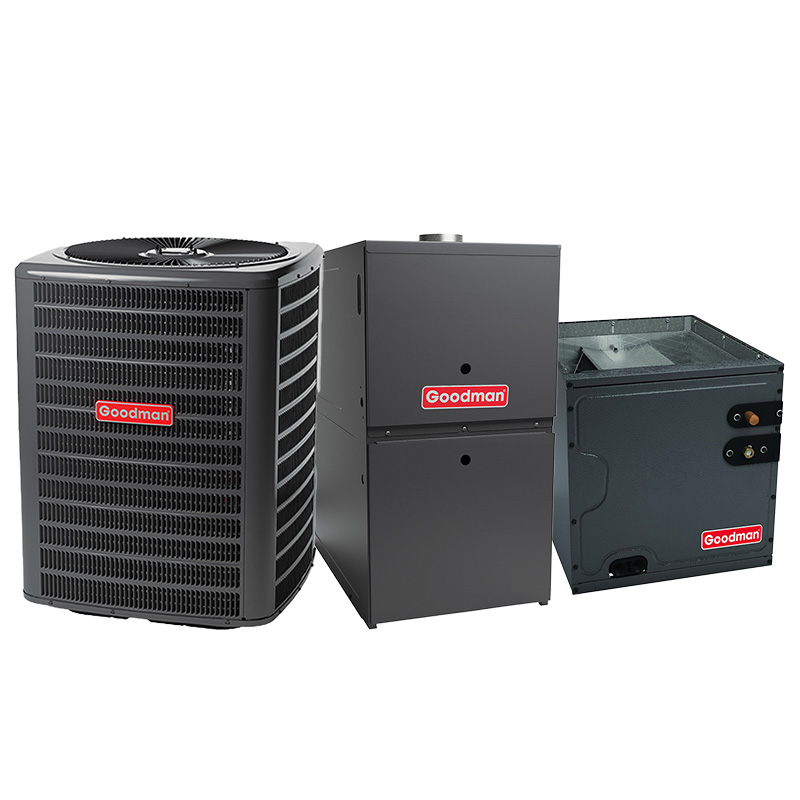
Goodman 5 Ton AC And 80000 BTU 80% AFUE Gas Furnace System | 16.2 SEER2 Two Stage AC | Variable Speed Two Stage Furnace | Upflow | R32
View on AC Direct see your lowest price →Check current price on AC Direct →
Key features
- 5-ton two-stage AC rated at 16.2 SEER2 for mid-efficiency seasonal cooling
- 80,000 BTU two-stage furnace with variable-speed ECM blower for quiet, even airflow
- 80% AFUE gas furnace suits moderate climates where high-efficiency units have longer payback periods
- R-32 refrigerant with lower global warming potential than legacy R-410A systems
- Upflow configuration designed for basement or closet installs with overhead duct systems
- Two-stage operation on both units reduces short cycling and improves humidity control versus single-stage alternatives
About this system
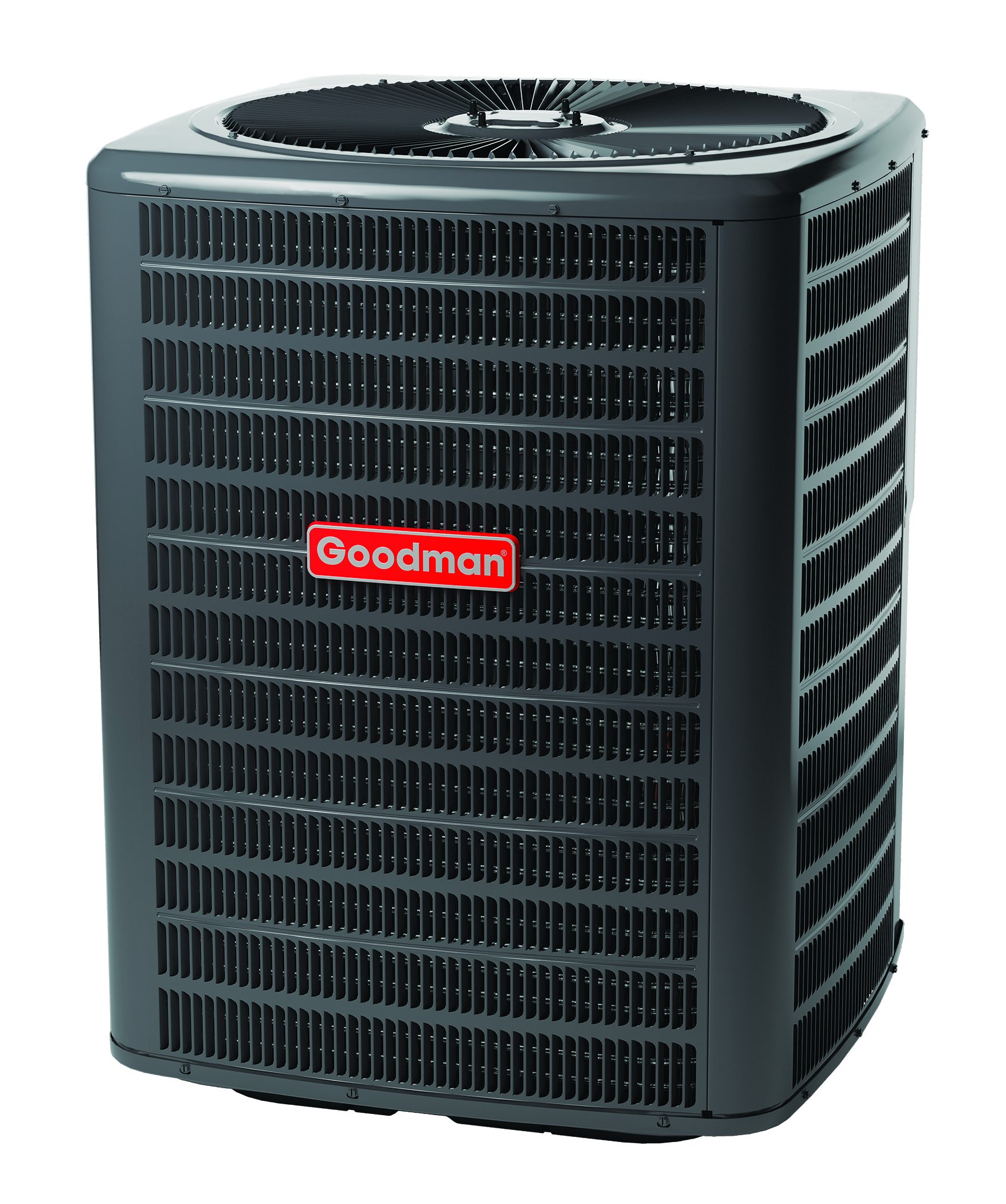
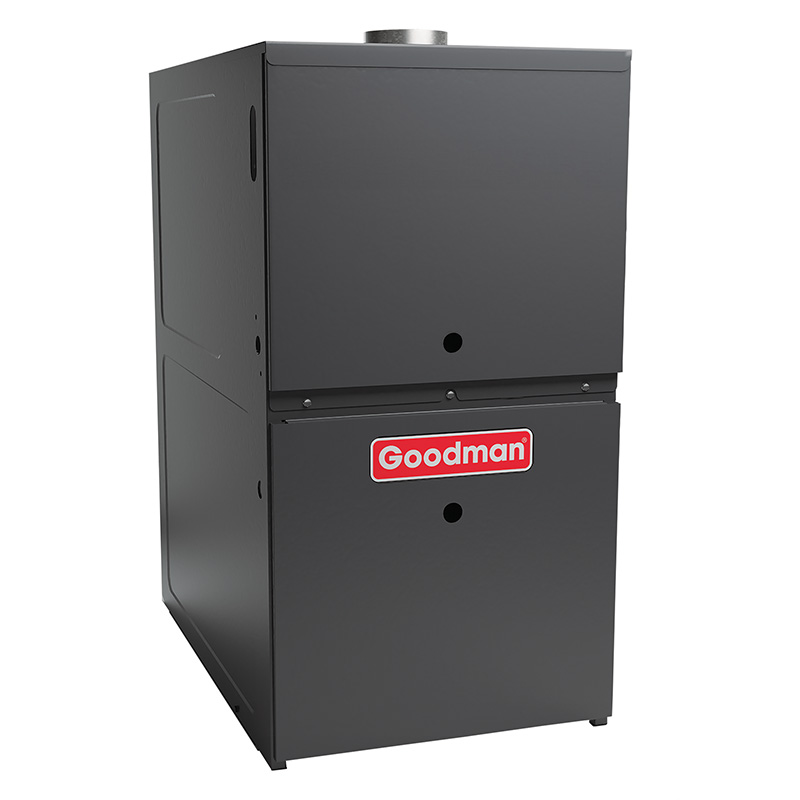
The Goodman 5-ton, 16.2 SEER2 two-stage air conditioner paired with an 80,000 BTU 80% AFUE two-stage variable-speed furnace is a mid-efficiency combo aimed at larger homes, typically in the 2,500 to 3,500 square foot range depending on climate and insulation. The two-stage compressor on the AC side runs at low capacity during milder weather, reducing short cycling, cutting humidity more effectively than a single-stage unit, and trimming runtime hours over a full season. The variable-speed furnace blower complements that by moving air quietly and consistently rather than blasting on at full speed every time the thermostat calls.
At 16.2 SEER2 the system clears the federal minimum for most regions but sits in the lower-mid tier rather than at the top of the efficiency ladder. The 80% AFUE rating means one dollar in five leaves through the flue, which is acceptable for mild climates or homes where natural gas is inexpensive, but owners in colder northern markets may find a 96% AFUE unit pays back the price difference over time. R-32 refrigerant has a lower global warming potential than the older R-410A it replaces and is increasingly standard across the industry. The upflow configuration suits the most common installation scenario: a basement or utility closet where air is drawn from the bottom and discharged upward into duct runs above.
This package appeals most to buyers who want a real step up from entry-level single-stage equipment without paying premium-brand prices. The two-stage operation on both pieces of equipment is the meaningful upgrade here, delivering noticeably more even temperatures and better moisture control than a basic single-stage setup at a price point that typically runs 15 to 25 percent below comparable Trane, Lennox, or Carrier configurations.
This Goodman combination delivers real two-stage comfort at a price that undercuts premium brands by a meaningful margin, making it a reasonable pick for budget-conscious buyers who prioritize upfront cost over long-term brand reliability. The 80% AFUE furnace and 16.2 SEER2 rating are functional but not standout numbers, and buyers should understand that Goodman's ownership experience is more install-dependent and more maintenance-prone past year seven than premium alternatives.
Overall score is the average of the five ratings above.
What we like
- Two-stage cooling and heating improves comfort and humidity control over single-stage systems
- Variable-speed ECM blower runs quietly and reduces energy use compared to single-speed blowers
- R-32 refrigerant is a modern, lower-GWP choice now becoming standard in the industry
- Priced 15 to 25 percent below Trane, Lennox, and Carrier for comparable two-stage configurations
- Upflow design fits the most common residential duct layout, keeping installation straightforward for qualified technicians
Trade-offs
- 80% AFUE is adequate but not efficient for cold-climate homes where high-AFUE units offer real fuel savings
- Dual-run capacitors are the most documented failure point, with repair costs typically in the 300 to 600 dollar range, and failures tend to cluster after year seven
- Compressor lifespan averages 10 to 14 years versus 15 to 20 years commonly seen on Trane and Carrier equipment
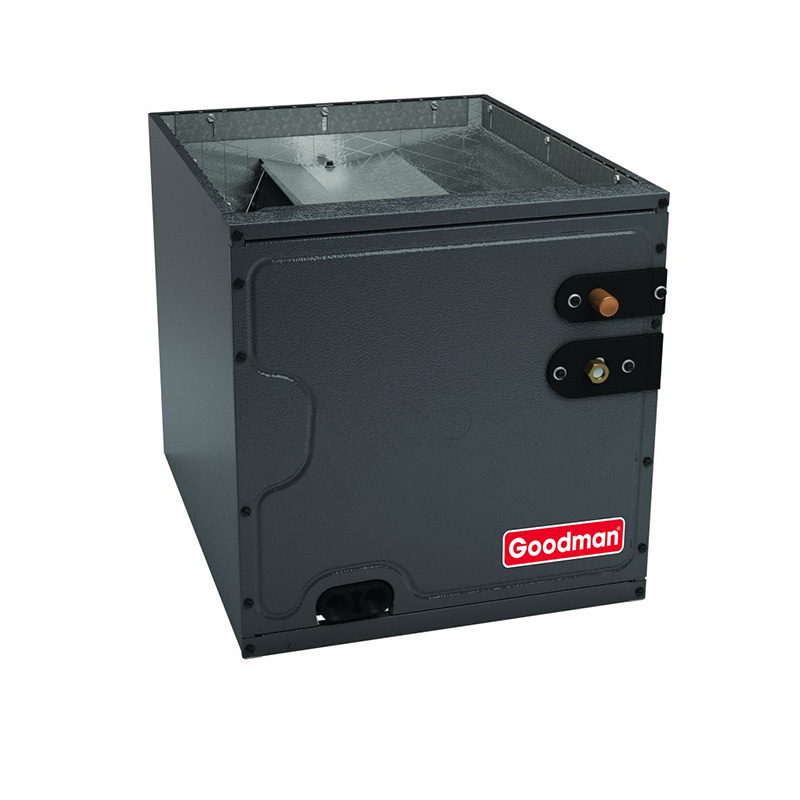
- A minority of owners report evaporator coil leaks and first-year refrigerant issues, outcomes closely tied to installation quality and charge accuracy
What homeowners and pros say about Goodman
Homeowners who share their experiences on ConsumerAffairs give Goodman roughly 2.5 out of 5, a score pulled down by a recurring pattern of rising repair costs after about the seventh year of ownership. That channel skews toward people motivated to complain, so it does not represent every owner, but the pattern around capacitor failures, evaporator coil leaks, and compressor longevity appears consistently enough to take seriously. Google dealer reviews land higher, around 3.8 out of 5, where the most frequent positive note is that Goodman equipment made a full system replacement affordable for homeowners who could not absorb a premium-brand price tag. The two-stage configuration in this specific package does earn more favorable comments than Goodman’s basic single-stage lineup, since the more consistent airflow and humidity control are noticeable in daily use.
HVAC technicians tend to describe Goodman as a brand where installation quality is the dominant variable. A careful, experienced installer who verifies refrigerant charge, checks capacitor ratings at startup, and sizes the equipment properly can get solid service life out of this system. Technicians also note that dual-run capacitors on Goodman equipment are among the most common service calls they handle, typically a 300 to 600 dollar fix, and owners of this 5-ton unit should plan for at least one capacitor replacement over the system’s life. Compressor lifespan is generally cited at 10 to 14 years on Goodman equipment versus 15 to 20 years for Trane and Carrier, a real trade-off that factors into total cost of ownership for buyers planning to stay in their homes long term.
Sources: ConsumerAffairs Goodman owner reviews, AHRI Directory of Certified Product Performance, U.S. DOE appliance and equipment efficiency standards, Goodman product specification sheets.
What it costs to run
At 16.2 SEER2, cooling this 5-ton system for a typical 1200-hour cooling season at the U.S. average electricity rate of $0.17/kWh works out to roughly $756 per year in cooling, about $157 less per year than a minimum-efficiency 13.4 SEER2 unit of the same size. Your real cost depends on your climate and local rate.
Method: (60,000 BTU/hr ÷ 16.2 SEER2) × 1200 hours ÷ 1000 × $0.17/kWh. Rate source: U.S. EIA average; cooling hours: moderate-climate estimate.
How it compares
| Brand | Comparable model | SEER2 | Stage | Price position |
|---|---|---|---|---|
| Goodman | GSXH5 / GMVC8 Series | 16.2 | Two-stage / Variable-speed | Value pick |
| Carrier | Comfort 16 (24ACC6) with 58STA Furnace | 16 | Single-stage | Typically 15 to 25 percent more than this Goodman package |
| Trane | XR16 (4TTR6) with S8X1 Furnace | 16 | Single-stage | Typically 15 to 25 percent more than this Goodman package |
| Lennox | Merit 16ACX with ML180 Furnace | 16 | Single-stage | Typically 15 to 25 percent more than this Goodman package |
Competitor rows are comparable single-stage units at similar efficiency; price is relative position, not a quote.
Questions about this system
Is 16.2 SEER2 good enough, or should I spend more to get a higher-efficiency unit?
16.2 SEER2 meets federal minimums for most U.S. regions and is a legitimate step above basic single-stage equipment, but it is not in the top tier. If your cooling season is long and electricity is expensive locally, a 18 to 20 SEER2 unit may pay back the price difference over 8 to 10 years. For shorter cooling seasons, 16.2 SEER2 is often sufficient.
Should I be concerned about the 80% AFUE furnace if I live somewhere with cold winters?
In climates with long, cold heating seasons, the difference between 80% and 96% AFUE compounds quickly. Roughly 20 cents of every heating dollar exits the flue at 80% AFUE, and in a high-BTU, high-usage scenario that gap can add up to several hundred dollars annually. For mild or mixed climates, 80% AFUE is more defensible on a payback basis.
What maintenance should I plan for to avoid the failure modes Goodman is known for?
Annual tune-ups that include inspecting the dual-run capacitor are the single highest-return maintenance task for this system, given that capacitor failure is the most commonly reported issue. Keeping the coil clean, verifying refrigerant charge at installation, and replacing air filters on schedule will also reduce the risk of evaporator coil degradation and compressor stress over time.
Does R-32 refrigerant create any service or safety issues compared to the older R-410A systems?
R-32 is mildly flammable, classified as A2L, which means certified technicians need specific training and appropriate equipment to service it safely. It is not something a homeowner should handle, and you should confirm any HVAC contractor you hire is A2L-certified before scheduling service on this system.
How does the two-stage operation actually affect day-to-day comfort in a 5-ton system?
On most days the system runs at its lower stage, which means longer, quieter cycles that pull more humidity out of the air and maintain more even temperatures from room to room. The second stage kicks in during peak heat loads. For a larger home that would otherwise have a single-stage 5-ton unit hammering on and off, the two-stage approach typically produces a noticeably more comfortable result.
Specifications
| Cooling capacity | 5 Ton |
| Efficiency | 16.2 SEER2 |
| Furnace output | 80000 BTU |
| Furnace efficiency | 80% AFUE |
| Configuration | Upflow |
| Refrigerant | R-32 |