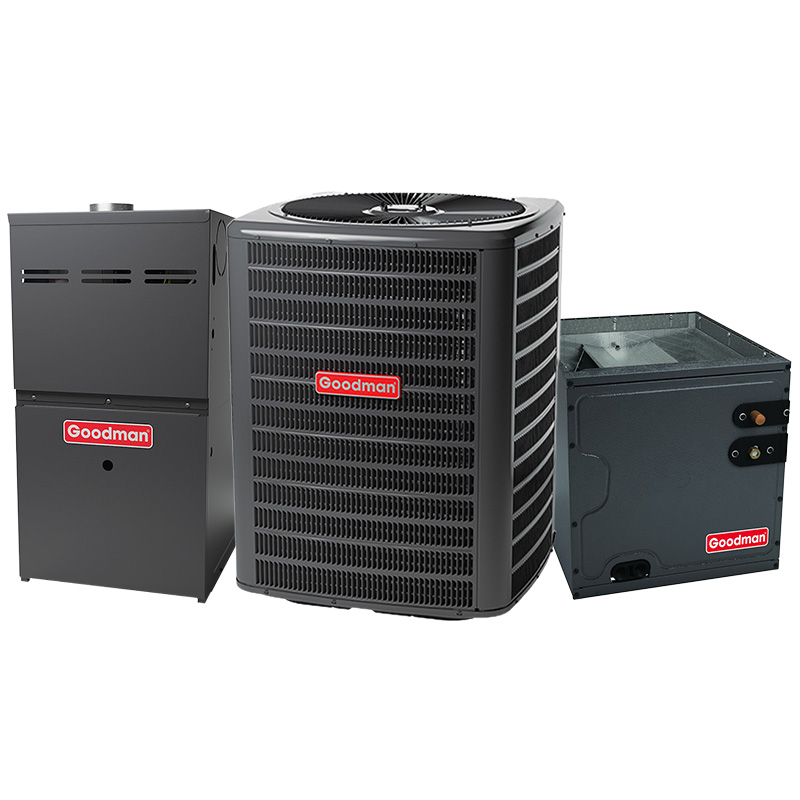
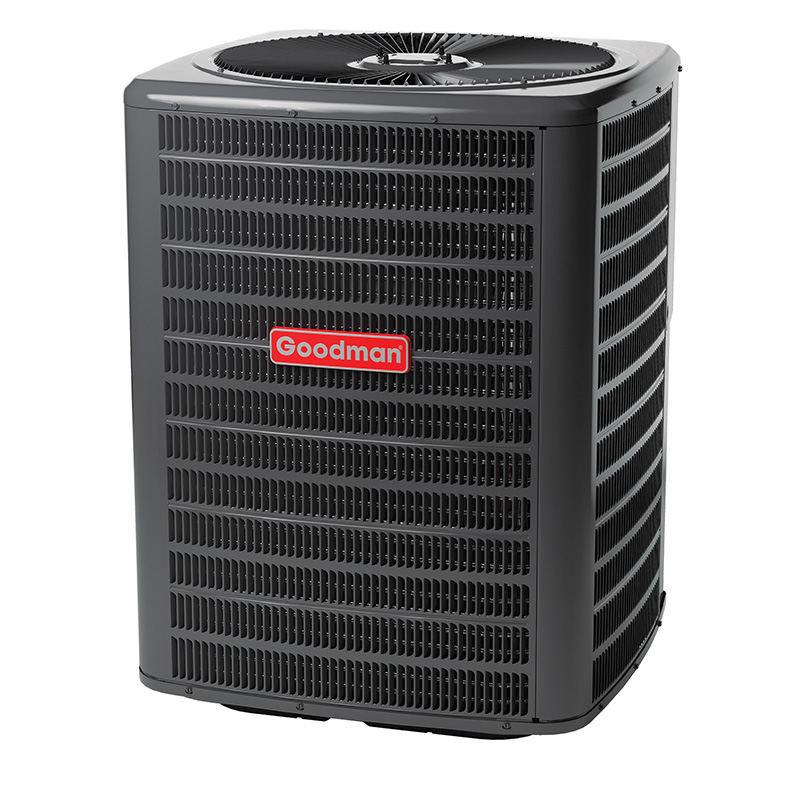
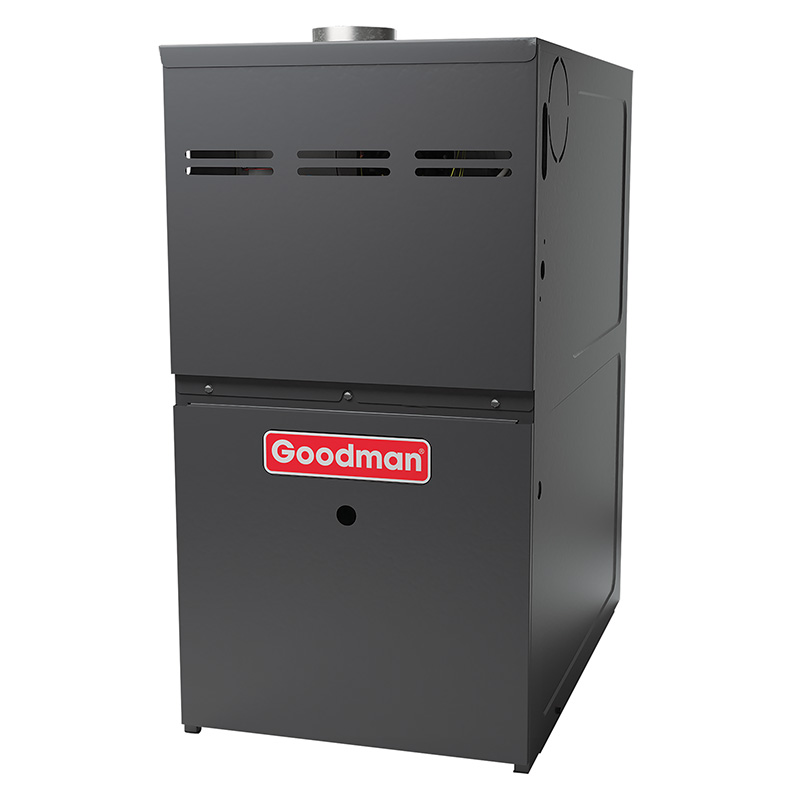
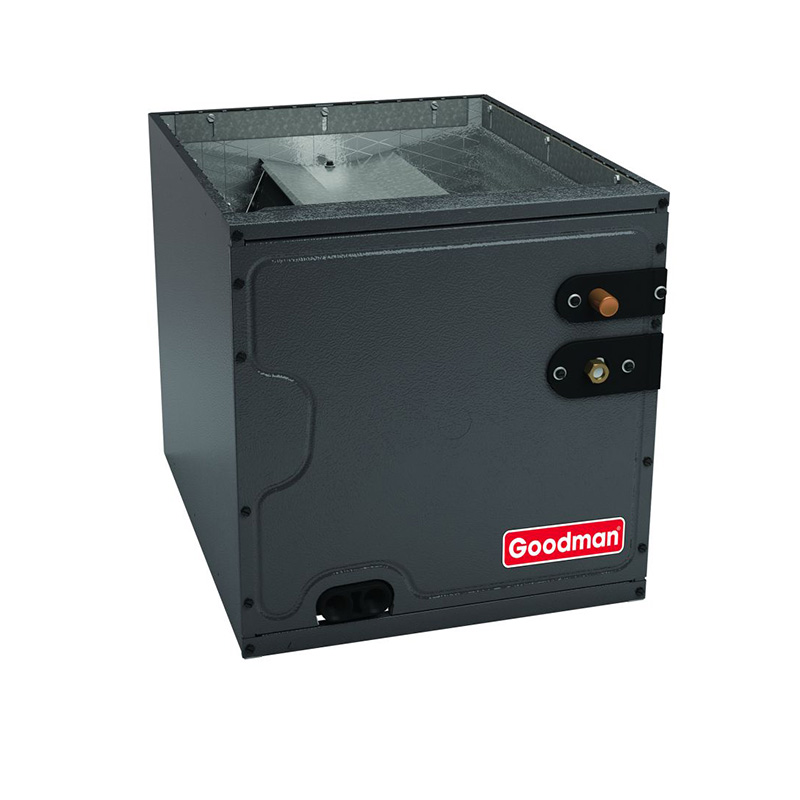
Goodman 5 Ton AC And 80000 BTU 80% AFUE Gas Furnace System | 16 SEER2 AC | Multi-Speed ECM Low NOx Furnace | Upflow | R32
View on AC Direct see your lowest price →Check current price on AC Direct →
Key features
- 5-ton cooling capacity at 16 SEER2 efficiency, meeting federal minimums for most U.S. regions
- 80,000 BTU, 80% AFUE upflow gas furnace with Low NOx burner certification
- Multi-speed ECM blower motor for improved airflow consistency versus single-speed PSC motors
- R-32 refrigerant with lower global-warming potential than R-410A
- Upflow configuration compatible with basement and main-floor utility closet installs
- Goodman factory warranty: 10-year parts, Lifetime limited compressor (registration required)
About this system
The Goodman 5-ton, 16 SEER2 air conditioner paired with an 80,000 BTU, 80% AFUE upflow gas furnace is a straightforward workhorse bundle aimed at larger homes, typically in the 2,400 to 3,200 square foot range depending on climate and insulation. The 16 SEER2 rating clears the federal minimum for most U.S. regions without reaching into the premium efficiency tier, which keeps the purchase price accessible while still offering a meaningful improvement over aging 13 or 14 SEER equipment. The furnace runs on R-32 refrigerant on the cooling side, a lower global-warming-potential option compared to R-410A, and the multi-speed ECM blower motor helps maintain more consistent airflow and humidity control than a single-speed PSC motor would.
The 80% AFUE furnace rating means 80 cents of every dollar spent on gas becomes heat, with the remaining 20 percent lost through flue gases. That is the entry point for modern gas furnaces and is adequate in mild to moderate heating climates, though homeowners in colder regions should compare operating costs against a 96% AFUE two-stage unit before committing. The upflow configuration suits the most common installation scenario, where the furnace sits in a basement or utility closet and air rises through ducts above it. The Low NOx designation makes this furnace compliant with stricter air-quality rules in California and other regulated markets. Combined, this is a budget-conscious system that covers the fundamentals without the comfort refinements of variable-speed or two-stage equipment.
This Goodman bundle delivers honest, code-compliant performance at a price point roughly 15 to 25 percent below comparable Carrier, Trane, and Lennox systems, making it a practical option for budget-focused buyers who understand they are trading some long-term reliability and premium comfort features for a lower upfront cost. The ECM blower is a genuine benefit at this price tier, but the 80% AFUE furnace and single-stage cooling mean this system will not compete on operating efficiency or comfort with higher-end alternatives. Install quality matters enormously with Goodman, and choosing a skilled contractor is arguably as important as the equipment choice itself.
Overall score is the average of the five ratings above.
What we like
- Purchase price sits 15 to 25 percent below Carrier, Trane, and Lennox equivalents for the same efficiency tier
- Multi-speed ECM blower improves humidity control and quiet operation compared to standard single-speed motors
- R-32 refrigerant has a lower environmental impact than R-410A and is increasingly supported by HVAC technicians
- Low NOx furnace design satisfies strict California and other regional air-quality regulations
- 10-year registered parts warranty and lifetime compressor coverage are competitive for the value segment
Trade-offs
- Compressors average 10 to 14 years in owner experience, shorter than the 15 to 20 years reported for premium brands
- Dual-run capacitor failures are the most common service call, typically adding $300 to $600 in repair costs around or after year 7
- 80% AFUE is the lowest efficiency tier available; homeowners in cold climates will pay noticeably more in annual gas costs versus a 96% AFUE unit
- Evaporator coil leaks appear in a meaningful share of owner reviews, and a minority report refrigerant charge issues within the first year, often linked to installation
What homeowners and pros say about Goodman
Homeowners who bought Goodman equipment tend to split into two camps, and that divide shows up clearly in the brand’s ratings. On Google dealer review pages, where scores average around 3.8 out of 5 across hundreds of reviews per location, affordability is the most consistent praise: buyers who got a working system installed cleanly are generally satisfied with what they paid. On ConsumerAffairs, where the score sits around 2.5 out of 5, the tone is different. That channel skews toward people who had problems, and the recurring pattern is repair costs that climb after roughly year seven, with dual-run capacitor replacements appearing most often as the first service bill, followed in more serious cases by evaporator coil leaks. Compressor longevity also comes up: owners and service technicians report Goodman compressors averaging 10 to 14 years, a shorter span than the 15 to 20 years associated with Trane, Carrier, or Lennox equipment at the same age.
HVAC professionals generally describe Goodman as a system that performs to spec when installed correctly and maintained regularly, but leaves less margin for error than premium brands. Technicians who service Goodman equipment frequently point to the dual-run capacitor as an almost predictable maintenance item, and advise owners to budget for it proactively rather than wait for a summer breakdown. For this specific 5-ton, 16 SEER2 bundle with an 80% AFUE furnace, the professional consensus is that it suits a buyer who is cost-conscious, works with a skilled installer, and understands they are buying a reliable baseline rather than a long-haul investment. The multi-speed ECM blower is a genuine plus that many pros acknowledge provides better comfort than the price tag might suggest, and the R-32 refrigerant aligns with where the industry is heading, which is a practical forward-looking feature at this price point.
Sources: ConsumerAffairs Goodman owner reviews, AHRI Directory of Certified Product Performance, U.S. DOE appliance and equipment efficiency standards, Goodman product specification sheets.
What it costs to run
At 16 SEER2, cooling this 5-ton system for a typical 1200-hour cooling season at the U.S. average electricity rate of $0.17/kWh works out to roughly $765 per year in cooling, about $148 less per year than a minimum-efficiency 13.4 SEER2 unit of the same size. Your real cost depends on your climate and local rate.
Method: (60,000 BTU/hr ÷ 16 SEER2) × 1200 hours ÷ 1000 × $0.17/kWh. Rate source: U.S. EIA average; cooling hours: moderate-climate estimate.
How it compares
| Brand | Comparable model | SEER2 | Stage | Price position |
|---|---|---|---|---|
| Goodman | GSZTO-GSX16/GMVC8 Series Bundle | 16 | Single-stage | Value pick |
| Carrier | Comfort 16 (24ACC6) with 58MCA Furnace | 16 | Single-stage | Typically 15 to 25 percent more than this Goodman bundle |
| Trane | XR16 (4TTR6) with S8X1 Furnace | 16 | Single-stage | Typically 15 to 25 percent more than this Goodman bundle |
| Lennox | Merit 16 (ML16XC1) with ML180 Furnace | 16 | Single-stage | Typically 15 to 25 percent more than this Goodman bundle |
Competitor rows are comparable single-stage units at similar efficiency; price is relative position, not a quote.
Questions about this system
Is 16 SEER2 efficient enough to avoid high electric bills on a 5-ton system?
16 SEER2 is the federal minimum for most markets and a reasonable baseline, but a 5-ton system running long hours in a hot climate will still produce substantial electric bills simply because of its size. Upgrading to 18 or 20 SEER2 reduces that cost, though the payback period depends on your local electricity rate and how many cooling hours your region logs annually.
Will 80% AFUE be a problem in a cold climate like the Midwest or Northeast?
It will not stop the furnace from heating your home, but you will pay more to do it. A 96% AFUE unit extracts significantly more heat from the same amount of gas, and in climates with 4,000 or more heating degree-days the annual savings can be substantial enough to justify the higher upfront cost of a high-efficiency furnace.
What is the most likely repair this system will need, and what does it cost?
Dual-run capacitors are the most commonly reported failure on Goodman AC units and usually surface after several years of use. Replacement typically runs $300 to $600 with labor, and the repair is straightforward for any certified HVAC technician. Evaporator coil leaks are a more expensive issue reported by a meaningful share of owners and worth monitoring after year five or six.
Does using R-32 refrigerant change anything about maintenance or technician availability?
R-32 requires EPA Section 608 certified technicians, the same standard as R-410A, so availability is not a concern. It does require A2L-rated equipment and handling procedures because it is mildly flammable, but any current-trained HVAC technician should be familiar with those protocols as R-32 becomes the industry standard.
How important is choosing the right installer for a Goodman system specifically?
It is critical. Goodman's own track record shows that performance and longevity lean heavily on installation quality, and a minority of owners who report refrigerant leaks within the first year trace the issue back to improper charge or line-set work rather than a factory defect. Getting at least two quotes from licensed, experienced contractors and checking their Goodman installation history is time well spent.
Specifications
| Cooling capacity | 5 Ton |
| Efficiency | 16 SEER2 |
| Furnace output | 80000 BTU |
| Furnace efficiency | 80% AFUE |
| Configuration | Upflow |
| Refrigerant | R-32 |