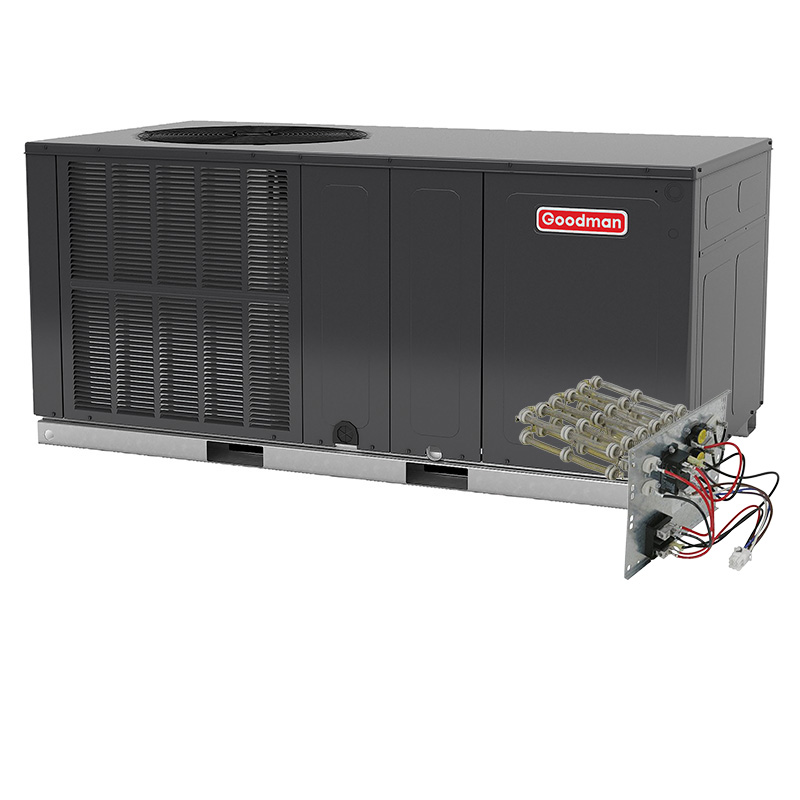
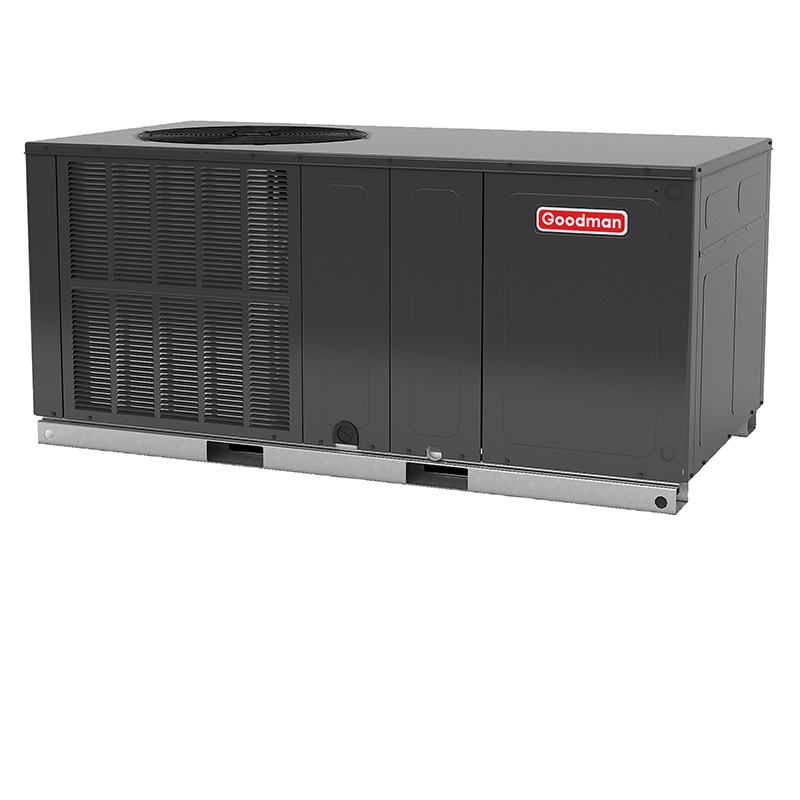
Goodman 5 Ton Package Unit Air Conditioning Cooling Only With Electric Heating | 13.4 SEER2 | Horizontal | R32
View on AC Direct see your lowest price →Check current price on AC Direct →
Key features
- 5-ton cooling capacity in a single horizontal-discharge cabinet, compatible with under-floor and rooftop horizontal duct connections
- 13.4 SEER2 efficiency rating meets current federal minimum standards for most U.S. climate zones
- R-32 refrigerant with lower global warming potential than R-410A and growing technician familiarity
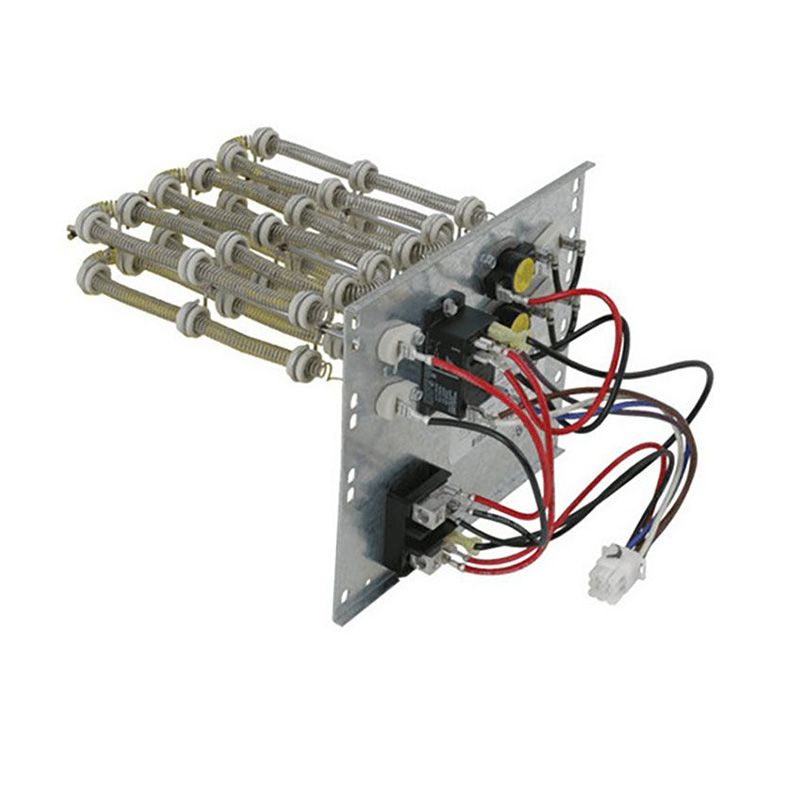
- Electric heat strips integrated in one package, eliminating gas line and flue requirements
- Single-stage scroll compressor designed for straightforward installation and service
- Value-tier pricing typically 15 to 25 percent below comparable Carrier, Trane, and Lennox package units
About this system
The Goodman 5-ton horizontal package unit delivers cooling-only comfort with electric heat strips in a single self-contained cabinet, making it the go-to choice for slab-on-grade homes, manufactured housing, and light commercial spaces where roof or under-floor horizontal ductwork connections are the only practical option. At 13.4 SEER2, it meets the current federal minimum efficiency standard for most U.S. climate zones, which means running costs are adequate but not exceptional compared to mid- or high-efficiency alternatives.
R-32 refrigerant is a meaningful step forward from the older R-410A systems still flooding the used market. R-32 has a lower global warming potential and slightly better thermodynamic efficiency, and parts availability is growing rapidly as the industry standardizes around it. The electric heat strips keep the mechanical package simple, with no gas valve, heat exchanger, or flue to maintain, though electric heat is more expensive to run than a gas furnace in most utility markets. This configuration suits climates with mild winters or buildings already on all-electric utilities.
Five tons of cooling covers roughly 2,000 to 2,500 square feet under typical conditions, though actual sizing depends on insulation, window area, climate zone, and duct design. Oversizing is a common mistake with package units, so a Manual J load calculation before purchase is strongly recommended. Goodman’s value positioning means the upfront price is substantially lower than equivalent Carrier, Trane, or Lennox package units, and the trade-off is a somewhat shorter expected compressor lifespan and a track record that rewards owners who invest in quality installation and routine maintenance.
This Goodman horizontal package unit is a solid, no-frills option for buyers who need all-in-one cooling with electric heat and have horizontal duct access. It delivers on affordability and acceptable efficiency, but owners should budget for potential capacitor replacements after the first few years and factor in the likelihood of a compressor replacement before the 15-year mark that premium-brand buyers might avoid. Install quality matters more with this unit than with higher-margin competitors, so choosing a skilled contractor is not optional.
Overall score is the average of the five ratings above.
What we like
- Upfront purchase price is 15 to 25 percent lower than comparable Carrier, Trane, and Lennox package units
- R-32 refrigerant is more environmentally responsible than R-410A and supported by a growing service network
- All-in-one horizontal cabinet simplifies installation on slab homes and manufactured housing with under-floor ducts
- Electric heat strips remove the need for gas lines, heat exchangers, or annual combustion inspections
- Widely serviced by independent HVAC contractors across the U.S. due to Goodman's large installed base
Trade-offs
- Dual-run capacitors are the most frequently reported failure point, typically failing within the first 7 to 10 years and adding 300 to 600 dollars per incident
- Compressor lifespan averages 10 to 14 years versus 15 to 20 years commonly seen with premium-brand competitors
- A minority of owners report refrigerant leaks within the first year, most often linked to installation or factory charge issues rather than design
- Evaporator coil leaks appear in a meaningful share of long-term owner reviews and can be costly to repair outside the warranty window
What homeowners and pros say about Goodman
Homeowners who have lived with Goodman package units for several years tend to echo what the numbers suggest: the units cool reliably out of the gate, and the upfront savings are real and appreciated. The ConsumerAffairs score of around 2.5 out of 5 is a signal worth taking seriously, though that platform skews heavily toward people who had a bad experience. Google dealer reviews land closer to 3.8 out of 5 across locations that carry the brand, and the recurring theme there is that buyers feel they got solid value for the money. The friction tends to show up later. Dual-run capacitor failures are the most commonly reported issue in the field, typically surfacing after several years of use and costing 300 to 600 dollars per repair including labor. Evaporator coil leaks appear in a meaningful share of longer-term owner accounts and are a more serious expense. Compressor longevity is the starkest trade-off: Goodman compressors tend to average 10 to 14 years in service, where premium-brand compressors routinely reach 15 to 20 years.
HVAC technicians generally describe Goodman as easy to work on and straightforward to source parts for, which keeps service costs from compounding. The consistent warning from experienced installers is that this brand rewards a careful, thorough installation more than almost any other. Refrigerant leaks in the first year, a documented failure mode for a minority of owners, are almost always tied to installation or factory charge problems rather than inherent unit defects, reinforcing that message. For a horizontal package unit replacing an older system on a budget, most pros will say Goodman is a defensible choice if the installer is skilled and the homeowner is prepared to keep up with annual maintenance and expect a capacitor replacement somewhere in the middle years of ownership.
Sources: ConsumerAffairs Goodman owner reviews, AHRI Directory of Certified Product Performance, U.S. DOE appliance and equipment efficiency standards, Goodman product specification sheets.
What it costs to run
At 13.4 SEER2, cooling this 5-ton system for a typical 1200-hour cooling season at the U.S. average electricity rate of $0.17/kWh works out to roughly $913 per year in cooling, about $0 less per year than a minimum-efficiency 13.4 SEER2 unit of the same size. Your real cost depends on your climate and local rate.
Method: (60,000 BTU/hr ÷ 13.4 SEER2) × 1200 hours ÷ 1000 × $0.17/kWh. Rate source: U.S. EIA average; cooling hours: moderate-climate estimate.
How it compares
| Brand | Comparable model | SEER2 | Stage | Price position |
|---|---|---|---|---|
| Goodman | 5-Ton Horizontal Package Unit (R-32, Electric Heat) | 13.4 | Single-stage | Value pick |
| Carrier | WeatherMaster 50XC Series | 14.0 | Single-stage | Typically 15 to 25 percent more than this Goodman |
| Trane | Precedent YSC Series | 14.0 | Single-stage | Typically 15 to 25 percent more than this Goodman |
| Lennox | LRP14 Series | 14.0 | Single-stage | Typically 15 to 25 percent more than this Goodman |
Competitor rows are comparable single-stage units at similar efficiency; price is relative position, not a quote.
Questions about this system
Will this unit work with my existing horizontal duct system designed for a standard package unit?
In most cases yes, provided the existing ductwork was sized for a 5-ton system. You should verify duct dimensions, supply and return configurations, and electrical service requirements with your installer before ordering, since converting or resizing ductwork after delivery adds cost and delays.
How much will the electric heat strips cost to operate compared to a gas furnace?
Electric resistance heat converts energy at close to 100 percent efficiency but electricity typically costs two to four times more per BTU than natural gas in most U.S. markets. In climates with cold winters, this unit's operating costs for heating can be significantly higher than a gas package unit, so it makes the most economic sense in mild-winter regions or where a gas line is not available.
R-32 is newer to the market. Will local technicians be able to service it?
R-32 is rapidly becoming the industry standard refrigerant and most licensed HVAC technicians now carry it or can source it quickly. The handling certification requirements are similar to R-410A, so service availability is not a meaningful concern in most urban and suburban markets.
Goodman has mixed reviews online. Should I be worried about reliability?
The ConsumerAffairs score of around 2.5 out of 5 reflects a complaint-heavy channel and should be weighted accordingly, while Google dealer reviews average closer to 3.8 out of 5 with affordability as the most common praise. The documented weak points are dual-run capacitors (a low-cost fix in the 300 to 600 dollar range), evaporator coil leaks in a portion of units, and compressors that average 10 to 14 years rather than the 15 to 20 years typical of premium brands. A maintenance plan and a quality installation substantially reduce these risks.
Is 13.4 SEER2 going to cost me significantly more to run than a higher-efficiency package unit?
At 13.4 SEER2 this unit meets current federal minimums, so it is meaningfully less efficient than 15 or 16 SEER2 alternatives. For a 5-ton unit running heavily in a hot climate, the difference can be 10 to 20 percent in annual cooling electricity costs. Whether the efficiency upgrade pays off depends on your local electricity rate, how many hours the system runs per year, and how long you plan to own the home.
Specifications
| Cooling capacity | 5 Ton |
| Efficiency | 13.4 SEER2 |
| Configuration | Horizontal |
| Refrigerant | R-32 |