Goodman 5 Ton Package Unit Heat Pump & AC | 13.4 SEER2 Horizontal Discharge | R32
View on AC Direct see your lowest price →Check current price on AC Direct →
Key features
- 5-ton capacity in a self-contained package unit, no separate indoor air handler required
- 13.4 SEER2 efficiency rating, meets current federal minimum standards
- Horizontal discharge configuration for ground-level or side-duct installations
- R-32 refrigerant with lower global warming potential than R-410A
- Provides both heating (heat pump) and cooling in a single outdoor cabinet
- Priced approximately 15 to 25 percent below comparable Carrier, Trane, and Lennox package units
About this system
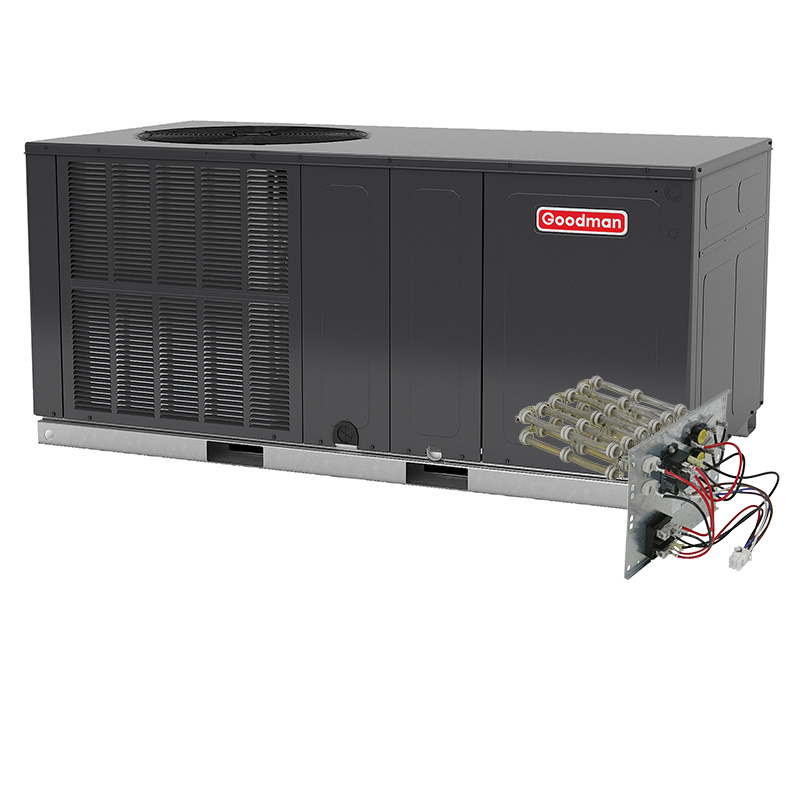
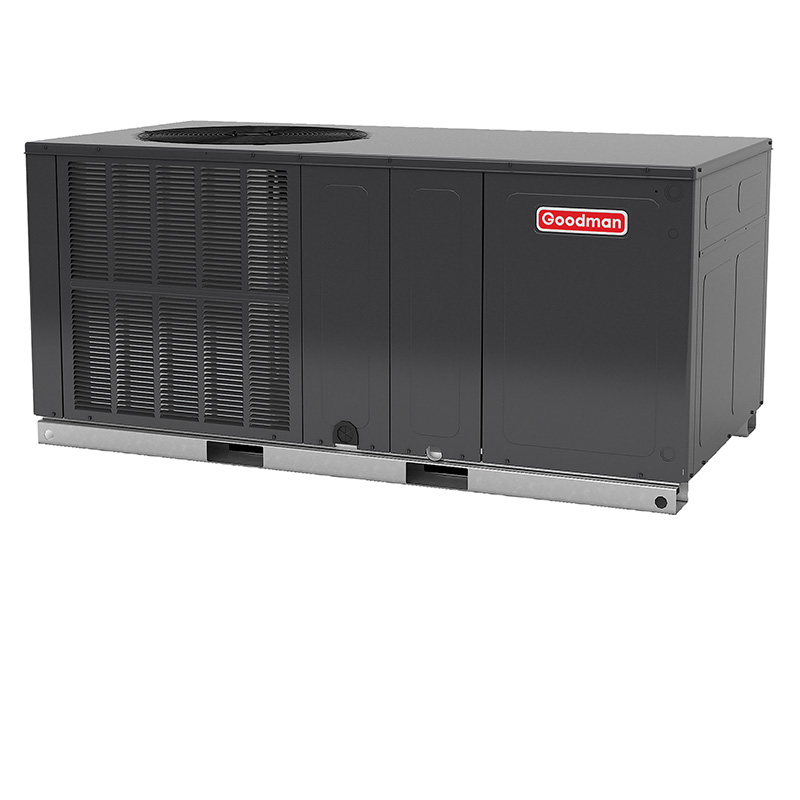
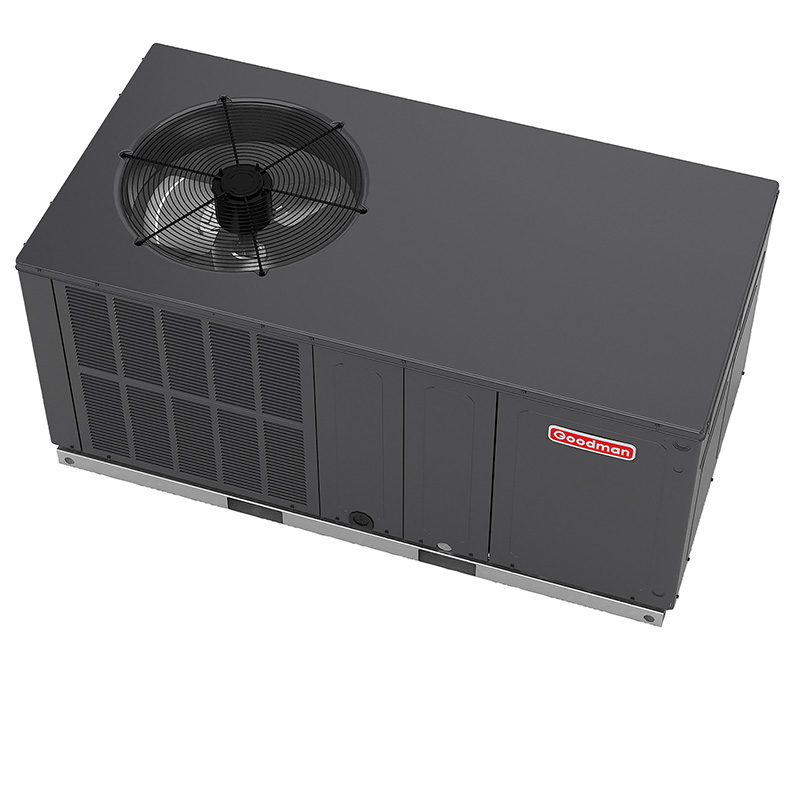
The Goodman 5-ton package unit heat pump combines heating and cooling into a single cabinet, making it a practical choice for homes without a dedicated indoor air handler space, such as manufactured housing, slab-on-grade construction, or buildings where all mechanical equipment sits on a rooftop or crawlspace curb. The horizontal discharge configuration means conditioned air exits from the side of the unit rather than the top, which suits ground-level pad installs where overhead clearance is limited or where ductwork runs laterally into the structure. At 5 tons, this unit is sized for larger homes typically in the 2,000 to 2,800 square foot range, though actual sizing should always be confirmed with a Manual J load calculation before purchase.
The 13.4 SEER2 rating meets the current federal minimum efficiency standard for most U.S. climate zones, so this unit clears the regulatory bar but does not exceed it by a wide margin. Buyers who prioritize long-term energy savings over upfront cost may want to compare higher-SEER2 options, but for homeowners focused on keeping the initial investment manageable, 13.4 SEER2 represents a workable baseline. The switch to R-32 refrigerant is a meaningful forward-looking detail: R-32 has a lower global warming potential than the R-410A it replaces, and it is increasingly the industry-standard refrigerant, meaning technicians and parts availability should remain strong for the foreseeable future.
This Goodman package unit delivers solid baseline efficiency and genuine cost savings up front, and it suits buyers who need a straightforward all-in-one solution for larger spaces with horizontal duct configurations. The trade-offs are real: reliability after year seven is a documented concern, compressor longevity trails premium brands, and the unit rewards good installation practices more than most. If your budget is the primary constraint and you have access to a qualified installer, it is a reasonable choice.
Overall score is the average of the five ratings above.
What we like
- Lower purchase price than comparable Carrier, Trane, or Lennox package units by a meaningful margin
- R-32 refrigerant is a future-ready choice with strong technician familiarity growing industry-wide
- All-in-one package design simplifies installation on slab, rooftop, or crawlspace curb applications
- Horizontal discharge suits a wider range of ductwork configurations than top-discharge units
- Common failure points like dual-run capacitors are inexpensive and straightforward to replace
Trade-offs
- Compressor lifespan averages 10 to 14 years, shorter than the 15 to 20 years typical of premium brands
- Evaporator coil leaks are a recurring complaint in owner reviews and can be a costly mid-life repair
- 13.4 SEER2 is the regulatory floor, not a high-efficiency option, so energy bill savings are modest
- A minority of owners have reported refrigerant leaks in the first year, often tied to installation or charge quality
What homeowners and pros say about Goodman
Owners who praise this Goodman package unit tend to focus on the same thing: the upfront price. On Google dealer reviews, where Goodman locations average around 3.8 out of 5 across hundreds of reviews, affordability is the most consistent theme. For buyers who need a working 5-ton all-in-one system without stretching their budget, that cost advantage over Carrier, Trane, and Lennox is tangible and real. HVAC technicians who install Goodman frequently note that the units perform well out of the gate when the installation is done correctly, and they point to installation quality as the single biggest factor in how long one lasts, a point that applies here more than with some premium competitors.
The more cautious perspective comes through on ConsumerAffairs, where Goodman holds around 2.5 out of 5, and while that platform skews toward dissatisfied owners, the specific complaints are consistent enough to take seriously. Dual-run capacitor failures are the most commonly cited repair, typically a manageable 300 to 600 dollar fix. Evaporator coil leaks appear with enough frequency to warrant attention, and compressor lifespan on Goodman units tends to run 10 to 14 years, noticeably shorter than the 15 to 20 years that owners of premium brands often report. A minority of owners have also described refrigerant leaks within the first year, which technicians generally attribute to installation or charge issues rather than the unit itself. For a 5-ton package unit in a horizontal discharge application, this Goodman earns its place as a cost-conscious starting point, as long as buyers go in with clear expectations about long-term maintenance costs.
Sources: ConsumerAffairs Goodman owner reviews, AHRI Directory of Certified Product Performance, U.S. DOE appliance and equipment efficiency standards, Goodman product specification sheets.
What it costs to run
At 13.4 SEER2, cooling this 5-ton system for a typical 1200-hour cooling season at the U.S. average electricity rate of $0.17/kWh works out to roughly $913 per year in cooling, about $0 less per year than a minimum-efficiency 13.4 SEER2 unit of the same size. Your real cost depends on your climate and local rate.
Method: (60,000 BTU/hr ÷ 13.4 SEER2) × 1200 hours ÷ 1000 × $0.17/kWh. Rate source: U.S. EIA average; cooling hours: moderate-climate estimate.
How it compares
| Brand | Comparable model | SEER2 | Stage | Price position |
|---|---|---|---|---|
| Goodman | 5-Ton Horizontal Discharge Package Heat Pump, R-32 | 13.4 | Single-stage | Value pick |
| Carrier | WeatherExpert 50XC Series Package Heat Pump | 14.0 | Single-stage | Typically 15 to 25 percent more than the Goodman |
| Trane | Precedent 4TTY3 Series Package Heat Pump | 14.0 | Single-stage | Typically 15 to 25 percent more than the Goodman |
| Lennox | LRP14HP Series Package Heat Pump | 14.0 | Single-stage | Typically 15 to 25 percent more than the Goodman |
Competitor rows are comparable single-stage units at similar efficiency; price is relative position, not a quote.
Questions about this system
Is a 5-ton package unit the right size for my home?
Tonnage should be determined by a Manual J load calculation that accounts for your home's square footage, insulation, window area, local climate, and other factors. A rough rule of thumb is 400 to 500 square feet per ton in a moderately insulated home, but oversizing a package unit causes short-cycling, poor humidity control, and accelerated wear. Have your installer run the calculation before committing to this size.
What does horizontal discharge mean, and does my installation need it?
Horizontal discharge means conditioned air exits from the side of the cabinet rather than the top. This is the correct configuration when ductwork enters the unit from the side, which is common in manufactured housing, some slab installations, and certain rooftop curb setups. Installing a horizontal-discharge unit where top-discharge is required, or vice versa, will cause airflow and performance problems, so confirm your duct entry point before ordering.
Why does Goodman have mixed reviews online, and should that concern me?
Goodman scores around 2.5 out of 5 on ConsumerAffairs, a platform where dissatisfied owners are far more likely to post than satisfied ones, and around 3.8 out of 5 on Google dealer reviews. The recurring theme in negative reviews is repair costs climbing after roughly year seven, particularly around compressors and coil integrity. These are real trade-offs worth weighing, not just noise, but they are also partly dependent on installation quality, which technicians consistently cite as the biggest variable in Goodman unit longevity.
What are the most common repairs I should budget for over the life of this unit?
Dual-run capacitors are the most frequently reported failure on Goodman heat pumps and typically cost 300 to 600 dollars to replace, a relatively minor repair. Evaporator coil leaks appear in a meaningful share of owner reports and are more expensive to address. Compressor replacement or failure is the largest potential cost, and Goodman compressors average 10 to 14 years of service life, so budgeting for a possible mid-life compressor repair or replacement is prudent.
Is R-32 refrigerant harder to find or service than R-410A?
R-32 is not harder to find at this stage, and it is increasingly common as the industry moves away from R-410A. Technicians who are certified to handle refrigerants can work with R-32, though some older recovery equipment may need to be checked for R-32 compatibility. Over time, parts and refrigerant availability for R-32 systems should only improve as it becomes the dominant refrigerant in new residential equipment.
Specifications
| Cooling capacity | 5 Ton |
| Efficiency | 13.4 SEER2 |
| Configuration | Horizontal |
| Refrigerant | R-32 |