Goodman 60000 BTU 80% Efficiency Two Stage Gas Furnace | Variable-Speed ECM Upflow / Horizontal | R32 (GRVT800603BN)
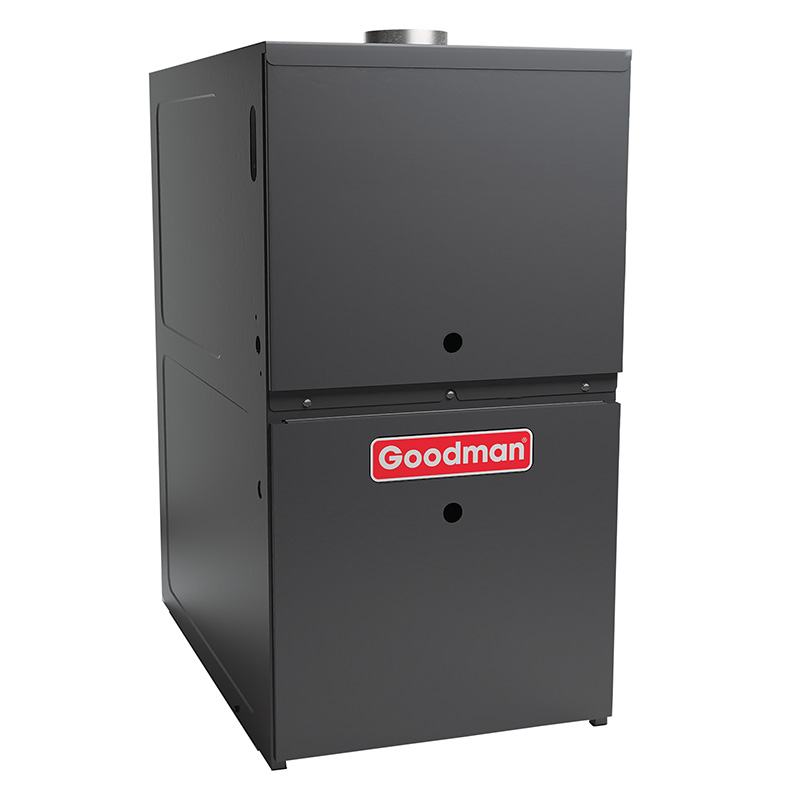
View on AC Direct see your lowest price →Check current price on AC Direct →
Key features
- 60,000 BTU two-stage burner fires at low and high capacity for reduced cycling and steadier temperatures
- 80% AFUE efficiency rating suitable for moderate heating climates
- Variable-speed ECM blower motor lowers electricity consumption and reduces airflow noise versus PSC motors
- Upflow and horizontal installation flexibility covers closet, utility room, and attic applications
- R-32 system-compatible design for pairing with current-generation cooling equipment
- Goodman value-tier pricing typically runs 15 to 25 percent below Trane, Lennox, and Carrier equivalents
About this system
The Goodman GRVT800603BN is a 60,000 BTU, 80% AFUE two-stage gas furnace built around a variable-speed ECM blower motor. The 80% AFUE rating means roughly 80 cents of every dollar spent on natural gas becomes usable heat, which is a solid but not top-tier efficiency level suited for moderate climates or homes where the additional cost of a 96% unit cannot be recovered quickly. Two-stage heating gives this furnace a genuine efficiency and comfort advantage over single-stage models: the burners fire at a lower capacity most of the time, reducing temperature swings, lowering operating noise, and burning less gas on mild days. The variable-speed ECM motor adds another layer of comfort by ramping airflow up gradually rather than blasting on full force, and it consumes significantly less electricity than a standard PSC motor at steady-state operation.
The upflow and horizontal configuration makes this unit compatible with the most common installation scenarios in North American homes, including closets, utility rooms, and attic or crawlspace horizontal applications. The R-32 refrigerant designation on this furnace model appears tied to its system pairing context; functionally the furnace itself burns gas for heat, so R-32 matters most when this unit is matched with a compatible coil and cooling system. At 60,000 BTU, this furnace is appropriately sized for roughly 1,200 to 2,000 square feet depending on climate, insulation quality, and Manual J load calculations. Oversizing or undersizing will negate the two-stage benefits, so a proper load calculation before purchase is not optional.
The GRVT800603BN delivers genuinely useful two-stage heating and a variable-speed motor at a price point that undercuts most major brands by a meaningful margin. That value proposition is real, but so are Goodman's documented long-term reliability concerns, and the furnace will perform closer to its ceiling only when installed by an experienced technician who does not cut corners on commissioning. Buyers who prioritize upfront savings and can tolerate the possibility of higher repair frequency after year seven will find this unit a reasonable fit.
Overall score is the average of the five ratings above.
What we like
- Two-stage operation reduces temperature swings and lowers fuel use on mild heating days
- Variable-speed ECM blower cuts electricity costs and runs quietly at low stage
- Priced 15 to 25 percent below comparable Carrier, Trane, and Lennox models
- Upflow and horizontal flexibility suits a wide range of home configurations
- 80% AFUE is adequate for mixed or moderate climates where the premium for 96% units is hard to recoup
Trade-offs
- 80% AFUE trails the 95 to 97% units now standard from premium brands in the same price tier, raising long-term fuel costs
- Dual-run capacitors are the most commonly reported failure point across Goodman equipment, typically surfacing within the first decade
- ConsumerAffairs reviews average around 2.5 out of 5, with recurring complaints about repair costs climbing after roughly year seven
- Compressor and component longevity tends to average 10 to 14 years, shorter than the 15 to 20 years owners report from premium-brand equipment
What homeowners and pros say about Goodman
Homeowners and HVAC technicians tend to agree on a consistent picture of Goodman equipment: the value is real and the hardware can perform well, but outcomes vary more than they do with premium brands. On ConsumerAffairs, Goodman sits at roughly 2.5 out of 5, a score that reflects a complaint-heavy audience but one where a recurring pattern stands out: repair costs tend to climb after about year seven, and owners who were happy early often feel differently a decade in. Google dealer reviews tell a more balanced story, averaging around 3.8 out of 5, with affordability cited most often as the reason buyers chose Goodman and stayed satisfied.
For this specific furnace, the documented failure modes worth knowing before purchase are dual-run capacitor failures, which are common across Goodman systems but typically a low-cost fix, and the broader question of component longevity. Goodman compressors and key parts tend to average 10 to 14 years in real-world use, compared to 15 to 20 years for premium-brand equipment. Evaporator coil leaks show up in a meaningful share of owner reports, and a small percentage of owners experience refrigerant issues within the first year, almost always traced back to installation rather than the hardware itself. The consistent takeaway from pros is that this furnace rewards a careful, experienced installer and punishes a hasty one more than a Trane or Carrier unit in the same situation would.
Sources: ConsumerAffairs Goodman owner reviews, AHRI Directory of Certified Product Performance, U.S. DOE appliance and equipment efficiency standards, Goodman product specification sheets.
How it compares
| Brand | Comparable model | SEER2 | Stage | Price position |
|---|---|---|---|---|
| Goodman | GRVT800603BN | N/A (furnace only) | Two-stage | Value pick |
| Carrier | Performance 80 (58TP Series) | N/A (furnace only) | Two-stage | Moderately higher than Goodman, mid-tier brand premium |
| Trane | S8X2 (80% Two-Stage) | N/A (furnace only) | Two-stage | Higher than Goodman, premium brand positioning |
| Lennox | Merit ML180 | N/A (furnace only) | Single-stage | Comparable to or slightly above Goodman two-stage at single-stage spec; Lennox two-stage units step up further in price |
Competitor rows are comparable single-stage units at similar efficiency; price is relative position, not a quote.
Questions about this system
Is 80% AFUE good enough for a cold-climate home, or should I pay more for a 96% furnace?
In climates with 6,000 or more heating degree days, a 96% AFUE furnace can recover its price premium through fuel savings within a reasonable payback period, often under seven years. In milder climates, the math favors the 80% unit. Run your local gas rates and estimated annual runtime through a simple payback calculation before deciding.
What does two-stage heating actually do for comfort and my gas bill?
Two-stage means the burner operates at a lower capacity, roughly 65 to 70 percent, during most heating cycles and only ramps to full output on the coldest days. This produces longer, gentler heat cycles that reduce temperature swings between rooms and burns less fuel per hour at low stage. The variable-speed blower reinforces both benefits by matching airflow to demand rather than running at full blast continuously.
Goodman has mixed reviews online. How much does installer quality actually matter?
Technicians consistently cite installation quality as the single largest factor in how long a Goodman unit lasts. Proper refrigerant charge, correct duct static pressure, and thorough commissioning of the two-stage and ECM controls are all areas where shortcuts show up as premature failures. Google dealer reviews average around 3.8 out of 5, and the better scores typically come from dealers known for careful startup procedures.
What are the most likely repairs I should budget for over the life of this furnace?
Dual-run capacitors are the most commonly reported failure across Goodman equipment and are generally an inexpensive fix in the 300 to 600 dollar range. Beyond that, the variable-speed ECM motor module can be a more costly repair if it fails out of warranty. Building a small service budget into your ownership plan, especially after year seven, is a reasonable precaution based on documented owner experience.
Does this furnace work with any air handler or coil, or does it need to be matched specifically?
The GRVT800603BN is designed for upflow and horizontal installations and should be paired with a compatible coil that matches its airflow requirements and the R-32 refrigerant system. Goodman publishes approved system matchups, and using a mismatched coil can void warranty coverage and reduce efficiency. Confirm the full system combination with your installing contractor before ordering components separately.
Specifications
| Furnace output | 60000 BTU |
| Configuration | Upflow |
| Refrigerant | R-32 |
| Model | GRVT800603BN |