Goodman 100000 BTU Gas Furnace – 2 Stage 96% Efficient Variable Speed ECM Upflow / Horizontal | R32 (GRVT961005CN)
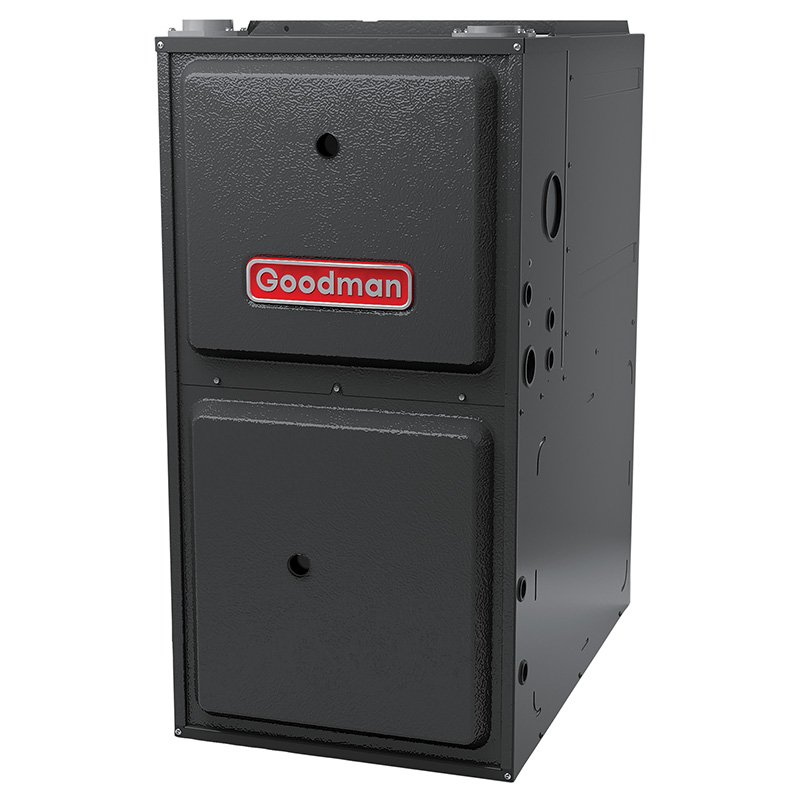
View on AC Direct see your lowest price →Check current price on AC Direct →
Key features
- 96% AFUE two-stage gas heating in a 100,000 BTU output
- Variable-speed ECM blower motor for quieter, more consistent airflow
- Upflow and horizontal installation configurations supported
- Two-stage burner reduces short-cycling and temperature swings
- Compatible with communicating and standard thermostat controls
- Factory-installed self-diagnostic control board with fault code display
About this system
The Goodman GRVT961005CN is a 100,000 BTU, 96% AFUE two-stage gas furnace with a variable-speed ECM blower motor, built for upflow or horizontal installation in a ducted forced-air system. The 96% AFUE rating means 96 cents of every dollar spent on gas goes toward heating your home, which puts this unit firmly in the high-efficiency tier and makes it eligible for federal tax credits in many situations. Two-stage operation means the burner runs at a lower capacity most of the time, ramping up only on the coldest days, which reduces temperature swings, cuts cycling noise, and typically lowers gas bills compared to a single-stage furnace of the same BTU rating.
The variable-speed ECM blower is one of the more meaningful specs here. Unlike a standard PSC motor that runs at a fixed speed, the ECM ramps airflow up and down to match demand, which improves comfort, reduces fan noise at lower speeds, and can cut blower electricity consumption significantly over a heating season. At 100,000 BTU, this unit is sized for larger homes, typically in the 2,000 to 3,500 square foot range depending on climate zone, insulation, and ceiling height. Proper Manual J load calculation by your installer is essential before committing to this size. The R-32 refrigerant designation on the model number relates to paired cooling equipment and does not affect furnace-only operation.
This furnace suits homeowners who want high-efficiency gas heating, a quieter operating profile, and better humidity distribution than a basic single-stage unit, but who are working with a budget that makes premium brands like Trane or Lennox harder to justify. It is a particularly strong fit when paired with a reputable local installer, since Goodman equipment’s real-world performance is more sensitive to installation quality than most competing brands at higher price points.
The GRVT961005CN delivers genuine high-efficiency, two-stage gas heating at a price point that is 15 to 25 percent below comparable Trane, Lennox, and Carrier furnaces. The ECM blower and two-stage burner are real comfort upgrades over base models, but long-term ownership costs depend heavily on installer quality and the known weak points common to the Goodman platform. Buyers who prioritize upfront savings and can vet a skilled installer will find this furnace a solid performer; those who want a lower-maintenance ownership experience may prefer spending more on a premium brand.
Overall score is the average of the five ratings above.
What we like
- 96% AFUE rating qualifies as high-efficiency and can reduce annual gas costs compared to 80% furnaces
- Variable-speed ECM blower meaningfully cuts fan electricity use and reduces noise at partial load
- Two-stage operation provides more even heat distribution and fewer abrupt on-off cycles
- Priced 15 to 25 percent below comparable Trane, Lennox, and Carrier models, lowering the initial investment
- Dual-fuel and zoning system compatibility broadens installation flexibility in larger homes
Trade-offs
- Dual-run capacitors are the most commonly reported failure point across Goodman units, typically adding a repair call in years 5 to 10
- Long-term reliability ratings are below premium brands, with ConsumerAffairs averaging around 2.5 out of 5 driven largely by post-year-7 repair complaints
- Real-world performance is unusually sensitive to installation quality, meaning a poor setup will undermine the efficiency and comfort gains the specs promise
- Compressor lifespan on paired Goodman cooling systems averages 10 to 14 years versus 15 to 20 years for premium brands, which matters if you are buying this as part of a full system
What homeowners and pros say about Goodman
Homeowners who share their experiences with Goodman furnaces tend to split along a familiar line. In the first several years, the most common feedback centers on the lower purchase price making the high-efficiency, two-stage feature set accessible at a budget that comparable Carrier, Trane, or Lennox units would not allow. Google dealer reviews across Goodman installers average around 3.8 out of 5, and affordability paired with adequate early performance is the most repeated theme. The variable-speed blower and two-stage burner on a unit like the GRVT961005CN do get credit from owners who notice quieter operation and more even room temperatures compared to older single-stage furnaces they replaced.
The longer-term picture is more complicated. ConsumerAffairs ratings for Goodman land around 2.5 out of 5, driven heavily by owners reporting that repair costs start climbing after roughly year 7. The documented failure points on Goodman equipment are specific: dual-run capacitors fail more often than on premium brands and typically require a 300 to 600 dollar repair call, and a meaningful share of owners in paired cooling systems report evaporator coil leaks. HVAC technicians consistently flag that Goodman’s real-world lifespan and efficiency are more dependent on installation quality than most competing brands, which means the installer you choose matters as much as the equipment itself. For this furnace specifically, that means a thorough combustion analysis, proper static pressure setup for the ECM blower, and correct gas pressure at startup are not optional steps.
Sources: ConsumerAffairs Goodman owner reviews, AHRI Directory of Certified Product Performance, U.S. DOE appliance and equipment efficiency standards, Goodman product specification sheets.
How it compares
| Brand | Comparable model | SEER2 | Stage | Price position |
|---|---|---|---|---|
| Goodman | GRVT961005CN | N/A (furnace only) | Two-stage | Value pick |
| Carrier | Performance 96 (58TP6) | N/A (furnace only) | Two-stage | 15 to 25 percent above Goodman |
| Trane | S9V2 (96% AFUE Variable Speed) | N/A (furnace only) | Two-stage | 20 to 30 percent above Goodman |
| Lennox | EL296V | N/A (furnace only) | Two-stage | 20 to 35 percent above Goodman |
Competitor rows are comparable single-stage units at similar efficiency; price is relative position, not a quote.
Questions about this system
What size home is a 100,000 BTU furnace actually right for?
A rough rule is 30 to 60 BTU per square foot depending on climate, insulation, and ceiling height, which puts 100,000 BTU in the range of roughly 2,000 to 3,300 square feet in a cold climate. The only reliable way to confirm proper sizing is a Manual J heat load calculation by your installer. Oversizing this furnace will cause short-cycling and undermine the two-stage efficiency advantages.
What does the R-32 in the model number mean for a furnace?
The R-32 designation on this Goodman model indicates compatibility or pairing with R-32 refrigerant cooling equipment in a split system. It does not affect how the furnace itself operates on natural gas or propane. If you are installing this as a furnace-only replacement, the refrigerant designation is relevant only if you are also purchasing or pairing a matching Goodman air handler or coil.
How does the variable-speed ECM blower affect my electricity bill?
ECM motors are significantly more efficient than standard PSC motors, often using 50 to 75 percent less electricity at lower speeds where they spend most of their runtime. In a larger home running a two-stage furnace, the annual savings on fan electricity can meaningfully offset part of the cost premium over a basic single-speed unit. The exact savings depend on how many hours per year your blower runs and your local electricity rate.
What are the most common repairs I should budget for on this Goodman furnace?
Based on documented owner experience across the Goodman line, dual-run capacitors are the most frequently reported failure and typically cost between 300 and 600 dollars to repair. Control board and igniter issues are also reported by some owners, particularly after year 7. Budgeting for one service call roughly every 5 to 8 years is a realistic expectation, which is part of the trade-off for the lower purchase price.
Does Goodman's warranty on this furnace require professional registration, and what does it actually cover?
Goodman requires the unit to be registered within a set window after installation to receive the full limited warranty term, including the lifetime heat exchanger warranty on qualifying models. If registration is missed, coverage typically reverts to a shorter base period. Parts are covered under the limited warranty, but labor costs for warranty repairs are the homeowner's responsibility unless your installer offers a separate labor warranty, so confirming what your contractor covers is important before you sign.
Specifications
| Furnace output | 100000 BTU |
| Configuration | Upflow |
| Refrigerant | R-32 |
| Model | GRVT961005CN |