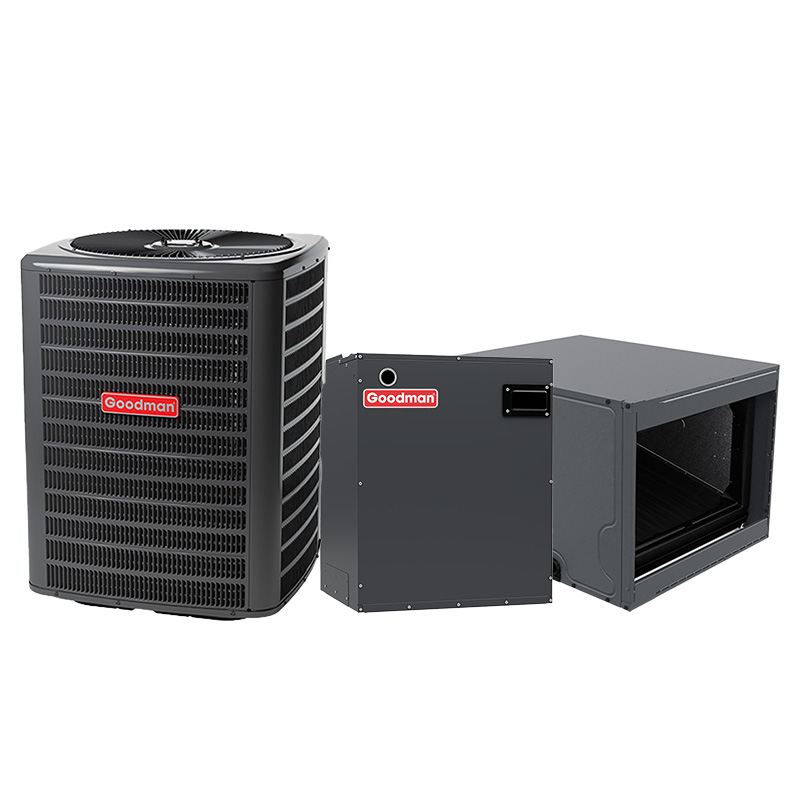
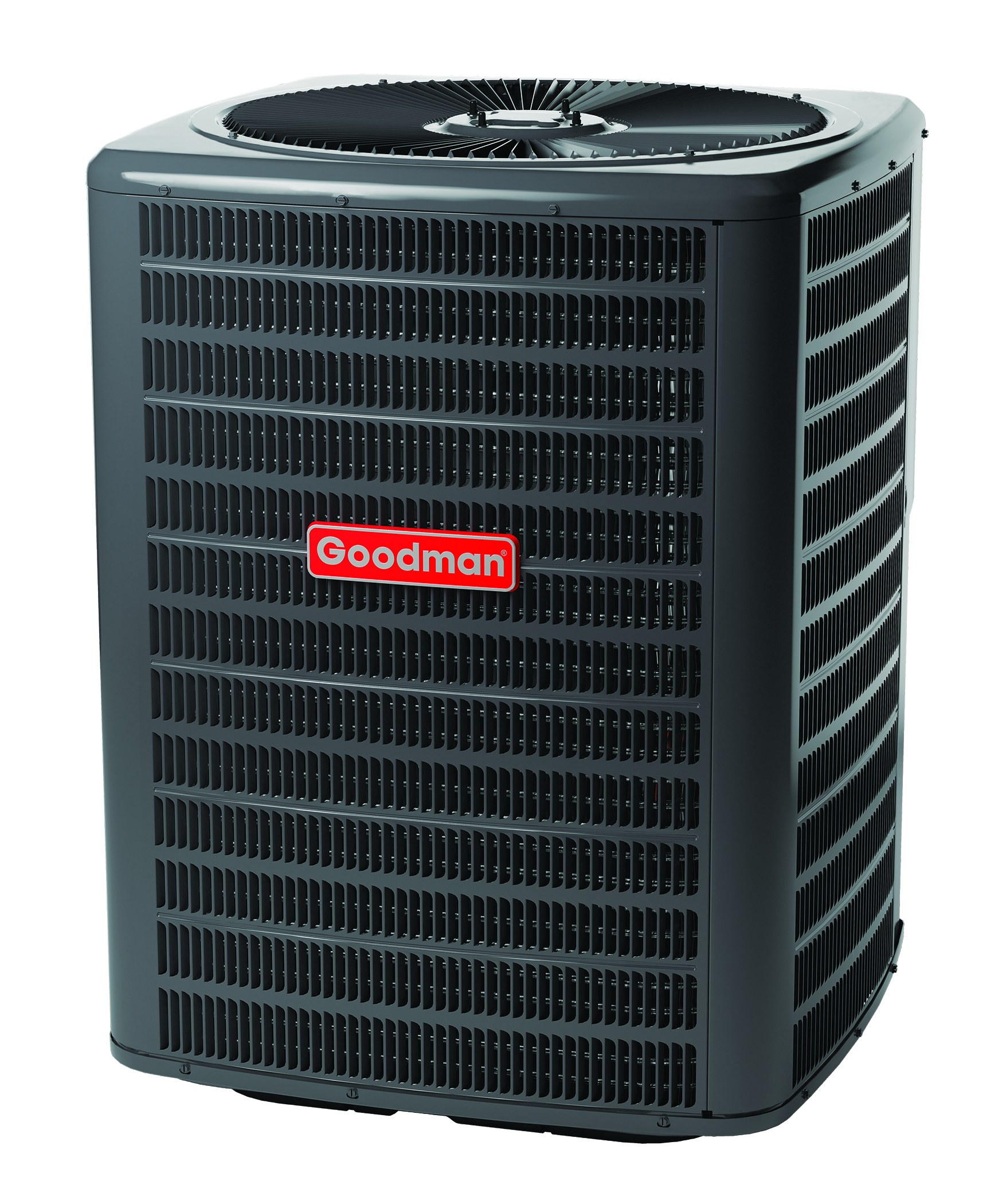
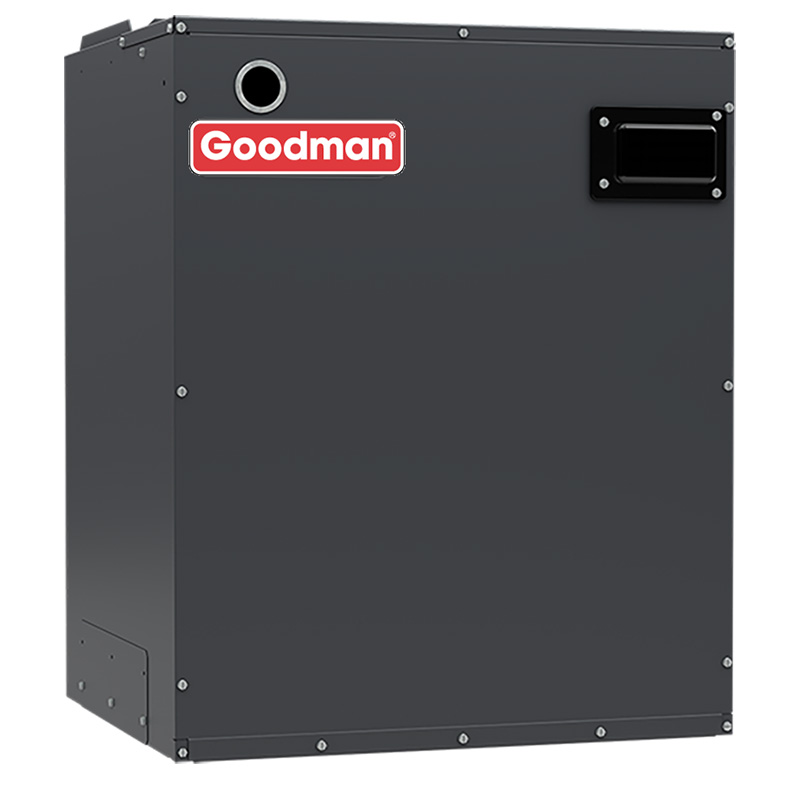
Goodman AC & Air Handler | 2 Ton 18.5 SEER2 2 Stage AC Horizontal | R32
View on AC Direct see your lowest price →Check current price on AC Direct →
Key features
- 18.5 SEER2 efficiency rating, upper-mid tier for meaningful energy savings over minimum-efficiency equipment
- Two-stage compressor runs at reduced capacity most of the time for better humidity control and quieter operation
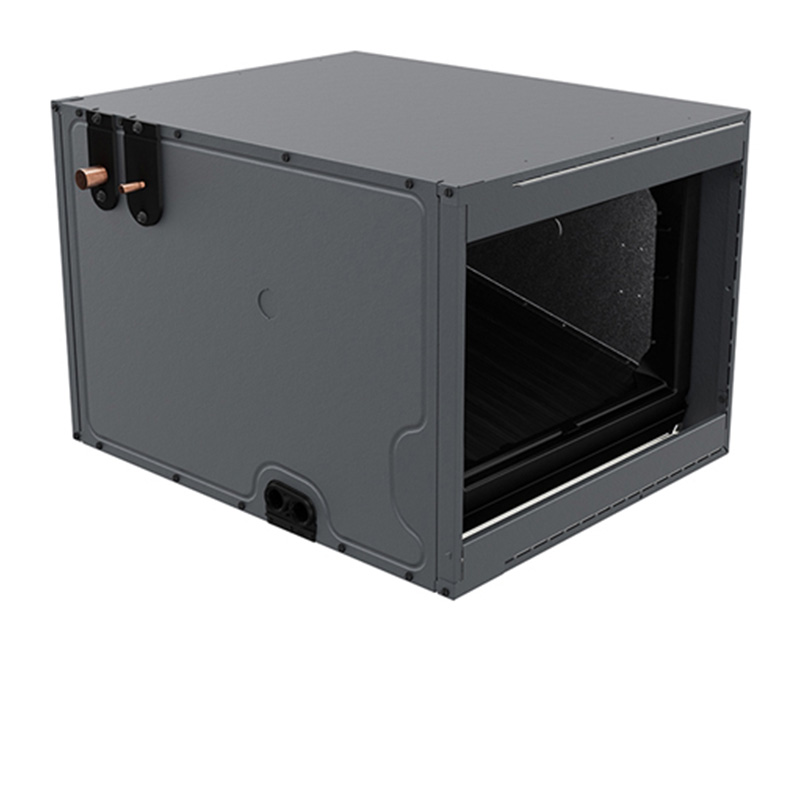
- Horizontal configuration designed for attic or crawlspace air handler installations
- R-32 refrigerant with lower global warming potential than R-410A
- 2-ton capacity suited to smaller to mid-size conditioned spaces
- Goodman's 10-year parts warranty available with product registration on qualifying components
About this system
The Goodman 2-ton 18.5 SEER2 two-stage horizontal air conditioner paired with a matching air handler is aimed at homeowners who want meaningful efficiency gains over the federal minimum without paying premium-brand prices. At 18.5 SEER2, this system sits comfortably in the upper-mid efficiency tier, where most households in moderate to hot climates will notice real reductions in summer cooling bills compared to a 14 or 15 SEER2 replacement. The two-stage compressor is the key upgrade here: it runs on a lower capacity most of the time, cycling less aggressively, which improves humidity control and makes the indoor temperature feel more consistent than a single-stage unit running full-blast in short bursts.
The horizontal configuration means this system is specifically built for attic or crawlspace installations where the air handler lies on its side rather than standing upright. That limits where it fits, but it is the right tool when the application calls for it. R-32 refrigerant is a forward-looking choice, carrying a lower global warming potential than the R-410A it replaces and already common in new Goodman equipment lines. Buyers should confirm their installer is rated and equipped to handle R-32, as not every technician has updated their tooling yet. At two tons, this unit is suited to conditioned spaces roughly in the 900 to 1,400 square foot range, depending on insulation, climate zone, and window load, and a proper Manual J load calculation before purchase is strongly recommended.
This system delivers a genuinely competitive efficiency and comfort package for the price, and the two-stage operation is a real functional advantage over single-stage units at similar or higher cost. The trade-off is Goodman's documented pattern of component failures past year seven and compressor longevity that trails premium brands, so buyers should factor in a service budget alongside the lower upfront price.
Overall score is the average of the five ratings above.
What we like
- 18.5 SEER2 is strong for the price point and will produce noticeable energy savings in warm climates
- Two-stage operation improves humidity removal and reduces temperature swings compared to single-stage units
- R-32 refrigerant is better positioned for long-term availability as R-410A is phased down
- Horizontal-specific design means the unit is properly engineered for attic and crawlspace installs rather than a compromise
- Priced roughly 15 to 25 percent below comparable Trane, Carrier, and Lennox two-stage systems
Trade-offs
- Compressor longevity averages 10 to 14 years versus 15 to 20 years typical of premium brands, which matters on a long ownership horizon
- Evaporator coil leaks and dual-run capacitor failures are the most frequently reported repair issues, with capacitor replacements running roughly $300 to $600
- A minority of owners report refrigerant leaks within the first year, most often traced to installation or initial charge quality
- Horizontal-only configuration limits this system to specific install scenarios and adds complexity compared to upflow or downflow units
What homeowners and pros say about Goodman
Homeowners who shop Goodman tend to split along a clear line: those who got a careful install from a detail-oriented technician often report years of trouble-free service and point to the savings at purchase as money well spent. Those who ran into problems more often trace the first sign of trouble back to a rushed install or a refrigerant charge that was never quite right. ConsumerAffairs scores for Goodman sit around 2.5 out of 5, a rating shaped by the fact that frustrated owners are far more likely to leave reviews than satisfied ones, but the recurring theme in those complaints is repair bills climbing after roughly year seven rather than early catastrophic failures. Google dealer reviews average around 3.8 out of 5, where affordability is the praise that shows up most consistently.
HVAC technicians who work on Goodman equipment regularly note that dual-run capacitors are the most predictable failure point across the brand, a repair that is usually quick and falls in the $300 to $600 range when it comes up. Evaporator coil leaks appear often enough in owner accounts to be worth noting, and compressor lifespan tends to land in the 10 to 14 year range rather than the 15 to 20 years more common in premium equipment. For this specific two-stage R-32 horizontal system, some installers flag the added layer of complexity: R-32 tooling requirements, the horizontal configuration, and two-stage commissioning all demand a technician who is up to date and thorough. When that box is checked, this system’s efficiency and comfort performance are competitive well above its price point.
Sources: ConsumerAffairs Goodman owner reviews, AHRI Directory of Certified Product Performance, U.S. DOE appliance and equipment efficiency standards, Goodman product specification sheets.
What it costs to run
At 18.5 SEER2, cooling this 2-ton system for a typical 1200-hour cooling season at the U.S. average electricity rate of $0.17/kWh works out to roughly $265 per year in cooling, about $100 less per year than a minimum-efficiency 13.4 SEER2 unit of the same size. Your real cost depends on your climate and local rate.
Method: (24,000 BTU/hr ÷ 18.5 SEER2) × 1200 hours ÷ 1000 × $0.17/kWh. Rate source: U.S. EIA average; cooling hours: moderate-climate estimate.
How it compares
| Brand | Comparable model | SEER2 | Stage | Price position |
|---|---|---|---|---|
| Goodman | 2-Ton 18.5 SEER2 Two-Stage Horizontal R-32 | 18.5 | Two-stage | Value pick |
| Carrier | Performance 17 (24ACC7 series) | ~17 | Single-stage | Typically 15 to 25 percent more than the Goodman |
| Trane | XR17 series | ~17 | Single-stage | Typically 15 to 25 percent more than the Goodman |
| Lennox | Merit ML17XC1 series | ~17 | Single-stage | Typically 15 to 25 percent more than the Goodman |
Competitor rows are comparable single-stage units at similar efficiency; price is relative position, not a quote.
Questions about this system
Why does this system require a horizontal air handler instead of a standard upflow unit?
The horizontal configuration is designed for spaces where the air handler must lie on its side, such as a low-clearance attic or a crawlspace. It is not interchangeable with an upflow or downflow unit in a closet or utility room. Confirm your installation space before ordering.
Is R-32 refrigerant harder to service or more expensive than R-410A?
R-32 requires technicians to have A2L-rated tools and training because it is mildly flammable, which most current technicians may not have yet. Service availability is growing but not universal, so it is worth confirming your preferred HVAC company is equipped before you commit to this system.
What are the most likely repairs I should budget for over the life of this unit?
Based on documented owner experience, dual-run capacitor failure is the most common issue and typically costs $300 to $600 to fix. Evaporator coil leaks appear in a meaningful share of reviews and are more expensive to address. Setting aside a service fund after year five is a reasonable precaution.
Does the two-stage compressor actually make a difference in a smaller 2-ton system, or is it mainly useful in larger units?
Two-stage operation is arguably more noticeable in smaller systems because they are more sensitive to short-cycling. Running on low stage for the majority of cooling hours reduces humidity better and keeps temperatures steadier, which matters in humid climates regardless of tonnage.
What does the Goodman warranty cover and what do I need to do to activate it?
Goodman's standard registered warranty covers parts for 10 years on qualifying components, but it requires product registration within a set window after installation. Failing to register typically drops coverage to a shorter unregistered term, so registering promptly after install is important. Labor is not covered by the manufacturer warranty, which is a consistent gap across Goodman products.
Specifications
| Cooling capacity | 2 Ton |
| Efficiency | 18.5 SEER2 |
| Configuration | Horizontal |
| Refrigerant | R-32 |