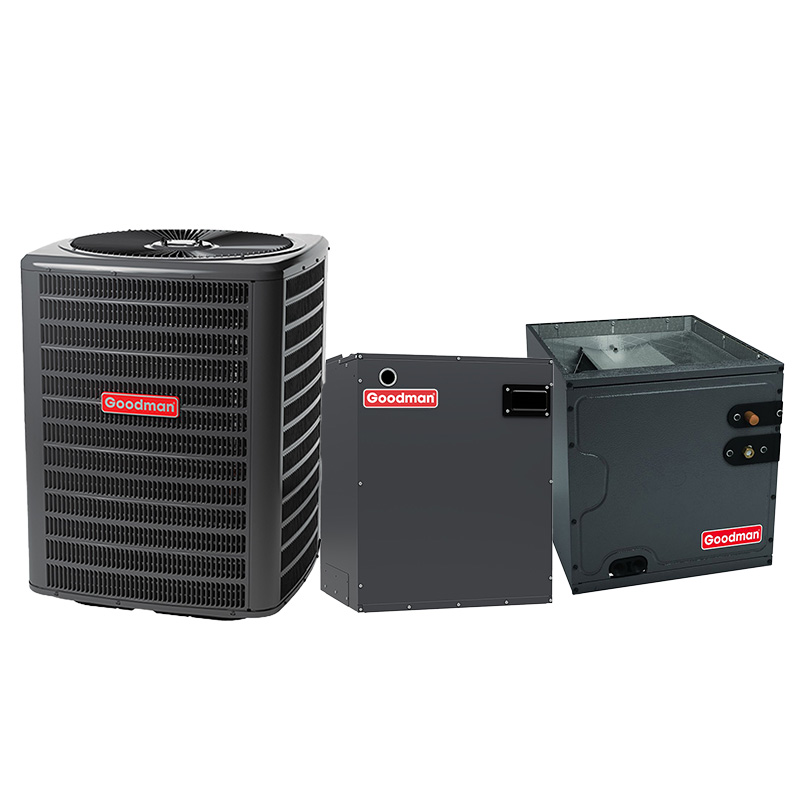
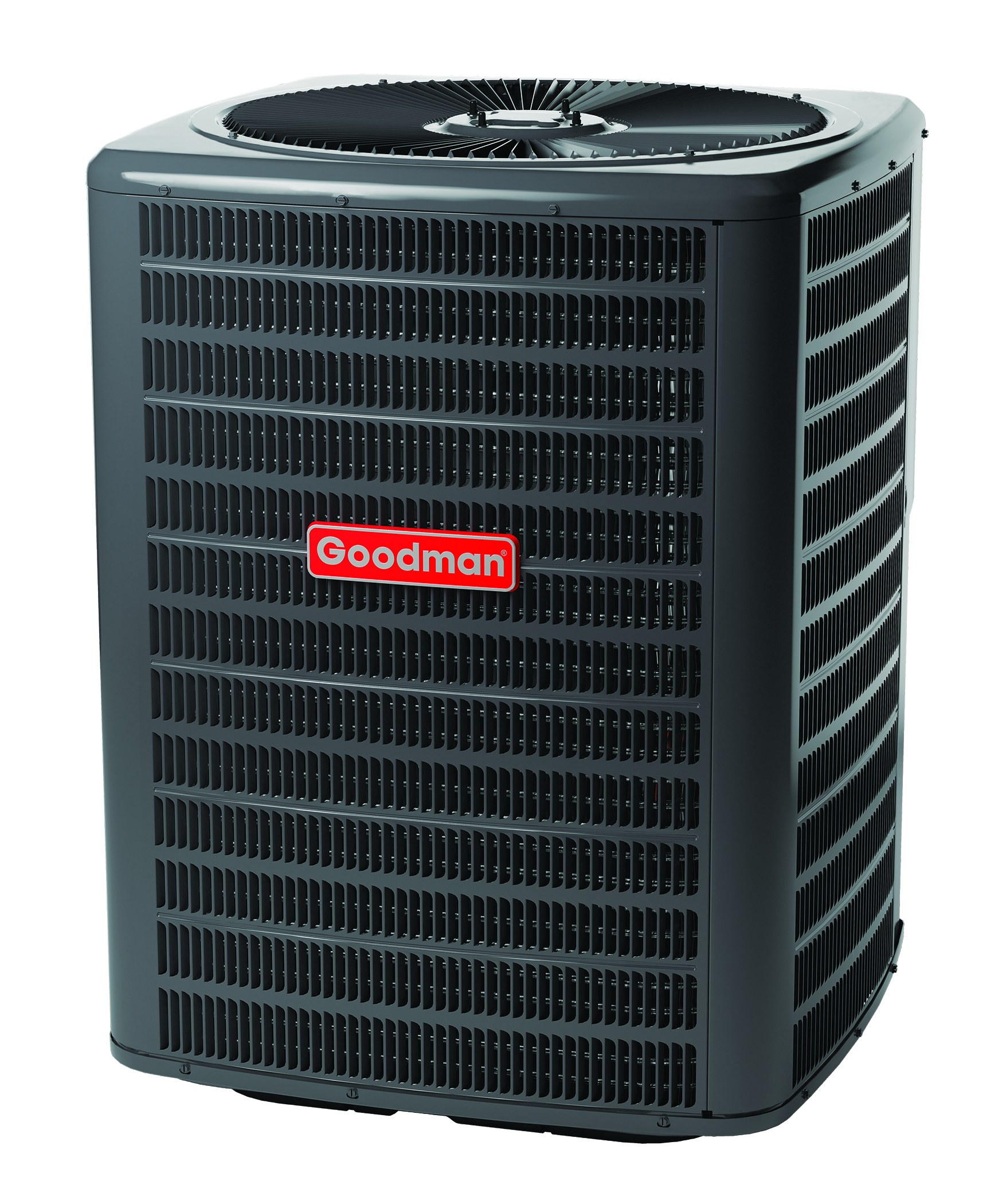
Goodman AC & Air Handler | 2 Ton 18.5 SEER2 2 Stage AC Upflow | R32
View on AC Direct see your lowest price →Check current price on AC Direct →
Key features
- 18.5 SEER2 efficiency rating qualifies for current federal energy-efficiency tax credits
- Two-stage compressor reduces humidity and temperature swings versus single-stage operation
- R-32 refrigerant: single-component, lower global warming potential than R-410A
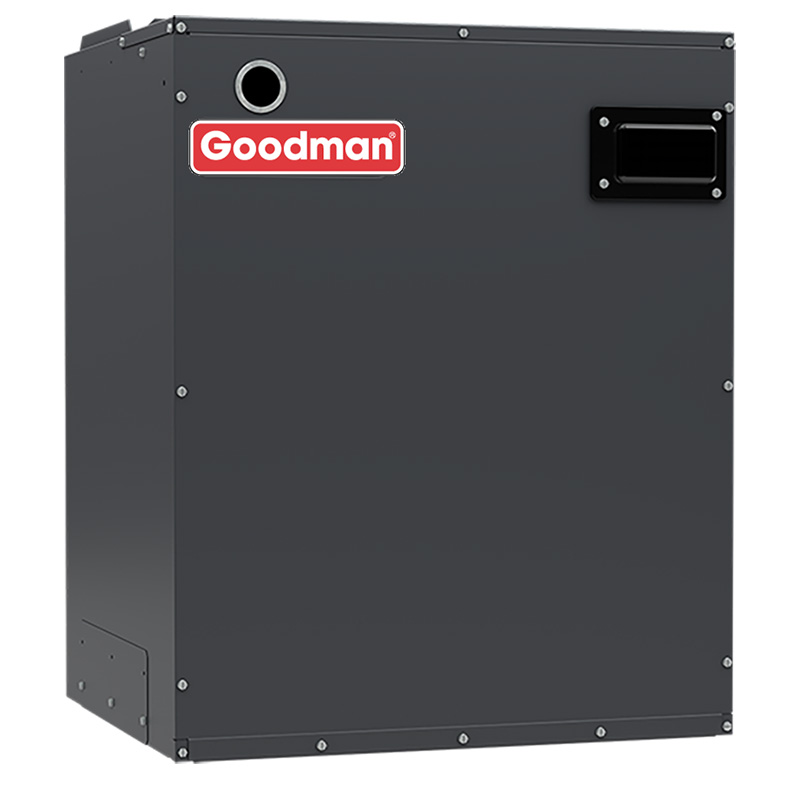
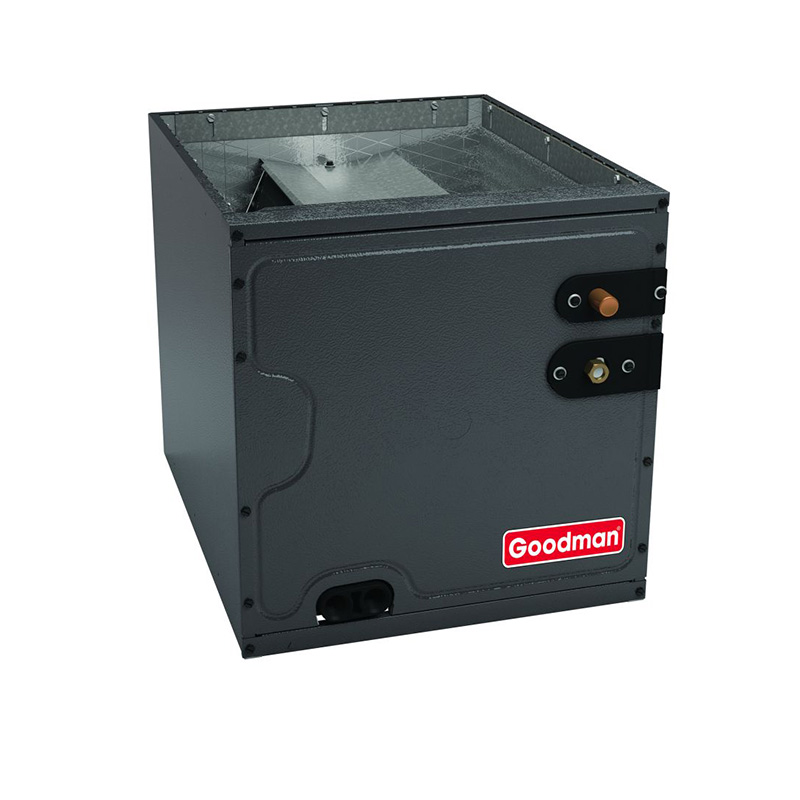
- Upflow air handler configuration suits basement and closet installations with overhead ductwork
- 2-ton capacity targets homes and zones in roughly the 900-to-1,200-square-foot range
- Priced 15 to 25 percent below comparable Carrier, Trane, and Lennox two-stage systems
About this system
The Goodman 2-ton, 18.5 SEER2 two-stage air conditioner paired with an upflow air handler brings genuine high-efficiency cooling to smaller homes and conditioned spaces in the 900-to-1,200-square-foot range. At 18.5 SEER2, this system clears the threshold that qualifies it for federal tax credits under current energy-efficiency incentive rules, which matters when you are budgeting a replacement project. Two-stage operation means the compressor runs at a reduced capacity most of the time, cycling up to full output only on the hottest days, which keeps indoor humidity lower and reduces the temperature swings that single-stage units tend to produce.
R-32 refrigerant is a forward-looking choice here. It has a global warming potential roughly one-third that of R-410A, and its single-component makeup simplifies leak detection and recharge. As R-410A production is phased down under EPA rules, having a system already on R-32 reduces future refrigerant cost uncertainty. The upflow configuration suits the most common residential installation scenario: a unit in a basement, closet, or utility room blowing conditioned air upward into the duct system. Buyers should confirm ceiling clearances and duct orientation before ordering, since this is not a configuration you can easily change in the field.
Goodman prices this system roughly 15 to 25 percent below equivalent Carrier, Trane, and Lennox two-stage equipment, which is the brand’s primary appeal. That savings is real, but so is the caveat: Goodman’s longevity record leans heavily on careful installation and early maintenance. Buyers who pair this unit with an experienced, detail-oriented installer and commit to annual tune-ups are most likely to see it perform close to its rated lifespan.
This Goodman two-stage system delivers legitimate high-efficiency performance and a modern refrigerant at a price point that is hard to ignore. The trade-off is a brand reliability record that trails premium competitors, with capacitor failures, evaporator coil leaks, and shorter average compressor life documented across owner reviews. Buyers who prioritize upfront cost savings and can commit to consistent professional maintenance will get the most from this system.
Overall score is the average of the five ratings above.
What we like
- 18.5 SEER2 rating supports meaningful energy savings over older or lower-efficiency replacements
- Two-stage operation improves comfort and dehumidification compared to single-stage equipment at this price
- R-32 refrigerant positions the system well as R-410A is phased down, reducing future recharge cost risk
- Priced 15 to 25 percent below comparable premium-brand two-stage systems, leaving budget for a quality install
- Widely available through HVAC distributors, so parts and service technicians familiar with the platform are not hard to find
Trade-offs
- Compressor lifespan averages 10 to 14 years, notably shorter than the 15 to 20 years documented for premium-brand counterparts
- Dual-run capacitor failures are the most commonly reported repair, typically appearing after year 7 and costing 300 to 600 dollars per event
- Evaporator coil leaks appear in a meaningful share of owner accounts, and a minority of owners report refrigerant leaks within the first year
- ConsumerAffairs scores sit around 2.5 out of 5, with recurring complaints about repair costs accumulating after the midpoint of the warranty period
What homeowners and pros say about Goodman
Homeowners reviewing Goodman equipment on platforms like ConsumerAffairs rate the brand around 2.5 out of 5, a score shaped in part by the complaint-heavy nature of that channel but also by a consistent pattern of repair costs rising after roughly year 7. Dual-run capacitor failures are the most frequently mentioned specific issue, usually a manageable 300-to-600-dollar fix but one that catches owners off guard if they were expecting a trouble-free decade. Evaporator coil leaks appear in enough owner accounts to count as a known risk rather than an outlier, and a smaller group reports refrigerant issues within the first year, which investigators typically trace back to installation or initial charge problems rather than manufacturing defects. Google dealer reviews land around 3.8 out of 5, where the recurring positive theme is straightforward: buyers got a capable system at a price that left room in the budget for other project costs.
HVAC technicians who work on Goodman equipment regularly tend to be pragmatic about it. They note that the hardware is serviceable and parts are easy to source, but they are consistent in saying that a Goodman unit installed with the same care as a premium-brand unit will outperform a carelessly installed Carrier or Trane. For this two-stage R-32 system specifically, the compressor lifespan question is the most honest dividing line: Goodman compressors average 10 to 14 years in documented field experience, compared to 15 to 20 years for top-tier competitors. For a buyer replacing a system in a home they plan to sell in seven to ten years, that gap matters less. For someone expecting 18 to 20 years of service from a single installation, it is a real consideration worth pricing into the decision.
Sources: ConsumerAffairs Goodman owner reviews, AHRI Directory of Certified Product Performance, U.S. DOE appliance and equipment efficiency standards, Goodman product specification sheets.
What it costs to run
At 18.5 SEER2, cooling this 2-ton system for a typical 1200-hour cooling season at the U.S. average electricity rate of $0.17/kWh works out to roughly $265 per year in cooling, about $100 less per year than a minimum-efficiency 13.4 SEER2 unit of the same size. Your real cost depends on your climate and local rate.
Method: (24,000 BTU/hr ÷ 18.5 SEER2) × 1200 hours ÷ 1000 × $0.17/kWh. Rate source: U.S. EIA average; cooling hours: moderate-climate estimate.
How it compares
| Brand | Comparable model | SEER2 | Stage | Price position |
|---|---|---|---|---|
| Goodman | 2-Ton 18.5 SEER2 Two-Stage Upflow R-32 | 18.5 | Two-stage | Value pick |
| Carrier | Comfort 18 (24ACC6 series) | 18 | Two-stage | Typically 15 to 25 percent more than Goodman |
| Trane | XR18 series | 18 | Two-stage | Typically 15 to 25 percent more than Goodman |
| Lennox | Merit ML18XC2 series | 18 | Two-stage | Typically 15 to 25 percent more than Goodman |
Competitor rows are comparable single-stage units at similar efficiency; price is relative position, not a quote.
Questions about this system
Does this system qualify for the federal energy-efficiency tax credit?
Yes. At 18.5 SEER2, this system meets the efficiency threshold for the 25C federal tax credit as currently structured. Consult a tax professional to confirm eligibility based on your specific situation and installation date, since credit rules can change.
Why does this unit use R-32 instead of R-410A, and does that affect service costs?
R-32 is a single-component refrigerant with a lower global warming potential than R-410A, and its use aligns with EPA phase-down rules for high-GWP refrigerants. Most technicians working on newer equipment are already certified to handle it, though you should confirm your installer has the correct equipment and certification before scheduling service.
What repairs should I budget for over the life of this system?
The most commonly reported failure on Goodman equipment is the dual-run capacitor, which typically runs 300 to 600 dollars to diagnose and replace. Evaporator coil leaks and compressor wear are also documented issues, with compressors averaging 10 to 14 years on Goodman units. Setting aside a modest annual maintenance budget and having the system inspected yearly gives you the best chance of catching these before they become larger problems.
Is the upflow configuration the right choice for my installation?
Upflow means the air handler pulls return air in from the bottom and discharges conditioned air upward into the supply duct. This is correct for basements, ground-floor utility closets, and similar installations where supply ducts run overhead. If your ducts come in from above and exit below, you need a downflow unit instead, and this configuration cannot be field-converted.
How much does installation quality actually affect how long this system lasts?
For Goodman equipment specifically, technicians consistently point to installation quality as the single largest variable in long-term performance. Proper refrigerant charging, correct airflow setup, and tight duct connections at commissioning directly affect whether issues like refrigerant leaks and coil stress show up early. Getting multiple installer quotes and asking about their commissioning process is time well spent with this brand.
Specifications
| Cooling capacity | 2 Ton |
| Efficiency | 18.5 SEER2 |
| Configuration | Upflow |
| Refrigerant | R-32 |