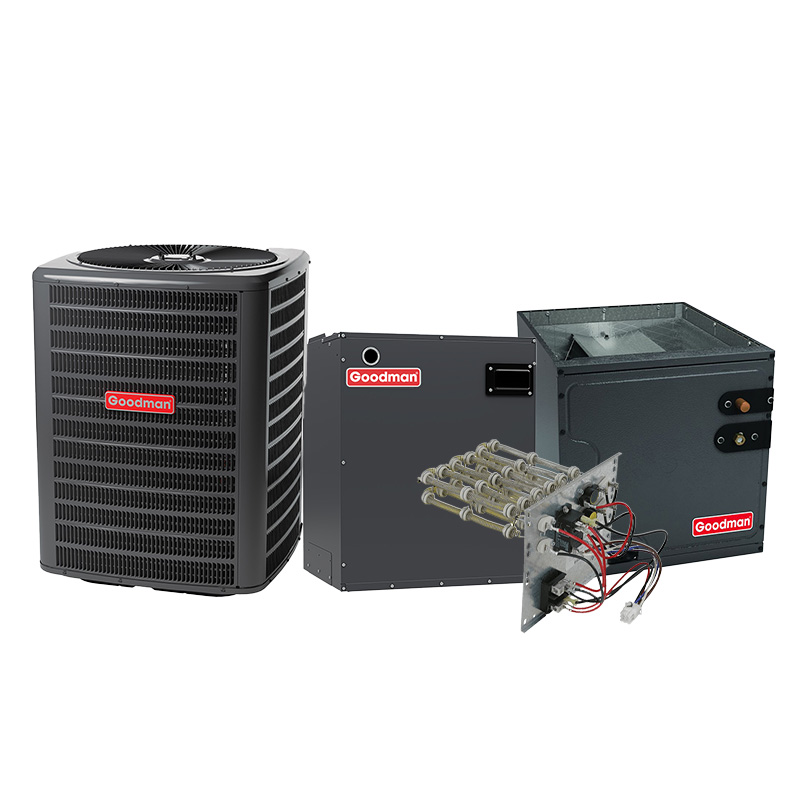
Goodman AC & Air Handler | 2 Ton 18 SEER2 2 Stage AC With Electric Heat – Upflow R32 | For Very Mild Winter Climates
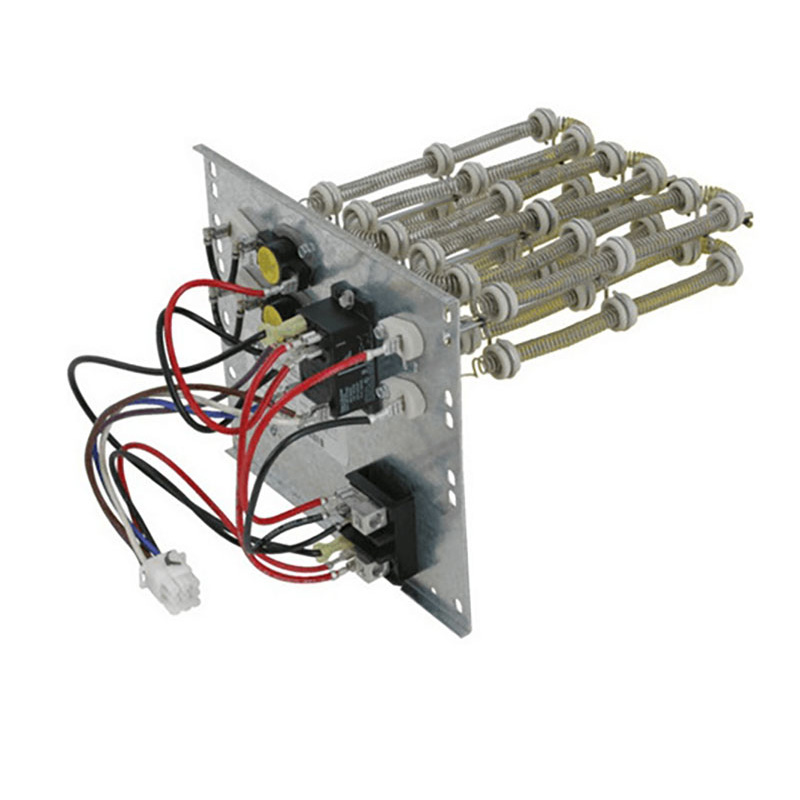
View on AC Direct see your lowest price →Check current price on AC Direct →
Key features
- 18 SEER2 two-stage compressor for better humidity control and part-load efficiency
- R-32 refrigerant with lower global-warming potential than R-410A
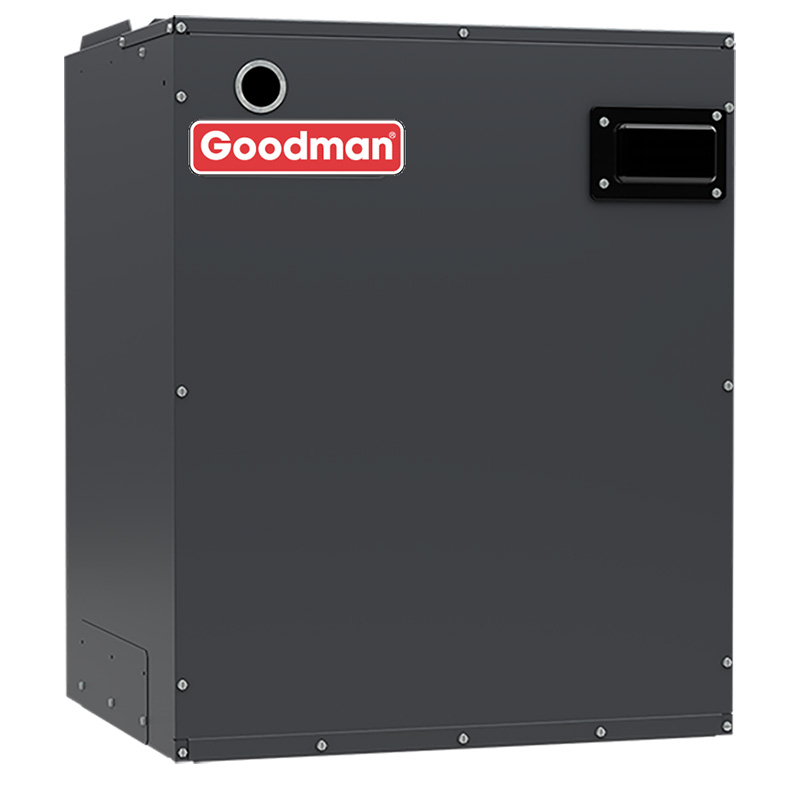
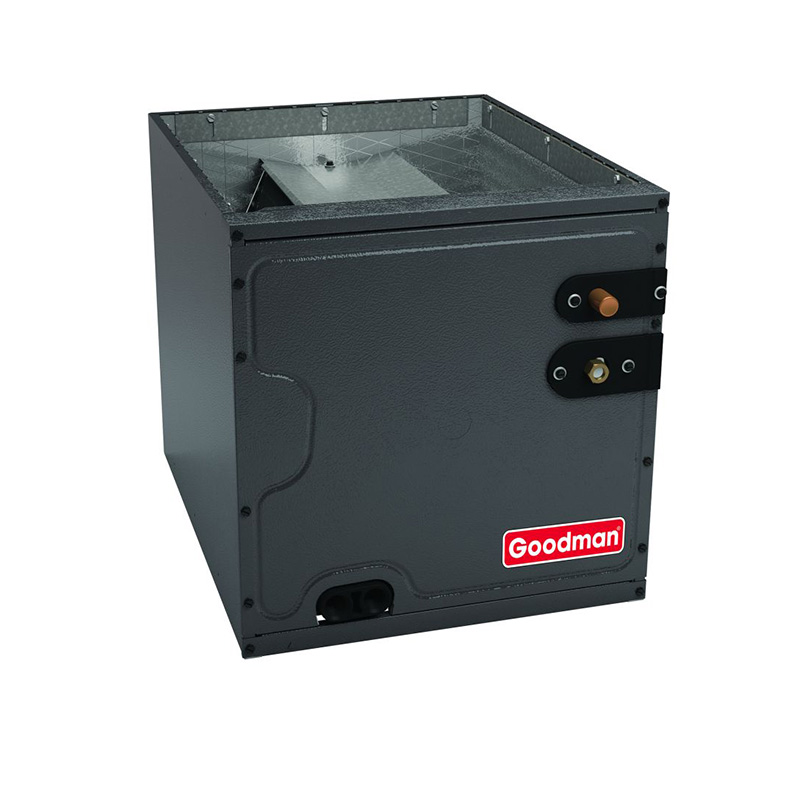
- Upflow air handler configuration for basement, closet, or utility room installs
- Electric heat strips included, suited to very mild winter climates only
- 2-ton capacity designed for smaller, well-insulated homes
- Goodman value pricing, typically 15 to 25 percent below Carrier, Trane, and Lennox equivalents
About this system
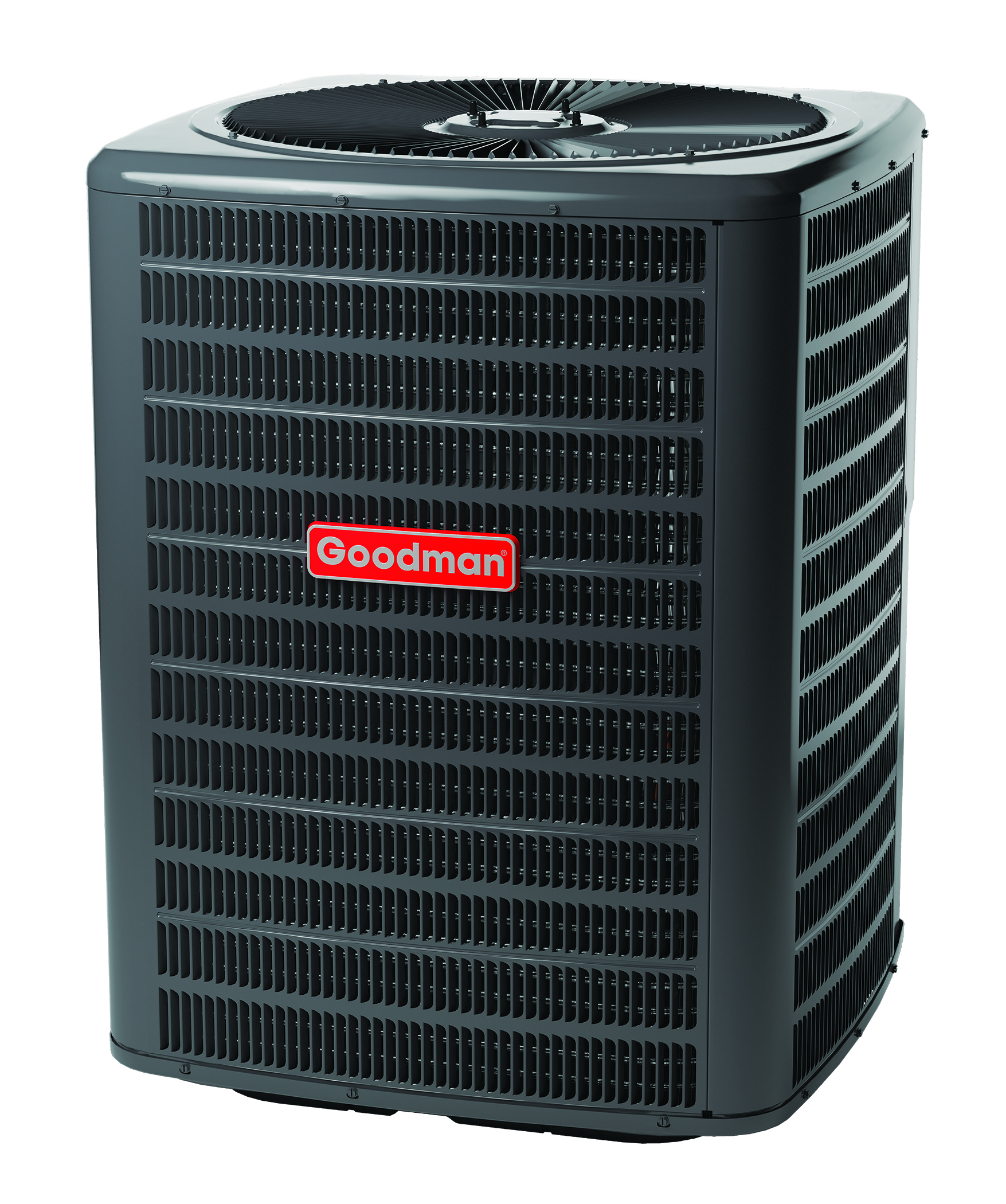
This Goodman 2-ton, 18 SEER2 two-stage system pairs a central air conditioner with an upflow electric air handler designed for regions where winters stay mild enough that gas heat is unnecessary. The two-stage compressor is the standout spec here: it runs at a reduced capacity most of the time, cycling to full output only during the hottest days. That behavior keeps humidity lower, avoids the blast-and-coast pattern of single-stage units, and is a big reason the system can reach an 18 SEER2 rating without variable-speed technology.
The R-32 refrigerant charge is worth understanding before you buy. R-32 has a lower global-warming potential than the R-410A it replaces and is more thermodynamically efficient, but it requires technicians who are specifically certified to handle it. In markets where R-32 service experience is still limited, that can mean longer wait times or a smaller pool of qualified technicians. The upflow configuration sends conditioned air upward through the plenum, making it the right fit for systems installed in a basement, closet, or utility room where the ductwork runs above the unit. Homeowners in coastal California, the Gulf Coast, southern Texas, or similar climates where a resistance electric strip provides all the heat the house ever needs will find this package sized and configured appropriately for their situation.
At 2 tons, this unit is suited to well-insulated homes roughly in the 900 to 1,300 square foot range, though a proper Manual J load calculation by a licensed contractor should always confirm sizing. Undersizing or oversizing by even half a ton can undercut efficiency gains and shorten equipment life regardless of the brand on the label.
This system delivers a genuinely competitive efficiency rating and a humidity-controlling two-stage compressor at a price point that undercuts most major brands by a meaningful margin. The trade-off is a reliability track record and compressor lifespan that fall short of premium competitors, and performance will depend heavily on who installs it and how well they do so. For buyers in mild climates who want more than single-stage cooling and are working within a tighter budget, it earns consideration with clear eyes about its limitations.
Overall score is the average of the five ratings above.
What we like
- 18 SEER2 is a strong efficiency tier that reduces cooling costs compared to older or entry-level equipment
- Two-stage operation lowers indoor humidity more effectively than single-stage alternatives at similar price points
- R-32 refrigerant is more environmentally responsible than R-410A and slightly more efficient per pound
- Upflow electric air handler simplifies installation in homes without gas lines or with existing upflow duct layouts
- Price point is typically 15 to 25 percent below comparable Carrier, Trane, and Lennox configurations
Trade-offs
- Compressor lifespan averages 10 to 14 years versus 15 to 20 years reported for premium brands
- Evaporator coil leaks appear in a meaningful share of owner reviews and can be a costly mid-life repair
- R-32 certification requirements narrow the field of qualified service technicians in some markets
- ConsumerAffairs score of roughly 2.5 out of 5 reflects a recurring theme of rising repair costs after year 7
What homeowners and pros say about Goodman
Goodman earns consistent praise for one thing above all else: getting capable equipment into homes at a price that competing brands cannot match at the same efficiency tier. Google dealer reviews land around 3.8 out of 5 across hundreds of reviews per location, and the most repeated positive comment is that buyers got more SEER2 or more stages of compression for their money than they expected. For this particular system, that means two-stage cooling and an 18 SEER2 rating without stretching into premium-brand territory. HVAC technicians who install Goodman regularly tend to echo that sentiment while adding an important qualifier: the brand rewards a careful installation more than most. Refrigerant charge accuracy, proper airflow setup, and a secure electrical connection at the dual-run capacitor are areas where a rushed install shows up in early service calls.
The harder truths come through in the ConsumerAffairs data, where Goodman scores approximately 2.5 out of 5 on a channel that skews toward dissatisfied owners. The recurring pattern there is not catastrophic early failure but rather repair costs that begin climbing noticeably after the seven-year mark. Dual-run capacitor replacements are the most common call, usually resolved for 300 to 600 dollars, and they are reported often enough to budget for at least one over the system’s life. Evaporator coil leaks show up in a meaningful portion of owner accounts and are a more expensive repair. Compressor longevity sits in the 10 to 14 year range on average, which is below the 15 to 20 years owners of Trane and Carrier equipment tend to report. A small minority of owners have reported refrigerant leaks in year one, which technician feedback consistently ties to charge or connection errors at installation rather than factory defects. For this R-32 system specifically, verifying your installer holds current R-32 certification is not optional, and it is worth asking directly before signing any contract.
Sources: ConsumerAffairs Goodman owner reviews, AHRI Directory of Certified Product Performance, U.S. DOE appliance and equipment efficiency standards, Goodman product specification sheets.
What it costs to run
At 18 SEER2, cooling this 2-ton system for a typical 1200-hour cooling season at the U.S. average electricity rate of $0.17/kWh works out to roughly $272 per year in cooling, about $93 less per year than a minimum-efficiency 13.4 SEER2 unit of the same size. Your real cost depends on your climate and local rate.
Method: (24,000 BTU/hr ÷ 18 SEER2) × 1200 hours ÷ 1000 × $0.17/kWh. Rate source: U.S. EIA average; cooling hours: moderate-climate estimate.
How it compares
| Brand | Comparable model | SEER2 | Stage | Price position |
|---|---|---|---|---|
| Goodman | 2-Ton 18 SEER2 Two-Stage AC with Upflow Electric Air Handler (R-32) | 18 | Two-stage | Value pick |
| Carrier | Comfort 18 Series (24ACC6) | 18 | Two-stage | Typically 15 to 25 percent more than Goodman |
| Trane | XR18 | 18 | Two-stage | Typically 15 to 25 percent more than Goodman |
| Lennox | Merit ML18XC2 | 18 | Two-stage | Typically 15 to 25 percent more than Goodman |
Competitor rows are comparable single-stage units at similar efficiency; price is relative position, not a quote.
Questions about this system
Is 2 tons the right size for my home, or do I need a load calculation?
A Manual J load calculation performed by a licensed HVAC contractor is the only reliable way to confirm sizing for your specific home. General square footage rules of thumb are a starting point only and can be thrown off by ceiling height, insulation levels, window area, and local climate. An incorrectly sized unit, even a high-efficiency one, will cycle poorly, wear faster, and cost more to run.
Why does this system use R-32 refrigerant, and does that affect who can service it?
R-32 has a lower global-warming potential than R-410A and requires less refrigerant by weight for the same cooling output. However, it is classified as mildly flammable, so technicians must hold specific R-32 handling certification to service it legally. In some markets, especially smaller towns, that can limit your service options, so it is worth confirming local R-32 availability before purchasing.
What does two-stage actually mean for comfort, and is it worth the step up from single-stage?
A two-stage compressor runs at a lower capacity, typically around 65 to 70 percent, during moderate conditions and ramps to full output only when outdoor heat demands it. Longer, lower-intensity run cycles remove more moisture from the air than short full-blast cycles do, which noticeably reduces that clammy feeling in humid climates. For most buyers in warm, humid regions, the comfort improvement justifies the modest cost difference over single-stage equipment.
The capacitor failure issue keeps coming up in Goodman reviews. How worried should I be, and what does it cost to fix?
Dual-run capacitor failure is the most commonly reported repair on Goodman equipment and is not unique to Goodman, though it appears frequently enough in owner reports to be worth knowing about. The good news is that it is one of the least expensive HVAC repairs, typically running in the 300 to 600 dollar range including labor. Keeping a service agreement that includes an annual inspection can catch a weakening capacitor before it causes a full breakdown.
This is listed for very mild winter climates. What happens if we get an unexpectedly cold night?
The electric heat strips in the air handler will handle occasional cold snaps, but electric resistance heat is expensive to operate per hour compared to a heat pump or gas furnace. If your region regularly sees temperatures below about 35 to 40 degrees Fahrenheit, the operating costs of electric-only heat will add up quickly and a heat pump system would likely serve you better. For true mild-winter climates where heating is rarely needed, electric strips are a practical and cost-effective solution.
Specifications
| Cooling capacity | 2 Ton |
| Efficiency | 18 SEER2 |
| Configuration | Upflow |
| Refrigerant | R-32 |