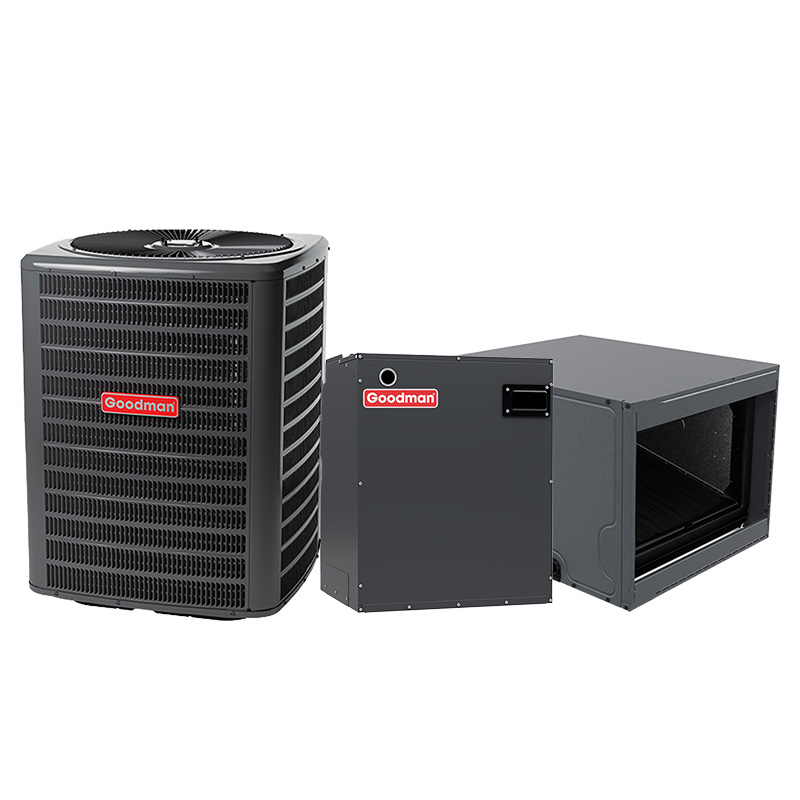
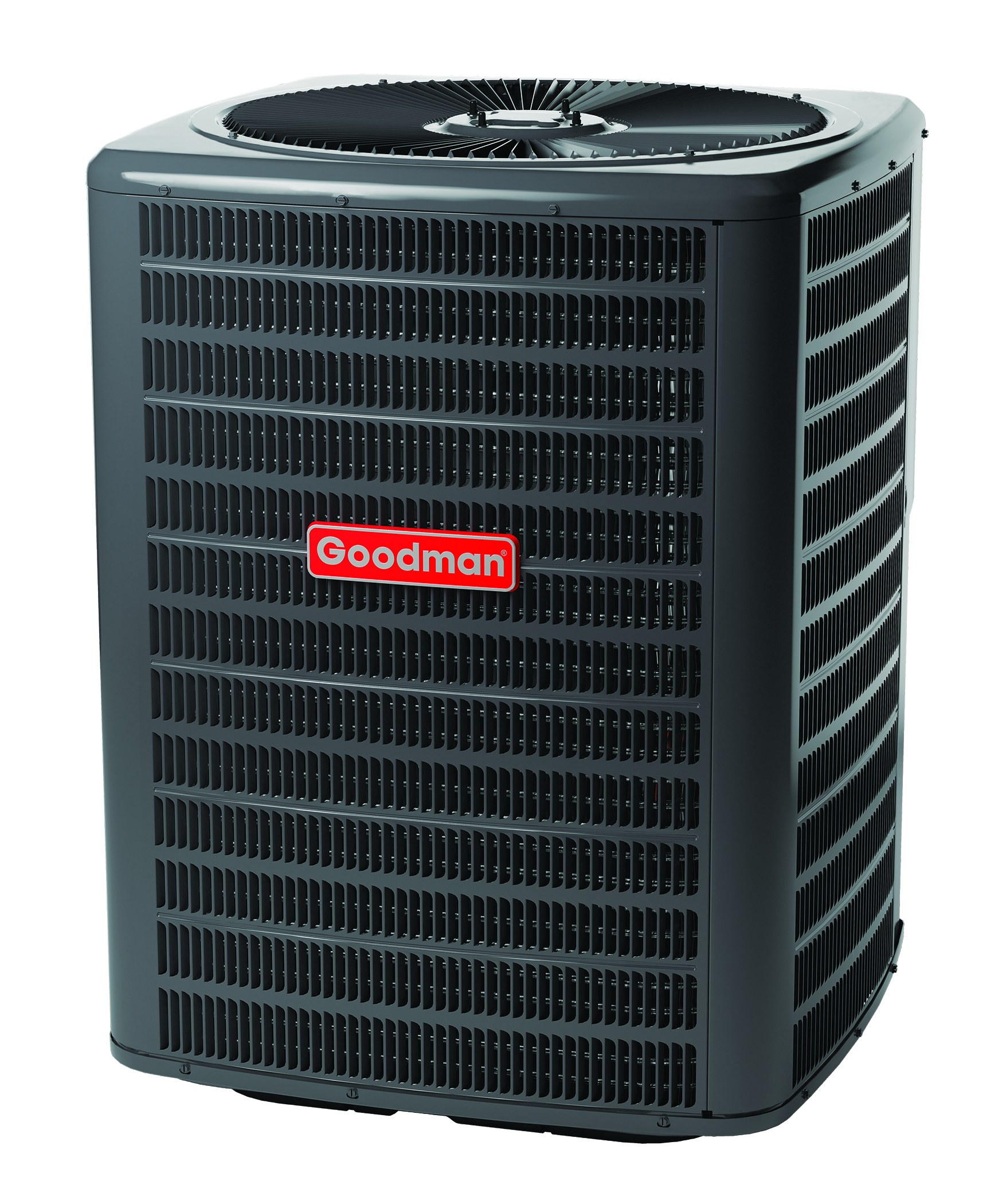
Goodman AC & Air Handler | 3 Ton 17.5 SEER2 2 Stage AC Horizontal | R32
View on AC Direct see your lowest price →Check current price on AC Direct →
Key features
- 17.5 SEER2 two-stage cooling for improved humidity control and part-load efficiency
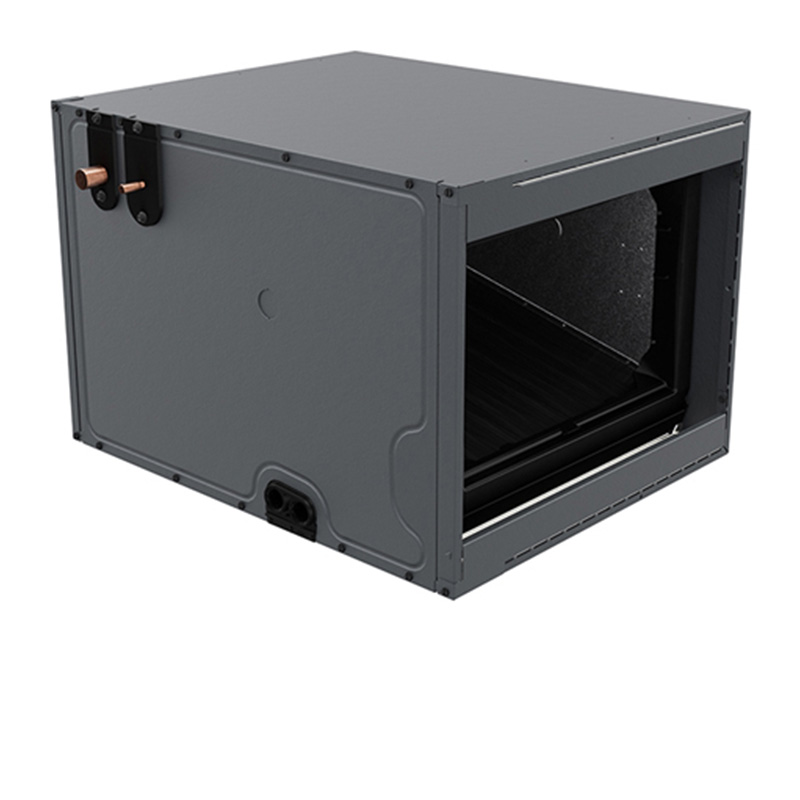
- Horizontal configuration designed for crawlspace or attic installations with restricted vertical space
- R-32 refrigerant with lower global warming potential than R-410A
- Two-stage compressor runs at reduced capacity during milder conditions, reducing cycling wear
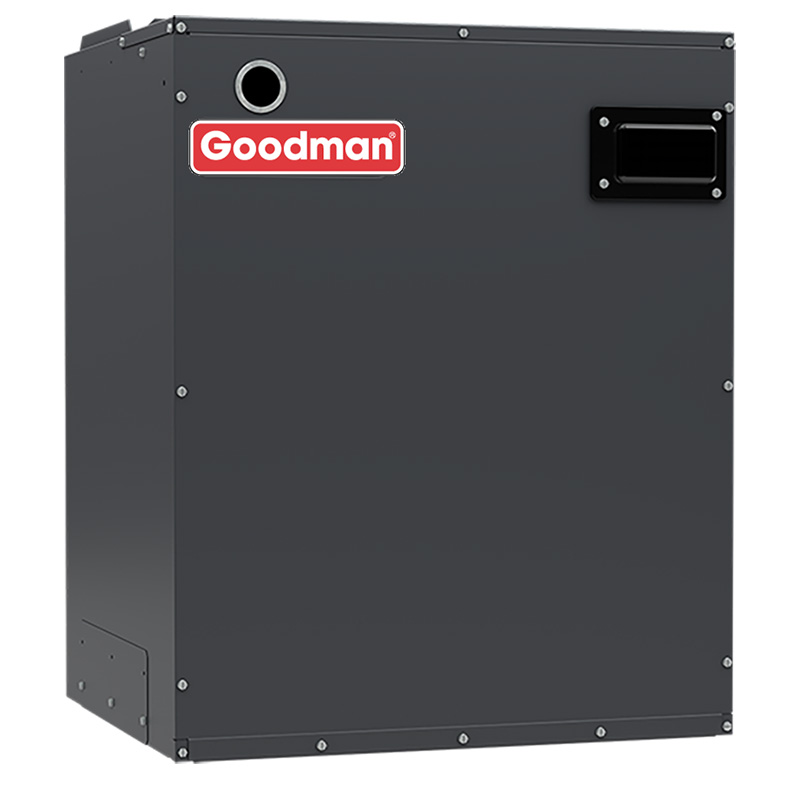
- Matched air handler included, factory-optimized for rated efficiency and simplified commissioning
- Priced 15 to 25 percent below comparable Trane, Carrier, and Lennox systems at similar SEER2
About this system
The Goodman 3-ton, 17.5 SEER2 two-stage horizontal air conditioner paired with a matching air handler is built for homeowners who want meaningful efficiency gains over a standard 14 or 15 SEER2 system without paying the premium that Trane, Lennox, or Carrier command for similar output. The horizontal configuration makes this unit the right call for crawlspace installations or attic setups where vertical clearance is limited, and the two-stage compressor means the system runs at a lower capacity most of the time, cycling less aggressively, reducing humidity more effectively, and putting less wear on components than a single-stage unit would.
R-32 refrigerant is the forward-looking choice here. It carries a significantly lower global warming potential than the R-410A it replaces across the industry, and its efficiency profile is slightly better per unit of cooling delivered. For buyers in markets already phasing out R-410A equipment, choosing R-32 now avoids a costly refrigerant crossover problem down the road. At 17.5 SEER2, this system sits solidly in the high-efficiency tier without reaching into the variable-speed territory where sticker prices climb steeply. It is a realistic match for moderate to warm climates, mid-size homes with good duct systems, and households that run the AC heavily from late spring through early fall.
This Goodman combo gives homeowners a genuine two-stage, R-32 system at a price point that comparable premium brands rarely touch, making it a legitimate contender for budget-conscious buyers who do their homework on installer selection. The efficiency and feature set are real, but Goodman's documented weak spots around capacitor failures, evaporator coil leaks, and shorter average compressor life mean long-term cost of ownership depends heavily on who puts it in and how diligently it is maintained. It is not the last AC you will ever buy, but for many households it is a smart first one.
Overall score is the average of the five ratings above.
What we like
- 17.5 SEER2 rating delivers measurable energy savings over entry-level single-stage alternatives
- Two-stage operation improves dehumidification and comfort during shoulder-season conditions
- R-32 refrigerant positions the system well ahead of ongoing industry phase-outs
- Horizontal air handler configuration solves a real installation problem for attic and crawlspace homes
- Entry price is 15 to 25 percent below Trane, Lennox, and Carrier equivalents, freeing budget for labor quality
Trade-offs
- Dual-run capacitors are the most commonly reported failure, typically showing up within the first several years and costing 300 to 600 dollars to repair
- A meaningful share of owners report evaporator coil leaks, which can be expensive to address outside of warranty
- Compressor lifespan averages 10 to 14 years versus 15 to 20 years typical of premium brands, affecting long-term value calculations
- A minority of owners have reported refrigerant leaks within the first year, generally traced to installation or initial charge errors rather than the unit itself
What homeowners and pros say about Goodman
Homeowners who share their experiences with Goodman equipment on ConsumerAffairs give the brand roughly 2.5 out of 5 stars, and it is worth understanding what drives that score. That platform skews heavily toward people motivated enough by a problem to write a review, and the recurring theme is repair costs that begin climbing after about year seven. Dual-run capacitor failures show up frequently in those accounts, evaporator coil leaks appear in a meaningful share of reports, and some owners describe refrigerant leaks that surfaced within the first year, most of which technicians attribute to installation or initial charge errors rather than a defective unit. On Google, where dealer reviews reflect a broader cross-section of customers, Goodman averages around 3.8 out of 5 across locations, with affordability cited as the most consistent praise.
HVAC professionals tend to view Goodman with a practical eye. Most will install it without hesitation, particularly for customers working with a tight budget, but they are consistent in one piece of advice: the quality of the contractor matters more with Goodman than with a premium brand. Because Goodman’s performance and longevity lean harder on correct installation, an improperly charged system or a poorly brazed line set will accelerate exactly the failure modes owners complain about. For this specific horizontal R-32 two-stage system, that advice carries extra weight. The configuration is not the simplest install, R-32 handling requires proper certification, and the two-stage commissioning step needs to be verified. Get those right and you have a capable, efficient system at a price point the big three rarely match. Skip that step and you may be validating every low-star review.
Sources: ConsumerAffairs Goodman owner reviews, AHRI Directory of Certified Product Performance, U.S. DOE appliance and equipment efficiency standards, Goodman product specification sheets.
What it costs to run
At 17.5 SEER2, cooling this 3-ton system for a typical 1200-hour cooling season at the U.S. average electricity rate of $0.17/kWh works out to roughly $420 per year in cooling, about $128 less per year than a minimum-efficiency 13.4 SEER2 unit of the same size. Your real cost depends on your climate and local rate.
Method: (36,000 BTU/hr ÷ 17.5 SEER2) × 1200 hours ÷ 1000 × $0.17/kWh. Rate source: U.S. EIA average; cooling hours: moderate-climate estimate.
How it compares
| Brand | Comparable model | SEER2 | Stage | Price position |
|---|---|---|---|---|
| Goodman | 3 Ton 17.5 SEER2 Two-Stage Horizontal with Air Handler | 17.5 | Two-stage | Value pick |
| Carrier | Performance 17 Series (24ACC7) | 17 | Single-stage | Typically 15 to 25 percent more than this Goodman |
| Trane | XR17 | 17 | Single-stage | Typically 15 to 25 percent more than this Goodman |
| Lennox | Merit 16ACX | 16.5 | Single-stage | Typically 15 to 25 percent more than this Goodman |
Competitor rows are comparable single-stage units at similar efficiency; price is relative position, not a quote.
Questions about this system
Why does the horizontal air handler matter, and can I use a vertical unit instead?
Horizontal air handlers are specifically built to lie on their side, with drain pans and coil orientation designed for that position. Using a vertical unit in a horizontal application risks condensate drainage problems and potential water damage. If your installation space is an attic with low clearance or a crawlspace, the horizontal unit is the correct and necessary choice.
Is R-32 refrigerant harder or more expensive to service than R-410A?
R-32 requires technicians with the appropriate handling certification because it is mildly flammable, though in practice the safety requirements are straightforward for any licensed HVAC professional. Availability is growing rapidly as the industry transitions, and R-32 actually holds efficiency advantages over R-410A. Long term, R-32 is the safer regulatory bet since R-410A is being phased out.
What is the most common repair this Goodman system will need, and what does it typically cost?
Dual-run capacitors are the most frequently cited failure point across Goodman owner accounts. They are a relatively minor electrical component and the repair typically runs 300 to 600 dollars including a service call. The fix is quick, but the frequency of occurrence is higher than what premium-brand owners tend to report.
How much does installation quality actually affect how long this system lasts?
HVAC technicians consistently identify install quality as the single largest variable in Goodman system longevity, even more so than with premium brands. Proper refrigerant charge, correct airflow setup, and tight brazing on the line set all directly affect whether the compressor and coil reach their rated lifespan. Spending more on a reputable installer is not optional if you want the system to perform as rated.
What does the two-stage compressor actually do differently from a standard single-stage unit?
A two-stage compressor operates at a lower capacity setting during mild weather, which means it runs longer cycles at lower output rather than short, aggressive on-off blasts. Longer, gentler cycles pull more moisture out of the air, which is the main reason two-stage systems tend to feel more comfortable in humid climates. The lower-stage operation also reduces mechanical stress compared to constant full-capacity cycling.
Specifications
| Cooling capacity | 3 Ton |
| Efficiency | 17.5 SEER2 |
| Configuration | Horizontal |
| Refrigerant | R-32 |