Goodman AC & Air Handler | 3 Ton 17.5 SEER2 2 Stage AC With Electric Heat – Horizontal R32 | For Very Mild Winter Climates
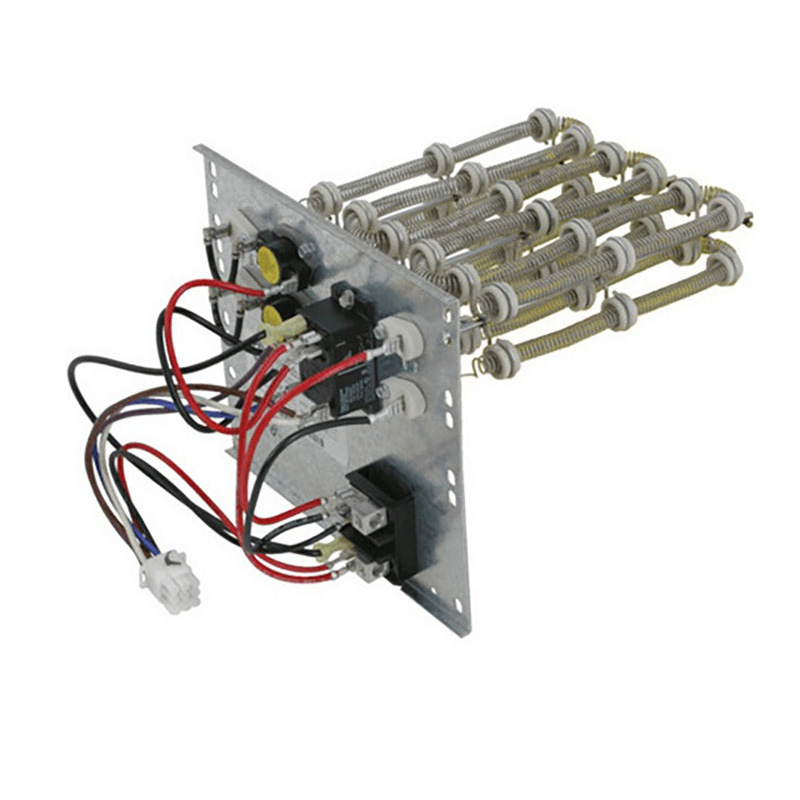
View on AC Direct see your lowest price →Check current price on AC Direct →
Key features
- 17.5 SEER2 two-stage compressor for improved humidity control and part-load efficiency
- Horizontal air handler orientation for attic, crawlspace, or tight utility room installs
- R-32 refrigerant with lower global warming potential than R-410A
- Electric heat strips included, suited to very mild winter climates only
- 3-ton capacity covers roughly 1,400 to 1,900 square feet depending on local load conditions
- Goodman factory warranty covers the compressor and parts for ten years with registration
About this system
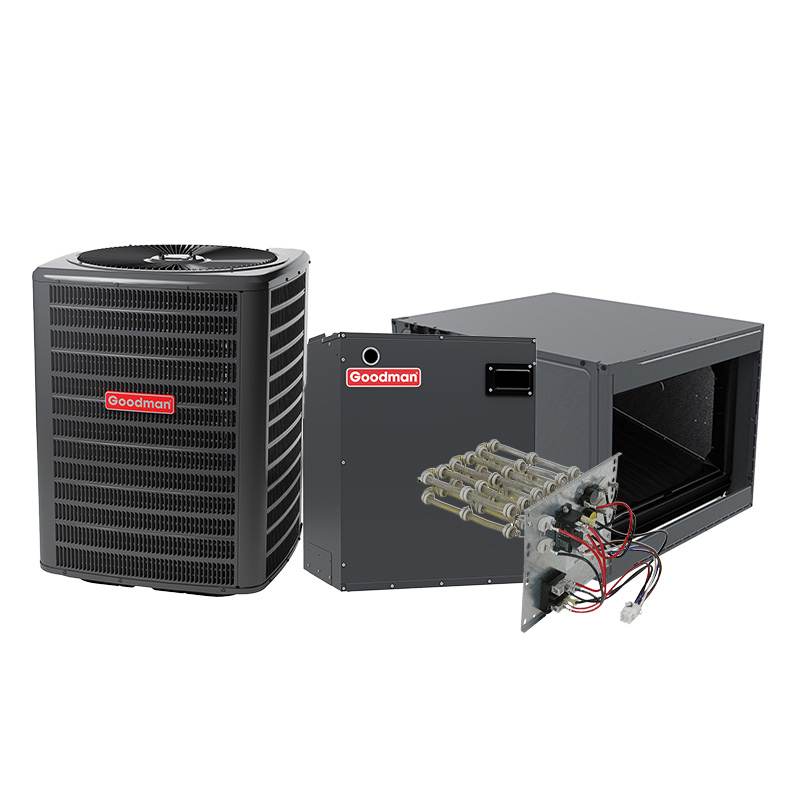
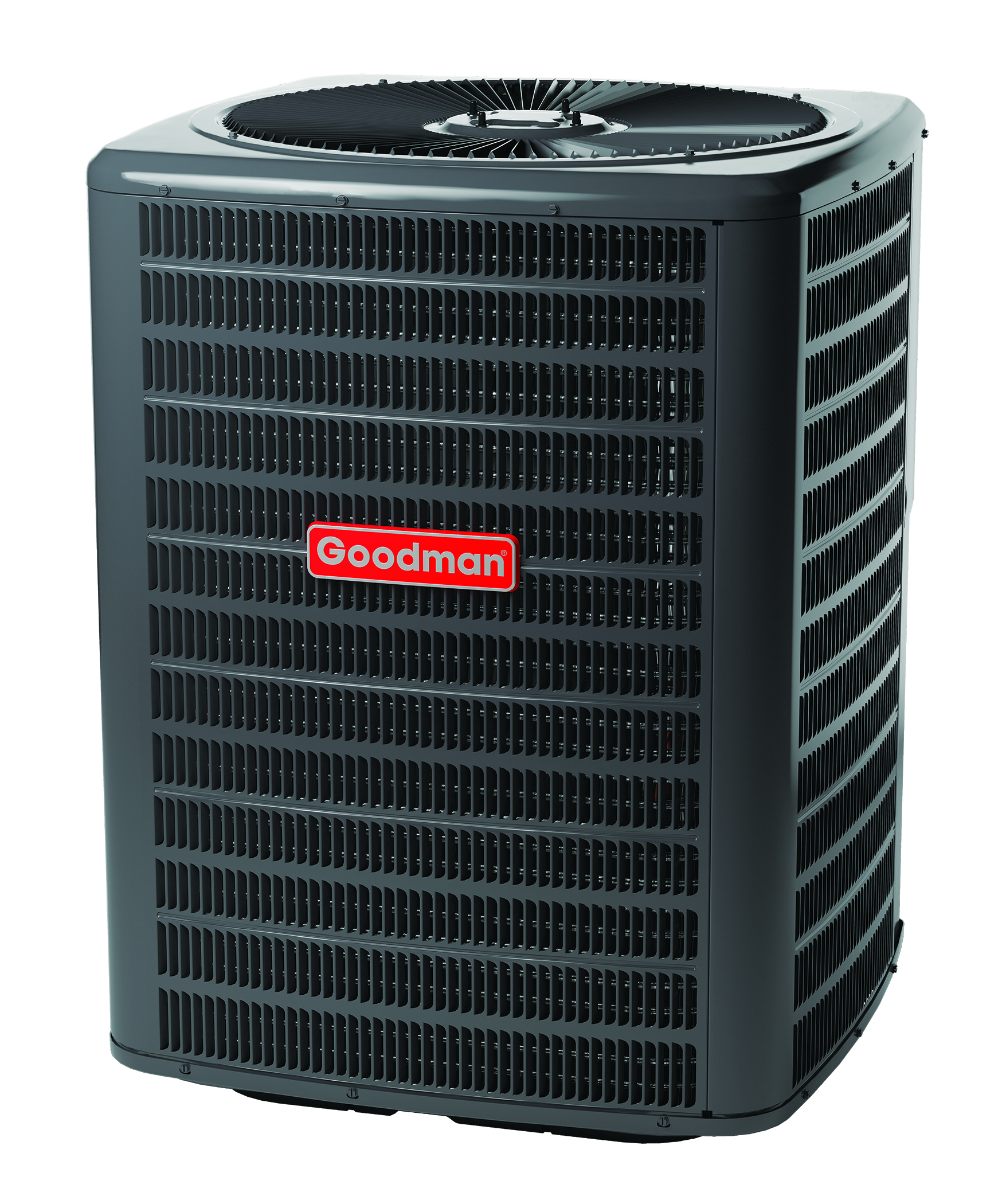
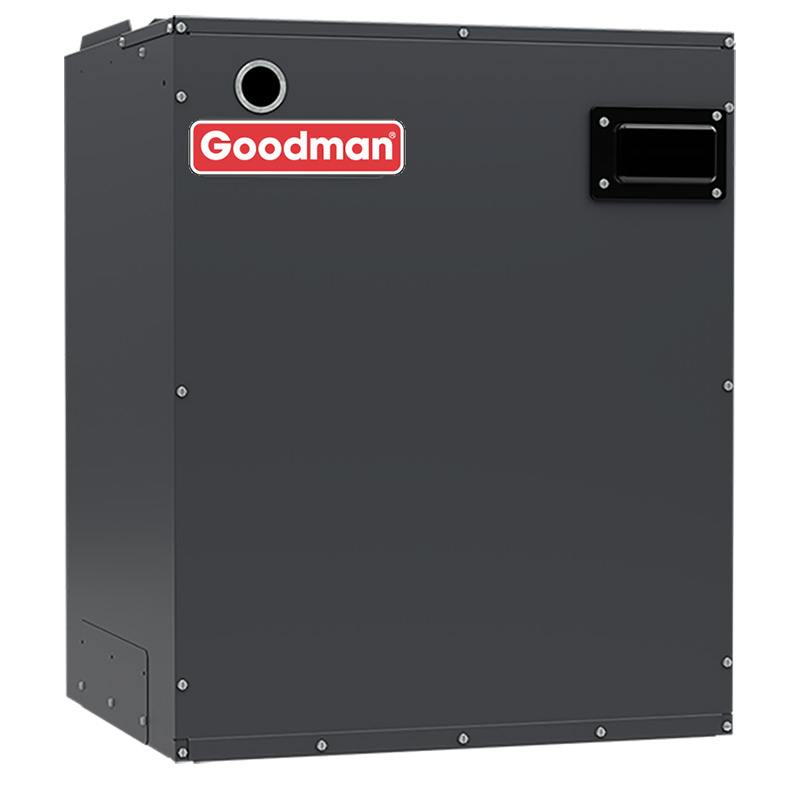
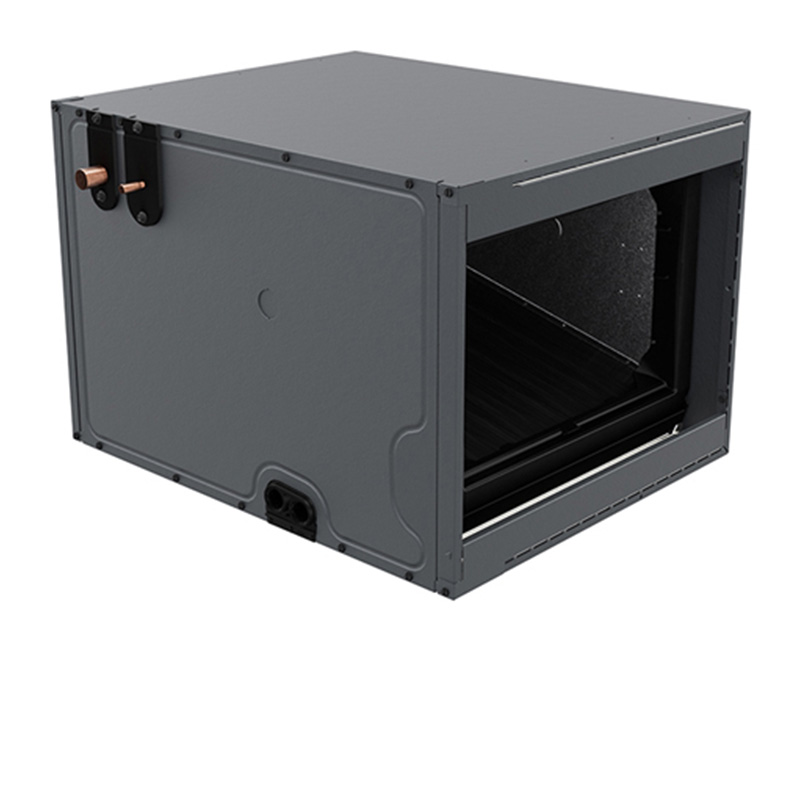
This Goodman 3-ton, 17.5 SEER2 two-stage system pairs a split air conditioner with a horizontal air handler equipped with electric heat strips. The horizontal configuration is the defining characteristic here: the air handler is designed to lie on its side, making it the right choice for attic installations, crawl spaces, or utility areas where a vertical cabinet simply will not fit. The R-32 refrigerant is a meaningful upgrade over legacy R-410A, carrying a lower global warming potential and running at somewhat lower operating pressure, which can reduce line-set stress over time. Two-stage cooling means the compressor runs at a reduced capacity on mild days, cycling less aggressively and holding indoor humidity more consistently than a single-stage unit would.
The electric heat designation tells you something important about who this system is built for: it is intended for climates where winter heating is an afterthought rather than a primary concern. Think coastal Southern California, South Florida, coastal Texas, or similar regions where temperatures rarely drop enough to demand a furnace. The electric resistance strips are simple and dependable for the handful of cold nights these climates see each year, but they are not cost-effective as a primary heat source in colder regions. Buyers in areas with meaningful winters should look at a heat pump configuration instead. If your situation fits, this package offers a straightforward path to above-average efficiency at a price well below what the major premium brands charge for similar output.
This system delivers legitimate mid-tier efficiency and genuine two-stage comfort at a price that undercuts comparable Carrier, Trane, and Lennox equipment by a meaningful margin. The horizontal-only configuration limits the installer pool, and Goodman's documented component failure history means long-term satisfaction leans heavily on who puts it in and how well it is maintained. For mild-climate homeowners who vet their installer carefully and budget for an extended service plan, it represents solid value.
Overall score is the average of the five ratings above.
What we like
- Two-stage operation keeps humidity lower and reduces short-cycling compared to single-stage alternatives at this price point
- 17.5 SEER2 rating puts operating costs comfortably above the federal minimum without paying premium-brand prices
- R-32 refrigerant is more environmentally responsible than R-410A and is positioned well for future regulatory compliance
- Horizontal air handler solves a real installation problem in homes with attic or crawlspace mechanical rooms
- Ten-year registered warranty on compressor and parts is competitive for the value segment
Trade-offs
- Dual-run capacitors are the most frequently reported failure point in Goodman units, typically surfacing within the first several years and adding a service call even if parts cost is modest
- Evaporator coil leaks appear in a notable share of owner reports, and a coil replacement is a far more disruptive and expensive repair than a capacitor swap
- Compressor lifespan averages 10 to 14 years in the owner record, several years shorter than what premium brands typically achieve
- Electric heat strips are inefficient for anything beyond occasional mild-cold nights, so this package is genuinely unsuitable for climates with real winters
What homeowners and pros say about Goodman
Homeowners who post about Goodman equipment tend to cluster at the extremes: those who got a clean install and years of trouble-free operation, and those who faced a repair bill that felt disproportionate to what they paid upfront. Google dealer reviews land around 3.8 out of 5 across hundreds of location-based ratings, and the most consistent praise is straightforward: affordability. ConsumerAffairs tells a more cautious story, with a score near 2.5 out of 5, and the complaints that repeat most often involve climbing repair costs somewhere after the seven-year mark. For this horizontal R-32 system specifically, the pattern that matters most is the documented failure sequence: dual-run capacitors are the first thing to watch, typically a 300 to 600 dollar service call when they go and a fast fix when caught early; evaporator coil leaks are less common but considerably more expensive and disruptive when they occur; and compressor longevity in the ten to fourteen year range means owners should plan for a system replacement sooner than they would with a Trane or Carrier of similar vintage.
HVAC technicians who work on Goodman equipment regularly tend to say roughly the same thing: the unit itself is not the whole story. Install quality drives outcomes more than the nameplate does, and a horizontal air handler configuration adds a layer of complexity that separates experienced attic installers from general-purpose crews. Pros also note that refrigerant charge precision matters more with R-32 than it did with R-410A, and the minority of owners who report refrigerant loss in the first year are almost always dealing with an installation or initial charge issue rather than a factory defect. The practical takeaway for buyers of this specific system is to spend as much energy vetting the installer as evaluating the equipment, ask explicitly about R-32 experience, and budget for a capacitor replacement somewhere in the five to eight year window as a form of inexpensive preventive care.
Sources: ConsumerAffairs Goodman owner reviews, AHRI Directory of Certified Product Performance, U.S. DOE appliance and equipment efficiency standards, Goodman product specification sheets.
What it costs to run
At 17.5 SEER2, cooling this 3-ton system for a typical 1200-hour cooling season at the U.S. average electricity rate of $0.17/kWh works out to roughly $420 per year in cooling, about $128 less per year than a minimum-efficiency 13.4 SEER2 unit of the same size. Your real cost depends on your climate and local rate.
Method: (36,000 BTU/hr ÷ 17.5 SEER2) × 1200 hours ÷ 1000 × $0.17/kWh. Rate source: U.S. EIA average; cooling hours: moderate-climate estimate.
How it compares
| Brand | Comparable model | SEER2 | Stage | Price position |
|---|---|---|---|---|
| Goodman | 3 Ton 17.5 SEER2 Two-Stage Horizontal R-32 with Electric Heat | 17.5 | Two-stage | Value pick |
| Carrier | Performance 17 Series (24ACC7) | 17 | Two-stage | Typically 15 to 25 percent more than this Goodman |
| Trane | XR17 | 17 | Two-stage | Typically 15 to 25 percent more than this Goodman |
| Lennox | Merit ML17XC2 | 17 | Two-stage | Typically 15 to 25 percent more than this Goodman |
Competitor rows are comparable single-stage units at similar efficiency; price is relative position, not a quote.
Questions about this system
Can I use this system in a climate that gets occasional freezes, like North Florida or coastal Georgia?
Occasional freezes are workable as long as temperatures rarely stay below 35 degrees for extended periods. The electric heat strips will handle those nights, but they draw significant amperage and are expensive to run compared to a heat pump. If your area sees more than a handful of true cold snaps per season, a heat pump would be a more economical choice.
What does horizontal-only mean, and how do I know if my installation qualifies?
Horizontal means the air handler cabinet is engineered to operate lying on its side, with supply and return connections oriented accordingly. It is not convertible to vertical without a different cabinet. Your installer should confirm the mechanical room layout before ordering, since forcing a horizontal unit into a vertical position will cause drainage and airflow problems.
Why does R-32 matter, and does it change anything about maintenance or service?
R-32 has roughly one-third the global warming potential of R-410A and operates at somewhat lower pressure. From a homeowner perspective it means the refrigerant is more environmentally responsible and may face fewer regulatory headwinds going forward. Not every technician carries R-32 yet, so confirm your service contractor stocks it before you commit.
Goodman has mixed reviews online. Should I be worried about reliability for this specific system?
The concerns are real and worth understanding specifically. ConsumerAffairs scores for Goodman sit around 2.5 out of 5, with repair costs after year seven being the recurring complaint. Dual-run capacitor failures and evaporator coil leaks are the most documented issues. The good news is capacitors are a low-cost repair; coil leaks are not. A solid install, a service agreement, and proactive capacitor replacement around years five to seven will reduce the odds of the more expensive surprises.
Does the ten-year warranty apply automatically, or do I have to do something to activate it?
Goodman requires product registration within a set window after installation to unlock the full ten-year parts and compressor coverage. Failing to register typically drops coverage to a shorter base period, often five years on parts. Register online immediately after your system is commissioned and keep a copy of the confirmation.
Specifications
| Cooling capacity | 3 Ton |
| Efficiency | 17.5 SEER2 |
| Configuration | Horizontal |
| Refrigerant | R-32 |