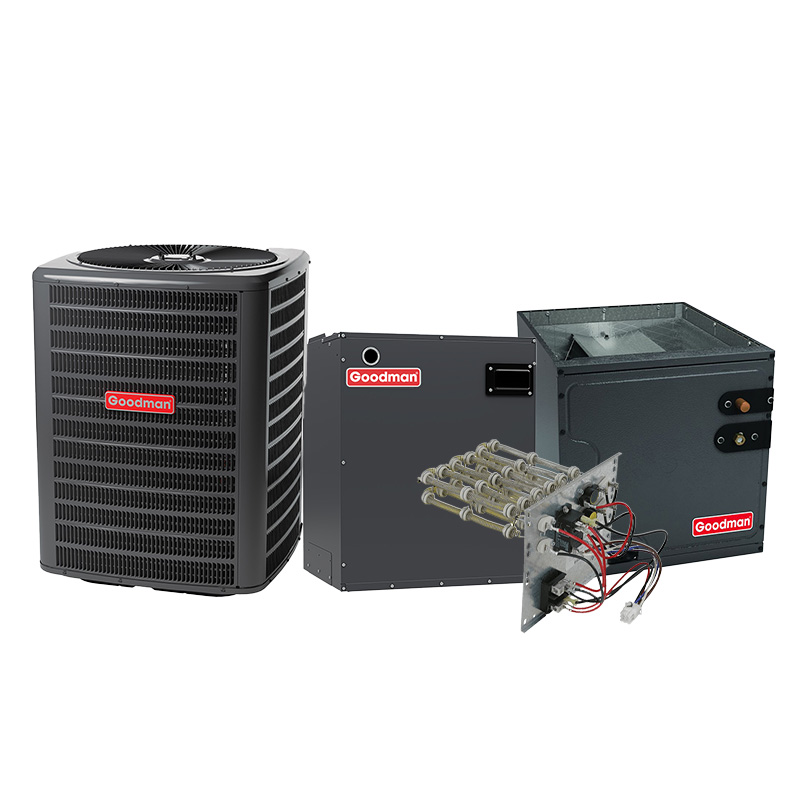
Goodman AC & Air Handler | 3 Ton 18 SEER2 2 Stage AC With Electric Heat – Upflow R32 | For Very Mild Winter Climates
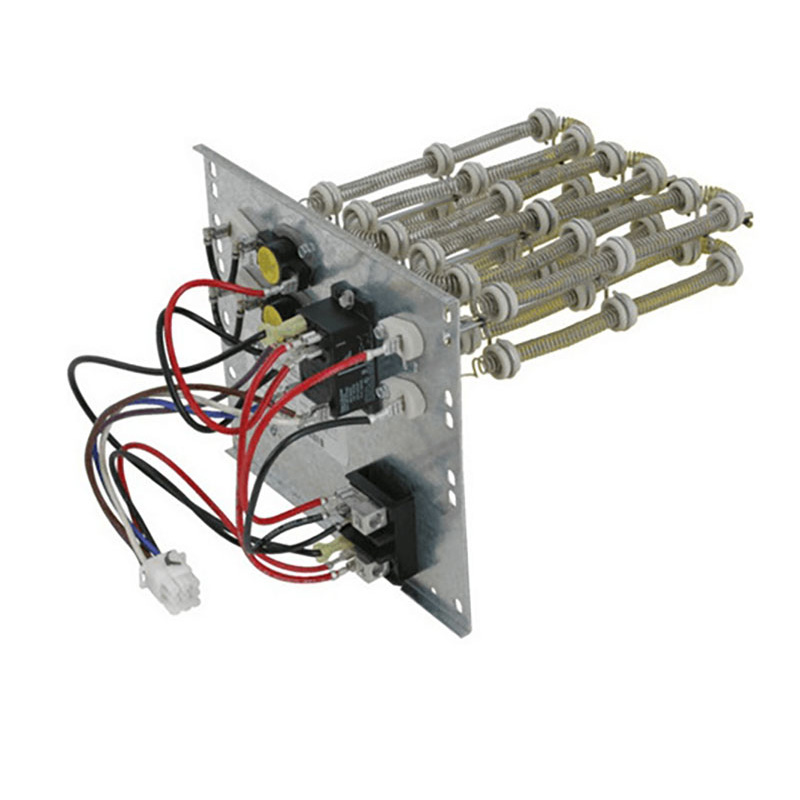
View on AC Direct see your lowest price →Check current price on AC Direct →
Key features
- 18 SEER2 two-stage compressor for improved humidity control and quieter part-load operation
- R-32 refrigerant with lower global warming potential than R-410A
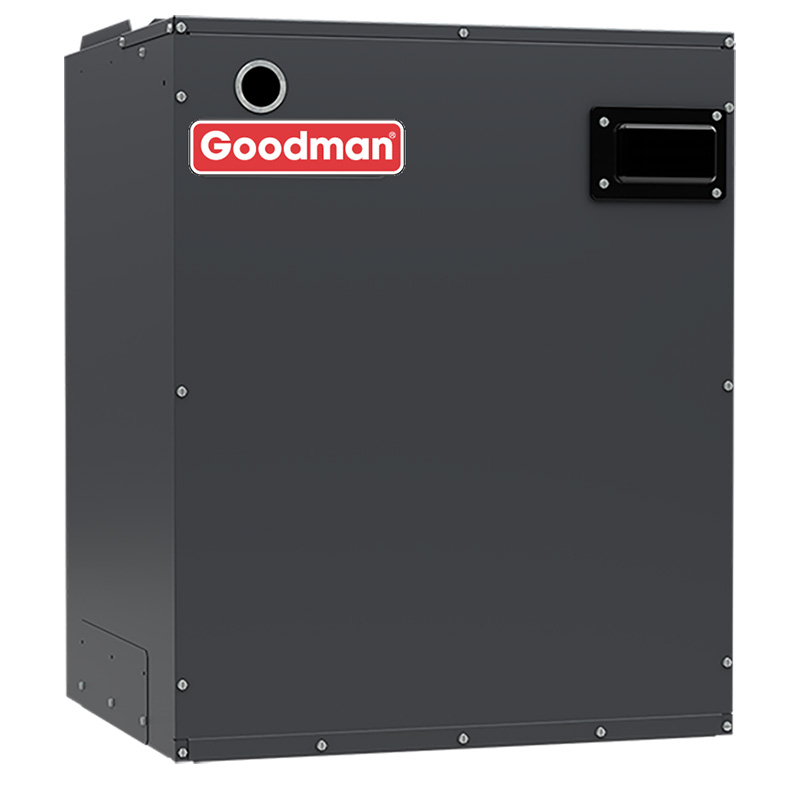
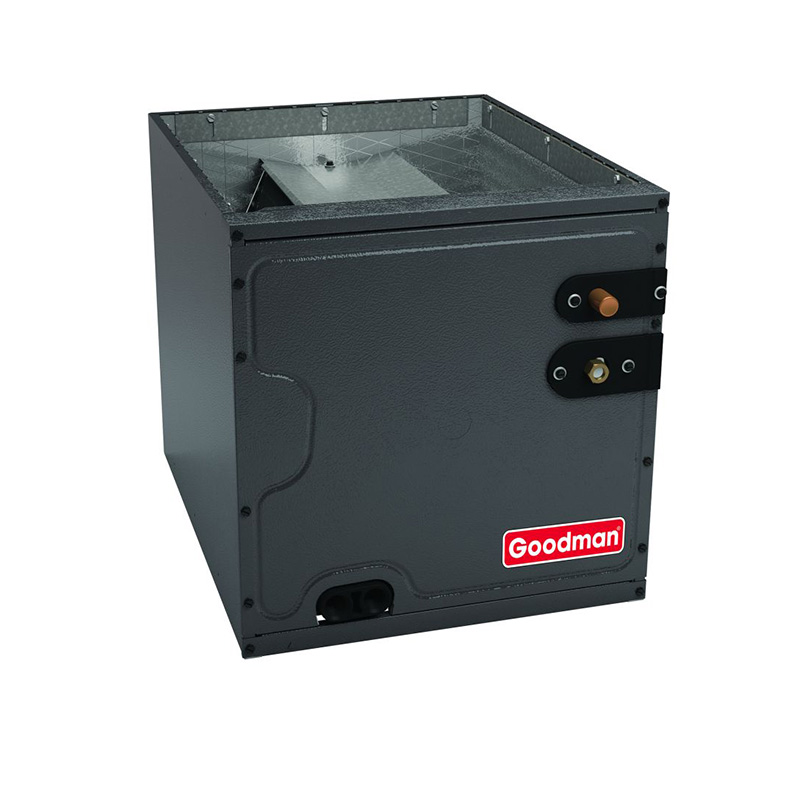
- Upflow electric air handler suited to basement or closet installations with overhead duct runs
- Electric heat strips designed for very mild winter climates where gas or heat pump backup is unnecessary
- Two-stage operation reduces short-cycling and extends average run times for more even temperatures
- Likely eligible for the federal 25C residential energy efficiency tax credit (verify with a tax professional)
About this system
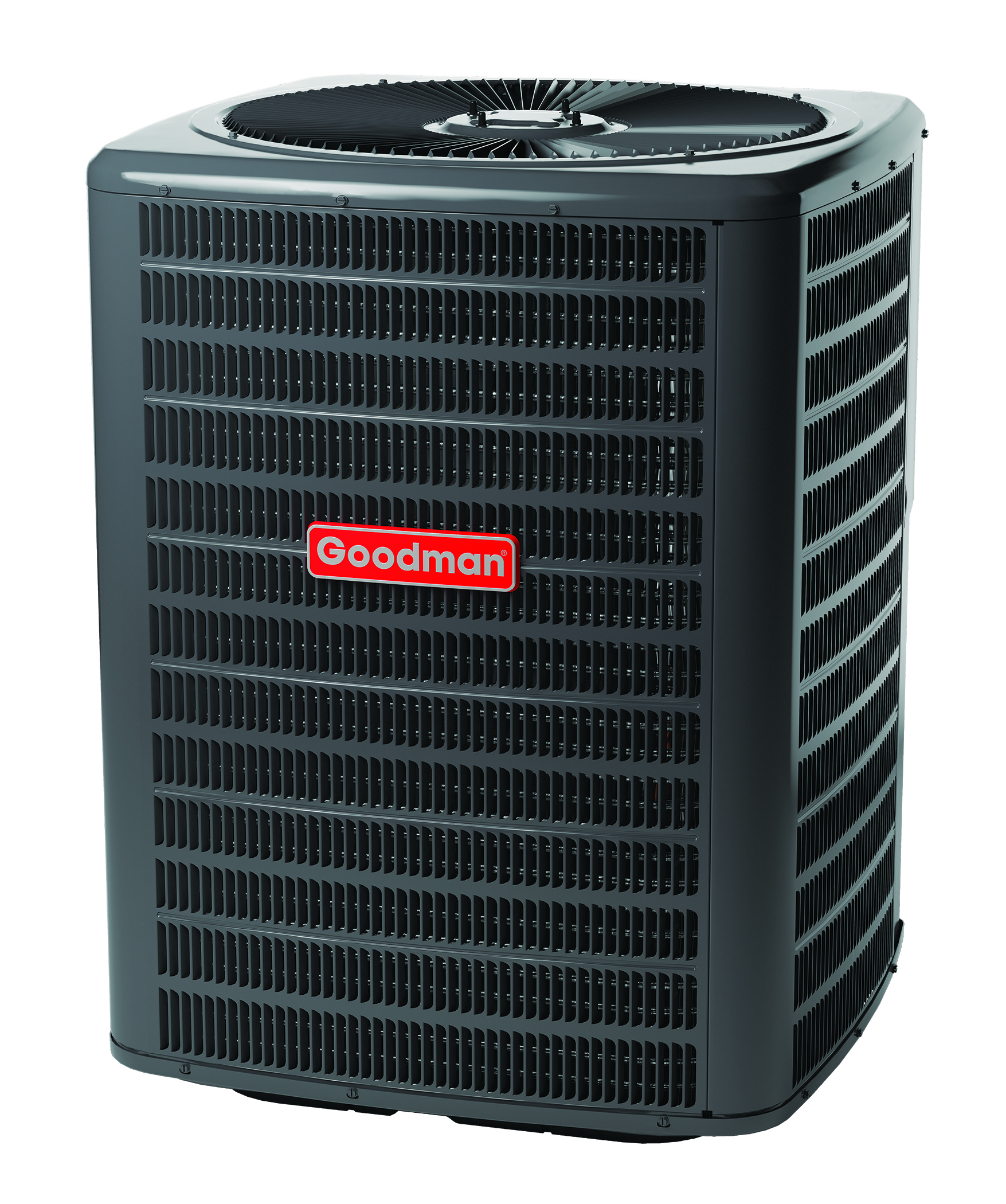
This Goodman 3-ton, 18 SEER2 two-stage system pairs an 18 SEER2 air conditioner with an upflow electric air handler sized for homes in very mild winter climates where electric resistance heat is all the supplemental warmth you need. The two-stage compressor runs at a lower capacity most of the time, cycling up to full output only when outdoor heat or a large load demands it. That translates to longer, steadier run cycles, better humidity control, and quieter operation compared to single-stage equipment at a similar efficiency tier.
R-32 refrigerant is a meaningful upgrade over R-410A: it has a lower global warming potential, operates at slightly higher efficiency in the refrigeration cycle, and is becoming the industry standard as R-410A is phased down. The upflow configuration suits a basement or utility closet installation where supply air exits from the top of the unit into overhead ductwork. At 18 SEER2, this system sits in the upper-mid efficiency range, meaningfully above federal minimums and likely to qualify for the federal 25C energy efficiency tax credit, though buyers should confirm current IRS eligibility rules with a tax professional.
This Goodman system delivers a genuine efficiency upgrade at a price point that undercuts Carrier, Trane, and Lennox by 15 to 25 percent, making it a reasonable choice for budget-conscious buyers in mild climates who commit to quality installation. The two-stage operation and R-32 refrigerant are real advantages, but Goodman's documented reliability record, including compressor lifespans that average shorter than premium competitors and a recurring pattern of repair costs rising after year 7, means long-term ownership costs can narrow that upfront savings gap.
Overall score is the average of the five ratings above.
What we like
- Two-stage compressor provides noticeably better humidity control than single-stage units at this price
- 18 SEER2 efficiency is well above federal minimums and positions the system for potential 25C tax credit eligibility
- R-32 refrigerant is lower-impact and increasingly the industry standard going forward
- Purchase price runs 15 to 25 percent below comparable Carrier, Trane, and Lennox equipment
- Upflow configuration is straightforward for technicians familiar with Goodman equipment, and parts are widely available
Trade-offs
- Dual-run capacitors are the most frequently reported failure point, typically requiring a 300 to 600 dollar repair
- Evaporator coil leaks appear in a meaningful share of owner reviews and can be costly to address
- Compressor lifespan averages 10 to 14 years versus 15 to 20 years for premium brands, which matters for long-term cost planning
- A minority of owners have reported refrigerant leaks within the first year, most traceable to installation or initial charge errors
What homeowners and pros say about Goodman
Homeowners who chose Goodman most often point to the upfront price as the decisive factor, and that sentiment is reflected in Google dealer review scores that hover around 3.8 out of 5 across dealer locations. The praise is real but specific: buyers appreciate paying less than they would for a Carrier or Trane while still getting a recognizable brand with widely available parts. The frustration side of the ledger is equally specific. On ConsumerAffairs, where Goodman scores roughly 2.5 out of 5, the pattern that surfaces repeatedly is not catastrophic early failure but rather a repair cost curve that steepens noticeably after year 7. The dual-run capacitor is the component that shows up most in service calls, and while a 300 to 600 dollar fix is not devastating, it is a recurring one. Evaporator coil leaks and a compressor lifespan that averages 10 to 14 years rather than the 15 to 20 years owners of premium equipment tend to see are the trade-offs that make long-term cost comparisons less clear-cut than the sticker price suggests.
HVAC technicians who work on Goodman equipment regularly tend to hold a pragmatic view: the equipment is serviceable, parts are easy to source, and the brand is not inherently poor quality. What they emphasize is that install quality is the single biggest predictor of how long a Goodman system lasts and how much it costs to own. The minority of owners who report refrigerant leaks in the first year are almost always dealing with installation or initial charge errors, not factory defects. For this specific two-stage R-32 upflow system, technicians familiar with the platform note that proper refrigerant handling certification for R-32 and careful attention to coil connections at install are worth verifying with any contractor before work begins.
Sources: ConsumerAffairs Goodman owner reviews, AHRI Directory of Certified Product Performance, U.S. DOE appliance and equipment efficiency standards, Goodman product specification sheets.
What it costs to run
At 18 SEER2, cooling this 3-ton system for a typical 1200-hour cooling season at the U.S. average electricity rate of $0.17/kWh works out to roughly $408 per year in cooling, about $140 less per year than a minimum-efficiency 13.4 SEER2 unit of the same size. Your real cost depends on your climate and local rate.
Method: (36,000 BTU/hr ÷ 18 SEER2) × 1200 hours ÷ 1000 × $0.17/kWh. Rate source: U.S. EIA average; cooling hours: moderate-climate estimate.
How it compares
| Brand | Comparable model | SEER2 | Stage | Price position |
|---|---|---|---|---|
| Goodman | 3-Ton 18 SEER2 Two-Stage AC with Upflow Electric Air Handler (R-32) | 18 | Two-stage | Value pick |
| Carrier | Comfort 18 Series (24ACC6) | 18 | Single-stage | Typically 15 to 25 percent more than Goodman |
| Trane | XR18 | 18 | Single-stage | Typically 15 to 25 percent more than Goodman |
| Lennox | Merit ML18XC1 | 18 | Single-stage | Typically 15 to 25 percent more than Goodman |
Competitor rows are comparable single-stage units at similar efficiency; price is relative position, not a quote.
Questions about this system
Will the electric heat strips in this air handler be enough for my home in a mild climate?
Electric heat strips are appropriate for climates where temperatures rarely dip below freezing and heating loads are light and infrequent. If your area sees extended cold stretches or sub-freezing nights, a heat pump or gas furnace would be more cost-effective; resistance electric heat is the least efficient heating method when run for long periods.
How does two-stage cooling actually change day-to-day comfort compared to single-stage?
A two-stage compressor runs at lower capacity for the majority of cooling hours, which means longer, gentler run cycles rather than hard on-off cycling. This does a better job pulling humidity out of the air and tends to produce more even temperatures room to room, which is especially noticeable in humid climates.
What does the switch to R-32 refrigerant mean for me as the homeowner?
R-32 has a lower global warming potential than R-410A and is being adopted broadly as the industry moves away from R-410A under EPA phasedown rules. For you practically, it means service technicians will need R-32 certified equipment to work on the system, and you should confirm any future service contractor is equipped for it.
Goodman has mixed reviews online. Should that concern me for this purchase?
It warrants honest attention. ConsumerAffairs rates Goodman around 2.5 out of 5, a channel where unhappy owners are overrepresented, and the recurring complaint is repair costs climbing after roughly year 7. Google dealer reviews average around 3.8 out of 5, where affordability is the most cited positive. The documented failure modes, specifically dual-run capacitors, evaporator coil leaks, and compressor lifespans shorter than premium brands, are real. A strong installer and a funded maintenance plan help manage this risk.
Does this system qualify for a federal tax credit?
At 18 SEER2, this system is likely to meet the efficiency threshold for the federal 25C residential energy efficiency tax credit, but eligibility rules, credit amounts, and qualifying equipment lists can change. Confirm current IRS guidelines or consult a tax professional before counting on the credit in your budget.
Specifications
| Cooling capacity | 3 Ton |
| Efficiency | 18 SEER2 |
| Configuration | Upflow |
| Refrigerant | R-32 |