Goodman AC & Air Handler | 4 Ton 17.5 SEER2 2 Stage AC With Electric Heat – Horizontal R32 | For Very Mild Winter Climates
View on AC Direct see your lowest price →Check current price on AC Direct →
Key features
- 17.5 SEER2 two-stage cooling for steadier temps and better humidity control than single-stage
- Horizontal air handler configuration for attic or crawl-space installs
- R-32 refrigerant with lower global-warming potential than R-410A
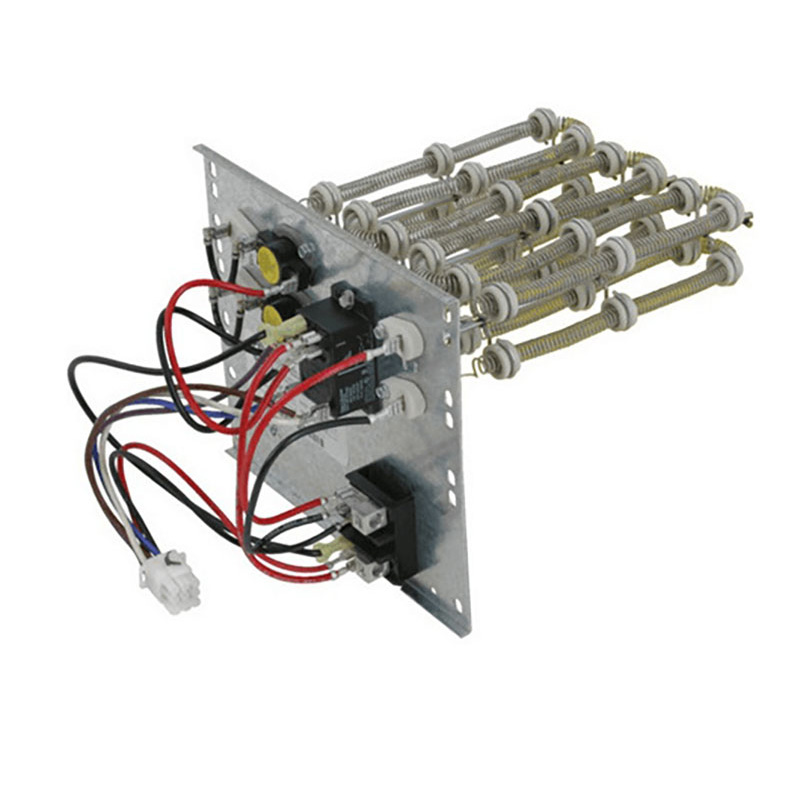
- Electric heat strips included, suited to very mild winter climates with minimal heating demand
- 4-ton capacity sized for roughly 1,800 to 2,400 sq ft depending on climate and insulation
- Value-tier pricing typically 15 to 25 percent below comparable Trane, Carrier, and Lennox systems
About this system
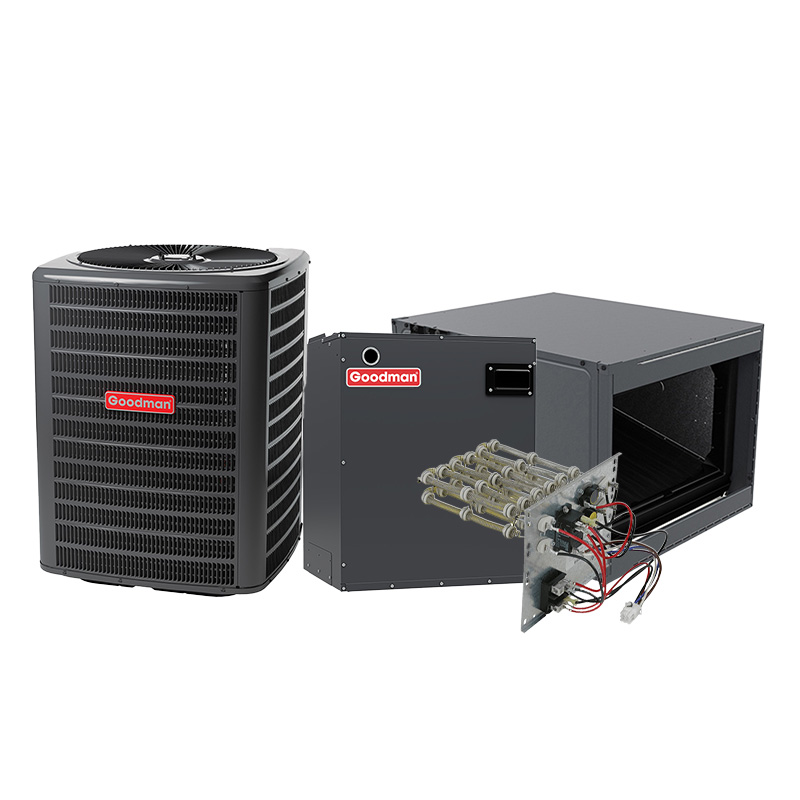
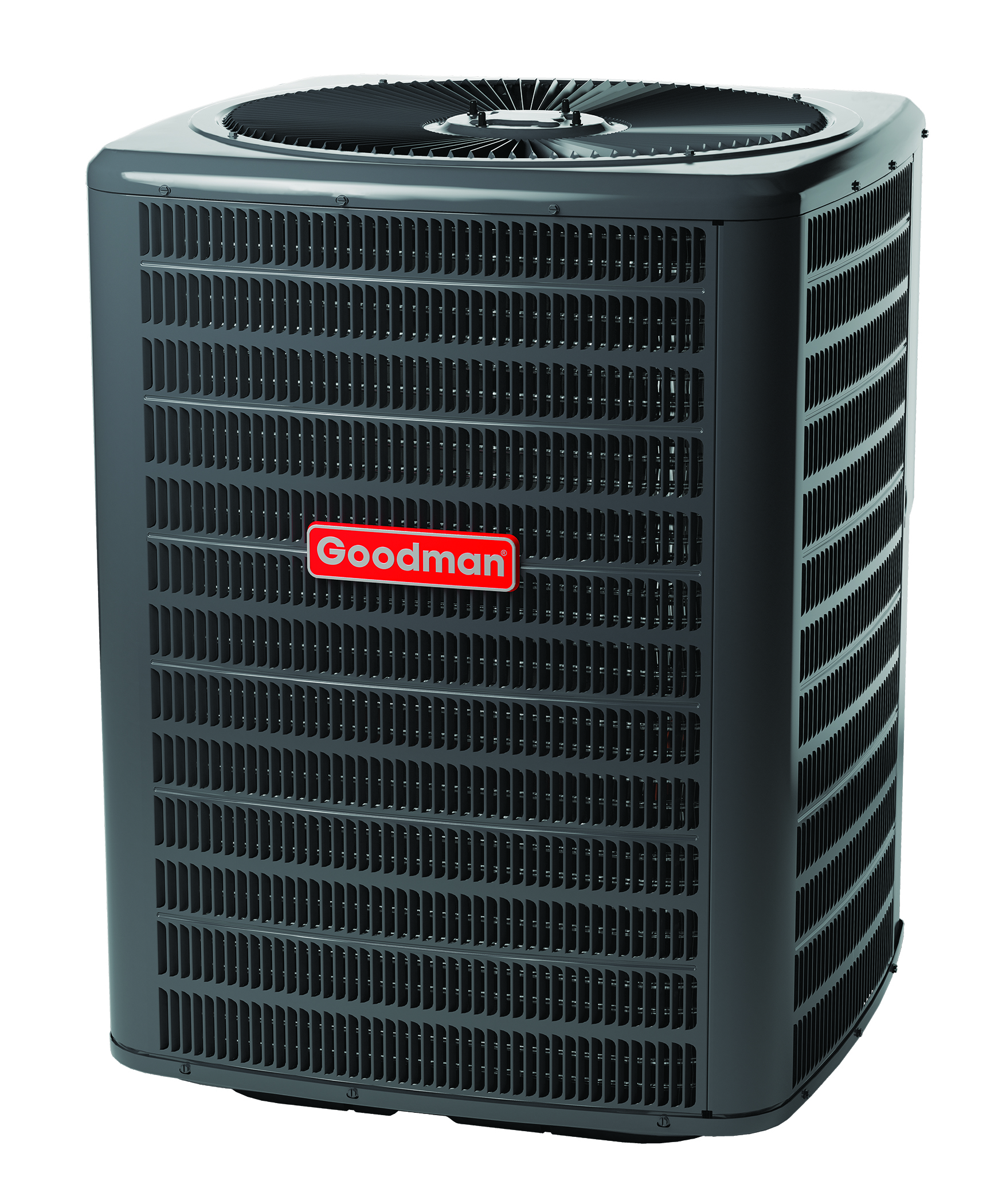
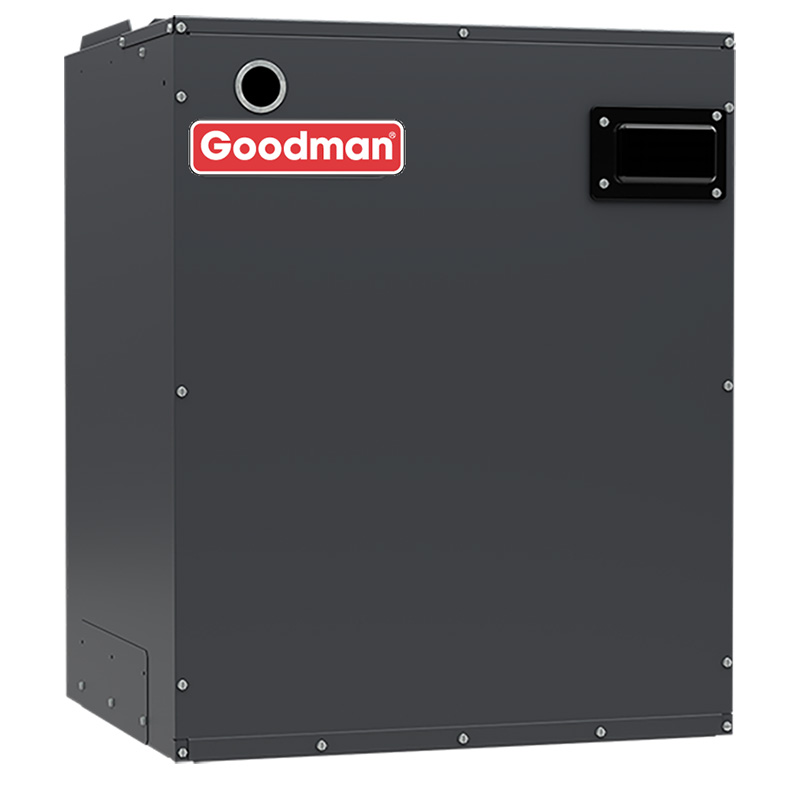
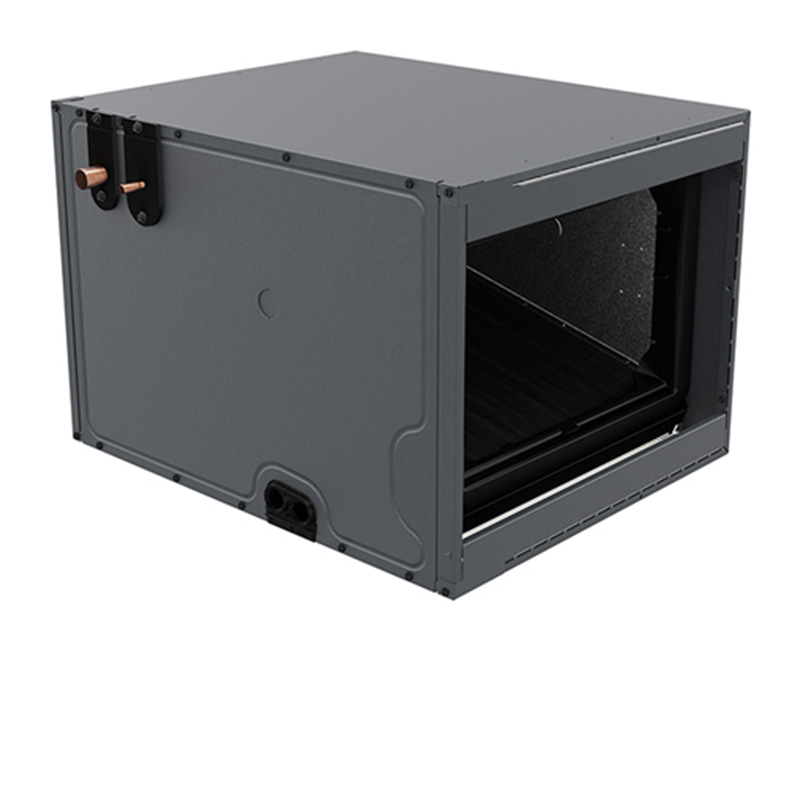
This Goodman 4-ton, 17.5 SEER2 two-stage system pairs a split-system air conditioner with a horizontal air handler designed for electric heat strips rather than a gas furnace. That configuration makes it a natural fit for homes in very mild winter climates, think coastal Southeast, South Texas, or the low-desert Southwest, where heating loads are minimal and a full heat pump or gas system would be engineering overkill. The horizontal air handler orientation suits attic installs or tight crawl spaces where a vertical cabinet simply will not fit.
The two-stage compressor is the headline spec here. Running at low stage during mild weather, which is most of the cooling season in a warm climate, the unit cycles less aggressively, holds steadier indoor temperatures, and pulls more humidity out of the air compared with a single-stage system at the same efficiency rating. R-32 refrigerant carries a lower global-warming potential than the R-410A it replaces and is increasingly what contractors and equipment suppliers are stocking, so parts availability should be solid for the foreseeable future. At 17.5 SEER2 this system sits in the upper-mid efficiency tier, meaningfully above the federal minimum but short of the variable-speed premium class.
This Goodman package delivers a competitive efficiency rating and genuine two-stage performance at a price point that is hard to argue with in mild-climate markets where electric heat strips cover all the heating you need. The brand's documented weak spots, especially capacitor failures and coil leaks, mean ongoing maintenance costs can erode the upfront savings over time, so the deal is only as good as the quality of the install and the service contract behind it.
Overall score is the average of the five ratings above.
What we like
- Two-stage compressor improves humidity removal, a real benefit in hot, humid coastal climates
- 17.5 SEER2 qualifies for many utility rebate programs and meaningfully cuts summer energy bills versus minimum-efficiency equipment
- Horizontal air handler eliminates the need to reconfigure ductwork in attic-mounted applications
- R-32 refrigerant is increasingly well-supported by parts suppliers and is better for the environment than R-410A
- Lower purchase price than comparable Carrier, Trane, or Lennox two-stage systems, freeing budget for a better install or extended service agreement
Trade-offs
- Dual-run capacitors are the most frequently reported failure point on Goodman units and typically need replacement within the first several years
- Compressor lifespan averages 10 to 14 years versus 15 to 20 years for premium brands, which matters at the 4-ton size where replacement costs are significant
- A minority of owners report refrigerant leaks within the first year, which usually points to install or initial charge issues rather than product defects
- Electric heat strips are inefficient compared with a heat pump, so if winter temperatures drop below the mid-30s even occasionally, operating costs will climb
What homeowners and pros say about Goodman
Goodman sits at a ConsumerAffairs rating of roughly 2.5 out of 5, a score that reflects a complaint-heavy audience where the dominant theme is repair costs accelerating after about year 7. Google dealer reviews land closer to 3.8 out of 5 across hundreds of location-based ratings, and the most consistent praise there is straightforward: the equipment is affordable and does what it says when it is installed correctly. For this specific horizontal two-stage system, the feedback pattern lines up with the broader Goodman experience. Owners in mild-climate markets who picked this configuration for an attic install tend to report satisfactory cooling performance in the early years, with humidity control frequently called out as a real benefit of the two-stage operation. The frustrations surface later, and they are predictable.
The documented failure modes for Goodman equipment are worth knowing before you buy. Dual-run capacitors are the most frequently cited repair item, typically showing up after several years of operation and running 300 to 600 dollars per incident including labor. Evaporator coil leaks appear in a meaningful share of longer-term owner accounts and can be a more expensive problem to resolve depending on whether the coil is under warranty at the time. Compressor lifespan on Goodman equipment tends to average 10 to 14 years, shorter than the 15 to 20 years cited for premium brands, which at 4-ton capacity means a significant replacement cost if the compressor goes before the rest of the system ages out. A smaller but real subset of owners have reported refrigerant leaks within the first year, almost always traced back to install quality or initial charge rather than a manufacturing defect, which underscores the universal technician observation that Goodman’s long-term performance is heavily tied to how carefully the system was put in.
Sources: ConsumerAffairs Goodman owner reviews, AHRI Directory of Certified Product Performance, U.S. DOE appliance and equipment efficiency standards, Goodman product specification sheets.
What it costs to run
At 17.5 SEER2, cooling this 4-ton system for a typical 1200-hour cooling season at the U.S. average electricity rate of $0.17/kWh works out to roughly $560 per year in cooling, about $171 less per year than a minimum-efficiency 13.4 SEER2 unit of the same size. Your real cost depends on your climate and local rate.
Method: (48,000 BTU/hr ÷ 17.5 SEER2) × 1200 hours ÷ 1000 × $0.17/kWh. Rate source: U.S. EIA average; cooling hours: moderate-climate estimate.
How it compares
| Brand | Comparable model | SEER2 | Stage | Price position |
|---|---|---|---|---|
| Goodman | 4-Ton 17.5 SEER2 Two-Stage Horizontal R-32 with Electric Heat | 17.5 | Two-stage | Value pick |
| Carrier | Performance 17 Series (24ACC7) | 17 | Two-stage | Typically 15 to 25 percent more than Goodman |
| Trane | XR17 | 17 | Two-stage | Typically 15 to 25 percent more than Goodman |
| Lennox | Merit ML17XC2 | 17 | Two-stage | Typically 15 to 25 percent more than Goodman |
Competitor rows are comparable single-stage units at similar efficiency; price is relative position, not a quote.
Questions about this system
Is a horizontal air handler harder to service than a vertical one?
Access to the coil, blower, and drain pan is generally the same, but technicians working in attic spaces in summer heat face a tougher environment, which can mean higher labor charges for routine service calls. Make sure your installer confirms the unit is positioned with adequate clearance on all service panels before startup.
The listing says this is for very mild winter climates. What happens if I run it through a hard freeze?
The electric heat strips will keep the home warm, but they operate at roughly one-third the efficiency of a heat pump in cold weather, so your electricity bill will spike significantly. If your area sees more than a few nights below 35 degrees per year, a heat pump system would be a better fit.
What is the real-world difference between two-stage and single-stage at this size?
At 4 tons a single-stage system blasts on at full capacity and shuts off quickly, often leaving humidity elevated between cycles. Running at low stage for longer periods, the two-stage compressor extracts more moisture and holds a more even temperature, which makes a noticeable comfort difference in humid climates.
How serious is the capacitor failure issue, and what does it cost to fix?
Dual-run capacitors are the most commonly reported failure on Goodman equipment and on residential AC units generally. Replacement typically runs between 300 and 600 dollars including labor and is usually a same-day repair, so it is not a catastrophic failure, but it is a recurring maintenance expense worth budgeting for after year 5 or 6.
Does switching to R-32 refrigerant affect who can service this unit?
R-32 requires technicians to hold their standard EPA 608 certification, the same as R-410A, but it is mildly flammable so some older service trucks are not yet equipped to handle it safely. Confirm before signing a service agreement that your contractor stocks R-32 and is trained to work with it.
Specifications
| Cooling capacity | 4 Ton |
| Efficiency | 17.5 SEER2 |
| Configuration | Horizontal |
| Refrigerant | R-32 |