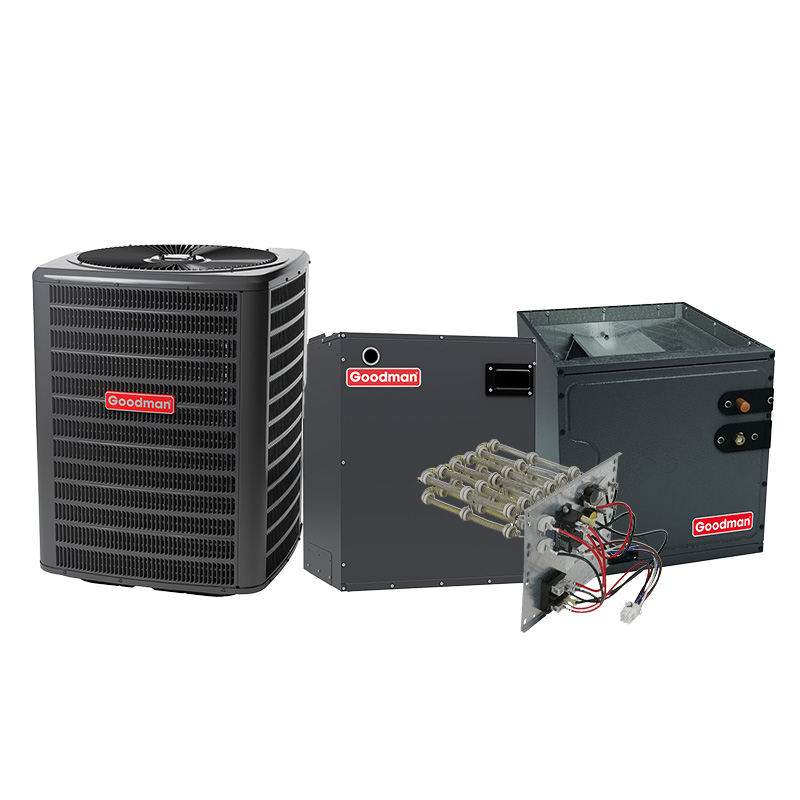
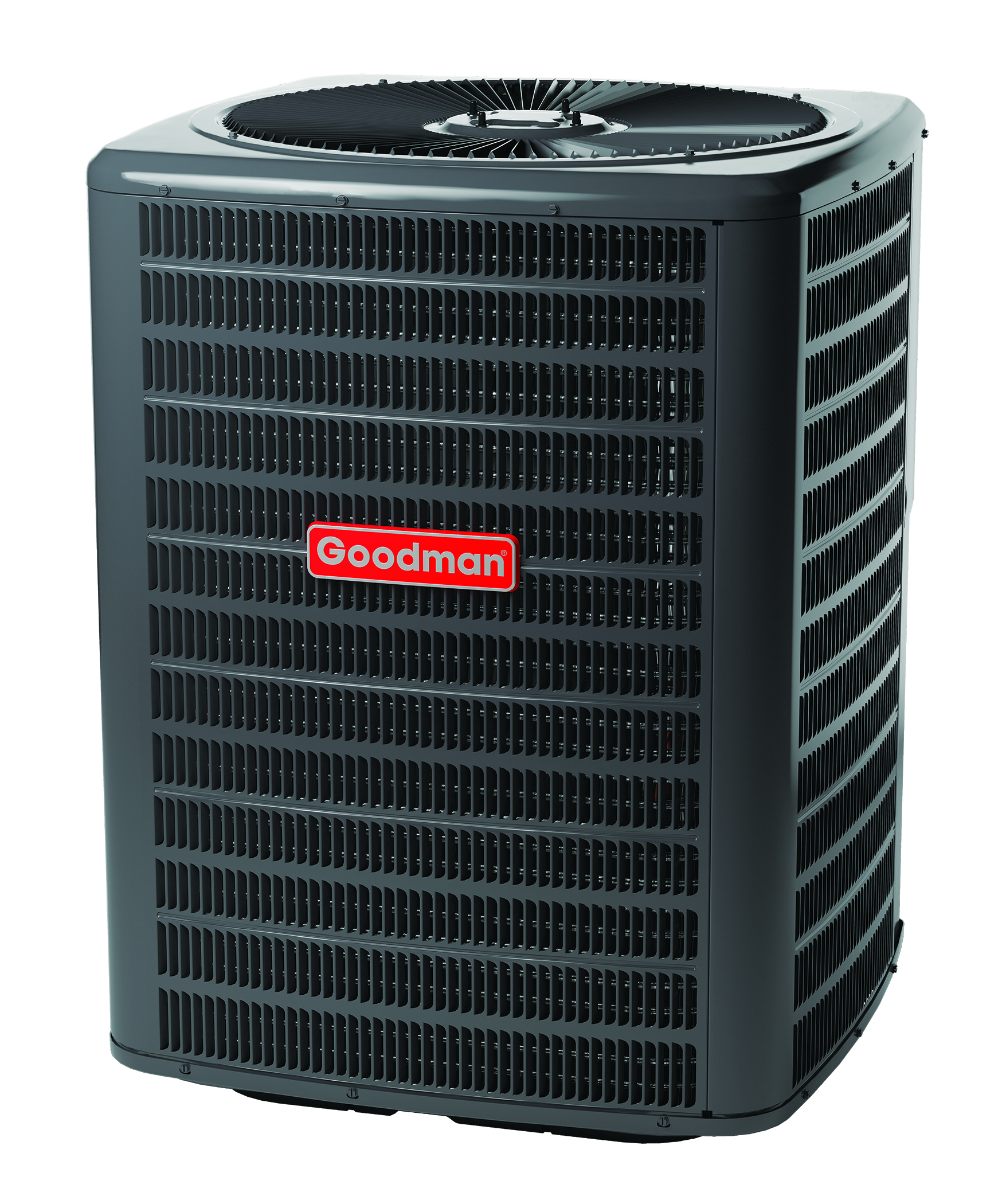
Goodman AC & Air Handler | 4 Ton 17.5 SEER2 2 Stage AC With Electric Heat – Upflow R32 | For Very Mild Winter Climates
View on AC Direct see your lowest price →Check current price on AC Direct →
Key features
- 17.5 SEER2 two-stage compressor for better humidity control and part-load efficiency
- R-32 refrigerant with lower global-warming potential than R-410A
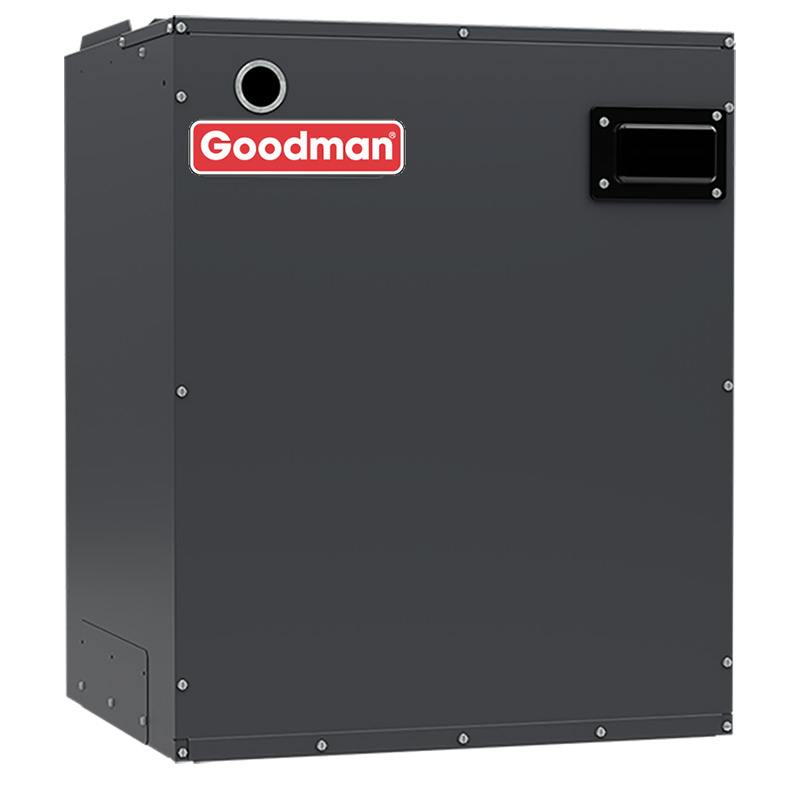
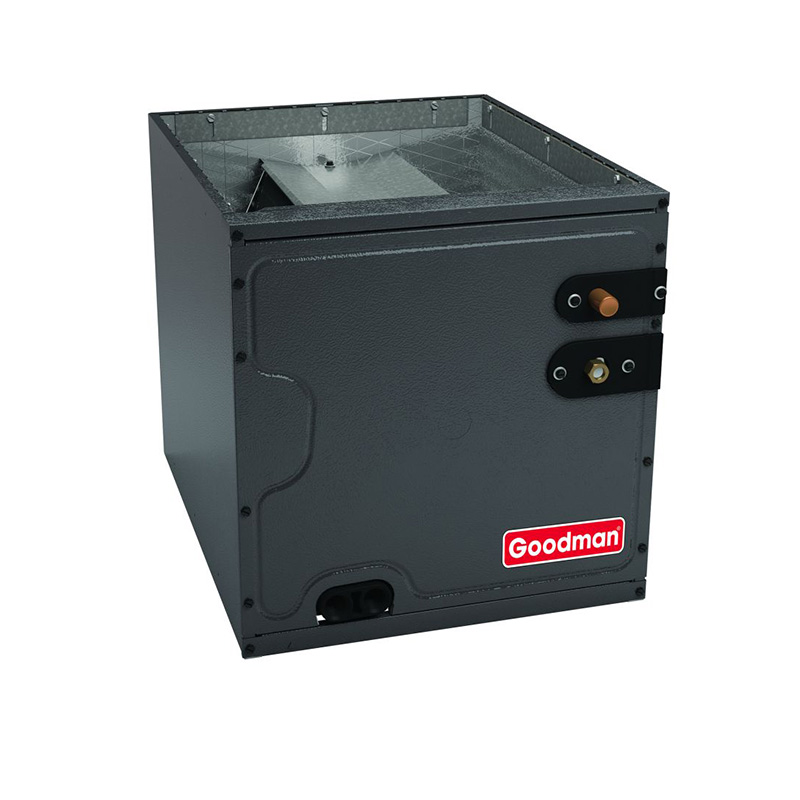
- Upflow air handler configuration for overhead duct systems
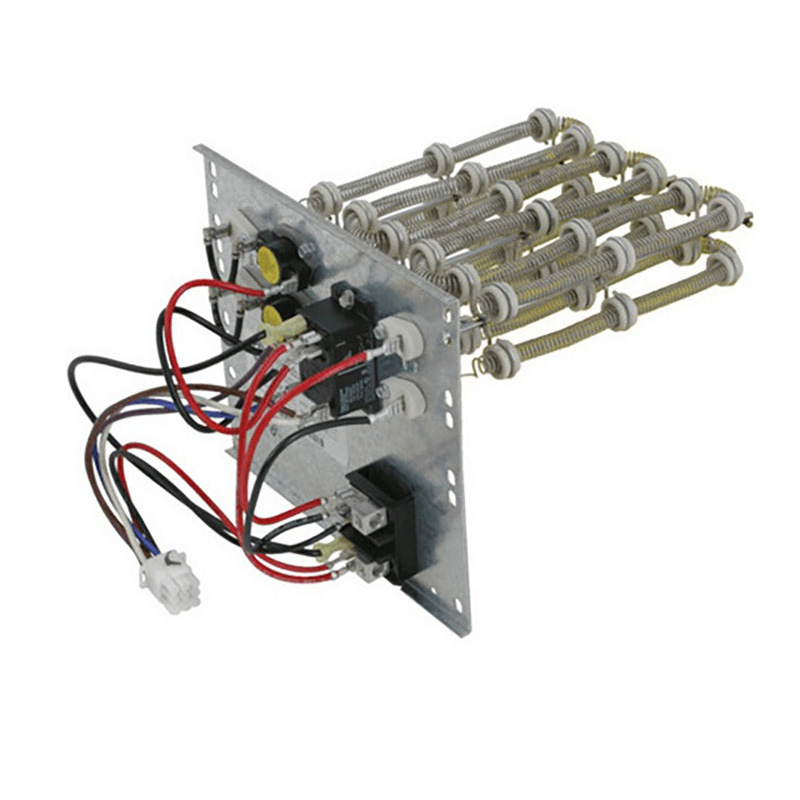
- Electric heat strips included for supplemental warmth in mild-winter climates
- 4-ton capacity suited to approximately 2,000 to 2,600 sq ft (load calc required)
- Priced 15 to 25 percent below comparable Trane, Lennox, and Carrier systems
About this system
This Goodman 4-ton, 17.5 SEER2 two-stage system pairs an R-32 condensing unit with an upflow air handler that includes electric heat strips, making it a practical choice for homeowners in mild-winter climates like coastal California, the Gulf Coast, or the Southwest where a gas furnace would be overkill. The upflow configuration means the air handler sits at floor level and pushes conditioned air upward through overhead ductwork, which suits most single-story slab homes and many split-level layouts. Electric heat strips handle the occasional cold snap without the cost and complexity of a gas line, though operating costs will be higher than a heat pump if you see more than a few heating weeks per year.
At 17.5 SEER2, this system sits in the upper-mid efficiency band. Two-stage operation means the compressor runs at low capacity during moderate weather, which improves humidity removal, reduces short-cycling, and trims energy bills compared to a single-stage unit at the same SEER2 rating. R-32 refrigerant has a lower global-warming potential than the older R-410A it replaces and is increasingly the industry standard, so future service access should not be a concern. The 4-ton sizing is appropriate for homes roughly in the 2,000 to 2,600 square-foot range, though a proper Manual J load calculation by your installer is the only reliable way to confirm the right size for your specific home, insulation levels, and local climate.
This system delivers genuine mid-tier efficiency at a price point that undercuts the major premium brands by a meaningful margin, making it a reasonable choice for budget-conscious buyers who understand that long-term performance depends heavily on installation quality. Two-stage operation is a real advantage over a single-stage unit at the same price, especially for humidity-heavy climates. The trade-off is a compressor lifespan that historically trails premium competitors and a customer service record that leaves something to be desired once problems arise.
Overall score is the average of the five ratings above.
What we like
- Two-stage compressor improves humidity removal and reduces energy use at partial load compared to single-stage alternatives
- 17.5 SEER2 efficiency qualifies for federal and some state energy rebates
- R-32 refrigerant is future-ready as R-410A is phased out industry-wide
- Price is 15 to 25 percent below comparable Carrier, Trane, and Lennox systems
- Electric heat strips eliminate the need for a separate furnace in mild climates, simplifying the installation
Trade-offs
- Compressor lifespan averages 10 to 14 years versus 15 to 20 years for premium brands, meaning earlier replacement costs
- Dual-run capacitors are the most commonly reported failure point, typically appearing after a few years of use
- Evaporator coil leaks are documented in a meaningful share of owner reviews and can be costly to address
- A minority of owners have reported refrigerant leaks in the first year, generally linked to installation or charge issues rather than the unit itself
What homeowners and pros say about Goodman
Homeowners who have lived with Goodman equipment long enough to form an opinion tend to split along a familiar fault line. Those whose systems were installed carefully by experienced technicians often report years of unremarkable, uneventful cooling, with affordability as the consistent point of praise reflected in Google dealer review scores that average around 3.8 out of 5. Those who ran into trouble, however, tend to feel it acutely: ConsumerAffairs scores sit around 2.5 out of 5, and the recurring complaint on that platform is repair costs that start accumulating after roughly year seven. The specific failure modes that come up most are dual-run capacitor replacements, evaporator coil leaks, and a compressor lifespan that typically lands between 10 and 14 years rather than the 15 to 20 years owners of premium brands often see.
HVAC technicians who service multiple brands tend to view Goodman with calibrated pragmatism. The equipment is not considered fragile, but they are consistent in pointing out that installation quality is the dominant variable in how any Goodman system performs over time. A properly sized, correctly charged unit from a skilled installer tends to hold up reasonably well through its first decade. The documented first-year refrigerant leaks reported by a minority of owners are generally attributed to improper charging at installation rather than factory faults, which underscores how much weight the installer carries in determining whether this system earns its price advantage or quietly erodes it in service calls.
Sources: ConsumerAffairs Goodman owner reviews, AHRI Directory of Certified Product Performance, U.S. DOE appliance and equipment efficiency standards, Goodman product specification sheets.
What it costs to run
At 17.5 SEER2, cooling this 4-ton system for a typical 1200-hour cooling season at the U.S. average electricity rate of $0.17/kWh works out to roughly $560 per year in cooling, about $171 less per year than a minimum-efficiency 13.4 SEER2 unit of the same size. Your real cost depends on your climate and local rate.
Method: (48,000 BTU/hr ÷ 17.5 SEER2) × 1200 hours ÷ 1000 × $0.17/kWh. Rate source: U.S. EIA average; cooling hours: moderate-climate estimate.
How it compares
| Brand | Comparable model | SEER2 | Stage | Price position |
|---|---|---|---|---|
| Goodman | 4 Ton 17.5 SEER2 Two-Stage R-32 Upflow with Electric Heat | 17.5 | Two-stage | Value pick |
| Carrier | Comfort 17 (24ACC7) | 17 | Two-stage | Typically 15 to 25 percent more than Goodman |
| Trane | XR17 | 17 | Two-stage | Typically 15 to 25 percent more than Goodman |
| Lennox | Merit 16ACX | 16.5 | Single-stage | Typically 15 to 25 percent more than Goodman |
Competitor rows are comparable single-stage units at similar efficiency; price is relative position, not a quote.
Questions about this system
Why does this system use electric heat strips instead of a heat pump, and is that the right call for my climate?
Electric resistance strips are simpler and cheaper to install than a heat pump and are adequate when you only need heat a few weeks a year. If your winters are genuinely mild (rarely below 40°F), this setup works well and avoids the extra cost of heat pump components. If you regularly see sustained cold stretches, a heat pump would lower your operating costs significantly despite the higher upfront price.
What is the most common repair I should budget for with a Goodman system?
Dual-run capacitors are the most frequently reported failure on Goodman equipment and typically cost between $300 and $600 to diagnose and replace. Keeping a service agreement or scheduling annual tune-ups can catch a weakening capacitor before it causes a compressor lockout on a hot summer day.
Does R-32 refrigerant affect how my system gets serviced?
R-32 requires certified technicians who are familiar with its mildly flammable properties and the specific equipment needed to handle it safely. Most established HVAC shops are already equipped for R-32 since it is the replacement standard as R-410A phases out, but it is worth confirming with your service provider before signing a maintenance contract.
How important is the installer's skill level with a Goodman unit specifically?
More important than with premium brands, according to technicians who work on multiple brands. Goodman's reputation for value holds up when the system is sized correctly and charged precisely, but documented first-year refrigerant leaks are frequently traced back to installation errors rather than factory defects. Getting multiple bids and verifying that your installer will perform a Manual J load calculation is worth the extra effort.
Is 4 tons the right size for my home?
Ton-per-square-foot rules of thumb are unreliable because insulation quality, ceiling height, window area, and local climate all affect the required capacity. A 4-ton unit is roughly appropriate for 2,000 to 2,600 square feet in moderate climates, but an oversized unit will short-cycle and leave your home feeling humid. Require your installer to perform a Manual J calculation before finalizing equipment selection.
Specifications
| Cooling capacity | 4 Ton |
| Efficiency | 17.5 SEER2 |
| Configuration | Upflow |
| Refrigerant | R-32 |