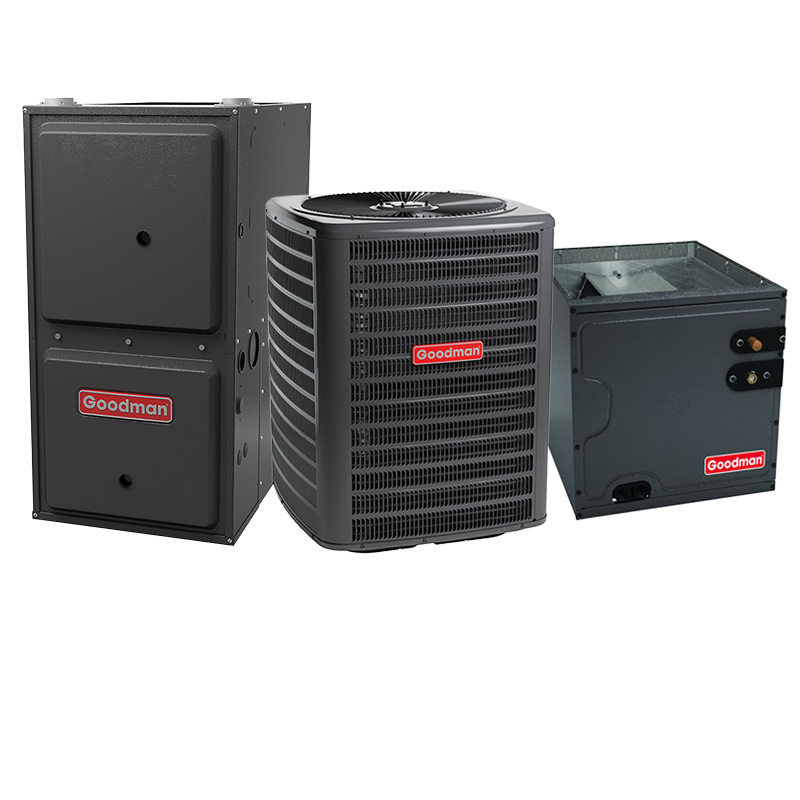
Goodman AC And Furnace – 3 Ton 16.7 SEER2 2 Stage AC With 60000 BTU 97% AFUE Modulating Variable-Speed ECM Gas Furnace System – Downflow | R32
View on AC Direct see your lowest price →Check current price on AC Direct →
Key features
- 3-ton two-stage compressor, 16.7 SEER2 cooling efficiency
- 60,000 BTU modulating gas furnace rated at 97% AFUE
- Variable-speed ECM blower motor for quiet, gradual airflow
- Downflow configuration for slab or raised-floor duct layouts
- R-32 refrigerant with lower global-warming potential than R-410A
- Priced approximately 15 to 25 percent below comparable Trane, Lennox, and Carrier systems
About this system
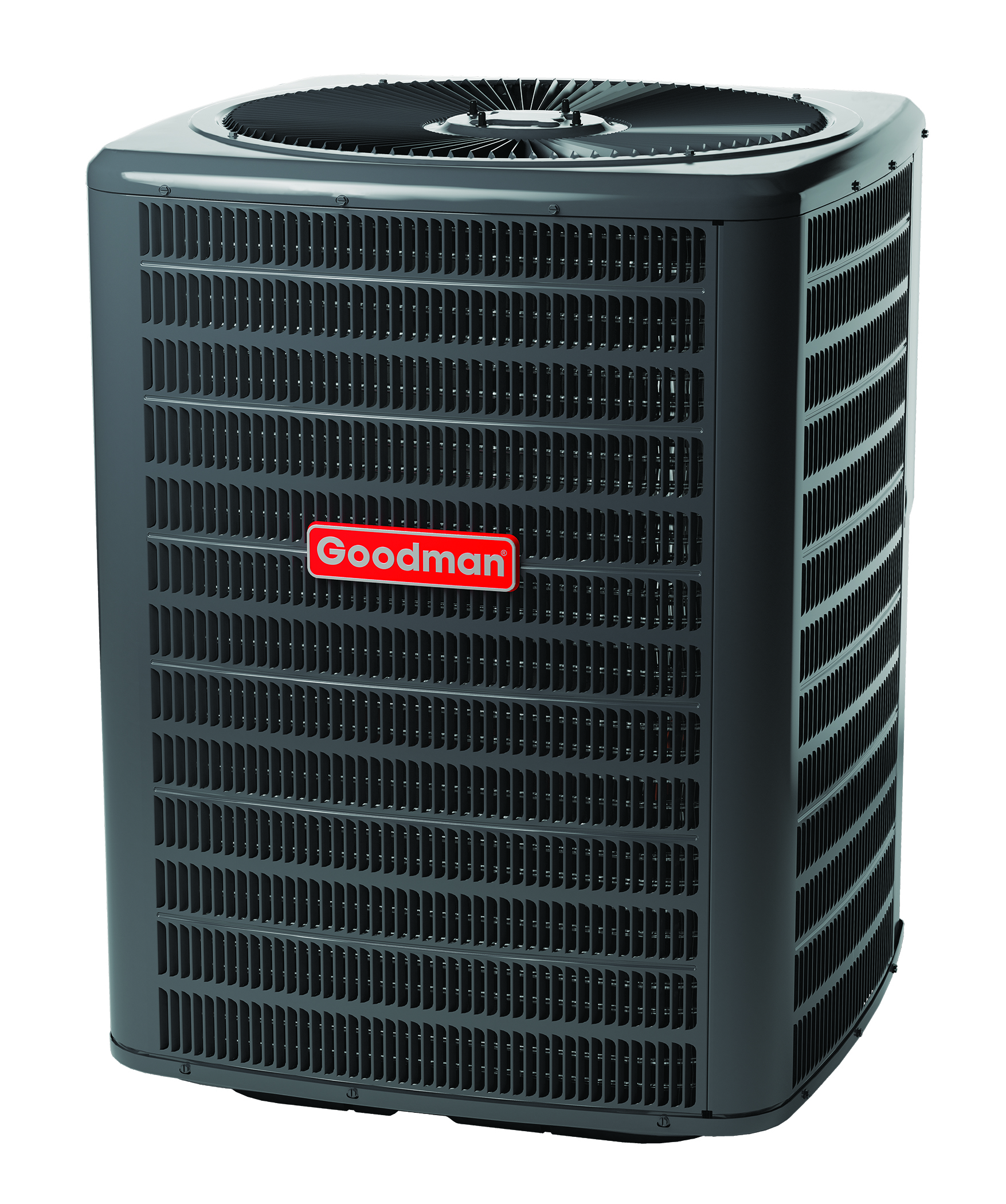
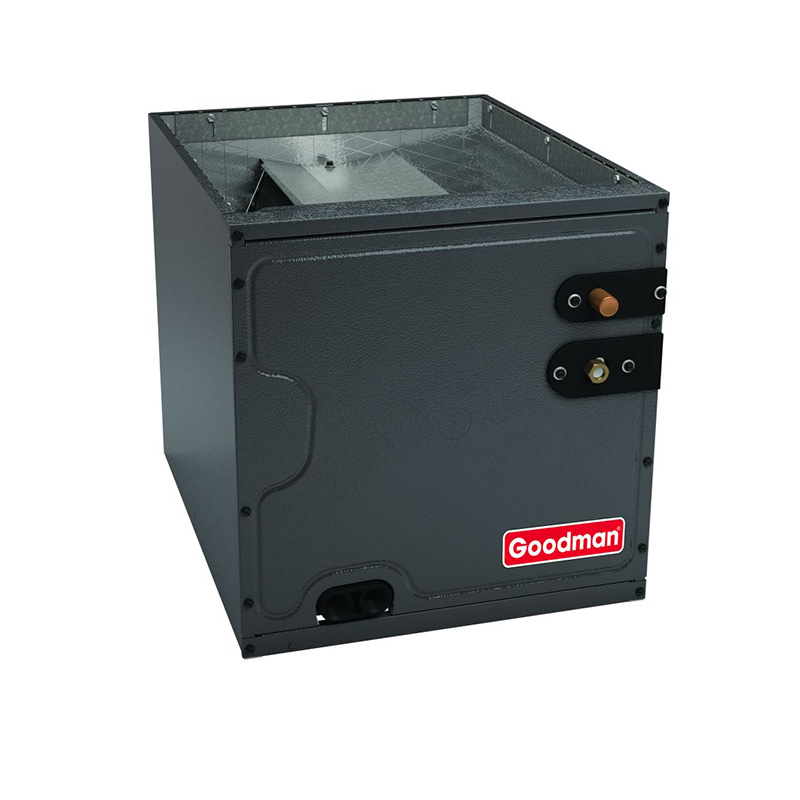
This Goodman package pairs a 3-ton, 16.7 SEER2 two-stage air conditioner with a 60,000 BTU, 97% AFUE modulating gas furnace in a downflow configuration, making it a reasonable fit for homes with ductwork running beneath the unit, such as slab foundations or raised-floor builds. The two-stage compressor runs at a lower capacity on mild days and steps up only when demand rises, which smooths temperature swings and reduces short-cycling compared with single-stage equipment. R-32 refrigerant replaces R-410A across much of Goodman’s newer lineup; it carries a lower global-warming potential and slightly better thermodynamic properties, though it does require technicians who are certified to handle it.
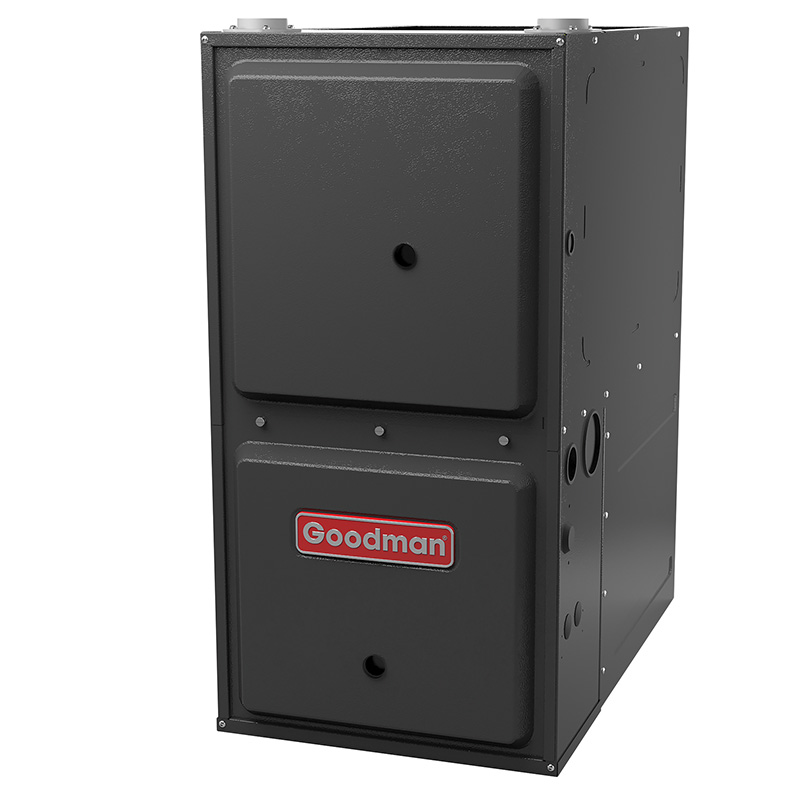
The furnace side is where this system earns its strongest case on paper. A 97% AFUE modulating burner adjusts heat output in small increments rather than just on and off, and the variable-speed ECM blower motor ramps airflow gradually to hold setpoint temperatures with less noise and less energy. For a gas-heating climate where the furnace runs hard several months a year, that combination meaningfully reduces utility bills compared with an 80% AFUE or even a standard 96% unit. Downflow-only staging limits where this system fits physically, so confirm your duct orientation before ordering. Goodman positions the package at a price point that is typically 15 to 25 percent below comparable Trane, Lennox, and Carrier systems, which is the core appeal for budget-conscious buyers who still want a mid-to-high efficiency spec.
This Goodman combo delivers genuinely strong efficiency specs, especially on the furnace side, at a price that undercuts the major premium brands by a meaningful margin. The trade-off is a documented history of component failures after year 7 and compressor longevity that typically trails premium competitors by several years. For buyers who prioritize upfront cost and are comfortable with the possibility of earlier maintenance costs, the specs-per-dollar ratio is hard to argue with.
Overall score is the average of the five ratings above.
What we like
- 97% AFUE modulating furnace is top-tier efficiency for a gas heating climate
- 16.7 SEER2 two-stage cooling is solid mid-to-high efficiency without variable-speed compressor pricing
- ECM variable-speed blower reduces electricity consumption and noise compared to PSC motors
- R-32 refrigerant is more environmentally favorable and has good thermodynamic efficiency
- Consistently 15 to 25 percent lower purchase price than Trane, Lennox, and Carrier equivalents
Trade-offs
- Dual-run capacitor failures are the most commonly reported issue and tend to surface after year 7, typically costing $300 to $600 per repair
- Evaporator coil leaks appear in a notable share of owner reviews and can be a more expensive fix
- Compressor lifespan averages 10 to 14 years versus 15 to 20 years reported for premium-brand compressors
- A minority of owners report refrigerant leaks within the first year, generally traced to install or initial charge problems rather than the equipment itself
What homeowners and pros say about Goodman
Homeowners who have lived with Goodman systems long enough to form an opinion tend to land in one of two camps. The first group bought on price, had a skilled installer do clean work, and years later reports no significant complaints beyond a capacitor swap, which is consistent with the brand’s documented failure pattern and the relatively modest $300 to $600 repair bill that goes with it. The second group ran into evaporator coil leaks or a compressor that gave out earlier than expected, and that frustration shows up clearly in Goodman’s roughly 2.5 out of 5 score on ConsumerAffairs, a channel that skews toward people motivated to leave negative feedback. Neither picture is the whole story. Google dealer reviews across installer locations average closer to 3.8 out of 5, where the most frequent praise is straightforward: the price made a quality install financially realistic for buyers who otherwise would have been looking at lower-efficiency equipment.
HVAC technicians who work on Goodman equipment regularly tend to characterize it as serviceable rather than exceptional. The consensus is that a well-installed Goodman will perform acceptably for 10 to 14 years on the compressor side, which is a real gap compared to the 15 to 20 years that premium-brand compressors more commonly reach. The dual-run capacitor is the part they expect to replace first and most often, and most frame that as a routine service call rather than a serious reliability concern. The modulating furnace and ECM blower in this specific system represent the strongest part of the value proposition: 97% AFUE with variable-speed air delivery is legitimate top-tier heating performance at a price point that premium brands rarely match. For the right buyer in the right climate with a quality installer, that combination is worth taking seriously.
Sources: ConsumerAffairs Goodman owner reviews, AHRI Directory of Certified Product Performance, U.S. DOE appliance and equipment efficiency standards, Goodman product specification sheets.
What it costs to run
At 16.7 SEER2, cooling this 3-ton system for a typical 1200-hour cooling season at the U.S. average electricity rate of $0.17/kWh works out to roughly $440 per year in cooling, about $108 less per year than a minimum-efficiency 13.4 SEER2 unit of the same size. Your real cost depends on your climate and local rate.
Method: (36,000 BTU/hr ÷ 16.7 SEER2) × 1200 hours ÷ 1000 × $0.17/kWh. Rate source: U.S. EIA average; cooling hours: moderate-climate estimate.
How it compares
| Brand | Comparable model | SEER2 | Stage | Price position |
|---|---|---|---|---|
| Goodman | This system: 3T 16.7 SEER2 Two-Stage AC + 97% AFUE Modulating Furnace | 16.7 | Two-stage cooling / Modulating heat | Value pick |
| Carrier | Performance 17 Series (24ACC6) with 58MVC or 59MV furnace | 17 | Two-stage cooling / Modulating heat | Typically 15 to 25 percent more than Goodman |
| Trane | XR17 (4TTR7) with S9V2 or XV95 furnace | 17 | Two-stage cooling / Variable-speed modulating heat | Typically 15 to 25 percent more than Goodman |
| Lennox | Merit ML17XC2 with SLP98V furnace | 17 | Two-stage cooling / Modulating heat | Typically 15 to 25 percent more than Goodman |
Competitor rows are comparable single-stage units at similar efficiency; price is relative position, not a quote.
Questions about this system
Is R-32 refrigerant a problem to service in my area?
R-32 is mildly flammable (A2L classification), which means technicians need specific certification and proper equipment to handle it safely. It is increasingly common as brands phase out R-410A, but you should confirm your local HVAC contractors are R-32 certified before purchasing, particularly in rural areas where fewer technicians may have updated their credentials.
Can this system be installed in an upflow or horizontal application?
No. The furnace in this configuration is rated for downflow only, meaning conditioned air exits from the bottom of the unit into ductwork below. Installing it in an upflow or horizontal orientation is not supported and would void the warranty. Verify your duct layout before ordering.
What does the modulating furnace actually do differently from a two-stage furnace?
A modulating burner adjusts heat output across a continuous range, typically from around 40% up to 100% capacity, rather than switching between just two fixed levels. Combined with the variable-speed ECM blower, this means the system can maintain setpoint temperature more steadily, reduces temperature swings between cycles, and tends to run quieter and more efficiently over a heating season.
What are the most likely repair costs I should budget for over 10 years?
The most commonly documented failure on Goodman equipment is the dual-run capacitor, a relatively inexpensive fix typically in the $300 to $600 range including labor. Evaporator coil leaks are a more costly repair that appear in a meaningful share of owner reviews. It is reasonable to budget for at least one capacitor replacement and to treat coil leak protection as a factor when evaluating extended warranty options.
Does the 60,000 BTU furnace size make sense for my home?
A proper Manual J load calculation is the only reliable way to confirm sizing. As a rough reference, 60,000 BTU output pairs reasonably with the 3-ton cooling capacity for moderate-to-cold climates, but oversizing a furnace causes short-cycling that degrades efficiency and comfort even with a modulating burner. Ask your installer to show you the load calculation before signing off on the system.
Specifications
| Cooling capacity | 3 Ton |
| Efficiency | 16.7 SEER2 |
| Furnace output | 60000 BTU |
| Furnace efficiency | 97% AFUE |
| Configuration | Downflow |
| Refrigerant | R-32 |