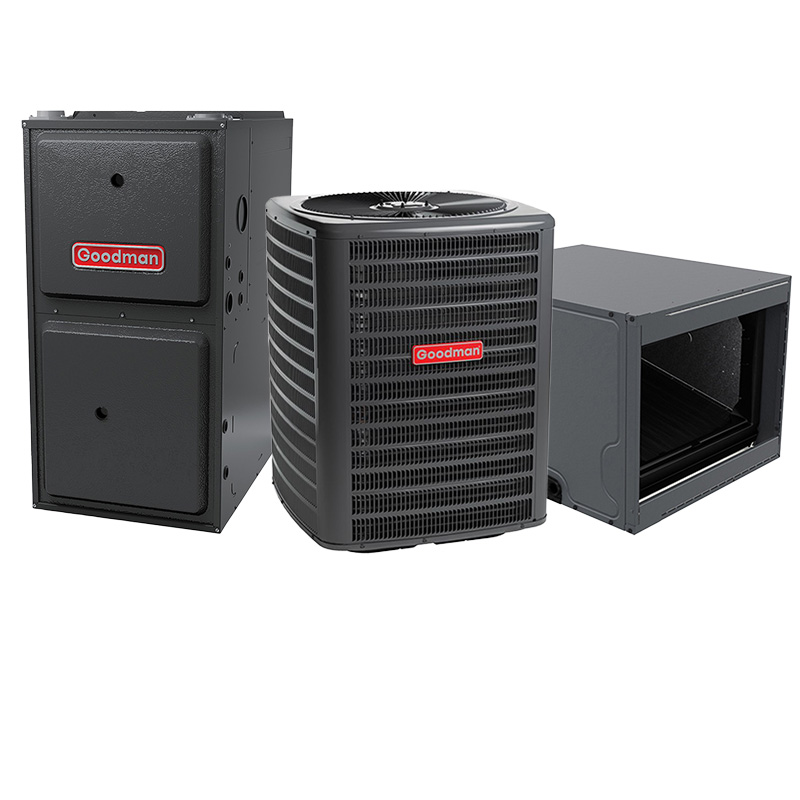
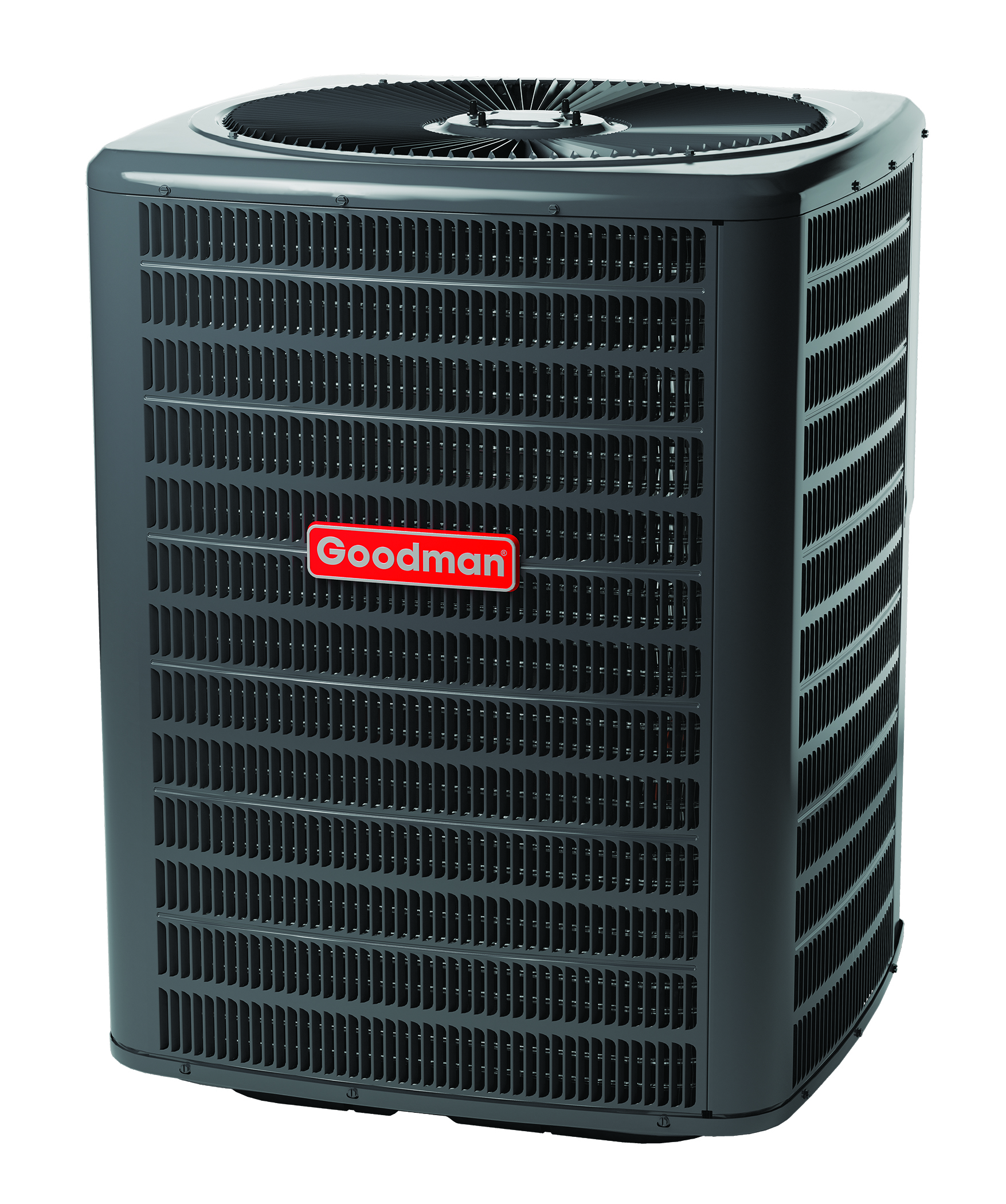
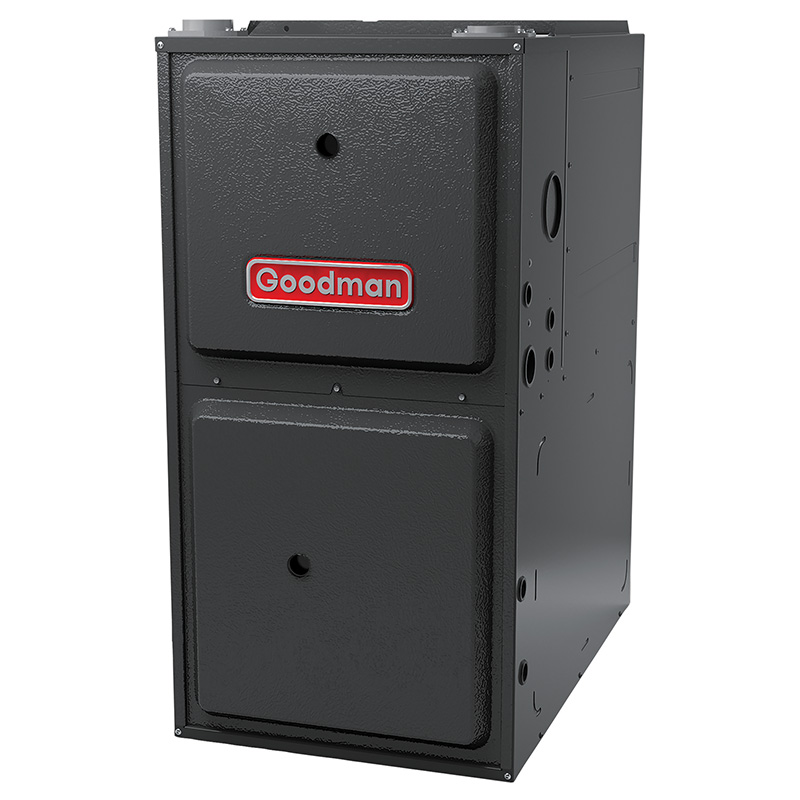
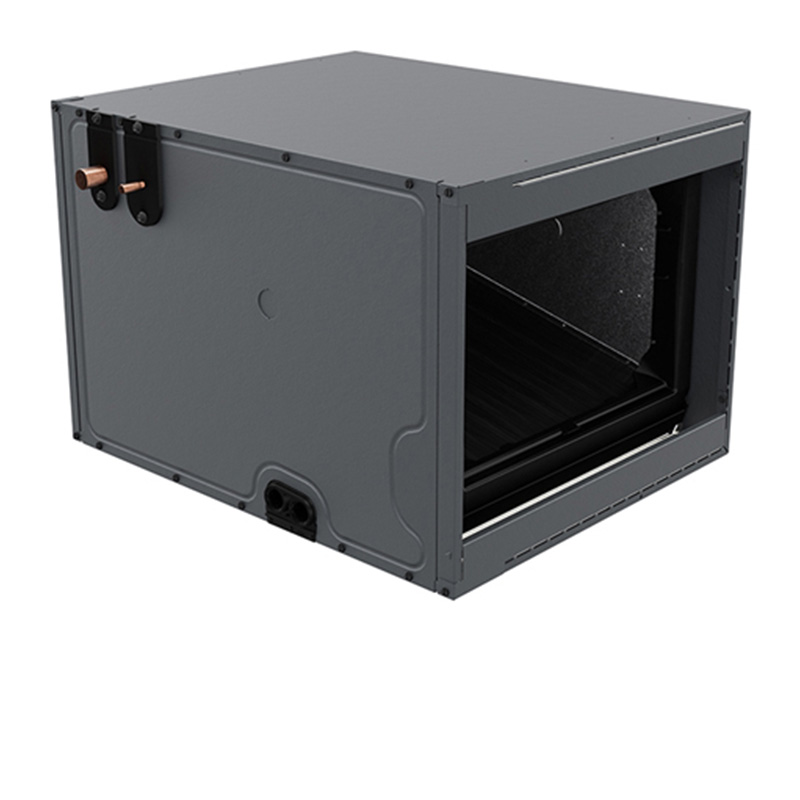
Goodman AC And Furnace – 4 Ton 16.7 SEER2 2 Stage AC With 120000 BTU 97% AFUE Modulating Variable-Speed ECM Gas Furnace System – Horizontal | R32
View on AC Direct see your lowest price →Check current price on AC Direct →
Key features
- 4-ton, 16.7 SEER2 two-stage cooling with R-32 refrigerant
- 120,000 BTU modulating gas furnace rated at 97% AFUE
- Variable-speed ECM blower motor for precise, quiet airflow
- Horizontal discharge configuration for attic and crawlspace installs
- Two-stage compression for improved humidity removal and part-load efficiency
- R-32 refrigerant: lower global warming potential than R-410A
About this system
This Goodman package pairs a 4-ton, 16.7 SEER2 two-stage air conditioner with a 120,000 BTU, 97% AFUE modulating variable-speed ECM gas furnace in a horizontal configuration, meaning the air handler sits on its side and discharges air through the side rather than the bottom. That orientation is purpose-built for attic installations, crawlspace setups, and utility closets where ceiling height is limited. The R-32 refrigerant charge is a forward-looking choice: R-32 has a lower global warming potential than R-410A and is increasingly the industry standard as R-410A is phased down, so replacement refrigerant should remain available and competitively priced for years ahead.
The two-stage AC compressor runs at a lower capacity most of the time, only ramping to full output on the hottest days. That translates to longer, steadier cooling cycles that do a better job of pulling humidity out of the air compared with a single-stage unit. On the heating side, a modulating furnace adjusts its output in small increments rather than simply switching on and off, which smooths out temperature swings and lets the variable-speed ECM blower motor run at the precise airflow the space needs. The combination is well suited to larger homes in climates with both serious summer cooling loads and cold winters, particularly where comfort consistency and energy bills both matter. Budget-conscious buyers who want two-stage or modulating performance without paying Trane or Carrier prices will find this system sits in a compelling spot on the price-to-spec curve.
This Goodman bundle delivers genuine high-efficiency specs at a price point meaningfully below comparable Trane, Carrier, and Lennox systems, making it a legitimate option for budget-focused buyers who want two-stage cooling and modulating heat. The trade-off is a brand track record that shows more repair activity after year 7 than premium competitors, and performance that is heavily dependent on how carefully the system is commissioned at installation. Buyers who vet their installer as carefully as they vet the equipment will get the most out of it.
Overall score is the average of the five ratings above.
What we like
- 16.7 SEER2 two-stage cooling offers real efficiency and humidity control gains over entry-level single-stage units
- 97% AFUE modulating furnace is near the top of the efficiency range available for gas heating
- Variable-speed ECM blower reduces electricity consumption and operates more quietly than fixed-speed alternatives
- R-32 refrigerant is better positioned for long-term availability as R-410A is phased out
- Horizontal configuration opens up installation locations unavailable to vertical units, useful in finished homes
Trade-offs
- Dual-run capacitors are the most commonly reported failure on Goodman cooling equipment, typically appearing after several years of use
- Evaporator coil leaks appear in a meaningful share of owner reviews, and a 4-ton coil replacement is not a small expense
- Compressor lifespan averages 10 to 14 years in real-world reports, shorter than the 15 to 20 years seen more often with premium brands
- A minority of owners report refrigerant leaks within the first year, most often traced to installation or initial charge issues rather than equipment defects
What homeowners and pros say about Goodman
Homeowners who go looking for Goodman feedback quickly land on two very different pools of opinion. On ConsumerAffairs, the brand sits at roughly 2.5 out of 5, and the comment threads are dominated by owners dealing with rising repair bills, most commonly after the system crosses the 7-year mark. The specific failure points that come up repeatedly are dual-run capacitor failures, evaporator coil leaks, and in a smaller number of cases, refrigerant loss traced back to the original installation. Those are not minor complaints on a 4-ton system with a modulating furnace, where even a mid-range repair can become a significant expense. On the other side of the ledger, Google reviews aggregated across dealer locations average around 3.8 out of 5, and the most consistent praise is straightforward: the system cost less than competing bids and it cools and heats the house as advertised when it was properly installed.
HVAC technicians who work on Goodman equipment regularly tend to have a nuanced take. The consensus is that the hardware is adequate for its price tier, but that installation quality separates the owners who are happy after 12 years from the ones posting frustrated reviews at year 8. The capacitor issue is widely seen as a predictable, low-cost maintenance item rather than a structural flaw, but coil leaks and shortened compressor lifespan compared to Trane or Carrier are genuine trade-offs that show up in honest service records. For a horizontal installation like this one, where access for future service is often more limited than in a basement setup, that service history matters more than usual. Buyers who treat the installer selection as seriously as the equipment selection, and who factor in an extended labor warranty, tend to report significantly better outcomes with this brand than those who chase the lowest installation bid.
Sources: ConsumerAffairs Goodman owner reviews, AHRI Directory of Certified Product Performance, U.S. DOE appliance and equipment efficiency standards, Goodman product specification sheets.
What it costs to run
At 16.7 SEER2, cooling this 4-ton system for a typical 1200-hour cooling season at the U.S. average electricity rate of $0.17/kWh works out to roughly $586 per year in cooling, about $145 less per year than a minimum-efficiency 13.4 SEER2 unit of the same size. Your real cost depends on your climate and local rate.
Method: (48,000 BTU/hr ÷ 16.7 SEER2) × 1200 hours ÷ 1000 × $0.17/kWh. Rate source: U.S. EIA average; cooling hours: moderate-climate estimate.
How it compares
| Brand | Comparable model | SEER2 | Stage | Price position |
|---|---|---|---|---|
| Goodman | This system (4-ton 16.7 SEER2 two-stage AC + 97% AFUE modulating furnace, horizontal, R-32) | 16.7 | Two-stage cooling / Modulating heat | Value pick |
| Carrier | Performance 17 series (24ACC7 AC + 59MN7 furnace bundle) | ~17 | Two-stage cooling / Two-stage heat | Typically 15 to 25 percent more than this Goodman system |
| Trane | XR17 series (4TTR7 AC + S9X2 furnace bundle) | ~17 | Two-stage cooling / Two-stage heat | Typically 15 to 25 percent more than this Goodman system |
| Lennox | Merit 16 series (ML17XC1 AC + ML296V furnace bundle) | ~16-17 | Two-stage cooling / Variable heat | Typically 15 to 25 percent more than this Goodman system |
Competitor rows are comparable single-stage units at similar efficiency; price is relative position, not a quote.
Questions about this system
Is a horizontal installation more complicated or expensive than a standard vertical install?
Yes, typically. Horizontal installs in attics or crawlspaces require proper sloping for condensate drainage, adequate support for the unit's weight, and enough clearance for service access. Labor time often runs higher than a straight-forward closet or basement vertical install, so confirm your HVAC contractor has specific experience with horizontal configurations before you book the job.
Does this system require a new thermostat to take advantage of the modulating furnace and two-stage cooling?
Not necessarily, but a two-stage or communicating thermostat will let you use both stages of the AC and the full modulation range of the furnace. A basic single-stage thermostat will still operate the system but defaults everything to high stage, which largely defeats the efficiency and comfort benefits you are paying for.
How long should I expect the compressor in a 4-ton Goodman unit to last?
Based on reported owner experience, Goodman compressors typically average 10 to 14 years of service, which is somewhat shorter than the 15 to 20 years more commonly seen with premium-brand equipment. Keeping the coils clean, maintaining proper refrigerant charge, and not oversizing the unit are the best ways to stay toward the higher end of that range.
What does the R-32 refrigerant mean for me practically, compared to R-410A systems I have seen?
R-32 operates at similar pressures to R-410A, so most certified HVAC technicians can service it without major new equipment. Its lower global warming potential puts it on the right side of upcoming regulations, meaning supply should remain stable as R-410A production winds down. One practical note: R-32 is mildly flammable (A2L classification), which requires technicians to follow specific handling procedures.
Is the 10-year parts warranty Goodman advertises actually reliable, and what does it cover?
Goodman's 10-year registered limited parts warranty covers major components including the compressor and heat exchanger when you register the unit within 60 days of installation. It does not cover labor, refrigerant, or consequential costs, so an extended labor warranty purchased through your installer is worth serious consideration given the repair-cost pattern that shows up in owner reviews after year 7.
Specifications
| Cooling capacity | 4 Ton |
| Efficiency | 16.7 SEER2 |
| Furnace output | 120000 BTU |
| Furnace efficiency | 97% AFUE |
| Configuration | Horizontal |
| Refrigerant | R-32 |