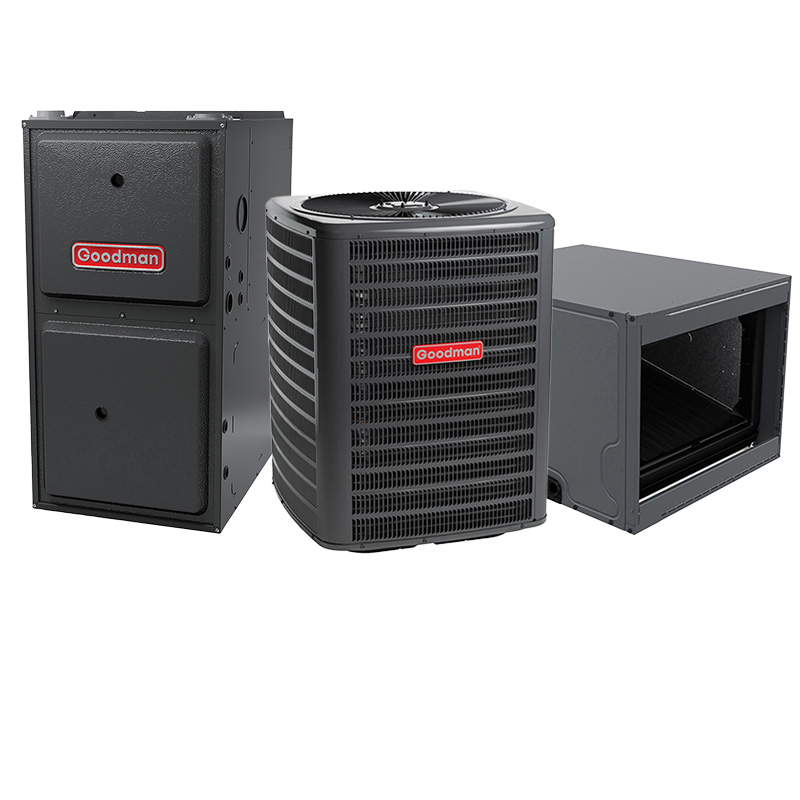
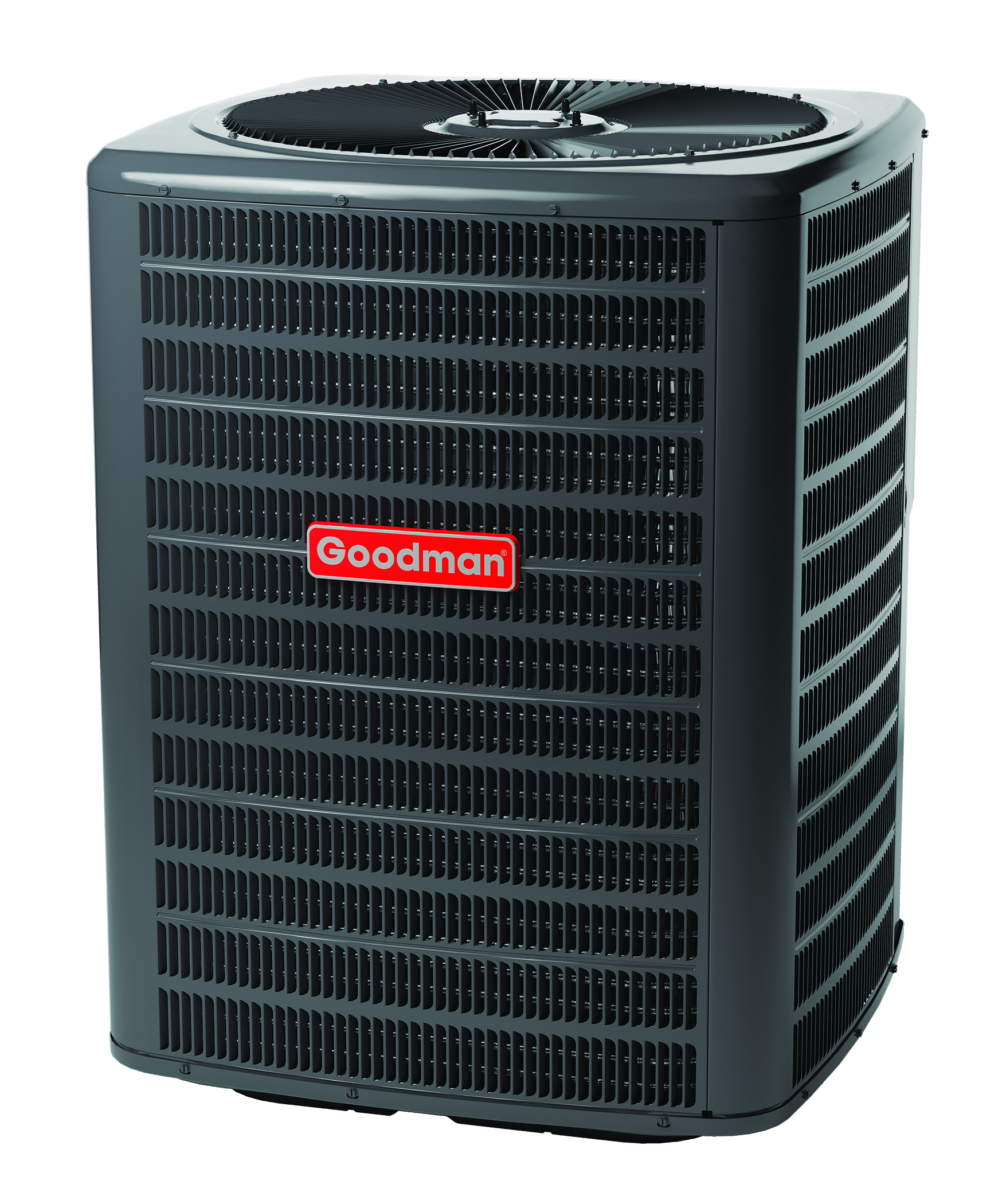
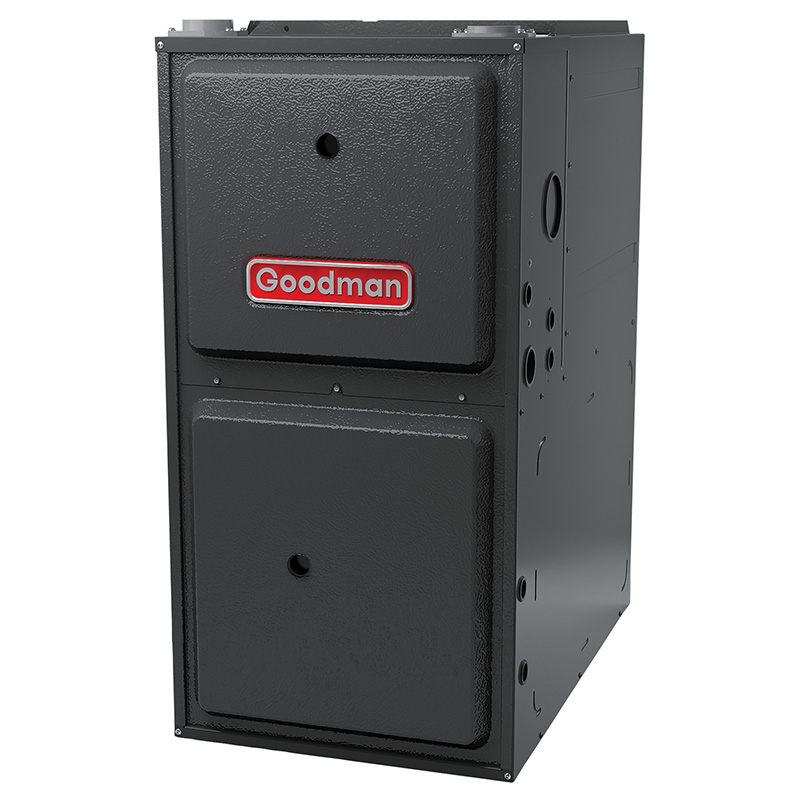
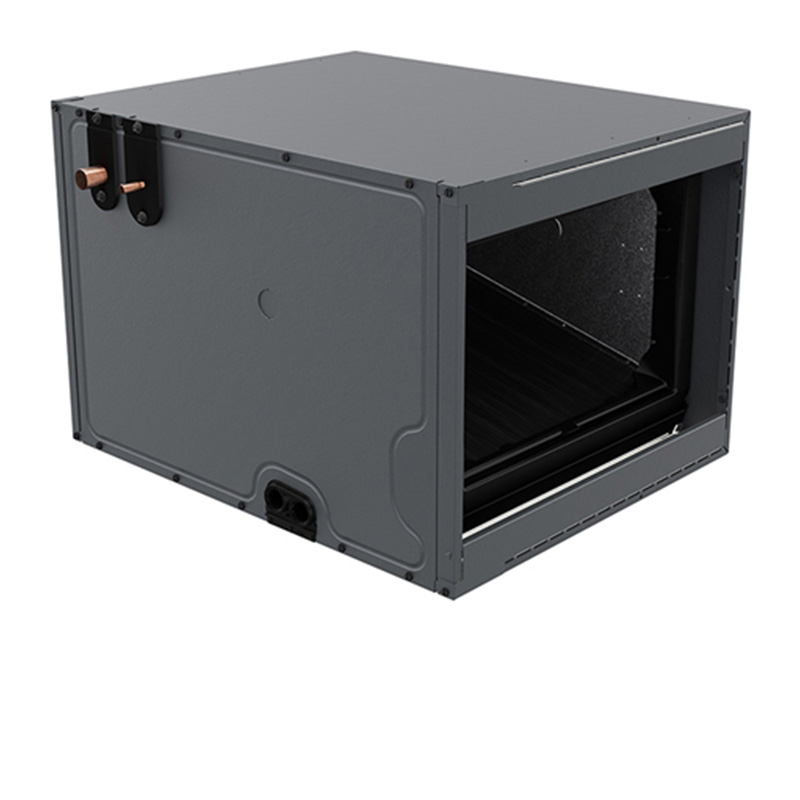
Goodman AC And Furnace – 4 Ton 16.7 SEER2 2 Stage AC With 80000 BTU 97% AFUE Modulating Variable-Speed ECM Gas Furnace System – Horizontal | R32
View on AC Direct see your lowest price →Check current price on AC Direct →
Key features
- 4-ton two-stage AC rated at 16.7 SEER2 for mid-tier cooling efficiency
- 80,000 BTU modulating gas furnace with 97% AFUE for near-maximum heating efficiency
- Variable-speed ECM blower motor reduces energy use and improves air distribution
- Horizontal configuration designed for attic, closet, or crawlspace installations
- R-32 refrigerant with lower global-warming potential than R-410A
- Two-stage cooling reduces short-cycling and improves dehumidification on mild days
About this system
This Goodman bundle pairs a 4-ton, 16.7 SEER2 two-stage cooling system with an 80,000 BTU, 97% AFUE modulating gas furnace in a horizontal configuration, making it a strong candidate for homes where mechanical space sits on its side, such as attic-mounted or crawlspace installations. The two-stage compressor lets the AC run at a lower capacity on mild days, which reduces short-cycling, holds humidity better, and quietly edges efficiency upward compared to a single-stage unit at the same SEER2 rating. The modulating furnace pairs with a variable-speed ECM blower to fine-tune heat output in small increments rather than blasting full capacity every cycle, so temperature swings are noticeably smaller and gas consumption drops close to that 97% efficiency ceiling in real-world use.
R-32 refrigerant is a meaningful upgrade over the older R-410A it replaces. It has a lower global-warming potential, requires a smaller refrigerant charge to do the same work, and is increasingly standard on new high-efficiency residential equipment. For a 4-ton load in a roughly 2,000 to 2,800 square foot home with average insulation, this system sits squarely in a capable mid-tier efficiency range. Buyers should be clear-eyed that Goodman hardware at this price point delivers real comfort performance, but installation quality and ongoing maintenance will determine whether this system reaches 12 years or pushes past it.
This system delivers genuine value for buyers who want high-efficiency heating and competent two-stage cooling without paying the premium brand markup, but Goodman's track record means installation quality and a good service plan matter more here than with Trane or Carrier equipment. The 97% AFUE furnace and modulating blower are real comfort upgrades; the AC hardware is capable but carries the brand's known vulnerability around capacitors, coil integrity, and compressor longevity past the decade mark. Buyers willing to invest in a skilled installer and keep up with maintenance will get most of what this spec sheet promises.
Overall score is the average of the five ratings above.
What we like
- 97% AFUE modulating furnace is among the highest efficiency tiers available and genuinely cuts heating costs
- Two-stage compressor reduces humidity swings and improves comfort on days when full capacity is not needed
- Variable-speed ECM blower is quieter and draws significantly less electricity than a standard multi-speed motor
- Priced roughly 15 to 25 percent below comparable Trane, Lennox, and Carrier systems, lowering the barrier to high-efficiency equipment
- R-32 refrigerant reduces environmental impact and requires a smaller charge, which can simplify leak-related service calls
Trade-offs
- Dual-run capacitors are the most frequently reported failure point, typically requiring a repair call within the first 7 to 10 years
- Evaporator coil leaks appear in a notable share of owner reviews and can be expensive to address after the parts warranty period
- Compressor lifespan averages 10 to 14 years versus 15 to 20 for premium brands, a real gap at the 12-year mark
- A minority of early owners report refrigerant leaks in year one, most traced to install or initial charge issues rather than the equipment itself
What homeowners and pros say about Goodman
Homeowners who chose Goodman equipment largely echo the same theme you see reflected in the brand’s Google dealer scores, which sit around 3.8 out of 5 across hundreds of reviews per location: the price-to-performance ratio is the main reason they bought it, and most are reasonably satisfied in the first few years. The ConsumerAffairs profile is rougher, running closer to 2.5 out of 5, though that channel draws complaints disproportionately. The recurring pattern in negative feedback is consistent: repair costs that start climbing after roughly year 7, often beginning with a dual-run capacitor failure (a 300 to 600 dollar fix that catches owners off guard) and sometimes escalating to evaporator coil leaks that are harder to absorb out of pocket once the parts warranty period has passed.
HVAC technicians who work on Goodman equipment regularly tend to hold a pragmatic view: the hardware is functional, the parts are widely available and not expensive, and the system performs well when it is installed correctly. The installer is the leverage point they cite most often, because improper refrigerant charge or poor airflow setup accelerates every known failure mode, from early coil degradation to shortened compressor life. Goodman compressors averaging 10 to 14 years versus the 15 to 20 years seen in premium brands is a real trade-off pros acknowledge openly. For this specific system, the high-efficiency furnace side draws fewer complaints than the AC hardware, and the modulating variable-speed components tend to be praised for comfort improvement when everything is dialed in correctly from day one.
Sources: ConsumerAffairs Goodman owner reviews, AHRI Directory of Certified Product Performance, U.S. DOE appliance and equipment efficiency standards, Goodman product specification sheets.
What it costs to run
At 16.7 SEER2, cooling this 4-ton system for a typical 1200-hour cooling season at the U.S. average electricity rate of $0.17/kWh works out to roughly $586 per year in cooling, about $145 less per year than a minimum-efficiency 13.4 SEER2 unit of the same size. Your real cost depends on your climate and local rate.
Method: (48,000 BTU/hr ÷ 16.7 SEER2) × 1200 hours ÷ 1000 × $0.17/kWh. Rate source: U.S. EIA average; cooling hours: moderate-climate estimate.
How it compares
| Brand | Comparable model | SEER2 | Stage | Price position |
|---|---|---|---|---|
| Goodman | This system: 4-ton 16.7 SEER2 two-stage AC + 80k BTU 97% AFUE modulating furnace, horizontal, R-32 | 16.7 | Two-stage | Value pick |
| Carrier | Comfort 16 series (two-stage AC paired with Infinity 97 or Performance 96 gas furnace) | 16-17 | Two-stage | Typically 15 to 25 percent more than this Goodman bundle |
| Trane | XR16 AC paired with S9V2 96% or 97% AFUE variable-speed furnace | 16-17 | Two-stage | Typically 15 to 25 percent more than this Goodman bundle |
| Lennox | Merit 16 AC paired with ML197 or EL197 97% AFUE furnace | 16-17 | Two-stage | Typically 15 to 25 percent more than this Goodman bundle |
Competitor rows are comparable single-stage units at similar efficiency; price is relative position, not a quote.
Questions about this system
Is horizontal-only configuration a problem if I ever want to convert to upflow or downflow later?
Yes, this unit is built and certified for horizontal orientation only, so repositioning it to upflow or downflow would require replacing the air handler or furnace cabinet entirely. Confirm your mechanical space requires horizontal before purchasing, and factor that constraint into any future renovation plans.
How does R-32 affect service costs compared to the R-410A systems I have been getting quotes on?
R-32 refrigerant is increasingly available and many technicians already stock it, but it is mildly flammable (A2L classification), which means service requires certified technicians with appropriate equipment. In most markets this does not significantly raise service call costs, but it is worth confirming your local contractors are R-32 certified before committing.
The capacitor failure issue is well documented with Goodman. Can I do anything proactively to avoid an emergency repair call?
Yes. Ask your installer to use a higher-rated aftermarket capacitor at startup, or budget for a proactive replacement around years 6 to 8 before failure occurs. Dual-run capacitor swaps run roughly 300 to 600 dollars with a service call, and catching it on a scheduled visit is far less disruptive than an emergency breakdown on a hot day.
Does the modulating furnace require a communicating thermostat to work properly, or will a standard smart thermostat do?
The modulating operation works best with a compatible communicating thermostat that can send precise demand signals to the furnace control board. A standard 24V smart thermostat will still run the furnace, but may limit it to fewer modulation stages, reducing some of the comfort and efficiency advantage. Check Goodman's compatibility list before purchasing your thermostat.
What does Goodman's warranty actually cover on this system, and are there conditions I need to meet to keep it valid?
Goodman typically offers a 10-year parts limited warranty on registered equipment, which covers the compressor, coils, and most functional components. To maintain coverage you must register the equipment within a set window after installation (usually 60 days) and, critically, have the system installed by a licensed HVAC contractor. DIY installation or failure to register typically reduces coverage to 5 years, so registration should happen immediately after startup.
Specifications
| Cooling capacity | 4 Ton |
| Efficiency | 16.7 SEER2 |
| Furnace output | 80000 BTU |
| Furnace efficiency | 97% AFUE |
| Configuration | Horizontal |
| Refrigerant | R-32 |