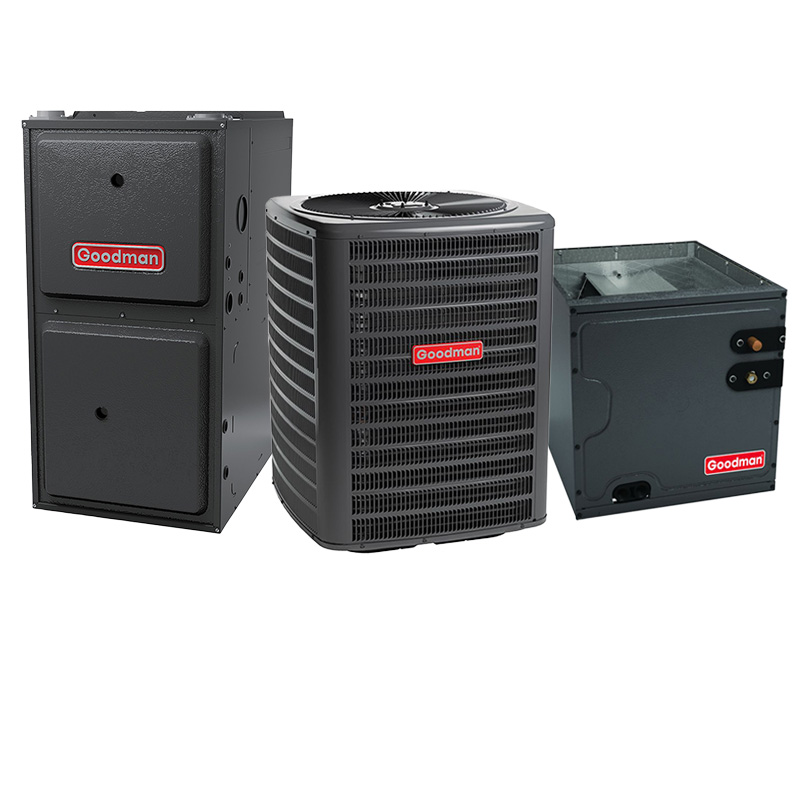
Goodman AC And Furnace – 4 Ton 17.2 SEER2 2 Stage AC With 120000 BTU 97% AFUE Modulating Variable-Speed ECM Gas Furnace System – Upflow | R32
View on AC Direct see your lowest price →Check current price on AC Direct →
Key features
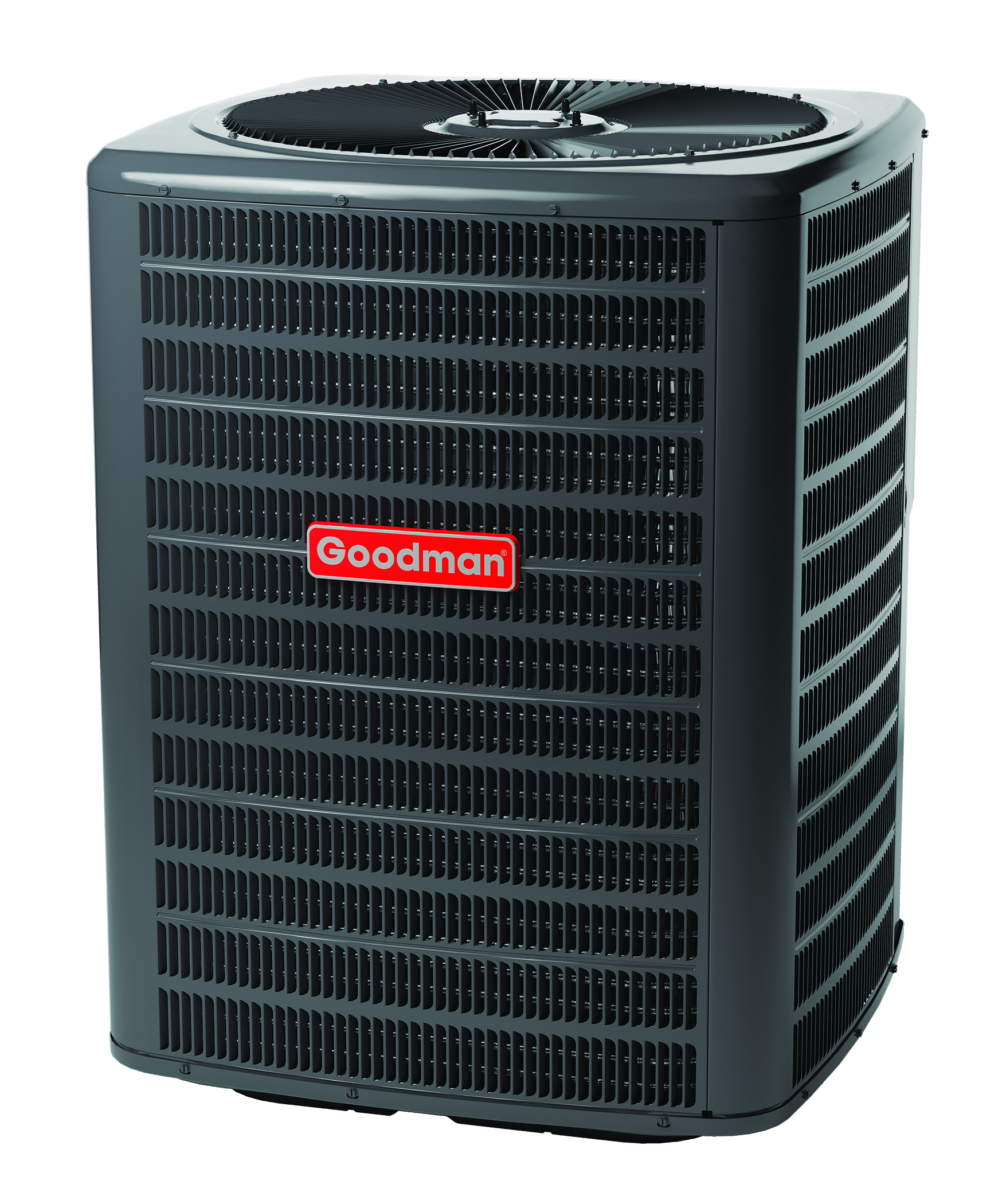
- 4-ton two-stage compressor rated at 17.2 SEER2 for upper-mid cooling efficiency
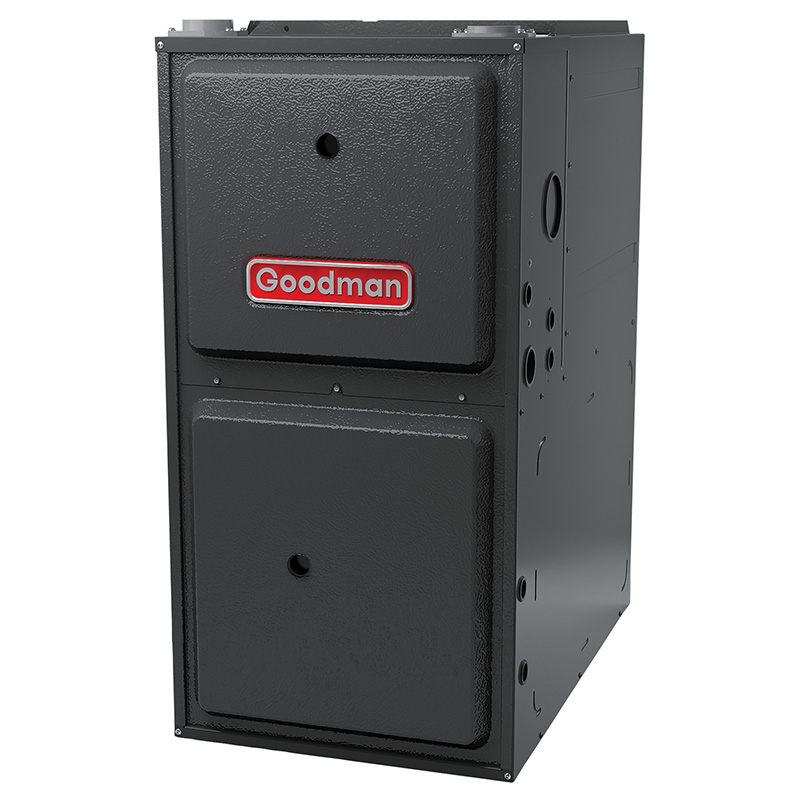
- 120,000 BTU modulating gas furnace at 97% AFUE for near-maximum fuel efficiency
- Variable-speed ECM blower motor reduces operating energy and improves comfort consistency
- R-32 refrigerant with lower global warming potential than outgoing R-410A
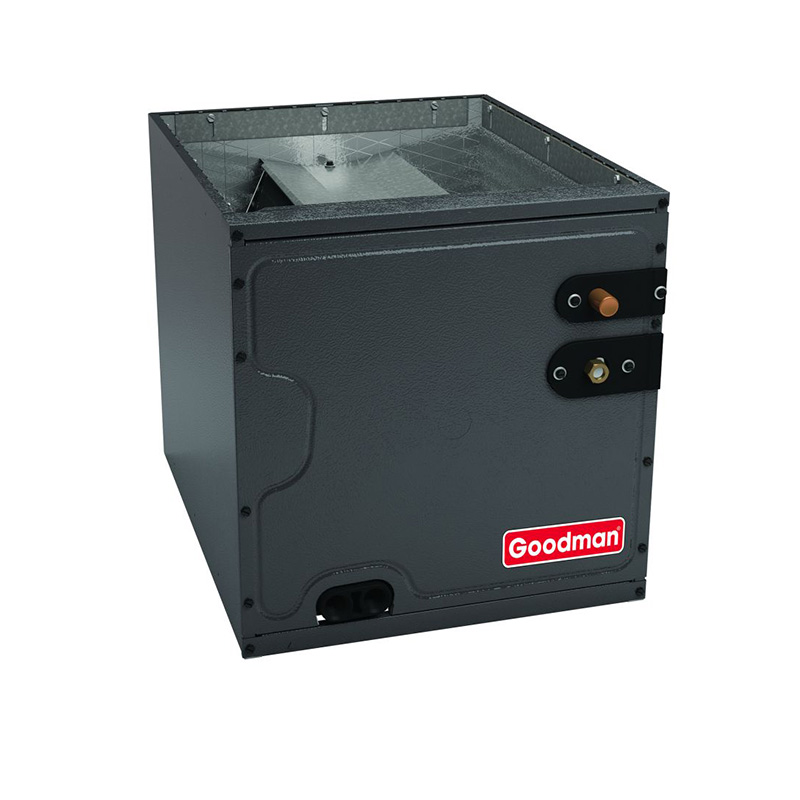
- Upflow configuration suits most homes with basement or closet air handler placement
- Two-stage cooling reduces short-cycling and improves humidity control during mild weather
About this system
This Goodman bundle pairs a 4-ton, 17.2 SEER2 two-stage air conditioner with a 120,000 BTU, 97% AFUE modulating gas furnace in an upflow configuration, making it a strong candidate for larger homes in mixed climates where both summer cooling loads and winter heating demands are meaningful. The two-stage compressor runs at low capacity during mild weather, reducing short-cycling and humidity spikes, while the modulating furnace adjusts heat output in small increments for steadier indoor temperatures and quieter operation. The variable-speed ECM blower motor ties both together, cutting fan energy use and improving air distribution across long duct runs.
The switch to R-32 refrigerant is worth noting for buyers thinking long-term. R-32 has a lower global warming potential than the R-410A it replaces, and industry supply chains are already shifting toward it, which should keep service costs reasonable over the system’s life. At 97% AFUE, the furnace captures nearly all the fuel energy it burns, a meaningful advantage in climates with cold winters and high gas bills. The 17.2 SEER2 rating sits in the upper-mid efficiency tier, well above the federal minimums for most U.S. regions, though it does not reach the premium variable-speed compressor territory of 20-plus SEER2 systems. Buyers willing to spend more can get incrementally higher efficiency; buyers prioritizing upfront cost get a capable, honest performer here.
This Goodman system delivers genuinely strong specs at a price that undercuts comparable Trane, Lennox, and Carrier equipment by 15 to 25 percent, and the modulating furnace plus two-stage AC combination produces real comfort gains over single-stage alternatives. The trade-off is a brand with a mixed long-term reliability record and documented failure points around capacitors, evaporator coils, and compressor longevity that buyers should budget for. If you pair it with a skilled installer and a maintenance plan, it earns its price; if you cut corners on installation, the value proposition erodes quickly.
Overall score is the average of the five ratings above.
What we like
- Significantly lower upfront cost compared to equivalent Carrier, Trane, and Lennox systems
- 97% AFUE modulating furnace is among the most fuel-efficient available and keeps heating bills low
- Two-stage cooling with ECM blower noticeably improves humidity control versus single-stage setups
- R-32 refrigerant positions the system well for long-term serviceability as the industry transitions
- Modulating furnace and variable-speed blower run quietly at partial capacity most of the time
Trade-offs
- Dual-run capacitor failures are the most commonly reported issue, typically surfacing within the first several years
- Compressor lifespan averages 10 to 14 years versus 15 to 20 years for premium-brand counterparts
- A minority of owners report refrigerant leaks in the first year, usually tied to install or charge quality
- Evaporator coil leaks appear in a meaningful share of owner reviews and can be costly to address
What homeowners and pros say about Goodman
Homeowners who choose Goodman tend to land in two camps. The first group appreciates the straightforward value: they got a capable two-stage system installed for less than competing brands quoted, the equipment works, and their utility bills reflect the efficiency ratings. Google dealer reviews across Goodman installers average around 3.8 out of 5, and affordability comes up repeatedly as the reason buyers went this direction. The second group surfaces on forums and review platforms like ConsumerAffairs, where Goodman scores around 2.5 out of 5. That channel skews toward complaints, but the patterns there are consistent: repair costs start climbing after roughly year seven, and the issues most often cited are dual-run capacitor failures, evaporator coil leaks, and compressors that give out in the 10-to-14-year range rather than the 15-to-20-year range owners of premium brands sometimes report.
HVAC technicians have a more nuanced view. Many will install Goodman without hesitation for cost-conscious clients, while being direct about what that choice involves. They note that the modulating furnace and two-stage compressor in this specific configuration are genuine comfort upgrades that work as advertised. They also note that Goodman’s tolerances leave less margin for sloppy installation, meaning a first-year refrigerant leak or an early coil problem is rarely a factory issue and more often a sign the system was not charged or fitted correctly. The practical takeaway from both groups is the same: this system rewards a skilled installer and routine maintenance, and it punishes corner-cutting more visibly than a premium brand might.
Sources: ConsumerAffairs Goodman owner reviews, AHRI Directory of Certified Product Performance, U.S. DOE appliance and equipment efficiency standards, Goodman product specification sheets.
What it costs to run
At 17.2 SEER2, cooling this 4-ton system for a typical 1200-hour cooling season at the U.S. average electricity rate of $0.17/kWh works out to roughly $569 per year in cooling, about $162 less per year than a minimum-efficiency 13.4 SEER2 unit of the same size. Your real cost depends on your climate and local rate.
Method: (48,000 BTU/hr ÷ 17.2 SEER2) × 1200 hours ÷ 1000 × $0.17/kWh. Rate source: U.S. EIA average; cooling hours: moderate-climate estimate.
How it compares
| Brand | Comparable model | SEER2 | Stage | Price position |
|---|---|---|---|---|
| Goodman | 4-Ton 17.2 SEER2 Two-Stage AC + 120,000 BTU 97% AFUE Modulating Furnace | 17.2 | Two-stage | Value pick |
| Carrier | Comfort 16 / Performance 17 Series (24ACC6 paired with 59TP6 furnace) | 17 | Two-stage | Typically 15 to 25 percent more than this Goodman bundle |
| Trane | XR17 AC paired with S9V2 96% AFUE variable-speed furnace | 17 | Two-stage | Typically 15 to 25 percent more than this Goodman bundle |
| Lennox | Merit ML17XC1 AC paired with SL297NV 97% AFUE modulating furnace | 17 | Two-stage | Typically 15 to 25 percent more than this Goodman bundle |
Competitor rows are comparable single-stage units at similar efficiency; price is relative position, not a quote.
Questions about this system
Is 120,000 BTU too large for my home, and does oversizing hurt performance with this furnace?
Oversizing any furnace causes short-cycling, uneven temperatures, and excess humidity. A 120,000 BTU output is appropriate for larger homes, typically 2,500 square feet and up depending on climate and insulation, but you should have a Manual J load calculation done before purchasing. The modulating design does reduce some of the oversizing penalty by running at lower output, but it does not fully compensate for a significant mismatch.
What does the documented capacitor failure issue mean for my maintenance budget?
Dual-run capacitor failures are the most frequently reported repair on Goodman AC units and often occur within the first several years of ownership. The part and labor cost typically falls in the 300 to 600 dollar range, which is a manageable but real out-of-pocket expense if it happens outside the warranty window. Keeping a maintenance contract that includes inspection of electrical components is a practical way to catch a weakening capacitor before it causes a full-system shutdown.
How does R-32 refrigerant affect future service costs compared to R-410A?
R-32 is becoming the industry standard replacement for R-410A, which is being phased out, so technician familiarity and parts availability should improve over time rather than decline. R-32 is also a single-component refrigerant, meaning it can be topped off without a full recharge if a small leak is found, unlike some blended refrigerants. Long-term serviceability looks favorable.
What warranty does Goodman include, and are there registration requirements?
Goodman typically offers a 10-year parts warranty when the system is registered online within a specified window after installation, and a shorter unregistered warranty applies if registration is missed. The compressor often carries a separate limited lifetime compressor replacement warranty on registered units. Always confirm current warranty terms at purchase, as Goodman has updated its coverage structure in recent years, and verify that your installer registers the equipment on your behalf.
How much does installer quality actually affect how this system performs and lasts?
HVAC technicians consistently point to installation quality as the single largest factor in Goodman system longevity, more so than with premium brands that have tighter factory tolerances. Proper refrigerant charge, correct duct sizing, accurate airflow balancing, and a tight coil connection are each critical. The first-year refrigerant leak complaints documented in owner reviews are almost always an installation or charge issue rather than a factory defect, which underscores why choosing a licensed, experienced installer matters more here than it might with a premium brand.
Specifications
| Cooling capacity | 4 Ton |
| Efficiency | 17.2 SEER2 |
| Furnace output | 120000 BTU |
| Furnace efficiency | 97% AFUE |
| Configuration | Upflow |
| Refrigerant | R-32 |