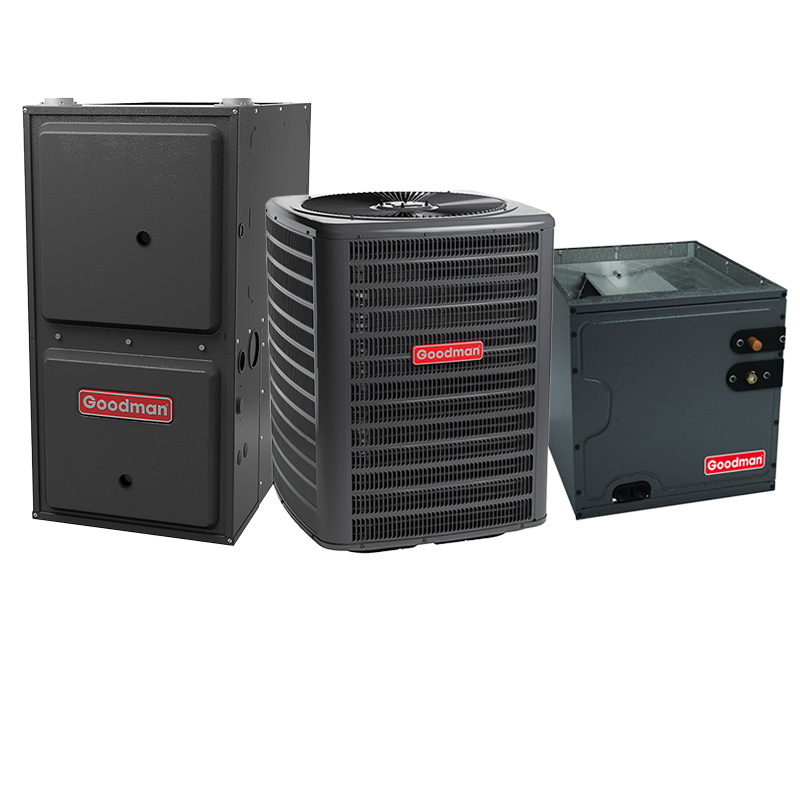
Goodman AC And Furnace – 4 Ton 17.2 SEER2 2 Stage AC With 80000 BTU 97% AFUE Modulating Variable-Speed ECM Gas Furnace System – Downflow | R32
View on AC Direct see your lowest price →Check current price on AC Direct →
Key features
- 17.2 SEER2 two-stage compressor for improved part-load efficiency and humidity control
- 97% AFUE modulating gas valve furnace for consistent temperatures and reduced fuel waste
- Variable-speed ECM blower motor for quiet, efficient airflow and better filtration performance
- Downflow configuration suits closet, utility room, or above-crawlspace installations
- R-32 refrigerant charge with lower global warming potential than R-410A
- 4-ton capacity appropriate for roughly 2,000 to 2,600 square feet depending on climate and insulation
About this system
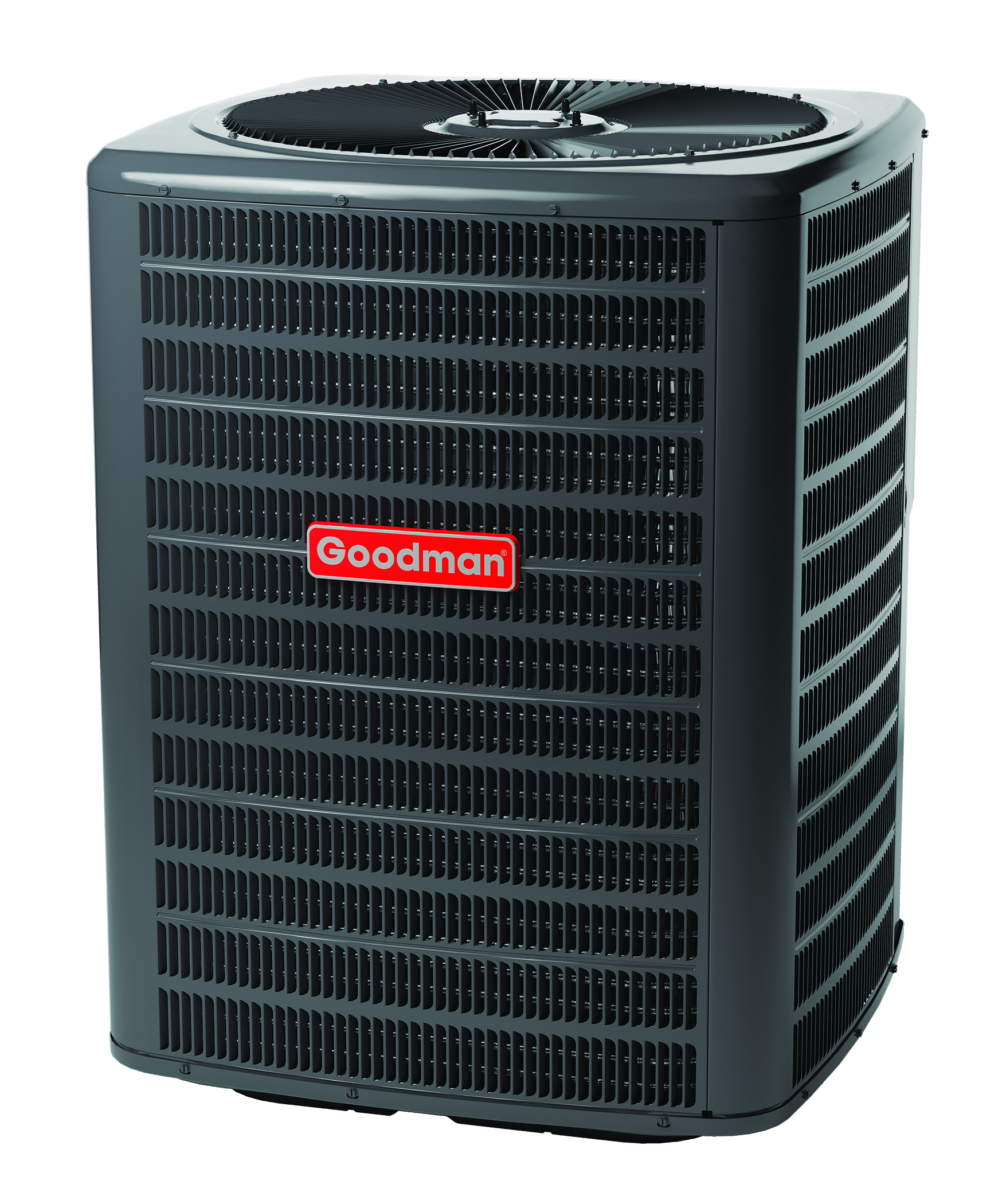
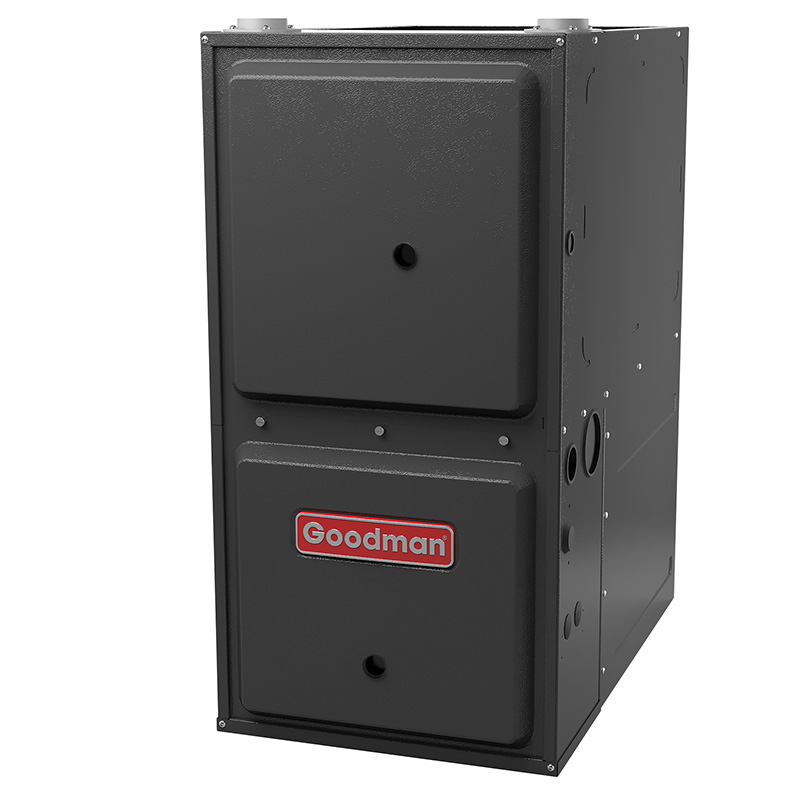
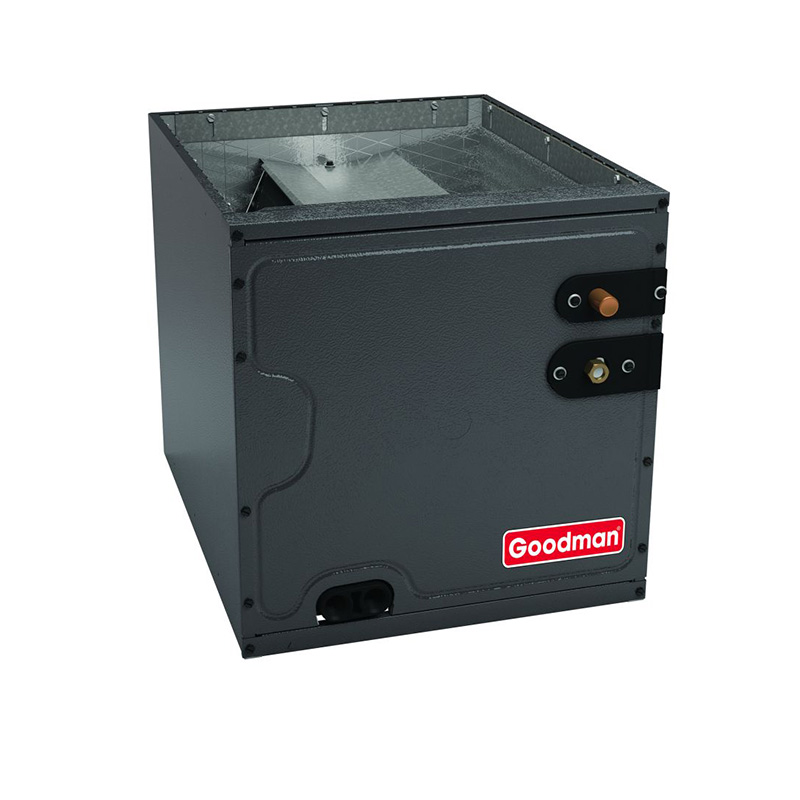
This Goodman bundle pairs a 4-ton, 17.2 SEER2 two-stage cooling system with an 80,000 BTU, 97% AFUE modulating variable-speed ECM gas furnace in a downflow configuration, making it a strong candidate for homes where the air handler sits in a closet or utility space above a crawlspace or basement ceiling. The two-stage compressor on the AC side means the system runs at a lower capacity on mild days, reducing the short-cycling that hammers comfort and humidity control in oversized single-stage setups. The furnace’s modulating gas valve and variable-speed ECM blower take that a step further, continuously adjusting output rather than simply toggling between high and low, which translates to steadier indoor temperatures and quieter operation compared to basic two-stage equipment.
The R-32 refrigerant charge is worth understanding before you buy. R-32 has a lower global warming potential than the R-410A it is replacing across the industry, and it is increasingly the standard for new residential equipment. However, it does require technicians who are familiar with its slightly higher operating pressures and flammability classification, so confirming your installer has R-32 experience is not optional. At 97% AFUE, the furnace qualifies as high-efficiency and may be eligible for federal tax credits and utility rebates depending on your location. That efficiency level requires PVC condensate and vent lines rather than metal flue pipe, which adds a small amount of installation labor. Altogether, this system targets homeowners who want premium performance features at a price point noticeably below Trane, Carrier, or Lennox equivalents, and who are willing to invest in a quality installation to get the most out of it.
This Goodman system delivers genuinely premium specs, including a modulating furnace and two-stage AC, at a price that undercuts comparable Trane, Carrier, and Lennox bundles by a meaningful margin. The trade-off is a brand history that shows shorter compressor longevity and documented component issues, meaning the savings work best when paired with a skilled installer and a proactive maintenance routine. Buyers comfortable with that calculus get a capable, feature-rich system; buyers who want the lowest possible long-term risk should budget up to a premium brand.
Overall score is the average of the five ratings above.
What we like
- Modulating furnace and two-stage AC provide comfort and humidity control closer to variable-capacity premium systems
- 97% AFUE may qualify for federal tax credits and utility rebates, helping offset upfront cost
- R-32 refrigerant is a future-oriented choice as the industry moves away from R-410A
- ECM blower reduces electricity consumption during the long continuous-fan hours a modulating furnace demands
- Priced roughly 15 to 25 percent below comparable Trane, Lennox, and Carrier configurations
Trade-offs
- Goodman compressors average 10 to 14 years versus 15 to 20 years for premium brands, so lifecycle cost advantage narrows over time
- Dual-run capacitor failures and evaporator coil leaks are documented recurring issues that add service calls after year 7
- A minority of owners report refrigerant leaks within the first year, typically traced to installation or charge quality rather than the unit itself
- Downflow-only configuration limits flexibility; this unit cannot be flipped to upflow or horizontal without a different model
What homeowners and pros say about Goodman
Homeowners who post about Goodman online tend to cluster at the extremes. On Google dealer pages, where ratings average around 3.8 out of 5 across hundreds of reviews per location, the most consistent praise is straightforward: the system works and the price was noticeably lower than competing bids. Owners who had skilled installers and who scheduled annual maintenance generally report few complaints through the first several years of ownership. On ConsumerAffairs, where the platform skews toward people writing because something went wrong, Goodman sits around 2.5 out of 5, and the recurring story is rising repair bills starting around year 7. The specific components that come up repeatedly are dual-run capacitors, which fail often enough that many HVAC technicians now consider them a routine consumable on Goodman equipment, and evaporator coil leaks, which are a more expensive fix and a more frustrating one. A smaller but consistent share of first-year owners report refrigerant leaks, which most experienced technicians attribute to installation quality or charge error rather than a defect in the unit itself.
HVAC professionals who work on Goodman equipment regularly tend to describe it in practical terms: the components are accessible, parts are widely stocked, and the savings at purchase are real. What they flag for this type of high-spec bundle, which combines a modulating furnace with a two-stage AC and an R-32 charge, is that the performance ceiling is only reached when the install is done precisely. Duct sizing, refrigerant charge, condensate routing, and PVC venting all have to be correct for the modulating furnace and two-stage compressor to do what they are designed to do. Compressor longevity averaging 10 to 14 years versus the 15 to 20 years more commonly seen with Trane, Carrier, and Lennox is the most cited long-term concern, and it is the main reason pros suggest budgeting for a service contract or a capacitor replacement fund rather than assuming the lower upfront cost is purely additive savings over the life of the system.
Sources: ConsumerAffairs Goodman owner reviews, AHRI Directory of Certified Product Performance, U.S. DOE appliance and equipment efficiency standards, Goodman product specification sheets.
What it costs to run
At 17.2 SEER2, cooling this 4-ton system for a typical 1200-hour cooling season at the U.S. average electricity rate of $0.17/kWh works out to roughly $569 per year in cooling, about $162 less per year than a minimum-efficiency 13.4 SEER2 unit of the same size. Your real cost depends on your climate and local rate.
Method: (48,000 BTU/hr ÷ 17.2 SEER2) × 1200 hours ÷ 1000 × $0.17/kWh. Rate source: U.S. EIA average; cooling hours: moderate-climate estimate.
How it compares
| Brand | Comparable model | SEER2 | Stage | Price position |
|---|---|---|---|---|
| Goodman | 4-Ton 17.2 SEER2 Two-Stage AC + 80,000 BTU 97% AFUE Modulating ECM Furnace (Downflow, R-32) | 17.2 | Two-stage | Value pick |
| Carrier | Comfort 16 / Performance 17 series bundle (comparable tonnage and efficiency tier) | 16-17 | Two-stage | Typically 15 to 25 percent more than Goodman |
| Trane | XR17 AC with S9V2 modulating furnace bundle | 17 | Two-stage / Modulating furnace | Typically 15 to 25 percent more than Goodman |
| Lennox | Merit ML17XC2 AC with SLP98V furnace bundle | 17 | Two-stage / Modulating furnace | Typically 15 to 25 percent more than Goodman |
Competitor rows are comparable single-stage units at similar efficiency; price is relative position, not a quote.
Questions about this system
Does the 97% AFUE furnace in this system require a special venting setup?
Yes. At 97% AFUE, the furnace operates as a condensing unit and must be vented with PVC pipe rather than traditional metal flue pipe. It also produces condensate that needs a drain line. Your installer will need to plan for both before the job starts, particularly in a downflow closet where routing PVC to an exterior wall or drain can add time and materials.
What R-32 certifications does my HVAC technician need?
Any EPA 608-certified technician can work on R-32 systems, but R-32 carries an A2L flammability classification, which means best practices call for technicians who have completed manufacturer or industry training specific to A2L refrigerants. Ask your installer directly whether they have handled R-32 equipment before, because improper charging is one of the documented causes of early refrigerant leaks in Goodman systems.
Is the 4-ton size right for my home, or should I go up or down?
Ton sizing should always come from a Manual J load calculation performed by your contractor, not from a square footage rule of thumb. A 4-ton unit is commonly installed in homes between roughly 2,000 and 2,600 square feet in moderate climates, but ceiling height, insulation levels, window area, and local design temperatures all shift that range significantly. An oversized system short-cycles and undermines the humidity control this two-stage setup is designed to deliver.
What are the most likely repair costs I should budget for over the first 10 years?
Based on Goodman's documented failure patterns, dual-run capacitor replacement is the most common service call and typically costs 300 to 600 dollars including labor. Evaporator coil leaks are a meaningful second concern and can run considerably more depending on the repair approach. Keeping up with annual tune-ups and replacing capacitors proactively at signs of wear is the practical way to reduce the odds of a mid-summer breakdown.
What warranty comes with this system, and what do I need to do to activate it?
Goodman typically offers a 10-year parts limited warranty on registered equipment and a lifetime heat exchanger warranty on qualifying furnaces, but coverage terms require online registration within a set window after installation, usually 60 days. Failure to register commonly drops parts coverage to a shorter base period. Confirm the exact registration requirement with the seller at purchase and complete it promptly after your install date.
Specifications
| Cooling capacity | 4 Ton |
| Efficiency | 17.2 SEER2 |
| Furnace output | 80000 BTU |
| Furnace efficiency | 97% AFUE |
| Configuration | Downflow |
| Refrigerant | R-32 |