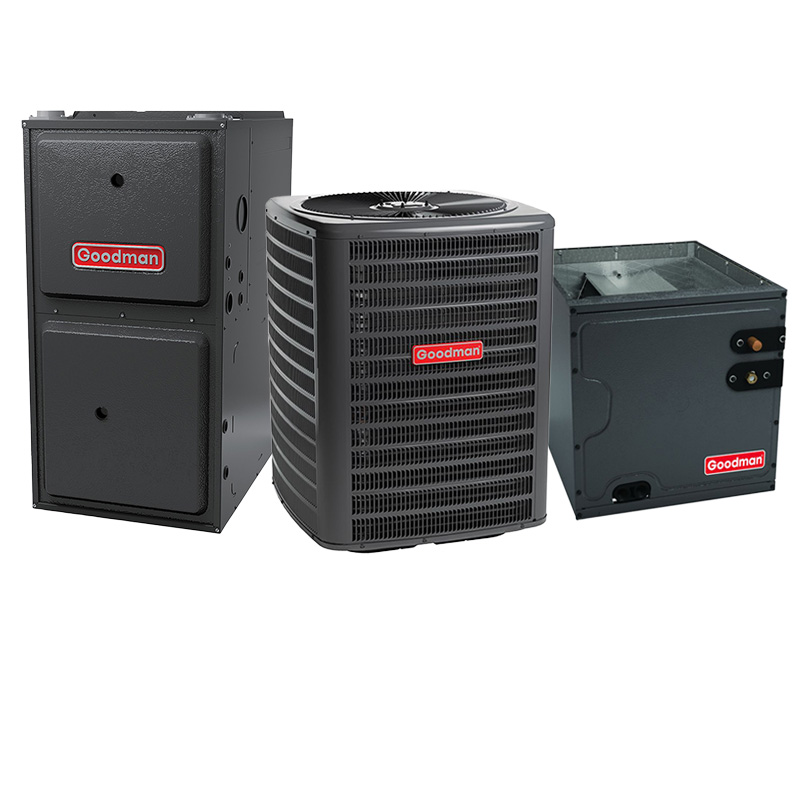
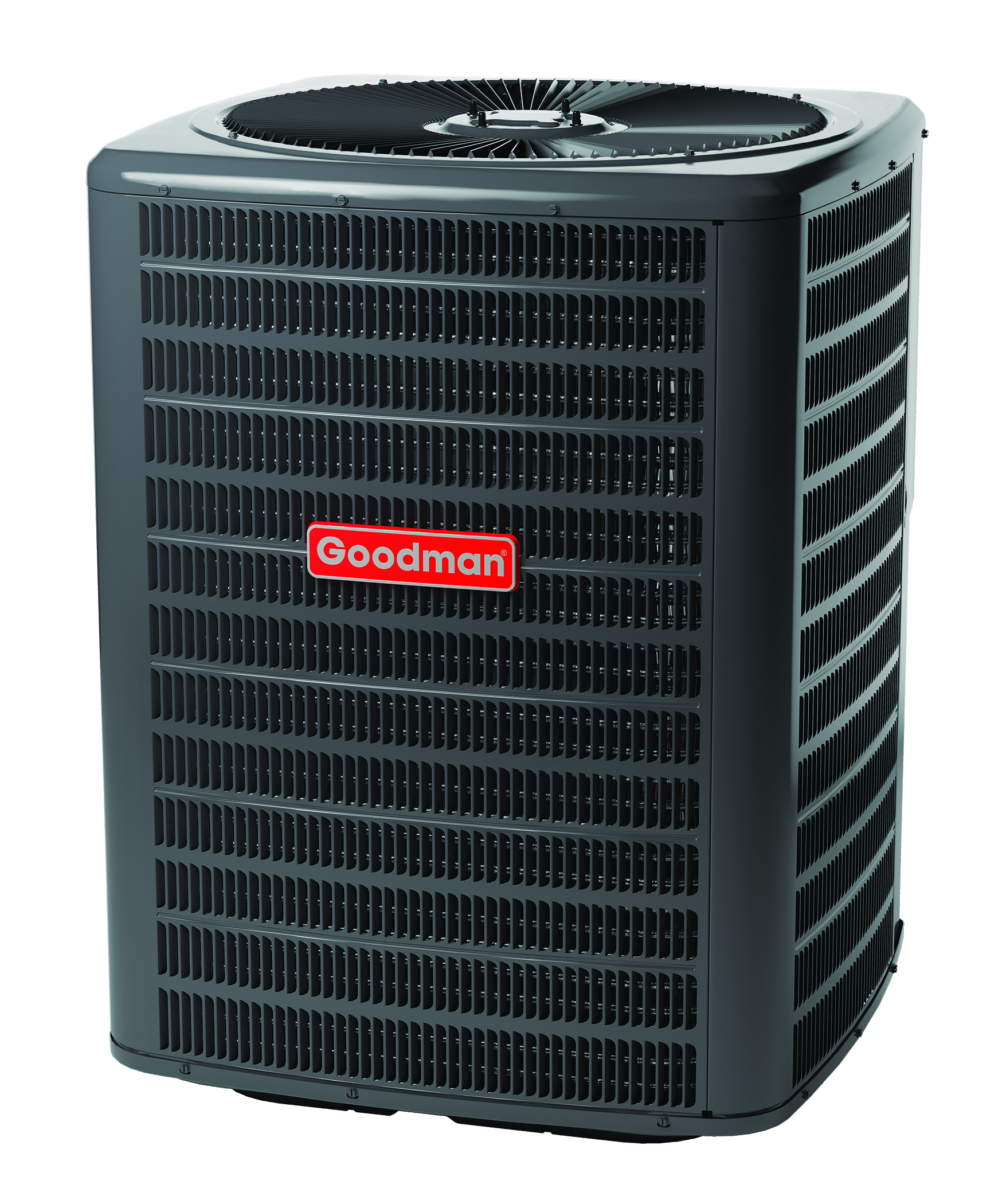
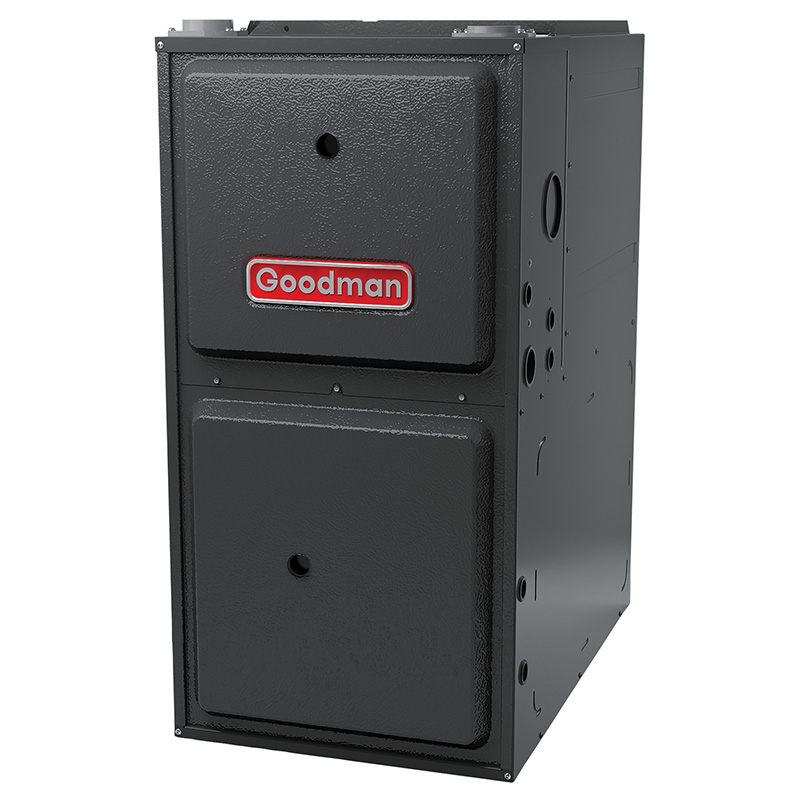
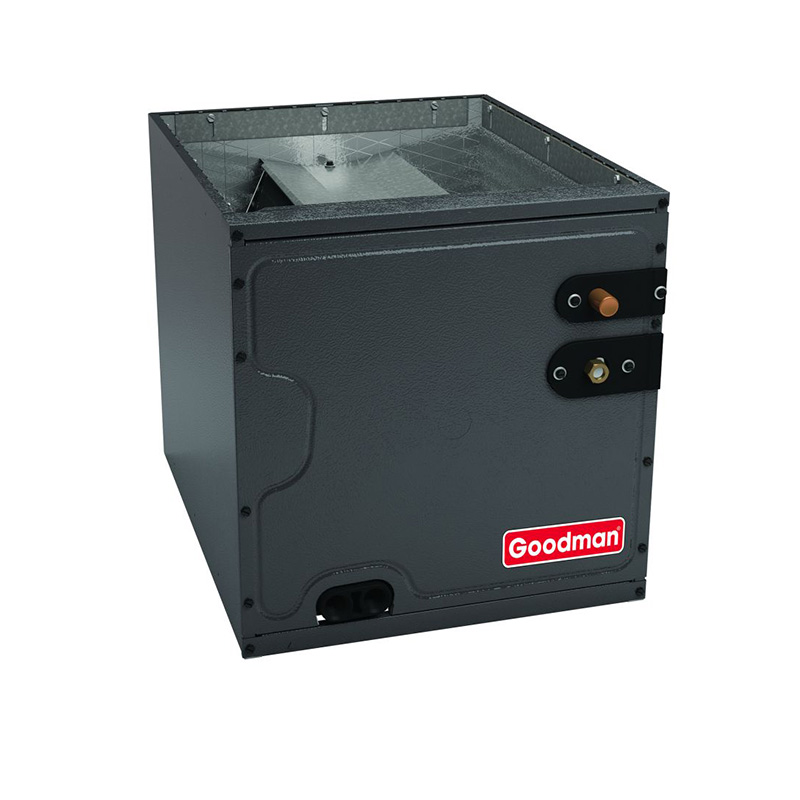
Goodman AC And Furnace – 5 Ton 16 SEER2 2 Stage AC With 120000 BTU 97% AFUE Modulating Variable-Speed ECM Gas Furnace System – Upflow | R32
View on AC Direct see your lowest price →Check current price on AC Direct →
Key features
- 5-ton two-stage AC rated at 16 SEER2 for above-baseline seasonal efficiency
- 120,000 BTU modulating gas furnace at 97% AFUE for near-maximum fuel utilization
- Variable-speed ECM blower motor for consistent airflow and quieter part-load operation
- R-32 refrigerant with lower global warming potential than R-410A
- Upflow cabinet orientation suits basement and utility-room duct layouts
- Two-stage cooling reduces short-cycling and improves dehumidification in large spaces
About this system
This Goodman package pairs a 5-ton, 16 SEER2 two-stage air conditioner with a 120,000 BTU, 97% AFUE modulating variable-speed ECM gas furnace in an upflow configuration, making it a strong candidate for larger homes in climates that demand serious heating and cooling muscle. The two-stage compressor runs at a lower capacity most of the time, cutting short-cycling and giving the system more hours to pull humidity out of the air, which matters significantly in a house this size. On the heating side, a modulating, variable-speed furnace is the top tier of gas heat: the burner ramps output up or down in fine increments while the ECM blower motor adjusts airflow continuously, resulting in steadier indoor temperatures and notably lower gas bills compared to single-stage or even standard two-stage furnaces.
The R-32 refrigerant charge is worth noting. R-32 has a lower global warming potential than the older R-410A it is replacing across the industry, and it operates at similar pressures, so certified technicians already familiar with R-410A systems can work on it without a steep learning curve. However, not every HVAC contractor stocks R-32 yet, so confirm your installer has access to it before signing a contract. The upflow configuration means conditioned air exits the top of the furnace cabinet and travels up into the duct system, which is the standard arrangement for most basement, utility-room, and crawl-space installations. This is not a system you install yourself; proper sizing of the existing duct work, correct refrigerant charge, and commissioning of the modulating controls all require a licensed professional.
This system delivers genuinely high-spec hardware, specifically a modulating furnace and two-stage AC, at a price point well below Trane, Lennox, or Carrier equivalents. Its real-world performance will depend heavily on installation quality, and Goodman's documented repair history after year 7 means ongoing maintenance costs are a legitimate budget consideration. For buyers who want premium features without a premium brand price and who plan to maintain the system diligently, it offers solid value.
Overall score is the average of the five ratings above.
What we like
- 97% AFUE modulating furnace is the highest efficiency tier for gas heat, reducing monthly fuel costs in cold climates
- Two-stage compressor improves humidity control and comfort in large homes versus single-stage systems
- ECM variable-speed blower cuts electricity use at the air handler and runs more quietly at partial load
- Priced roughly 15 to 25 percent below comparable Carrier, Trane, and Lennox configurations
- R-32 refrigerant aligns with the industry's regulatory direction and has lower environmental impact
Trade-offs
- Dual-run capacitor failures are the most commonly reported issue and typically begin appearing after several years of use
- Evaporator coil leaks show up in a meaningful share of owner reviews and can be costly to address
- Compressor lifespan averages 10 to 14 years, shorter than the 15 to 20 years reported for premium-brand compressors
- R-32 is not yet stocked by every contractor, which can complicate service calls in some markets
What homeowners and pros say about Goodman
Homeowners who post about Goodman tend to split into two groups separated by time. Early on, most report no complaints and point to the lower purchase price as the reason they chose it over a Carrier or Trane. That lines up with the brand’s Google dealer review average of around 3.8 out of 5, where affordability is the most frequently cited positive. The tone shifts in the longer-term reviews and on forums like HVAC-Talk, where repair frequency after the seven-year mark becomes a recurring theme. On ConsumerAffairs, where the rating sits at roughly 2.5 out of 5, the complaints cluster around exactly that window: owners who felt costs were climbing at a point when they expected the system to still have years of trouble-free service ahead of it.
HVAC technicians who service Goodman equipment tend to have a pragmatic view of it. They note that dual-run capacitor failures are the most routine call they see on these units, and that a capacitor swap is a low-drama, relatively inexpensive fix. The concerns they flag more seriously are evaporator coil leaks, which show up in a meaningful share of units over time and involve real labor and refrigerant costs, and compressor longevity, which they peg at 10 to 14 years on average compared to 15 to 20 for premium-brand compressors. On this specific system, technicians also note that the modulating furnace controls and ECM blower add complexity that rewards careful commissioning at startup; a rushed install that skips proper setup can prevent the system from ever running at its rated efficiency, which undercuts the main argument for buying it in the first place.
Sources: ConsumerAffairs Goodman owner reviews, AHRI Directory of Certified Product Performance, U.S. DOE appliance and equipment efficiency standards, Goodman product specification sheets.
What it costs to run
At 16 SEER2, cooling this 5-ton system for a typical 1200-hour cooling season at the U.S. average electricity rate of $0.17/kWh works out to roughly $765 per year in cooling, about $148 less per year than a minimum-efficiency 13.4 SEER2 unit of the same size. Your real cost depends on your climate and local rate.
Method: (60,000 BTU/hr ÷ 16 SEER2) × 1200 hours ÷ 1000 × $0.17/kWh. Rate source: U.S. EIA average; cooling hours: moderate-climate estimate.
How it compares
| Brand | Comparable model | SEER2 | Stage | Price position |
|---|---|---|---|---|
| Goodman | 5-Ton 16 SEER2 Two-Stage AC / 120K BTU 97% AFUE Modulating ECM Furnace | 16 | Two-stage | Value pick |
| Carrier | Comfort 16 Series (CA16) with 80/97% AFUE Performance Gas Furnace | 16 | Single-stage | Typically 15 to 25 percent more than Goodman |
| Trane | XR16 AC with S9V2 Variable-Speed Gas Furnace | 16 | Single-stage AC / modulating furnace | Typically 15 to 25 percent more than Goodman |
| Lennox | Merit 16ACX AC with SLP98V Gas Furnace | 16 | Single-stage AC / variable-speed furnace | Typically 15 to 25 percent more than Goodman |
Competitor rows are comparable single-stage units at similar efficiency; price is relative position, not a quote.
Questions about this system
Is a 5-ton system actually the right size for my house, or could I be over-sizing?
Five tons serves roughly 2,500 to 3,500 square feet depending on insulation, window area, ceiling height, and climate zone, but those are rough guidelines. An over-sized system short-cycles, raises humidity, and shortens equipment life. Have a licensed contractor perform a Manual J load calculation before purchasing; this is especially important with a modulating furnace and two-stage AC, which reward correct sizing.
What does the modulating furnace actually do differently from a two-stage furnace?
A two-stage furnace switches between a high fire and a low fire, typically around 65 to 70 percent of full capacity. A modulating furnace adjusts its flame in much smaller increments, sometimes as finely as one percent steps, so it can match heat output almost exactly to what the house needs at any given moment. The result is fewer temperature swings, less noise from on-off cycling, and marginally better fuel efficiency.
How serious is the R-32 refrigerant situation for future service calls?
R-32 availability is growing but is not universal yet. Before installation, confirm that your contractor stocks R-32 and has technicians certified to handle it. In most metro areas this is not an issue, but in rural markets it could mean a longer wait or a higher trip charge if the system ever needs a refrigerant top-off.
What are the most likely repair costs I should budget for over the first 10 years?
Based on Goodman's documented failure patterns, the most common repair is a dual-run capacitor replacement, typically in the 300 to 600 dollar range and a straightforward fix for any HVAC technician. Evaporator coil leaks are a more expensive scenario, potentially running into the low thousands depending on labor and refrigerant costs. A small percentage of owners have reported refrigerant leaks in the first year, which is generally an installation issue rather than a manufacturing defect.
Does Goodman's warranty cover both the AC and the furnace, and what are the conditions?
Goodman offers a 10-year parts limited warranty on registered systems, but registration must typically be completed within a set window after installation. The warranty does not cover labor, refrigerant, or damage caused by improper installation. Because labor is often the largest cost in a repair, homeowners frequently add a separate labor warranty through their installing contractor or a third-party service plan.
Specifications
| Cooling capacity | 5 Ton |
| Efficiency | 16 SEER2 |
| Furnace output | 120000 BTU |
| Furnace efficiency | 97% AFUE |
| Configuration | Upflow |
| Refrigerant | R-32 |