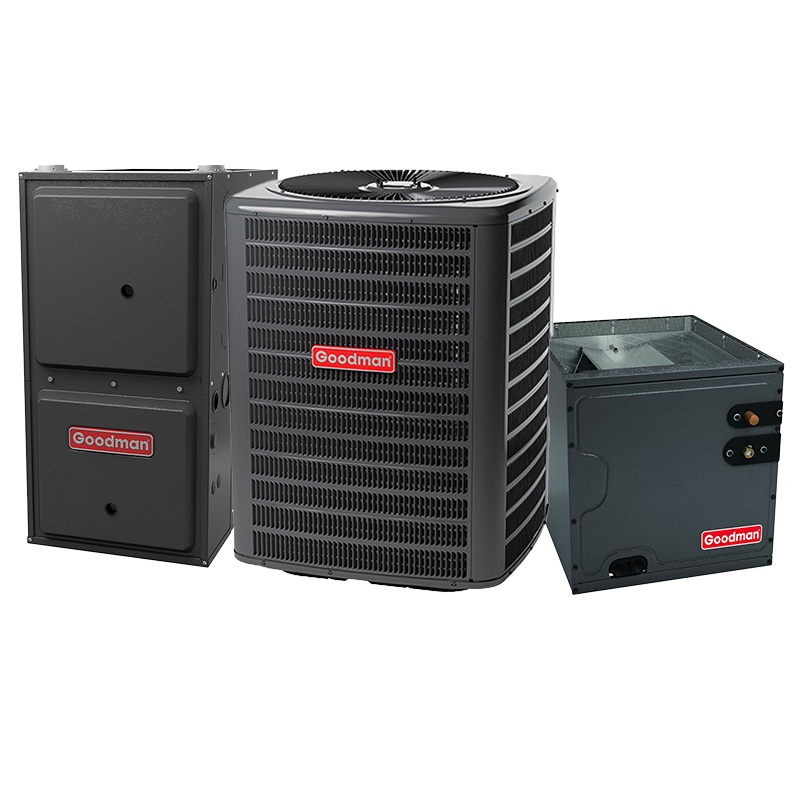
Goodman 1.5 Ton 14 SEER2 AC With 40000 BTU 96% AFUE 2-Stage Variable-Speed ECM Gas Furnace System – Downflow | R32
View on AC Direct see your lowest price →Check current price on AC Direct →
Key features
- 96% AFUE two-stage gas furnace reduces heating waste to roughly 4 cents per dollar spent
- Variable-speed ECM blower motor improves humidity control and runs quieter than single-speed alternatives
- 14 SEER2 cooling meets current federal minimums for northern U.S. climates
- Downflow configuration designed for main-floor utility closets or raised-foundation installs
- R-32 refrigerant with lower global warming potential than R-410A
- Two-stage gas valve allows reduced firing on mild days, limiting short-cycling
About this system
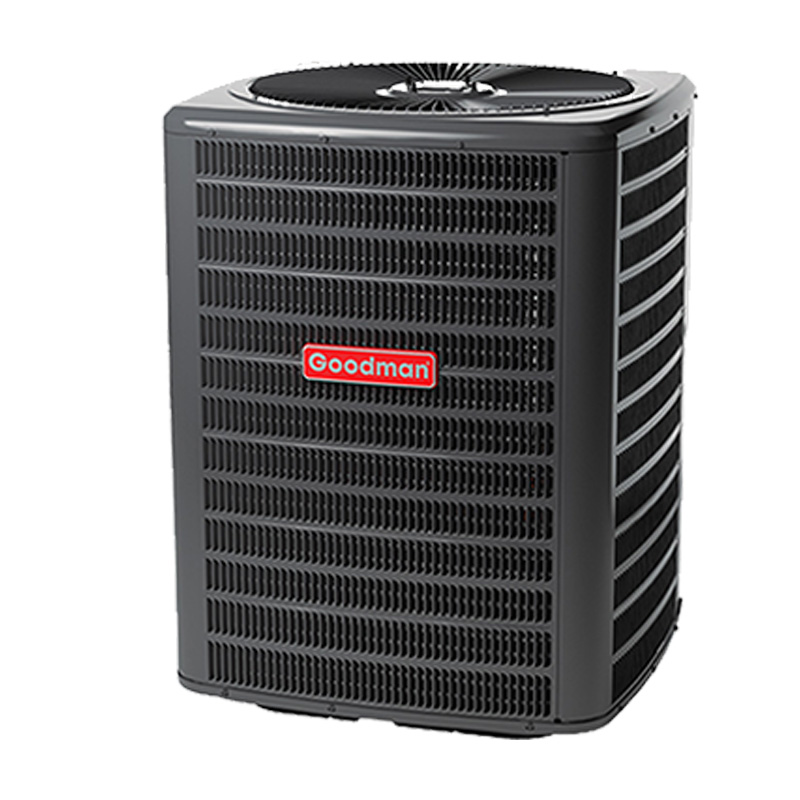
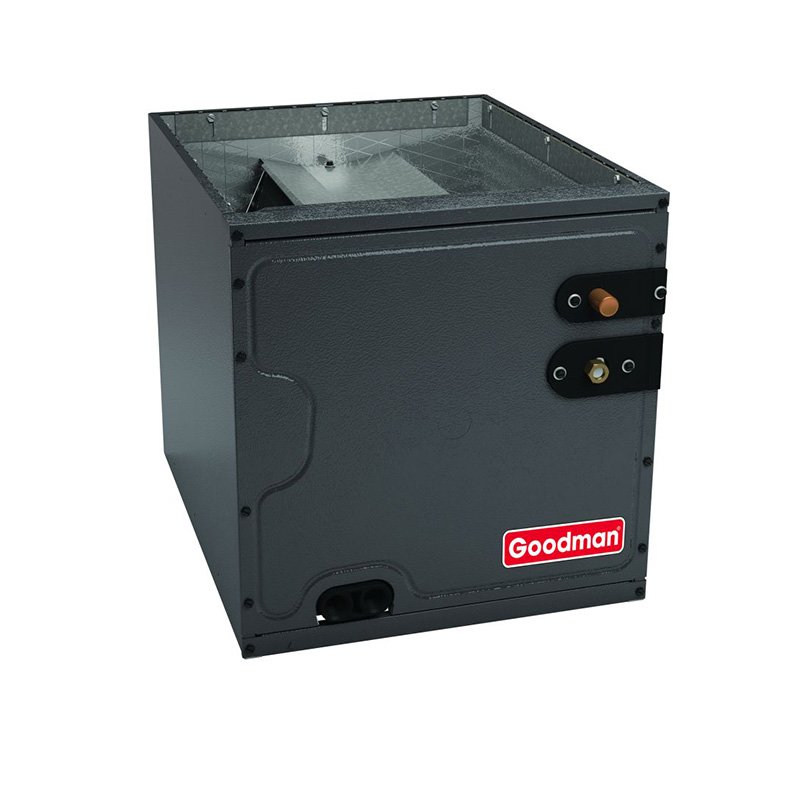
This Goodman bundle pairs a 1.5-ton, 14 SEER2 air conditioner with a 40,000 BTU, 96% AFUE two-stage, variable-speed ECM gas furnace in a downflow configuration. The combination is sized for smaller homes, typically in the 600 to 900 square foot range depending on climate zone and insulation, and the downflow orientation means the air handler sits above the living space and pushes conditioned air downward, a layout common in homes with a main-floor utility closet or a raised foundation. R-32 refrigerant replaces the older R-410A in newer Goodman equipment, offering a lower global warming potential and slightly better thermodynamic efficiency, though it does require technicians who are certified to handle it.
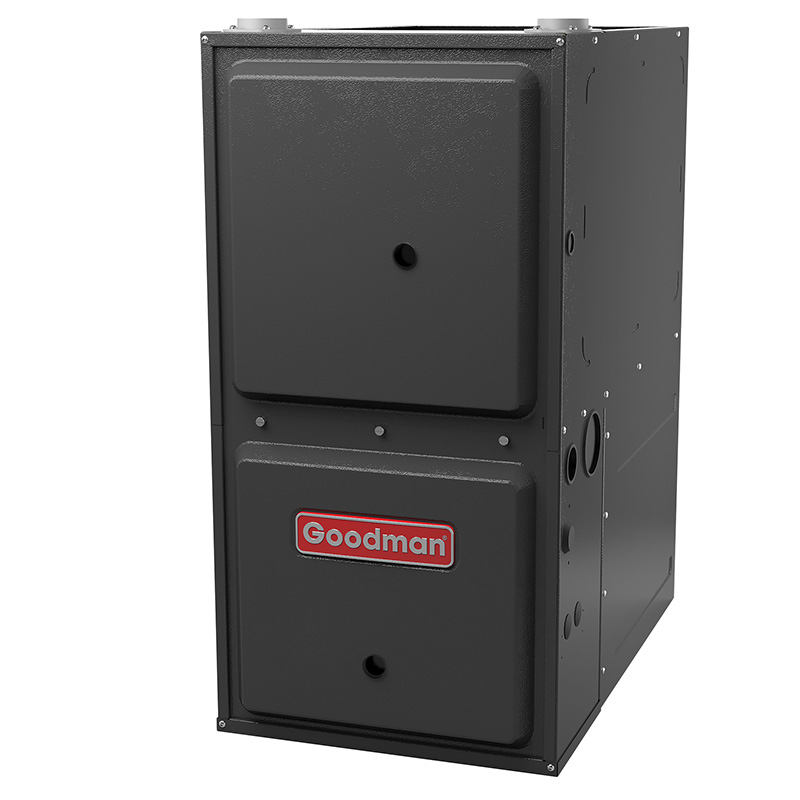
The 96% AFUE furnace is a genuine efficiency highlight. At that rating, only four cents of every heating dollar escapes as exhaust, which keeps gas bills meaningfully lower than an 80% AFUE unit over a full heating season. The two-stage gas valve lets the furnace run at a reduced firing rate on mild days, cutting short-cycling and extending the life of the heat exchanger. The variable-speed ECM blower motor complements that by ramping airflow up and down gradually rather than slamming on at full speed, which also improves humidity control and air filtration compared to a single-speed motor. On the cooling side, 14 SEER2 meets current federal minimums for most northern regions but sits at the lower end of available efficiency, so operating costs will be higher than a 16 or 18 SEER2 alternative over a long ownership horizon.
This Goodman system delivers genuinely strong heating efficiency and a capable variable-speed motor at a price point that undercuts Carrier, Trane, and Lennox by a noticeable margin. The trade-off is a brand track record that shows higher-than-average component failure rates after year seven and a cooling efficiency rating that sits at the regulatory floor rather than mid-market. It is a reasonable buy for budget-conscious homeowners who plan to stay on top of annual maintenance and use a certified installer.
Overall score is the average of the five ratings above.
What we like
- 96% AFUE furnace is a high-efficiency tier that will produce real gas savings over an 80% unit
- Variable-speed ECM motor provides better humidity control and quieter operation than single-speed blowers
- Two-stage furnace reduces short-cycling and distributes heat more evenly
- R-32 refrigerant is a more environmentally responsible choice than R-410A
- Purchase price runs 15 to 25 percent below comparable Trane, Lennox, and Carrier bundles
Trade-offs
- 14 SEER2 is the minimum efficiency tier; higher SEER2 options will lower long-term cooling costs
- Dual-run capacitors and evaporator coil leaks are documented recurring failure points in Goodman equipment
- Compressor lifespan averages 10 to 14 years, shorter than the 15 to 20 years seen with premium brands
- Downflow configuration limits install flexibility and adds complexity compared to upflow or horizontal setups
What homeowners and pros say about Goodman
Homeowners who have installed Goodman equipment tend to split into two camps. Those who had a careful, experienced installer and kept up with annual tune-ups often report years of trouble-free operation and point to the lower purchase price as a genuine win. Those who ran into problems frequently mention repair costs that started accumulating around year seven or eight, consistent with the brand’s ConsumerAffairs score of roughly 2.5 out of 5, a channel where after-the-fact complaints dominate. Google dealer reviews land higher, around 3.8 out of 5 across many locations, and affordability is the word that shows up most often in positive feedback.
HVAC technicians who work on Goodman equipment regularly tend to describe it as serviceable but not exceptional. The dual-run capacitor is the failure they see most often on Goodman units, and most say it is a straightforward, low-cost fix when caught promptly. Evaporator coil leaks are the complaint they treat as a more serious flag, since a coil replacement is a significant job. On compressor longevity, technicians note that Goodman compressors typically average 10 to 14 years, a shorter window than the 15 to 20 years they associate with Trane or Carrier compressors at the same age. The consistent theme in pro feedback is that install quality and refrigerant charge accuracy matter more with Goodman than with a premium brand, and that the equipment rewards attentive ownership.
Sources: ConsumerAffairs Goodman owner reviews, AHRI Directory of Certified Product Performance, U.S. DOE appliance and equipment efficiency standards, Goodman product specification sheets.
What it costs to run
At 14 SEER2, cooling this 1.5-ton system for a typical 1200-hour cooling season at the U.S. average electricity rate of $0.17/kWh works out to roughly $262 per year in cooling, about $12 less per year than a minimum-efficiency 13.4 SEER2 unit of the same size. Your real cost depends on your climate and local rate.
Method: (18,000 BTU/hr ÷ 14 SEER2) × 1200 hours ÷ 1000 × $0.17/kWh. Rate source: U.S. EIA average; cooling hours: moderate-climate estimate.
How it compares
| Brand | Comparable model | SEER2 | Stage | Price position |
|---|---|---|---|---|
| Goodman | GSXH5 / GCVC96 Bundle (this system) | 14 | Two-stage / variable-speed | Value pick |
| Carrier | Performance 14 / 58TP Series Bundle | 14 | Single-stage / two-stage | Moderately higher than this system |
| Trane | XR14 / S9V2 Bundle | 14-15 | Two-stage / variable-speed | Noticeably higher than this system |
| Lennox | ML14XC1 / SL280V Bundle | 14 | Single-stage / variable-speed | Noticeably higher than this system |
Competitor rows are comparable single-stage units at similar efficiency; price is relative position, not a quote.
Questions about this system
Is 14 SEER2 going to cost me more to run than a higher-efficiency unit?
Yes, over a full cooling season a 16 or 18 SEER2 system will use less electricity for the same amount of cooling. For a 1.5-ton unit in a small home the dollar difference per year is moderate, but over a 12-year ownership period it adds up. If your cooling season is short or mild, the lower upfront cost of 14 SEER2 can still make sense.
What does the downflow configuration actually mean for my install?
Downflow means the furnace draws return air in at the top and discharges heated or cooled air downward into the duct system below it. This layout works well in a main-floor closet sitting above a crawl space or basement duct network, but it does not work as an upflow or horizontal replacement without swapping equipment. Confirm your existing duct layout before purchasing.
My technician mentioned R-32 requires special handling. Is that a real concern?
R-32 is mildly flammable, classified A2L, so technicians need specific certification and the right recovery equipment to work on it safely. Most newer HVAC technicians are already certified, but it is worth confirming before you hire someone for service or installation, since using the wrong tools or procedures carries a safety risk.
What are the most likely repairs I should budget for over the life of this system?
Based on documented Goodman failure patterns, dual-run capacitors are the most common service call and typically cost between 300 and 600 dollars to fix, so that is worth keeping in a maintenance budget. Evaporator coil leaks also appear in a meaningful share of owner reports and are more expensive to address. A small minority of owners have reported refrigerant leaks in the first year, which is usually a sign of an install or initial charge issue rather than a product defect.
Does the two-stage furnace actually make a noticeable comfort difference in a small home?
In a 600 to 900 square foot space, the main benefit is fewer abrupt temperature swings and less noise from the system blasting on at full capacity every cycle. The variable-speed ECM motor amplifies that effect. For very small, well-insulated spaces, the furnace may rarely need to run at full stage, which also stretches heat exchanger life.
Specifications
| Cooling capacity | 1.5 Ton |
| Efficiency | 14 SEER2 |
| Furnace output | 40000 BTU |
| Furnace efficiency | 96% AFUE |
| Configuration | Downflow |
| Refrigerant | R-32 |