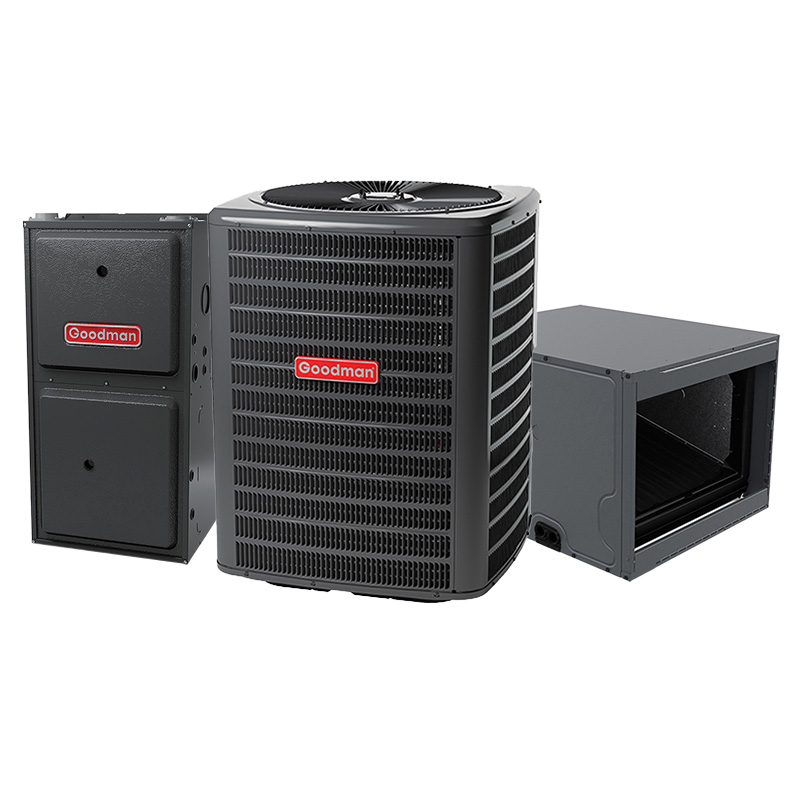
Goodman 2.5 Ton 14 SEER2 AC With 60000 BTU 96% AFUE 2-Stage Variable-Speed ECM Gas Furnace System – Horizontal | R32
View on AC Direct see your lowest price →Check current price on AC Direct →
Key features
- 2.5-ton cooling capacity matched to a 60,000 BTU heating output
- 96% AFUE two-stage gas furnace for low fuel waste and quieter part-load operation
- Variable-speed ECM blower motor improves comfort and reduces electricity use versus PSC motors
- Horizontal configuration designed for attic, crawl space, or side-discharge installs
- R-32 refrigerant with lower global-warming potential than legacy R-410A
- 14 SEER2 cooling efficiency meets current federal minimum efficiency standards
About this system
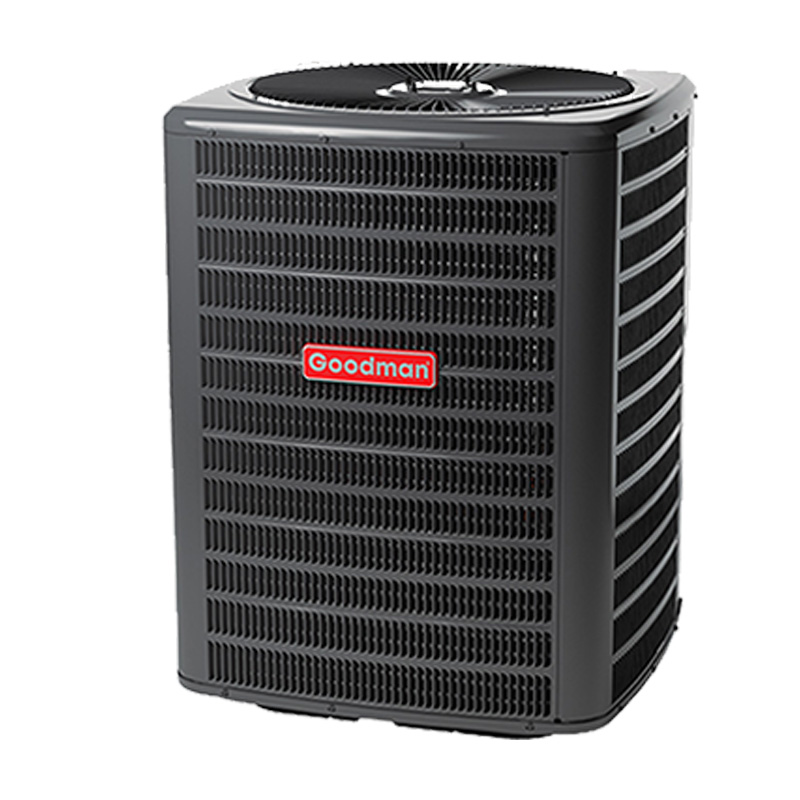
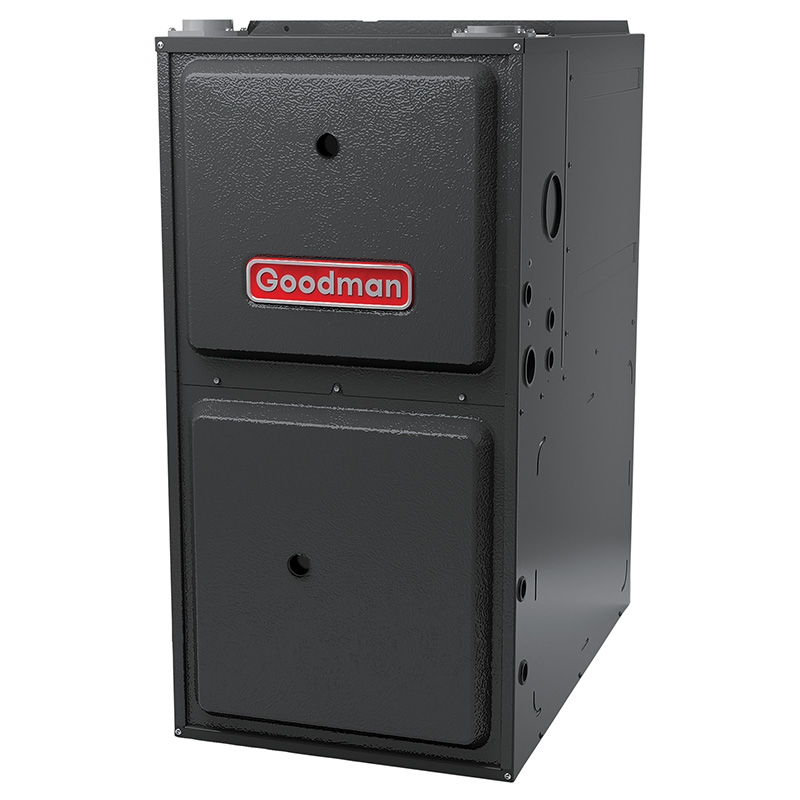
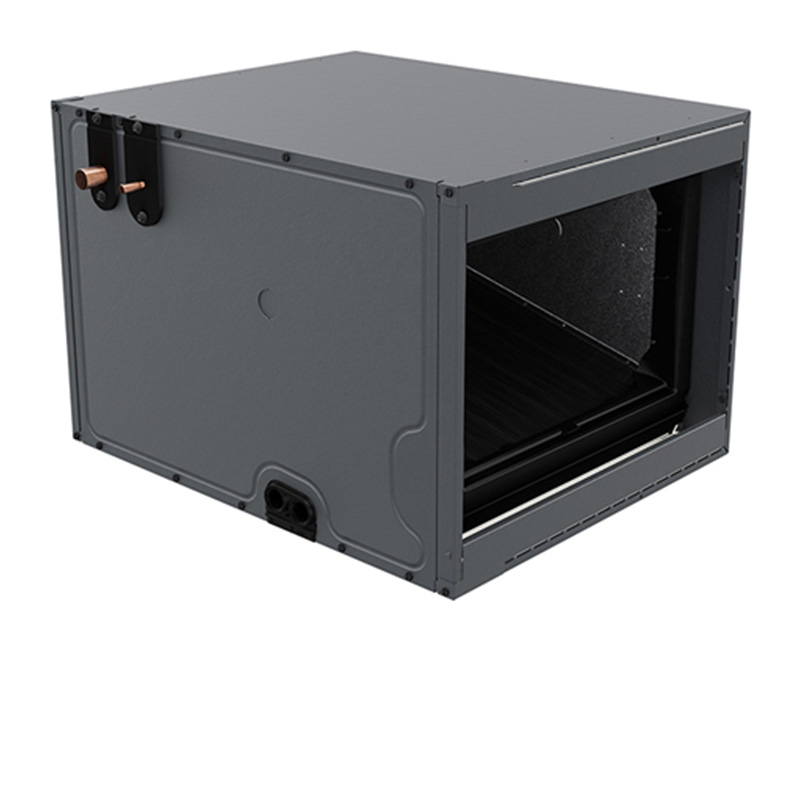
This Goodman bundle pairs a 2.5-ton, 14 SEER2 air conditioner with a 60,000 BTU, 96% AFUE two-stage, variable-speed ECM gas furnace in a horizontal configuration, making it a strong candidate for homes where the air handler sits in a crawl space, attic, or side-discharge mechanical room. The R-32 refrigerant charge is a forward-looking detail: R-32 has a lower global-warming potential than the R-410A it replaces, and the industry is actively moving in this direction, so parts and service should remain accessible for the life of the system.
The 96% AFUE rating on the furnace side is genuinely efficient. At that level, only four cents of every fuel dollar escapes up the flue, which translates to real savings on heating bills compared with an 80% unit, especially in climates where the furnace runs hard from November through March. The two-stage gas valve and variable-speed ECM blower work together to run at a lower output most of the time, cycling up only on the coldest days. That steady, quieter operation also improves humidity control and air distribution more than a single-stage furnace can. On the cooling side, 14 SEER2 sits at the federal minimum efficiency tier for most U.S. regions, so it will meet code but will not deliver the utility-bill savings you would see from a 17 or 18 SEER2 system.
This bundle suits homeowners replacing an aging system in a 1,200 to 1,800 square-foot home who want a capable, code-compliant system without paying the premium that Trane, Lennox, or Carrier command. The horizontal-only configuration means it is not a drop-in for every installation, so confirming the orientation fits your mechanical space before purchasing is important.
This Goodman bundle delivers a genuinely efficient furnace and a competent air conditioner at a price point that undercuts comparable premium-brand systems by a meaningful margin. The 14 SEER2 cooling side is baseline rather than impressive, and Goodman's real-world reliability record carries known risks around capacitors, evaporator coils, and compressor longevity. Buyers who use an experienced, licensed installer and stay current on maintenance will get solid value; those expecting the longevity of a Trane or Carrier at this price should calibrate expectations accordingly.
Overall score is the average of the five ratings above.
What we like
- 96% AFUE furnace meaningfully cuts heating costs versus an 80% unit
- Two-stage operation and ECM blower improve comfort and reduce temperature swings
- R-32 refrigerant is the industry's forward direction, supporting long-term serviceability
- Price runs 15 to 25 percent below comparable Trane, Lennox, and Carrier bundles
- Horizontal configuration fills a real install need that vertical-only systems cannot
Trade-offs
- 14 SEER2 is the federal minimum efficiency floor, offering no headroom above code
- Dual-run capacitor failures are the most commonly reported repair, typically appearing after year 3 to 7
- Compressor lifespan averages 10 to 14 years versus 15 to 20 years for premium brands
- A minority of owners report refrigerant leaks in year one, most often traced to install or charge errors
What homeowners and pros say about Goodman
Homeowners who post about Goodman systems tend to cluster at the extremes. On Google dealer review pages, where the brand averages around 3.8 out of 5 across hundreds of reviews per location, the most consistent praise centers on affordability and the sense that buyers got a functional system for significantly less than a Trane or Carrier quote required. On ConsumerAffairs, where the score sits around 2.5 out of 5 on a channel that skews toward complaint-driven posts, the recurring frustration is repair costs that start climbing after roughly year seven, often eroding the upfront savings that made Goodman attractive in the first place.
HVAC technicians who service Goodman equipment regularly point to dual-run capacitor failures as the most predictable maintenance item, a relatively low-cost fix in the $300 to $600 range but one that comes up often enough to be worth budgeting for. Evaporator coil leaks appear in a meaningful portion of owner reports and are a more expensive problem to address. Compressor lifespan on Goodman condensers tends to average 10 to 14 years, noticeably shorter than the 15 to 20 years technicians cite for premium brands. A smaller share of owners report refrigerant leaks within the first year, which professionals largely attribute to install or charge errors rather than the equipment itself, reinforcing the widely held view among technicians that install quality is the single biggest factor in how long a Goodman system performs reliably.
Sources: ConsumerAffairs Goodman owner reviews, AHRI Directory of Certified Product Performance, U.S. DOE appliance and equipment efficiency standards, Goodman product specification sheets.
What it costs to run
At 14 SEER2, cooling this 2.5-ton system for a typical 1200-hour cooling season at the U.S. average electricity rate of $0.17/kWh works out to roughly $437 per year in cooling, about $20 less per year than a minimum-efficiency 13.4 SEER2 unit of the same size. Your real cost depends on your climate and local rate.
Method: (30,000 BTU/hr ÷ 14 SEER2) × 1200 hours ÷ 1000 × $0.17/kWh. Rate source: U.S. EIA average; cooling hours: moderate-climate estimate.
How it compares
| Brand | Comparable model | SEER2 | Stage | Price position |
|---|---|---|---|---|
| Goodman | 2.5T 14 SEER2 AC + 60K BTU 96% AFUE 2-Stage ECM Furnace (Horizontal, R-32) | 14 | Two-stage furnace / single-stage AC | Value pick |
| Carrier | Comfort Series 24ACC636 + 59SC2B060 | 14-15 | Single-stage AC / two-stage furnace | Typically 20 to 30 percent more than this Goodman bundle |
| Trane | XR14c + S9X2 Gas Furnace | 14 | Single-stage AC / two-stage furnace | Typically 20 to 25 percent more than this Goodman bundle |
| Lennox | Merit ML14XC1 + ML196E Furnace | 14-15 | Single-stage AC / two-stage furnace | Typically 25 to 35 percent more than this Goodman bundle |
Competitor rows are comparable single-stage units at similar efficiency; price is relative position, not a quote.
Questions about this system
Is a horizontal-only system harder to install or service than a standard upflow unit?
Horizontal installations are more common in attics and crawl spaces and any qualified HVAC technician should be familiar with them, but access for future service calls is often tighter than in a basement upflow setup. Confirm with your installer that there is adequate clearance around the unit for coil cleaning and blower service before purchasing.
R-32 is newer to residential systems. Will I have trouble finding a technician who can work on it?
R-32 requires technicians to hold an EPA 608 certification, which most licensed HVAC contractors already carry. The refrigerant is widely stocked by HVAC distributors and is the direction the industry is heading, so availability is not a concern today and is expected to improve over time.
The 96% AFUE sounds high. How much will it actually save over an 80% furnace?
Upgrading from 80% to 96% AFUE means you recover 16 additional cents from every fuel dollar. On a $1,200 annual gas bill, that is roughly $192 per year in heating savings, though actual results depend on your climate, home insulation, and gas rates. The payback period relative to an 80% unit is typically three to six years.
What is the most common repair I should budget for on a Goodman AC system?
Dual-run capacitor failure is the most frequently reported issue, usually showing up as the AC failing to start or cycling off early. It is one of the least expensive HVAC repairs, typically running $300 to $600 including labor, and any technician can complete it in under an hour.
Does Goodman's warranty cover parts and labor, and how long does it last?
Goodman's registered warranty typically covers the compressor and heat exchanger for longer periods (often 10 years on parts with registration) and other components for a shorter window, but it covers parts only, not labor. Labor costs for a warranty repair can still run several hundred dollars, so a service agreement through your installer is worth considering.
Specifications
| Cooling capacity | 2.5 Ton |
| Efficiency | 14 SEER2 |
| Furnace output | 60000 BTU |
| Furnace efficiency | 96% AFUE |
| Configuration | Horizontal |
| Refrigerant | R-32 |