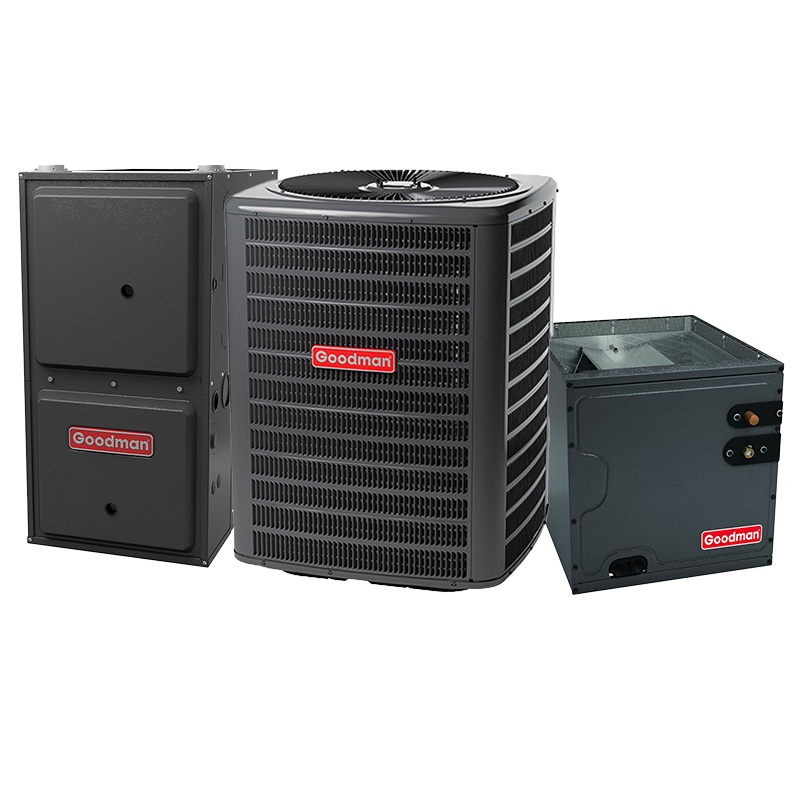
Goodman 3 Ton 14.5 SEER2 AC With 100000 BTU 96% AFUE 2-Stage Variable-Speed ECM Gas Furnace System – Downflow | R32
View on AC Direct see your lowest price →Check current price on AC Direct →
Key features
- 3-ton cooling capacity, 14.5 SEER2 efficiency rating
- 100,000 BTU two-stage gas furnace at 96% AFUE
- Variable-speed ECM blower motor for quieter, more consistent airflow
- Downflow configuration for installations with supply ducts below the unit
- R-32 refrigerant charge with lower global warming potential than R-410A
- Two-stage burner reduces fuel use and temperature swings on mild days
About this system
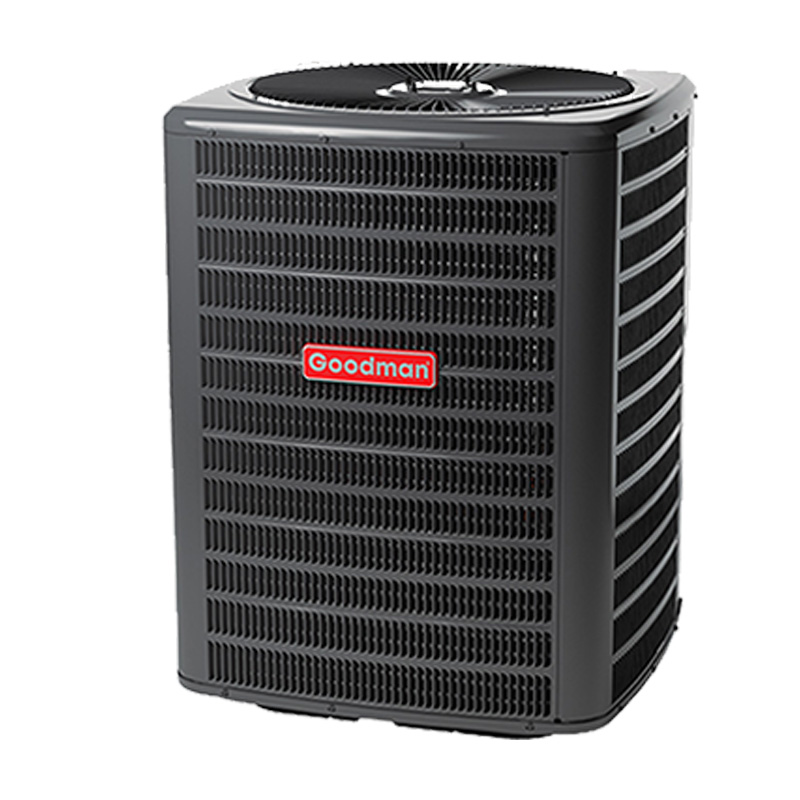
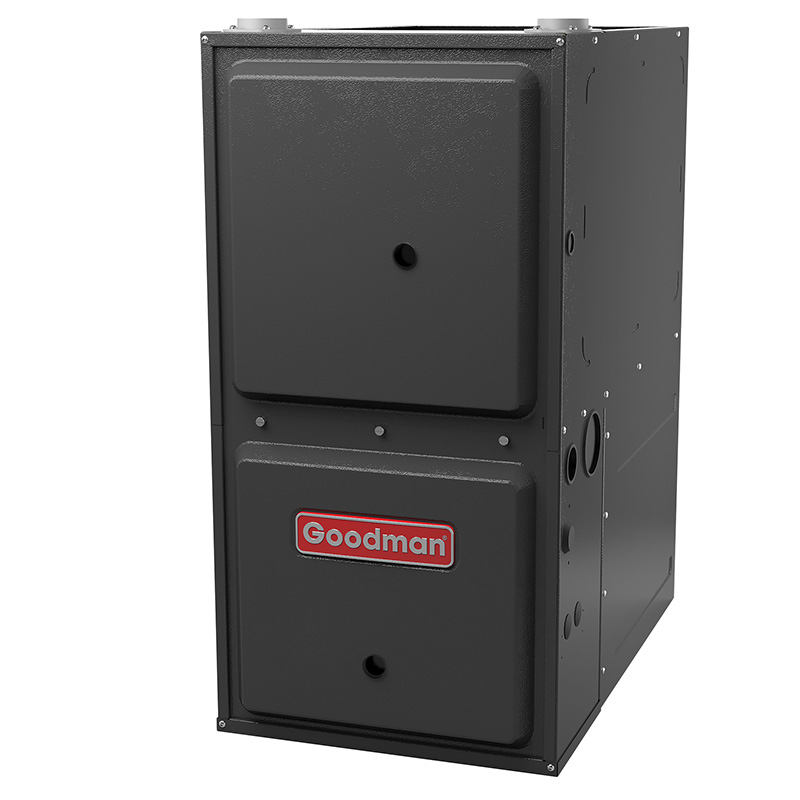
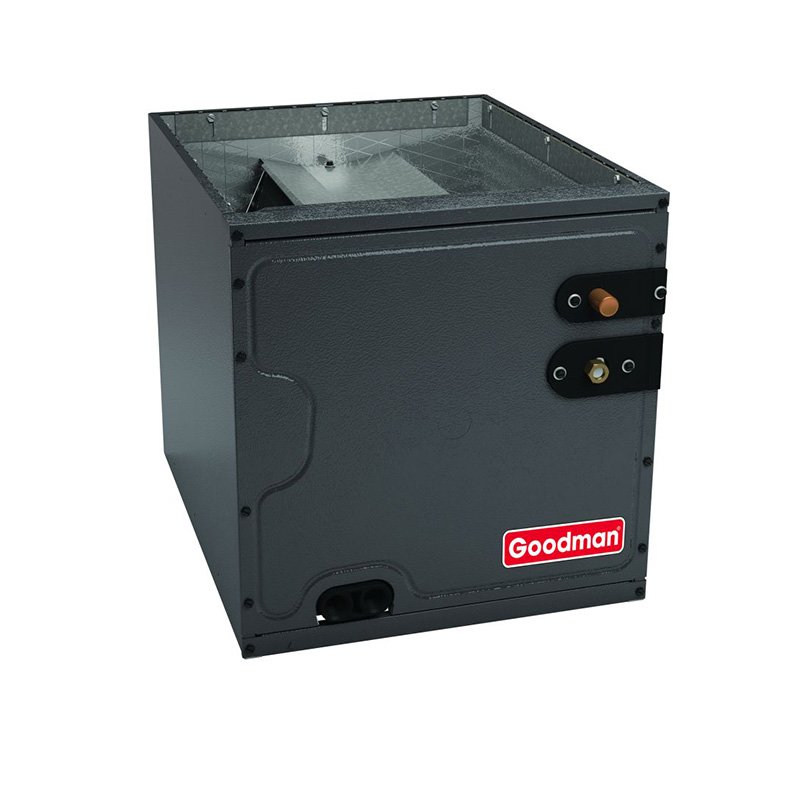
This Goodman bundle pairs a 3-ton, 14.5 SEER2 central air conditioner with a 100,000 BTU, 96% AFUE two-stage gas furnace in a downflow configuration, making it a practical fit for homes where the air handler sits above a crawlspace or on a main floor with supply ducts running downward. The R-32 refrigerant charge is worth noting: R-32 has a lower global warming potential than the R-410A it replaces and operates at slightly different pressures, so your installing technician needs to be current on R-32 handling procedures and certified accordingly.
The furnace side punches above the entry-level ticket price. A 96% AFUE rating means roughly 96 cents of every fuel dollar becomes usable heat, which puts it in the top efficiency tier for gas furnaces. The two-stage burner and variable-speed ECM blower work together to run at a lower capacity on milder days, cutting fuel consumption, reducing temperature swings, and moving air more quietly than a single-stage unit. For a 3-ton cooling load, typical of a well-insulated 1,600 to 2,200 square foot home depending on climate and construction, this bundle offers a meaningful efficiency upgrade over minimum-standard equipment without the price of a premium brand nameplate.
This Goodman system delivers genuinely high furnace efficiency and thoughtful variable-speed hardware at a price point well below comparable Trane or Carrier bundles, which makes it a reasonable choice for budget-conscious buyers who hire an experienced installer and stay on top of maintenance. The brand's documented failure tendencies, particularly capacitors and evaporator coil leaks after year seven, mean the lower upfront cost can erode if service bills accumulate. You get solid specs for the money, but not the long-term durability record of premium-tier competitors.
Overall score is the average of the five ratings above.
What we like
- 96% AFUE furnace is among the most efficient tiers available for a gas system
- Two-stage operation reduces fuel bills and hot-cold swings compared to single-stage units
- Variable-speed ECM blower runs quieter and improves humidity control versus fixed-speed alternatives
- R-32 refrigerant is more environmentally responsible and increasingly standard on new equipment
- Priced roughly 15 to 25 percent below equivalent Trane, Carrier, and Lennox systems
Trade-offs
- Dual-run capacitors are the most frequently reported failure point, typically requiring a 300 to 600 dollar service call
- Evaporator coil leaks appear in a meaningful share of owner reports, especially past the seven-year mark
- Compressor lifespan averages 10 to 14 years versus 15 to 20 years for premium brands
- Downflow-only configuration limits installation flexibility and rules out attic or horizontal applications
What homeowners and pros say about Goodman
On consumer review platforms, Goodman draws a split reaction that tracks closely with the equipment’s documented strengths and weaknesses. The brand holds roughly a 3.8 out of 5 on Google dealer reviews, where affordability is cited most often as the reason buyers chose it and where satisfied owners typically describe systems that have run without major issues through the first several years. ConsumerAffairs tells a harsher story, sitting around 2.5 out of 5, though that channel tends to capture owners who sought out a place to log complaints rather than a representative cross-section of all buyers. The recurring theme there is repair costs that climb noticeably after roughly year seven, which aligns with the documented failure tendencies: dual-run capacitors going out, a meaningful share of owners reporting evaporator coil leaks, and compressors that average 10 to 14 years rather than the 15 to 20 years more common on premium-brand equipment.
HVAC technicians who work on Goodman equipment regularly tend to echo a consistent point: the brand’s longevity leans heavily on the quality of the original installation and whether the homeowner keeps up with annual maintenance. A poorly charged system or undersized ductwork will surface problems faster on a value brand than on a premium one. For this specific downflow bundle with its 96% AFUE furnace and variable-speed ECM blower, the hardware is genuinely capable, and the R-32 refrigerant is the direction the whole industry is moving. The honest trade-off is that you are accepting a shorter expected service life and a higher probability of mid-life service calls in exchange for a meaningfully lower purchase price compared to Carrier, Trane, or Lennox alternatives with similar efficiency ratings.
Sources: ConsumerAffairs Goodman owner reviews, AHRI Directory of Certified Product Performance, U.S. DOE appliance and equipment efficiency standards, Goodman product specification sheets.
What it costs to run
At 14.5 SEER2, cooling this 3-ton system for a typical 1200-hour cooling season at the U.S. average electricity rate of $0.17/kWh works out to roughly $506 per year in cooling, about $42 less per year than a minimum-efficiency 13.4 SEER2 unit of the same size. Your real cost depends on your climate and local rate.
Method: (36,000 BTU/hr ÷ 14.5 SEER2) × 1200 hours ÷ 1000 × $0.17/kWh. Rate source: U.S. EIA average; cooling hours: moderate-climate estimate.
How it compares
| Brand | Comparable model | SEER2 | Stage | Price position |
|---|---|---|---|---|
| Goodman | 3-Ton 14.5 SEER2 AC + 96% AFUE 2-Stage ECM Furnace (Downflow, R-32) | 14.5 | Two-stage furnace / single-stage AC | Value pick |
| Carrier | Performance Series (24ACC636 AC + 59TP6 Furnace bundle) | 15.2 | Two-stage furnace / two-stage AC | Roughly 20 to 25 percent above this Goodman bundle |
| Trane | S Series (XR15 AC + S9V2 96% AFUE Furnace bundle) | 15.0 | Two-stage furnace / single-stage AC | Roughly 20 to 25 percent above this Goodman bundle |
| Lennox | Merit Series (ML14XC1 AC + ML196V Furnace bundle) | 14.3 | Two-stage furnace / single-stage AC | Roughly 15 to 20 percent above this Goodman bundle |
Competitor rows are comparable single-stage units at similar efficiency; price is relative position, not a quote.
Questions about this system
Why does this system use R-32 instead of R-410A, and does my installer need special certification?
R-32 is a next-generation refrigerant with a global warming potential roughly 68 percent lower than R-410A, and it is becoming the industry standard as R-410A is phased down under EPA regulations. Your technician must hold an EPA 608 certification and should have current hands-on experience with R-32 systems, since its pressure and flammability characteristics differ from R-410A.
What does two-stage mean on the furnace, and is it worth the cost over a single-stage unit?
A two-stage furnace fires at a lower capacity, roughly 65 to 70 percent, on mild days and ramps to full capacity only when the load demands it, which reduces fuel consumption and keeps temperatures more consistent throughout the home. Paired with the variable-speed ECM blower, the system also tends to run longer, quieter cycles that do a better job managing indoor humidity compared to a single-stage furnace cycling on and off repeatedly.
What is the downflow configuration, and how do I know if it is right for my house?
In a downflow setup the air handler draws return air in from the top and pushes conditioned air downward into the supply duct system beneath it, which suits homes where the furnace sits on the main floor above a crawlspace or basement plenum. If your existing system is upflow or horizontal, this specific unit will not fit without significant ductwork changes, so confirm your current configuration with your installer before purchasing.
What are the most common repairs I should budget for over the life of this system?
Dual-run capacitors are the most frequently reported failure on Goodman equipment and usually cost between 300 and 600 dollars to replace, including a service call. Evaporator coil leaks are the other documented concern, appearing in a notable share of owner reports particularly after year seven, and those repairs can run significantly higher depending on coil pricing at the time.
How does the Goodman warranty on this system compare to premium brands?
Goodman typically offers a 10-year parts limited warranty when the system is registered within a set window after installation, which is competitive on paper but applies to parts only and does not cover labor. Premium brands like Trane and Carrier offer similar parts terms but tend to back them up with larger dealer networks and, in some cases, more accessible customer service when warranty claims arise.
Specifications
| Cooling capacity | 3 Ton |
| Efficiency | 14.5 SEER2 |
| Furnace output | 100000 BTU |
| Furnace efficiency | 96% AFUE |
| Configuration | Downflow |
| Refrigerant | R-32 |