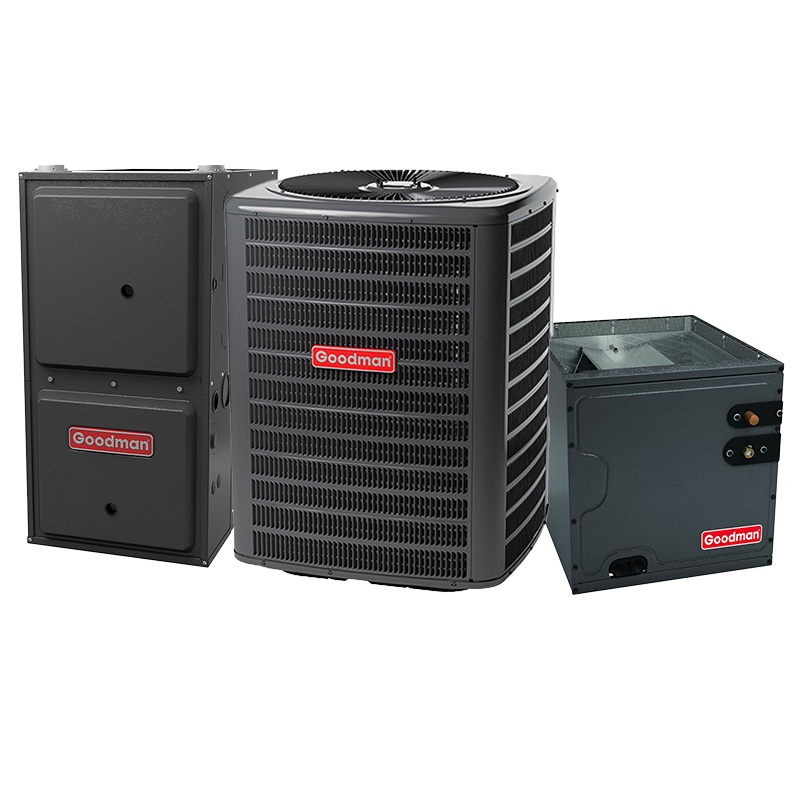
Goodman 3 Ton 14 SEER2 AC With 60000 BTU 96% AFUE 2-Stage Variable-Speed ECM Gas Furnace System – Downflow | R32
View on AC Direct see your lowest price →Check current price on AC Direct →
Key features
- 3-ton cooling capacity with 14 SEER2 efficiency rating
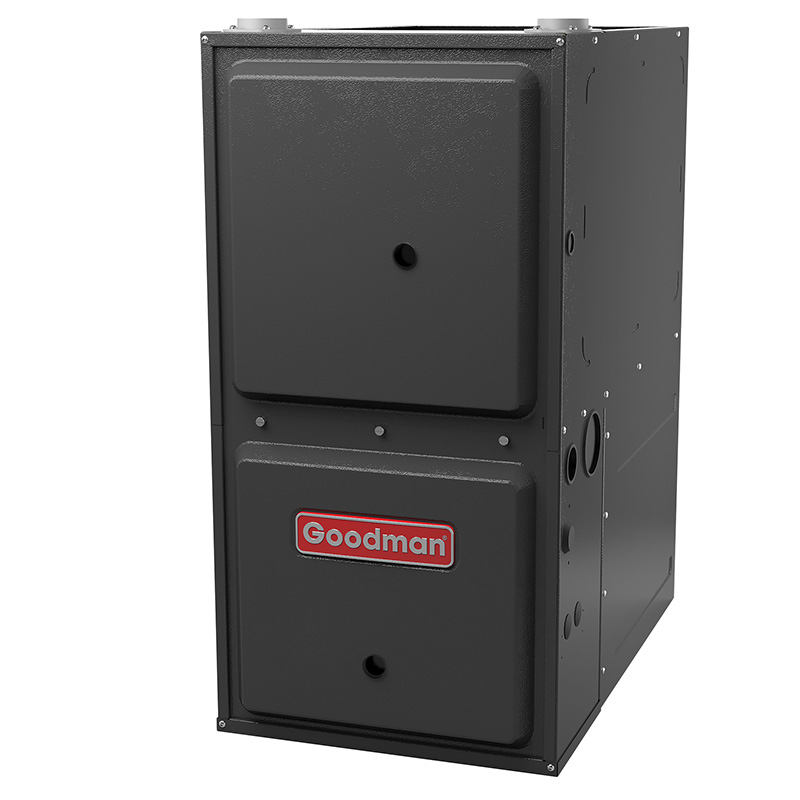
- 60,000 BTU two-stage gas furnace rated at 96% AFUE
- Variable-speed ECM blower motor for quieter, lower-energy air distribution
- Downflow configuration for installations requiring top-entry, bottom-exit airflow
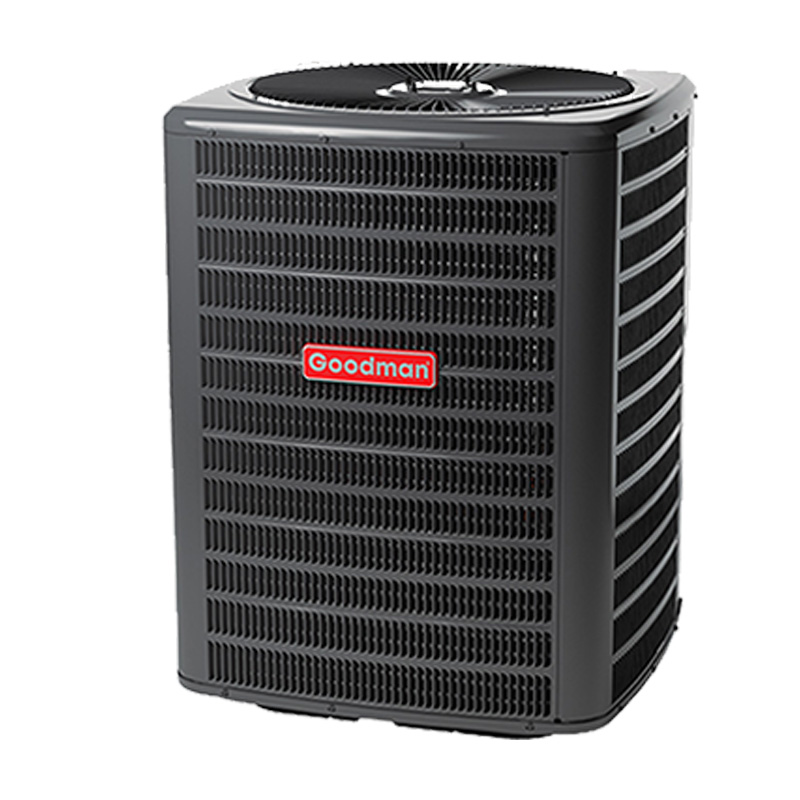
- R-32 refrigerant with lower global warming potential than R-410A
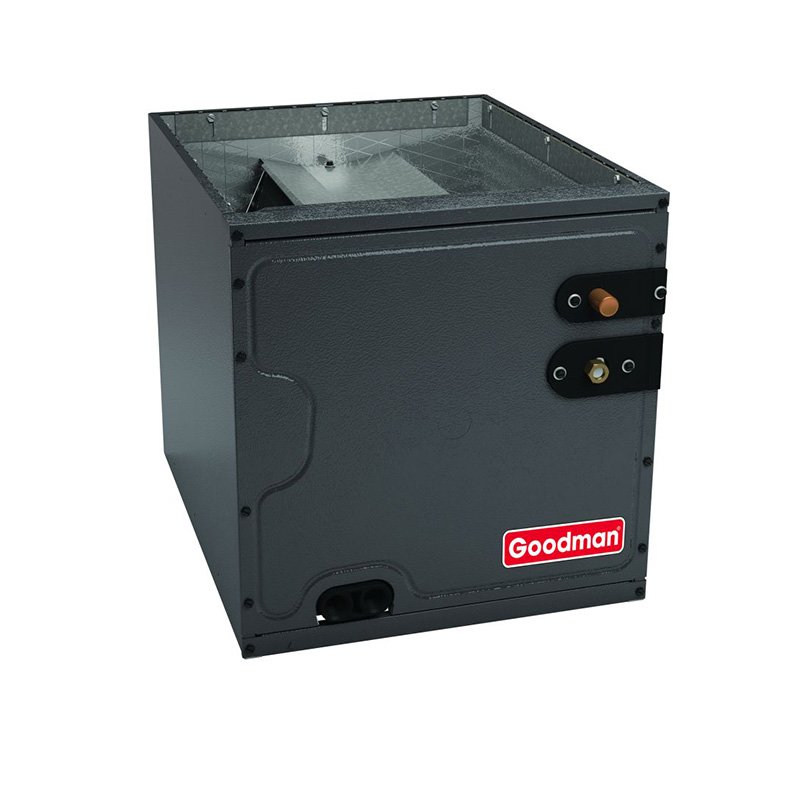
- Factory-matched coil and furnace for streamlined AHJ approval and warranty coverage
About this system
This Goodman system pairs a 3-ton, 14 SEER2 central air conditioner with a 60,000 BTU, 96% AFUE two-stage, variable-speed ECM gas furnace in a downflow configuration. The combination suits homes where the air handler sits in a closet or utility space above the living area, with supply air directed downward through floor registers. The 96% AFUE rating means roughly 96 cents of every dollar spent on gas becomes usable heat, placing this furnace solidly in the high-efficiency tier and making it eligible for federal tax credits in many situations. R-32 refrigerant has a lower global warming potential than the older R-410A it replaces, and it tends to operate at slightly higher efficiency under real-world conditions.
The two-stage furnace and variable-speed ECM blower motor are meaningful upgrades over basic single-stage equipment. Two-stage heating runs on the lower fire most of the time, reducing temperature swings and cycling noise. The ECM motor ramps airflow up and down gradually, which improves humidity control in cooling mode and cuts blower electricity use substantially compared to a standard PSC motor. For a 1,200 to 2,200 square foot home in a mixed or cold climate, this combination offers genuine comfort performance at a price point well below comparable setups from premium brands. That said, 14 SEER2 sits at the lower end of the efficiency range, so homeowners in high-cooling-demand regions or those who plan to stay in the house for 15 or more years should weigh whether a higher SEER2 rating would pay back the upfront difference.
This Goodman system delivers a capable two-stage, high-efficiency heating and cooling package at a price 15 to 25 percent below comparable Trane, Lennox, or Carrier setups, making it a practical choice for budget-conscious buyers who prioritize upfront cost. The two-stage furnace and ECM blower are genuine comfort upgrades, but Goodman's documented track record of capacitor failures, evaporator coil leaks, and compressors that average shorter lifespans than premium competitors means long-term ownership costs deserve honest consideration. Installation quality has an outsized effect on how this system performs and how long it lasts, so choosing an experienced installer matters as much as the equipment itself.
Overall score is the average of the five ratings above.
What we like
- Upfront cost is typically 15 to 25 percent lower than Trane, Lennox, or Carrier equivalents
- 96% AFUE two-stage furnace significantly reduces gas bills compared to standard 80% single-stage units
- Variable-speed ECM motor cuts blower electricity use and improves humidity control in summer
- R-32 refrigerant is a more environmentally responsible choice and is increasingly well-supported by technicians
- Factory-matched system simplifies permitting, warranty claims, and refrigerant charge verification
Trade-offs
- Dual-run capacitors are the most commonly reported failure, typically surfacing within the first several years and costing $300 to $600 per event
- Evaporator coil leaks appear in a meaningful share of owner reviews, potentially requiring expensive refrigerant recovery and coil replacement
- Compressor lifespan averages 10 to 14 years versus 15 to 20 years for premium-brand counterparts, raising lifetime cost calculations
- 14 SEER2 is the minimum efficiency tier in most U.S. regions, offering limited energy savings headroom compared to 16 SEER2 or higher options
What homeowners and pros say about Goodman
Homeowners who share their experiences online tend to split along a predictable line with Goodman. On Google dealer reviews, where ratings average around 3.8 out of 5 across locations, affordability is the most consistent point of praise. Buyers who shopped multiple bids frequently note that Goodman let them get a two-stage or variable-speed system for roughly what a basic single-stage unit from a premium brand would have cost. On ConsumerAffairs, which carries a complaint-skewed audience, Goodman sits at roughly 2.5 out of 5, and the recurring theme is repair costs that start accumulating after year seven, with dual-run capacitor failures and evaporator coil leaks cited most often. Neither data point tells the whole story on its own, but together they paint a picture of equipment that performs acceptably when installed correctly and maintained regularly, but that carries more service risk in the back half of its life than premium alternatives.
HVAC technicians tend to hold a pragmatic view of Goodman. Many acknowledge that the dual-run capacitor is a known weak point and that they see it fail with enough regularity that it is nearly a routine service call on aging Goodman condensers. Coil leaks, while not universal, show up often enough that experienced techs factor them into conversations about long-term cost of ownership. The compressor lifespan question is harder to pin down precisely, but the industry consensus is that Goodman compressors average 10 to 14 years in the field versus 15 to 20 years for Trane or Carrier units under comparable conditions. Pros who are candid about it will tell you that installation quality closes a significant portion of that gap, and that a Goodman system installed carefully by a skilled technician will outperform a premium-brand unit thrown in by someone cutting corners. For this specific downflow configuration, proper airflow balancing and a verified refrigerant charge at startup are especially important to long-term reliability.
Sources: ConsumerAffairs Goodman owner reviews, AHRI Directory of Certified Product Performance, U.S. DOE appliance and equipment efficiency standards, Goodman product specification sheets.
What it costs to run
At 14 SEER2, cooling this 3-ton system for a typical 1200-hour cooling season at the U.S. average electricity rate of $0.17/kWh works out to roughly $525 per year in cooling, about $23 less per year than a minimum-efficiency 13.4 SEER2 unit of the same size. Your real cost depends on your climate and local rate.
Method: (36,000 BTU/hr ÷ 14 SEER2) × 1200 hours ÷ 1000 × $0.17/kWh. Rate source: U.S. EIA average; cooling hours: moderate-climate estimate.
How it compares
| Brand | Comparable model | SEER2 | Stage | Price position |
|---|---|---|---|---|
| Goodman | GSXH5/GCVC96 Series (this system) | 14 | two-stage | Value pick |
| Carrier | Comfort 24ACC6 with 59TP6 Furnace | 14-15 | two-stage | Priced 15 to 20 percent above this Goodman system |
| Trane | XR14c with S9V2 Furnace | 14 | single-stage AC, two-stage furnace | Priced 20 to 25 percent above this Goodman system |
| Lennox | Merit 14ACX with ML96V Furnace | 14 | single-stage AC, variable-speed furnace | Priced 20 to 30 percent above this Goodman system |
Competitor rows are comparable single-stage units at similar efficiency; price is relative position, not a quote.
Questions about this system
Why does my installer keep recommending a higher SEER2 rating when this system meets code?
14 SEER2 satisfies minimum federal efficiency standards for most regions, but higher SEER2 units reduce cooling-season electricity bills meaningfully over time. In regions with long, hot summers or high electricity rates, the payback period on a 16 or 17 SEER2 unit can be five to eight years, after which you save money every season. Your installer may also earn a higher margin on premium units, so it is worth asking them to run the numbers specific to your climate and utility rate.
What does the downflow configuration actually mean, and how do I know if my home needs it?
Downflow means the furnace pulls return air in at the top and pushes conditioned air out the bottom, typically feeding into underfloor ductwork. It is the right choice when your furnace sits in a main-floor closet or utility room with ducts running below the subfloor. If your furnace is in an attic or basement with overhead ducts, you likely need an upflow or horizontal configuration instead, so confirm with your HVAC contractor before ordering.
Are capacitor failures on Goodman equipment something I should budget for in advance?
Yes, dual-run capacitor failure is the most commonly reported issue with Goodman air conditioning equipment. A capacitor typically costs $300 to $600 to replace when a technician is dispatched, and the failure usually shows up as the unit humming but not starting or shutting off shortly after startup. Keeping a service agreement or a small repair fund is a reasonable precaution, particularly after year five.
Is the 10-year parts warranty automatic, or do I have to register the equipment?
Goodman requires product registration within a specified window after installation to receive the full 10-year parts warranty; without registration, coverage typically drops to five years on parts. Registration is done online using the model and serial numbers on the unit, and your installer should provide those at the time of commissioning. Confirm the registration was completed, because this step is easy to overlook and matters significantly if a compressor or heat exchanger fails.
What are the signs of an evaporator coil leak, and how expensive is that repair on this system?
Common signs include the system running longer than usual without reaching the set temperature, ice forming on the refrigerant lines, or a hissing sound near the indoor unit. Evaporator coil replacement on a system like this typically runs $1,000 to $2,000 or more depending on labor rates and refrigerant costs, and R-32 recovery and recharge adds to that total. If the system is still under the parts warranty and properly registered, the coil itself may be covered, but labor is rarely included in base warranty terms.
Specifications
| Cooling capacity | 3 Ton |
| Efficiency | 14 SEER2 |
| Furnace output | 60000 BTU |
| Furnace efficiency | 96% AFUE |
| Configuration | Downflow |
| Refrigerant | R-32 |