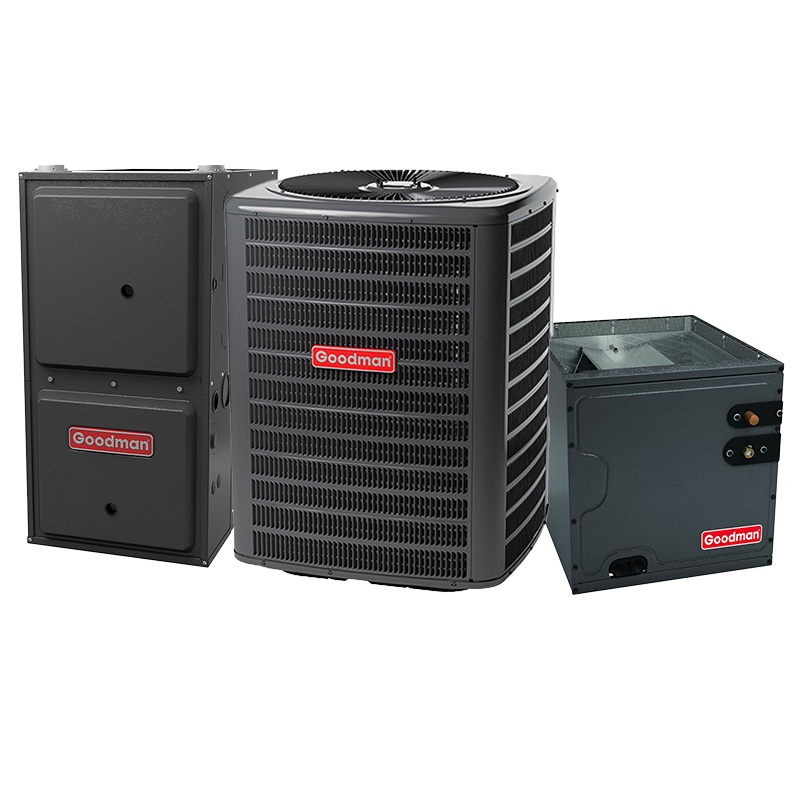
Goodman 5 Ton 13.6 SEER2 AC With 100000 BTU 96% AFUE 2-Stage Variable-Speed ECM Gas Furnace System – Downflow | R32
View on AC Direct see your lowest price →Check current price on AC Direct →
Key features
- 13.6 SEER2 cooling efficiency meets current federal minimum standards for most U.S. regions
- 96% AFUE two-stage gas furnace burns 96 cents of every fuel dollar as usable heat
- Variable-speed ECM blower motor reduces electricity use and lowers airflow noise versus PSC motors
- R-32 refrigerant offers lower global warming potential than R-410A and is factory-charged
- Downflow configuration designed for closet or platform installations with supply air directed downward
- 5-ton capacity suited to larger homes, contingent on a proper Manual J load calculation
About this system
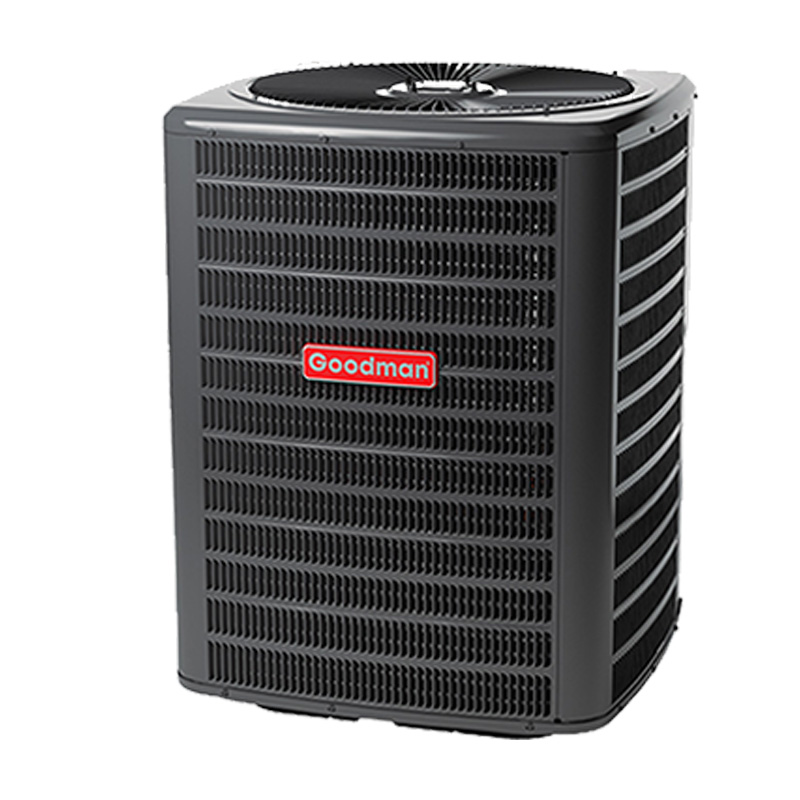
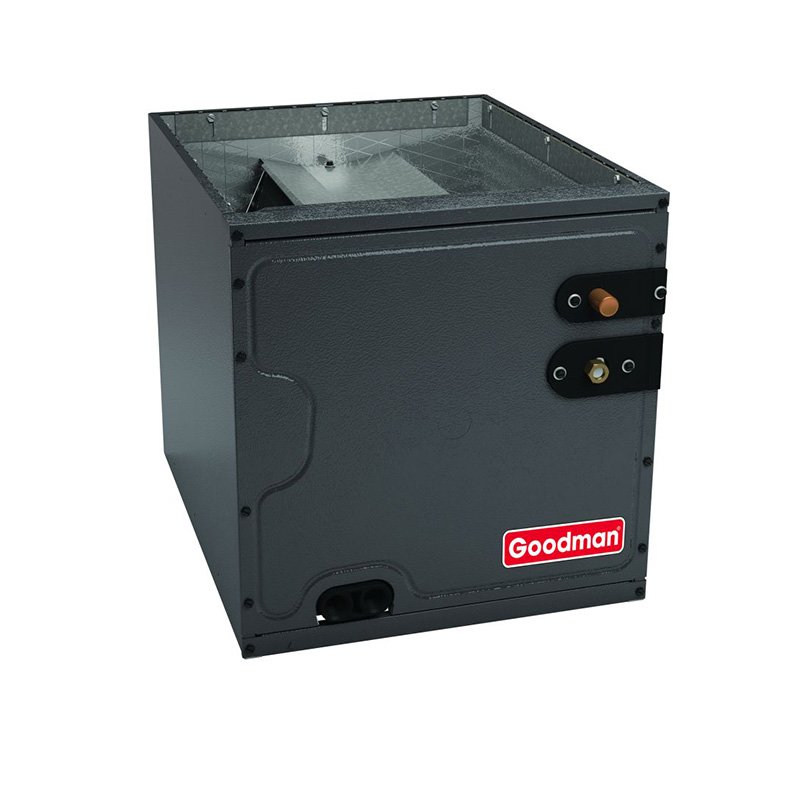
This Goodman package pairs a 5-ton, 13.6 SEER2 air conditioner with a 100,000 BTU, 96% AFUE two-stage, variable-speed ECM gas furnace in a downflow configuration, making it a strong candidate for homes where the air handler sits in an upper-floor closet or attic and supply air flows downward into the living space. The R-32 refrigerant charge is a forward-looking choice: R-32 has a lower global warming potential than R-410A and is increasingly the industry standard as manufacturers phase out older refrigerants. At 13.6 SEER2, efficiency sits at the entry tier of current federal minimums for most U.S. climate zones, which is honest enough to keep monthly cooling bills reasonable without reaching the premium efficiency bracket.
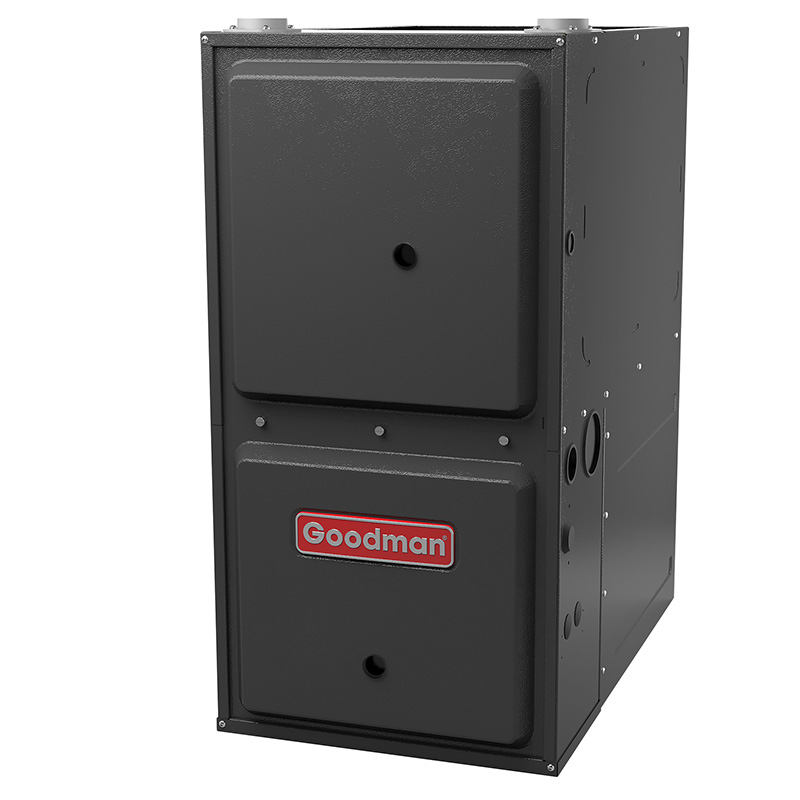
The furnace side is where this system earns its keep on cold nights. A 96% AFUE rating means 96 cents of every fuel dollar becomes heat, which is near the ceiling of what a gas furnace can deliver. The two-stage burner runs at a lower capacity most of the time, cycling up only on the coldest days, which reduces temperature swings and lowers wear on the heat exchanger. The variable-speed ECM blower motor complements that by ramping airflow gradually rather than blasting on at full speed, improving comfort, reducing noise, and cutting blower electricity use compared with a standard PSC motor. Together, the two-stage burner and ECM motor make this a noticeably more comfortable heating system than a single-stage, fixed-speed alternative at a similar price point.
Downflow configuration limits where this unit can be installed, so confirm your ductwork and mechanical-room layout before purchasing. At 5 tons, this is sized for larger homes, generally in the 2,400 to 3,200 square foot range depending on climate, insulation, and window exposure. An oversized unit will short-cycle, so a proper Manual J load calculation by the installing contractor is not optional here.
This system delivers a genuinely capable furnace in a value-priced bundle, with the 96% AFUE two-stage furnace and ECM motor punching well above the entry-level price point on comfort and heating efficiency. The AC side is functional but unremarkable at 13.6 SEER2, and Goodman's documented history of capacitor failures and coil leaks means long-term cost depends heavily on install quality and a solid maintenance plan. Buyers who want premium-brand longevity assurances should budget up; buyers who want the best heating dollar at a lower upfront cost will find this competitive.
Overall score is the average of the five ratings above.
What we like
- 96% AFUE furnace is near the top of gas-furnace efficiency and meaningfully lowers heating bills versus 80% AFUE alternatives
- Two-stage burner and ECM motor together improve comfort and reduce temperature swings compared with single-stage systems
- Priced 15 to 25 percent below comparable Trane, Lennox, and Carrier configurations, freeing budget for a quality install
- R-32 refrigerant is a future-ready choice as the industry moves away from R-410A
- Downflow configuration fills a specific niche that many competing bundles do not address in a single package
Trade-offs
- Dual-run capacitors are the most frequently reported failure point, typically surfacing within the first several years and costing 300 to 600 dollars per repair
- Evaporator coil leaks appear in a meaningful share of owner reviews and can be expensive to address once the unit is out of warranty
- Compressor lifespan averages 10 to 14 years versus 15 to 20 years for premium brands, a real long-run cost factor on a 5-ton system
- 13.6 SEER2 is entry-level cooling efficiency; homeowners in hot climates running the AC heavily will see a larger gap versus mid- or high-efficiency alternatives
What homeowners and pros say about Goodman
Homeowners who chose this Goodman system or similar bundles tend to split along a clear line. Those who used experienced installers and kept up with seasonal maintenance, specifically capacitor checks and coil cleaning, report years of reliable operation and consistently mention the low upfront cost as the deciding factor. Dealer-level Google reviews for Goodman equipment average around 3.8 out of 5, where affordability is by far the most cited positive and most complaints trace back to a specific installation or service experience rather than the equipment itself. HVAC technicians generally echo this: Goodman is serviceable equipment whose longevity is more contractor-dependent than most premium-brand alternatives.
The harder data comes from ConsumerAffairs, where Goodman sits at roughly 2.5 out of 5. That channel skews heavily toward frustrated owners filing complaints rather than satisfied customers leaving notes, but the recurring themes are worth acknowledging: repair bills that climb after roughly year 7, dual-run capacitor failures that show up repeatedly as a low-cost but annoying maintenance item in the 300 to 600 dollar range, evaporator coil leaks that are more expensive to sort out, and a compressor lifespan that averages 10 to 14 years versus the 15 to 20 years owners of premium-brand equipment more often report. A small minority of owners also report refrigerant leaks in the first year, which technicians typically attribute to installation or initial charge issues rather than a manufacturing defect. None of these trade-offs disqualify the product; they are the honest price of the savings, and buyers who go in with that understanding tend to be satisfied.
Sources: ConsumerAffairs Goodman owner reviews, AHRI Directory of Certified Product Performance, U.S. DOE appliance and equipment efficiency standards, Goodman product specification sheets.
What it costs to run
At 13.6 SEER2, cooling this 5-ton system for a typical 1200-hour cooling season at the U.S. average electricity rate of $0.17/kWh works out to roughly $900 per year in cooling, about $13 less per year than a minimum-efficiency 13.4 SEER2 unit of the same size. Your real cost depends on your climate and local rate.
Method: (60,000 BTU/hr ÷ 13.6 SEER2) × 1200 hours ÷ 1000 × $0.17/kWh. Rate source: U.S. EIA average; cooling hours: moderate-climate estimate.
How it compares
| Brand | Comparable model | SEER2 | Stage | Price position |
|---|---|---|---|---|
| Goodman | This system (5T 13.6 SEER2 / 96% AFUE 2-Stage ECM Downflow R-32) | 13.6 | Two-stage furnace / single-stage AC | Value pick |
| Carrier | Performance 96 series paired with 24ACC636 condensing unit | 14.0-15.2 | Two-stage furnace / two-stage AC | Approximately 20 to 30 percent higher than this Goodman bundle |
| Trane | S9V2 furnace paired with XR15 or XR16 condensing unit | 14.0-16.0 | Two-stage furnace / single- or two-stage AC | Approximately 20 to 35 percent higher than this Goodman bundle |
| Lennox | ML296V furnace paired with XC16 condensing unit | 15.0-16.0 | Two-stage furnace / two-stage AC | Approximately 25 to 40 percent higher than this Goodman bundle |
Competitor rows are comparable single-stage units at similar efficiency; price is relative position, not a quote.
Questions about this system
Why does the downflow configuration matter, and can I use this unit in an upflow setup?
Downflow means the blower draws return air in at the top of the unit and discharges conditioned air downward into the supply plenum below, which suits closet or platform installations where ductwork runs under the unit. Using it in an upflow application requires a different cabinet orientation and is generally not supported by the manufacturer. Confirm your mechanical room layout and duct entry points before ordering.
Is R-32 refrigerant safe, and will my technician be able to service it?
R-32 is mildly flammable (A2L classification) but has been widely used in residential systems in Europe and Asia for years and is increasingly common in North America. Most certified HVAC technicians are now trained to handle A2L refrigerants, though you should confirm this with your service provider before scheduling work. It should not be a barrier to finding qualified service in most markets.
What is the most likely repair I will face, and what will it cost?
Based on documented owner experience, the dual-run capacitor is the most common failure point on Goodman AC equipment, typically running 300 to 600 dollars for parts and labor. Evaporator coil leaks are also reported at a meaningful rate and are more expensive to address, particularly after the warranty period ends. Annual preventive maintenance significantly reduces the risk of either failure developing into an emergency call.
What size home is a 5-ton system appropriate for?
Five tons is a rough match for homes in the 2,400 to 3,200 square foot range, but the right answer depends on your climate zone, insulation levels, window area, and ceiling height. Oversizing causes short-cycling, poor humidity control, and excess wear. Your installing contractor should complete a Manual J load calculation before confirming this unit is the correct size for your home.
How does the two-stage furnace improve comfort compared with a single-stage model?
A single-stage furnace fires at 100 percent capacity every time it runs, which can create noticeable hot and cold swings between cycles. This furnace's two-stage burner operates at a lower output level for most heating loads, running longer and more evenly to hold a steadier indoor temperature. Combined with the variable-speed ECM blower, air is distributed more gradually and quietly, which most occupants notice as a meaningful comfort improvement over single-stage, fixed-speed alternatives.
Specifications
| Cooling capacity | 5 Ton |
| Efficiency | 13.6 SEER2 |
| Furnace output | 100000 BTU |
| Furnace efficiency | 96% AFUE |
| Configuration | Downflow |
| Refrigerant | R-32 |