Goodman 2 Ton 17.5 SEER2 AC With 80000 BTU 96% AFUE 2-Stage Variable-Speed ECM Gas Furnace System – Upflow | 2-Stage High Efficiency AC | R32
View on AC Direct see your lowest price →Check current price on AC Direct →
Key features
- 17.5 SEER2 two-stage cooling with R-32 refrigerant (lower GWP than R-410A)
- 96% AFUE two-stage gas furnace for above-average heating efficiency
- Variable-speed ECM blower motor reduces energy use and improves airflow consistency
- Upflow configuration designed for basement or ground-level closet installations with overhead ductwork
- 80,000 BTU heating capacity appropriate for homes roughly 1,600 to 2,400 sq ft depending on climate
- Two-stage operation on both heating and cooling reduces short-cycling and helps control indoor humidity
About this system
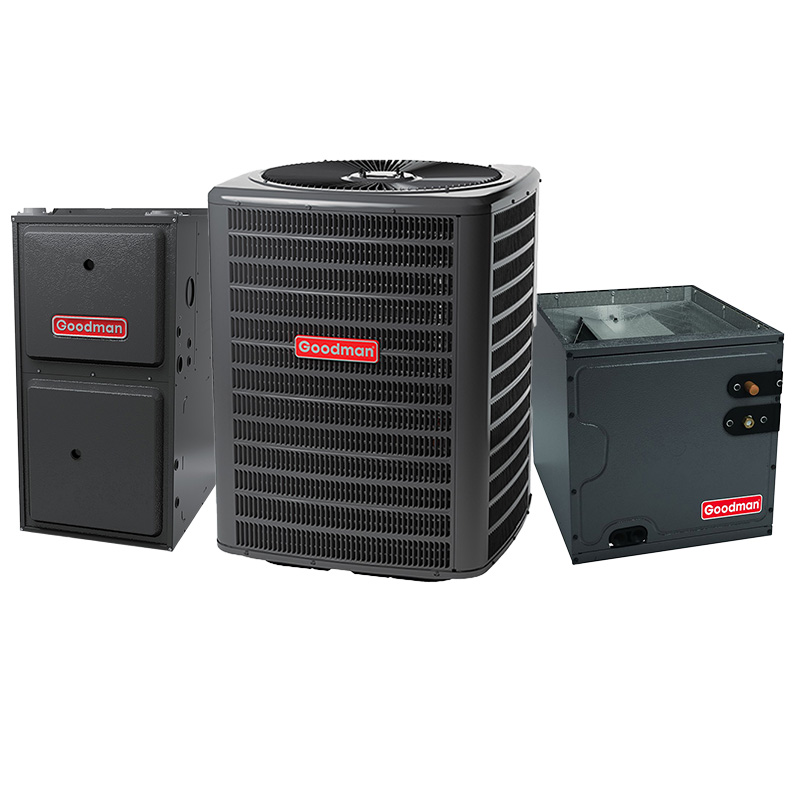
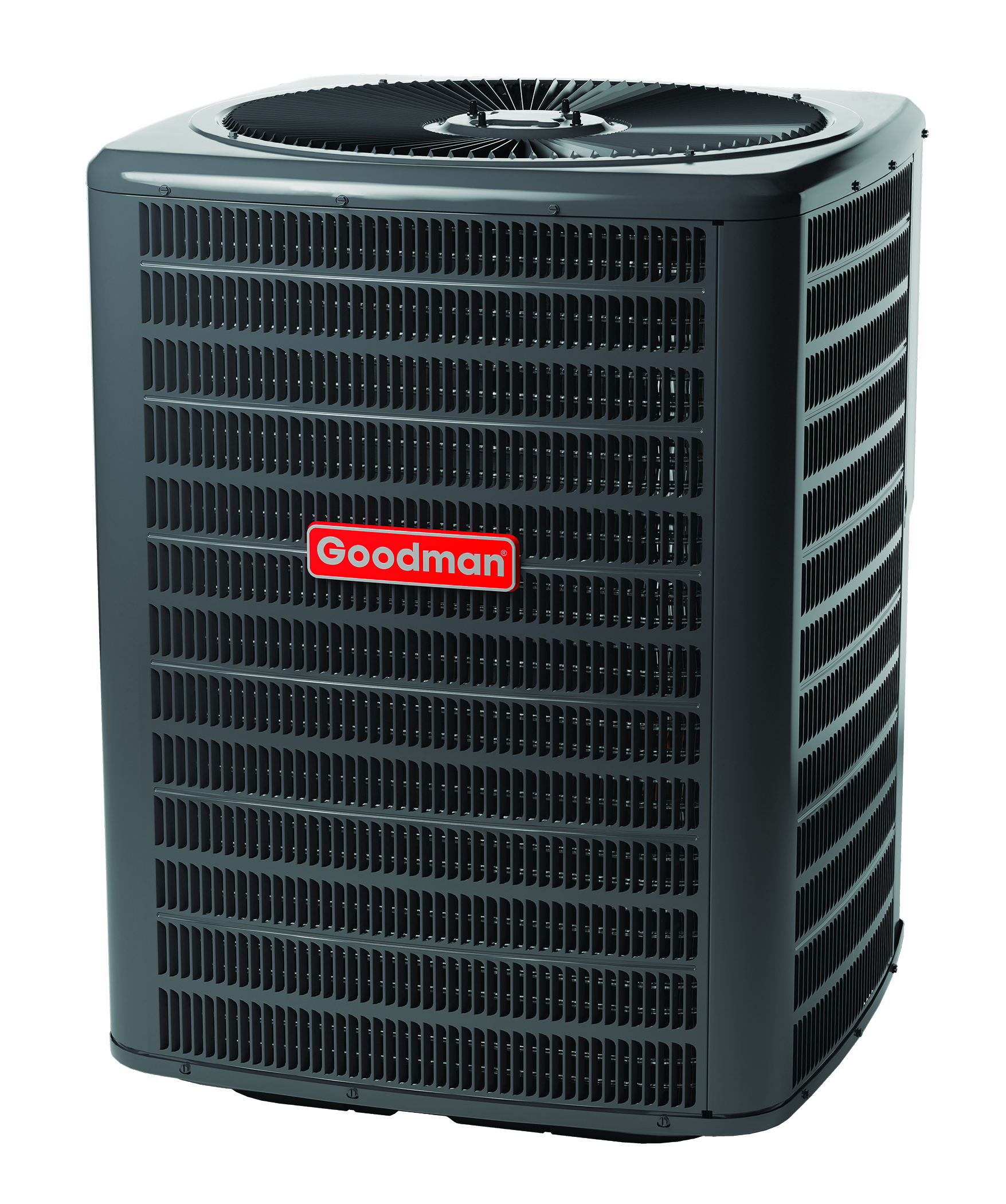
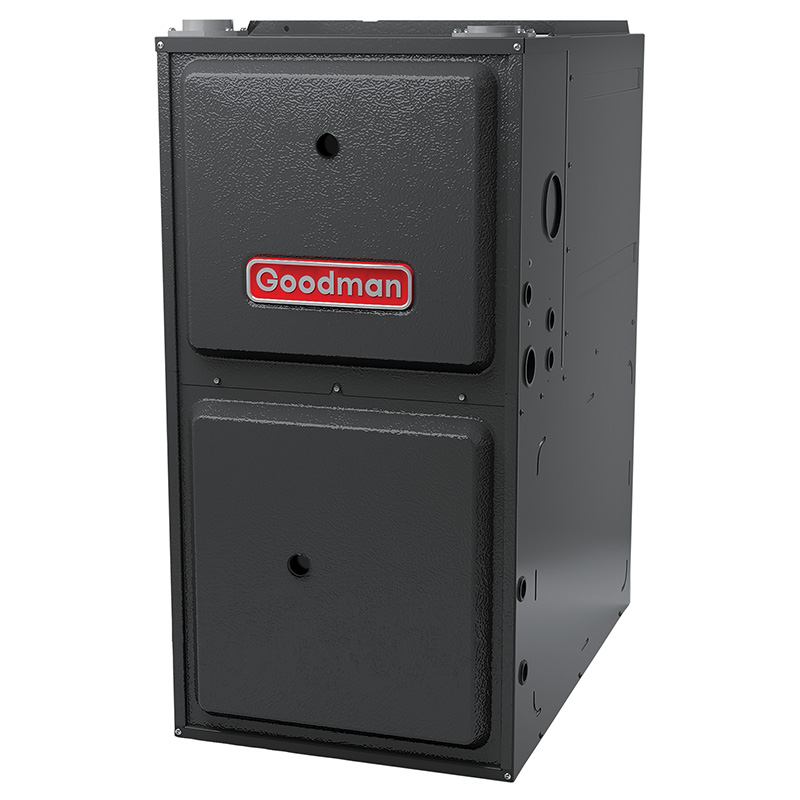
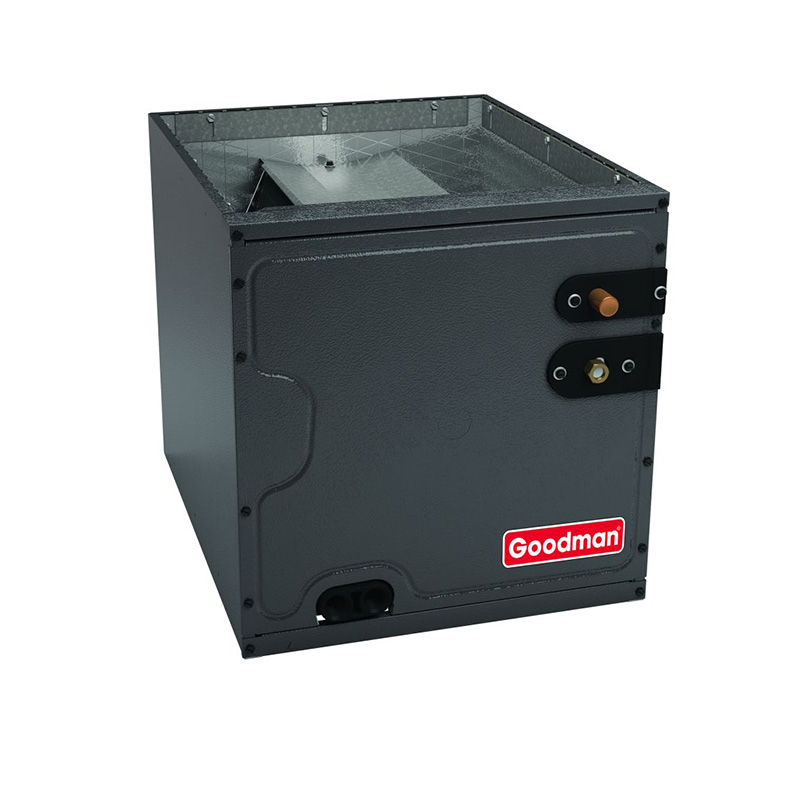
The Goodman GLXT7CA2410 pairs a 2-ton, 17.5 SEER2 two-stage air conditioner using R-32 refrigerant with an 80,000 BTU, 96% AFUE two-stage variable-speed ECM gas furnace in an upflow configuration. Together, those ratings put this system in the upper tier of mid-efficiency residential equipment, well above federal minimums, and R-32 is a lower-global-warming-potential refrigerant that is increasingly common as R-410A is phased out. The upflow orientation suits homes where the furnace sits in a basement or closet with ductwork running overhead, which is the most common arrangement in cold-weather markets.
The two-stage compressor and two-stage gas valve both run at reduced capacity during mild weather and ramp up only when conditions demand it. That part-load operation reduces short-cycling, keeps humidity levels more stable than a single-stage unit, and produces quieter sound levels on most days. The ECM (electronically commutated motor) blower adjusts airflow continuously, which contributes to both the high AFUE rating and the comfort consistency. This system is a practical fit for homeowners in mixed climates who want meaningful efficiency gains over a basic 14 to 16 SEER2 system without stretching to a variable-capacity inverter system at a significantly higher price point.
The GLXT7CA2410 delivers a genuinely efficient system at a price that undercuts comparable Carrier, Trane, and Lennox packages by a meaningful margin. The efficiency specs are real and competitive, but long-term reliability sits below the premium tier, and how well this system performs over its lifespan depends heavily on who installs and commissions it.
Overall score is the average of the five ratings above.
What we like
- 17.5 SEER2 rating delivers real operating cost savings over baseline-efficiency systems
- 96% AFUE two-stage furnace is among the more efficient gas heating options available at this price level
- ECM blower reduces electricity consumption compared to PSC motor furnaces
- R-32 refrigerant is environmentally preferable and supply chain is growing
- Purchase price typically runs 15 to 25 percent below comparable Trane, Carrier, or Lennox systems
Trade-offs
- Dual-run capacitors are a documented early failure point, often requiring a 300 to 600 dollar service call within the first several years
- Evaporator coil leaks appear in a meaningful share of owner reports, a more expensive repair than a capacitor replacement
- Compressor lifespan averages 10 to 14 years versus 15 to 20 years for premium-brand compressors, which is a real total-cost-of-ownership consideration
- A minority of owners have reported refrigerant leaks in year one, typically traced to installation or initial charge issues rather than a manufacturing defect
What homeowners and pros say about Goodman
Homeowners who shop Goodman tend to split into two camps. The most common praise heard at the dealer level, reflected in Google dealer scores averaging around 3.8 out of 5, is straightforward: the system cooled or heated the house well and the price was noticeably lower than competing bids. That affordability advantage is real, typically 15 to 25 percent below Trane, Carrier, and Lennox for similar efficiency specs. The frustration surfaces later. ConsumerAffairs scores average around 2.5 out of 5, and the recurring pattern in those complaints is repair costs rising after roughly year 7, which aligns with the documented failure modes: dual-run capacitors going out (a quick fix, usually 300 to 600 dollars), evaporator coil leaks showing up in a meaningful share of units, and compressor lifespans averaging 10 to 14 years rather than the 15 to 20 years typical of premium brands.
HVAC technicians generally say the same thing about Goodman: installation quality determines everything. A properly sized, carefully commissioned Goodman system with a good refrigerant charge can run reliably for well over a decade. A rushed installation with an inaccurate charge or undersized ductwork will produce the exact complaints you see in low-review channels. For a two-stage ECM system like the GLXT7CA2410, where proper commissioning of both the gas valve staging and the blower motor ramp rate actually matters, that installer-dependence is especially worth taking seriously. The specs on this unit are competitive and honest; the question is always who puts it in.
Sources: ConsumerAffairs Goodman owner reviews, AHRI Directory of Certified Product Performance, U.S. DOE appliance and equipment efficiency standards, Goodman product specification sheets.
What it costs to run
At 17.5 SEER2, cooling this 2-ton system for a typical 1200-hour cooling season at the U.S. average electricity rate of $0.17/kWh works out to roughly $280 per year in cooling, about $85 less per year than a minimum-efficiency 13.4 SEER2 unit of the same size. Your real cost depends on your climate and local rate.
Method: (24,000 BTU/hr ÷ 17.5 SEER2) × 1200 hours ÷ 1000 × $0.17/kWh. Rate source: U.S. EIA average; cooling hours: moderate-climate estimate.
How it compares
| Brand | Comparable model | SEER2 | Stage | Price position |
|---|---|---|---|---|
| Goodman | GLXT7CA2410 | 17.5 | Two-stage | Value pick |
| Carrier | Performance 17 (24ACC7 + 59TP6) | 17 | Two-stage | Approximately 15 to 25 percent above this Goodman system |
| Trane | XR17 + XC80 (4TTR7 series + TUD2) | 17 | Two-stage | Approximately 20 to 30 percent above this Goodman system |
| Lennox | Merit 17ACX + ML96DF | 17 | Two-stage | Approximately 20 to 30 percent above this Goodman system |
Competitor rows are comparable single-stage units at similar efficiency; price is relative position, not a quote.
Questions about this system
What size home is an 80,000 BTU 2-ton system actually suited for?
The 2-ton cooling side generally serves homes in the 1,200 to 1,800 square foot range in moderate climates, though proper sizing requires a Manual J load calculation from your installer. The 80,000 BTU furnace can be appropriate for larger homes in colder climates, so the heating and cooling capacities may not always be matched to the same house size. Never skip the load calculation.
Is R-32 refrigerant harder to service or find than R-410A?
R-32 is a single-component refrigerant, which means technicians can top off a charge without replacing the entire refrigerant load, unlike R-410A blends. Availability is growing as manufacturers shift to lower-GWP refrigerants, though not every technician currently carries it. Confirming your service company is already working with R-32 before purchase is a reasonable step.
What does the two-stage operation actually do for comfort compared to a single-stage system?
On most days, the system runs at its lower stage, which means longer, quieter cycles that do a better job removing humidity and keeping temperatures even throughout the home. The high stage only kicks in during peak heat or cold. Most owners in mixed climates notice both quieter operation and better dehumidification compared to single-stage equipment.
Goodman gets mixed reviews online. How worried should I be about reliability?
Goodman's ConsumerAffairs score is around 2.5 out of 5, though that channel tends to attract complaints more than praise. Google dealer reviews average closer to 3.8 out of 5. The documented failure modes to know about are dual-run capacitors (common, inexpensive fix), evaporator coil leaks (less common, more expensive), and compressor lifespan averaging 10 to 14 years versus 15 to 20 for premium brands. An extended labor warranty and a strong installer reduce your exposure to most of these risks.
Does the upflow configuration limit where this system can be installed?
Upflow means heated or cooled air exits from the top of the furnace and flows into overhead ductwork, making it the standard choice for basement or first-floor closet installations where ducts run through the ceiling. It is not the right choice for attic installations or homes with ductwork under the floor, which require downflow or horizontal configurations. Your installer should confirm the configuration matches your existing duct layout before ordering.
Specifications
| Cooling capacity | 2 Ton |
| Efficiency | 17.5 SEER2 |
| Furnace output | 80000 BTU |
| Furnace efficiency | 96% AFUE |
| Configuration | Upflow |
| Refrigerant | R-32 |
| Model | GLXT7CA2410 |