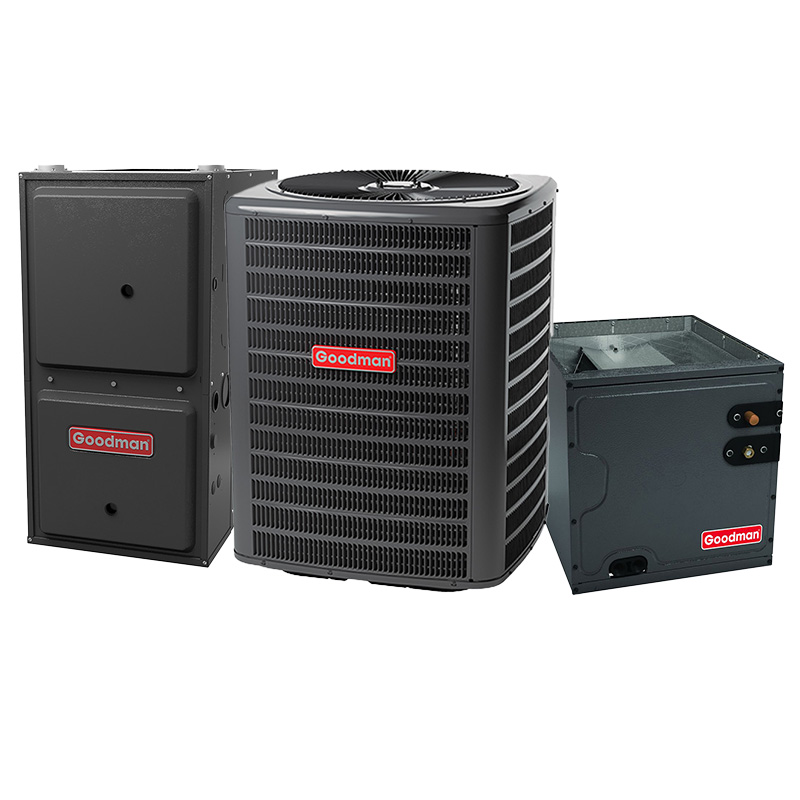
Goodman 3 Ton 16.7 SEER2 AC With 60000 BTU 96% AFUE 2-Stage Variable-Speed ECM Gas Furnace System – Downflow | 2-Stage High Efficiency AC | R32
View on AC Direct see your lowest price →Check current price on AC Direct →
Key features
- 16.7 SEER2 two-stage compressor for improved humidity control and part-load efficiency
- 96% AFUE two-stage gas furnace qualifies for many utility rebate programs
- R-32 refrigerant with lower global warming potential than R-410A
- Variable-speed ECM blower motor reduces electricity use during fan-only operation
- Downflow configuration designed for closet, platform, or utility-room installs discharging through floor registers
- Matched system sold as a verified communicating pair to simplify staging and control setup
About this system
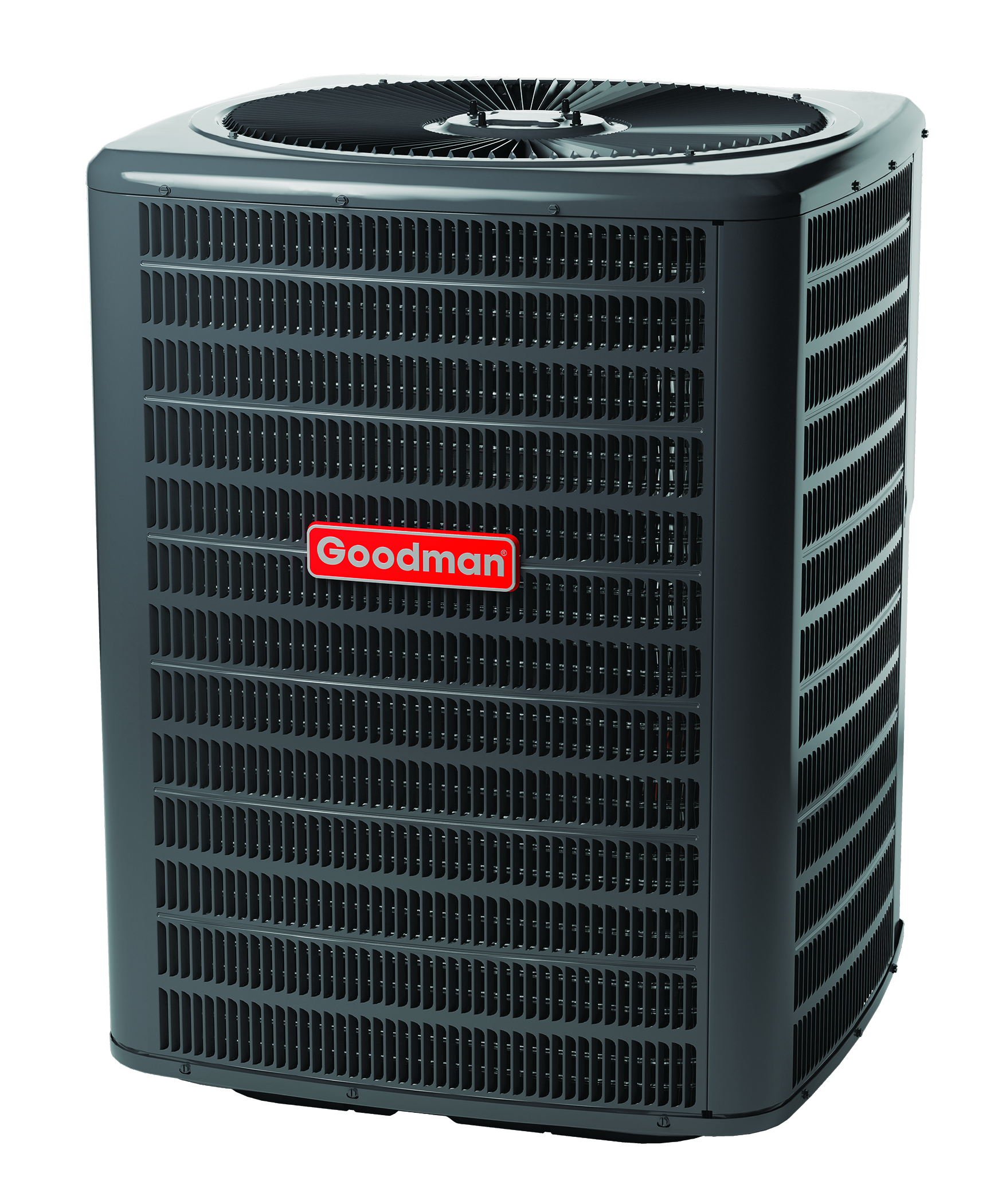
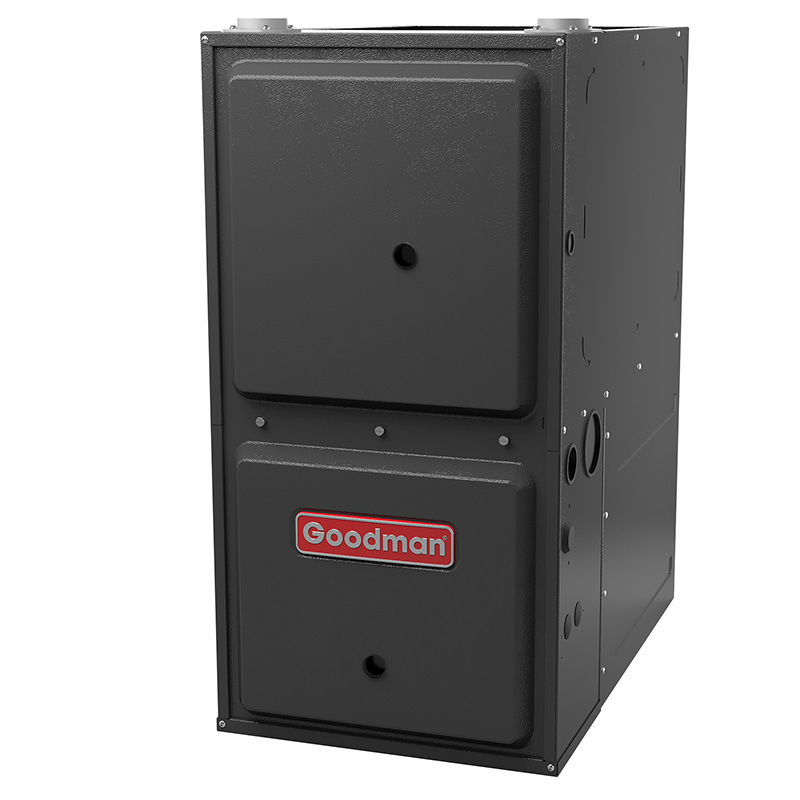
The Goodman GLXT7CA3610 pairs a 3-ton, 16.7 SEER2 two-stage air conditioner using R-32 refrigerant with a 60,000 BTU, 96% AFUE two-stage variable-speed ECM gas furnace in a downflow configuration. That combination is well suited to homes where the air handler sits in a closet, utility room, or attic platform that discharges conditioned air downward through floor registers, a layout common in ranch-style homes and slab-foundation construction. The two-stage compressor on the cooling side runs at low capacity on mild days, which smooths out humidity control and reduces the short-cycling that wears equipment prematurely. On the heating side, the 96% AFUE furnace returns 96 cents of heat for every dollar of gas burned, which qualifies as high-efficiency in most utility rebate programs.
R-32 refrigerant is worth noting for buyers thinking about long-term operating costs. It has a lower global warming potential than R-410A and is increasingly the direction the industry is moving, so parts and refrigerant availability should remain solid through the life of this system. The variable-speed ECM blower motor in the furnace is one of the more significant comfort upgrades at this price point: it ramps airflow gradually rather than slamming on at full speed, which reduces drafts and lowers electricity consumption during blower-only operation compared with a standard PSC motor. Together, these specs place this system firmly in the mid-to-upper efficiency tier without crossing into the premium price range that brands like Lennox or Trane command.
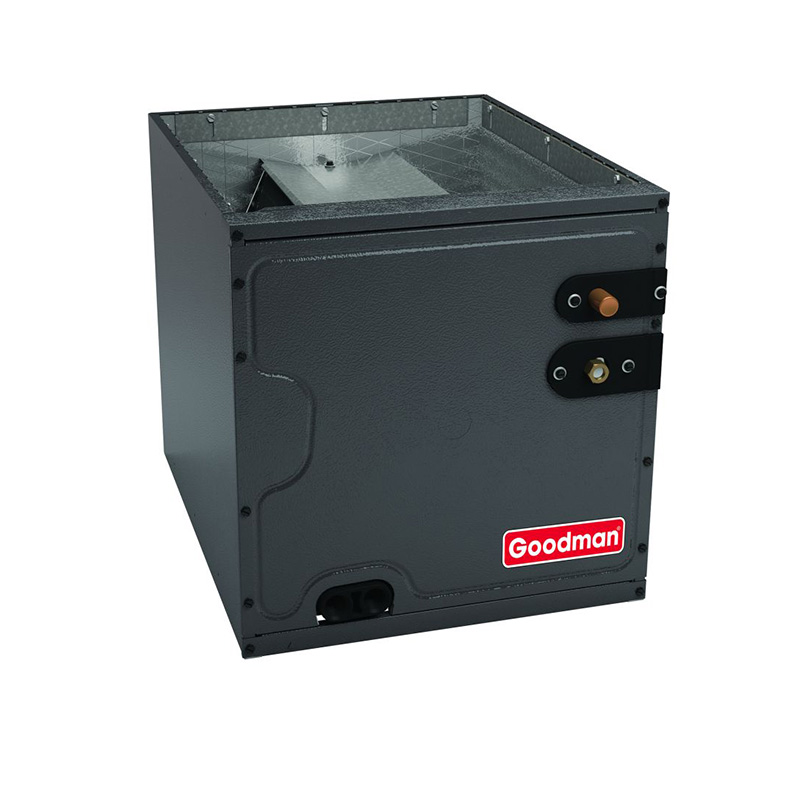
The GLXT7CA3610 delivers genuine mid-to-upper efficiency hardware at a price point noticeably below comparable Carrier, Trane, or Lennox systems, making it a reasonable choice for budget-conscious buyers who prioritize comfort features like two-stage cooling and a variable-speed blower. The trade-off is a brand reliability record that trails premium competitors, with compressor longevity averaging shorter than the industry's top tier and documented failure modes that owners should factor into their long-term cost planning. A skilled installation and a good extended-warranty strategy go a long way toward closing that gap.
Overall score is the average of the five ratings above.
What we like
- Priced 15 to 25 percent below comparable Trane, Carrier, and Lennox equipment for the same efficiency tier
- Two-stage compressor improves dehumidification and reduces short-cycling versus single-stage units
- 96% AFUE furnace is eligible for utility rebates in most regions and cuts heating fuel costs meaningfully
- Variable-speed ECM blower provides quieter, more even airflow and lower fan-mode electricity draw
- R-32 refrigerant is a forward-looking choice with good long-term parts and refrigerant availability
Trade-offs
- Dual-run capacitors are the most commonly reported failure point, typically requiring a service call and 300 to 600 dollars after several years of use
- Evaporator coil leaks appear in a meaningful share of owner reviews and can be a costly mid-life repair
- Compressor lifespan averages 10 to 14 years, shorter than the 15 to 20 years reported for premium-brand compressors
- A minority of owners report refrigerant leaks within the first year, generally traced to install or factory charge issues rather than equipment defects, which underscores how much performance depends on installer quality
What homeowners and pros say about Goodman
On sites like ConsumerAffairs, Goodman earns roughly 2.5 out of 5, a score shaped heavily by the platform’s tendency to attract frustrated owners rather than satisfied ones. The recurring theme in those reviews is repair costs that start climbing around year 7, with dual-run capacitor failures and evaporator coil leaks appearing most frequently. Google dealer reviews tell a somewhat different story, averaging around 3.8 out of 5 across hundreds of reviews per location, where affordability is the most cited reason buyers chose Goodman over alternatives. The divergence between those two numbers reflects a real split: buyers who got a clean installation from a skilled contractor and buyers who did not, with the latter group more likely to seek out a complaint forum.
HVAC professionals who work on Goodman equipment regularly tend to describe it as serviceable but not forgiving of shortcuts. The documented failure modes, capacitors going first, coil leaks in the middle years, and compressors that average 10 to 14 years rather than the 15 to 20 years seen in premium brands, are well known in the trade and largely priced into how technicians approach maintenance schedules on these units. For a two-stage, variable-speed ECM system at this price point, the hardware specifications are genuinely competitive. The honest caveat is that the long-term ownership experience tracks closely with the quality of the original installation, a factor that is entirely within a buyer’s control.
Sources: ConsumerAffairs Goodman owner reviews, AHRI Directory of Certified Product Performance, U.S. DOE appliance and equipment efficiency standards, Goodman product specification sheets.
What it costs to run
At 16.7 SEER2, cooling this 3-ton system for a typical 1200-hour cooling season at the U.S. average electricity rate of $0.17/kWh works out to roughly $440 per year in cooling, about $108 less per year than a minimum-efficiency 13.4 SEER2 unit of the same size. Your real cost depends on your climate and local rate.
Method: (36,000 BTU/hr ÷ 16.7 SEER2) × 1200 hours ÷ 1000 × $0.17/kWh. Rate source: U.S. EIA average; cooling hours: moderate-climate estimate.
How it compares
| Brand | Comparable model | SEER2 | Stage | Price position |
|---|---|---|---|---|
| Goodman | GLXT7CA3610 | 16.7 | Two-stage | Value pick |
| Carrier | Comfort 16 (24ACC636A003) | 16 | Single-stage | Moderately higher than Goodman |
| Trane | XR17 (4TTR7036) | 17 | Two-stage | Noticeably higher than Goodman |
| Lennox | Merit ML17XC2 | 17 | Two-stage | Noticeably to significantly higher than Goodman |
Competitor rows are comparable single-stage units at similar efficiency; price is relative position, not a quote.
Questions about this system
Why does this system use a downflow configuration, and how do I know if it fits my home?
Downflow means the furnace draws return air from the top and discharges heated or cooled air out the bottom, feeding into ductwork below the unit. It is the correct choice when your air handler sits in a closet, utility room, or raised platform above floor-level supply ducts, which is common in slab-foundation homes and ranch-style construction. If your ducts feed upward from the unit, you need an upflow or horizontal configuration instead.
What are the most likely repair costs I should plan for over the life of this Goodman system?
The most commonly reported failure on Goodman equipment is the dual-run capacitor, which is a relatively inexpensive fix in the 300 to 600 dollar range for parts and labor. Evaporator coil leaks are also documented in a meaningful share of owner reviews and can cost considerably more to repair. Compressor replacement, if needed, is the most expensive scenario; Goodman compressors have averaged 10 to 14 years of service life, so budgeting for that possibility after year 10 is prudent.
Is R-32 refrigerant easy to service, and will it be available long-term?
R-32 is widely used in new equipment globally and is increasingly common in the U.S. market, so availability is not a concern for the foreseeable future. It does require technicians to use specific recovery equipment and hold the proper certifications, but any HVAC company equipped for modern systems will be familiar with it. One practical note: R-32 is mildly flammable, so repairs should only be done by certified technicians.
Will this system qualify for a federal tax credit or utility rebates?
The 96% AFUE furnace generally meets the efficiency threshold for the federal 25C energy efficiency tax credit, which covers a percentage of qualifying equipment costs up to the annual cap. The 16.7 SEER2 AC may also qualify depending on your climate zone and the specific credit requirements in effect when you install. Always confirm current IRS guidance and check your utility's rebate portal before purchase, as program terms change.
How much does installer quality actually matter for a Goodman system?
It matters more than with some premium brands. HVAC technicians consistently cite proper refrigerant charge, duct sizing, and airflow setup as the biggest determinants of how long and how efficiently a Goodman system performs. The first-year refrigerant leak complaints documented in owner reviews are typically traced back to install or charge issues rather than factory defects, which means choosing an experienced, licensed installer who will verify system performance after startup is one of the most important decisions you will make with this purchase.
Specifications
| Cooling capacity | 3 Ton |
| Efficiency | 16.7 SEER2 |
| Furnace output | 60000 BTU |
| Furnace efficiency | 96% AFUE |
| Configuration | Downflow |
| Refrigerant | R-32 |
| Model | GLXT7CA3610 |