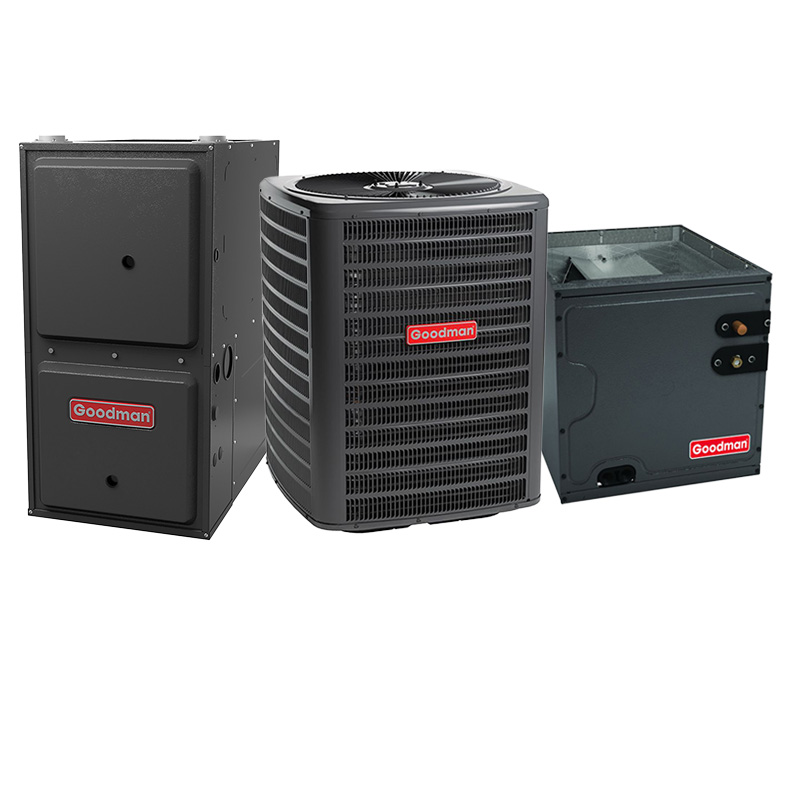
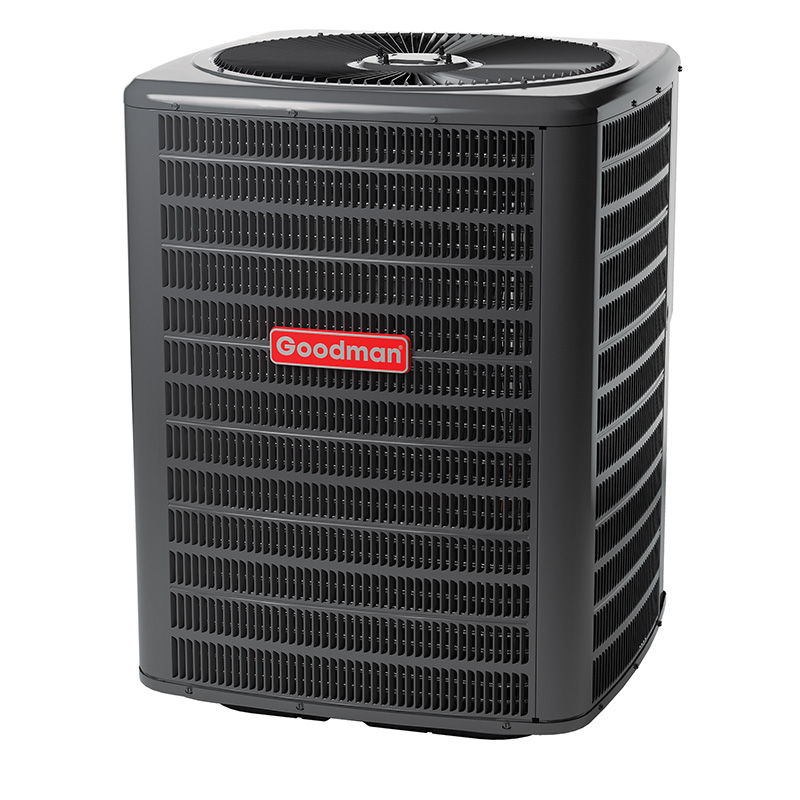
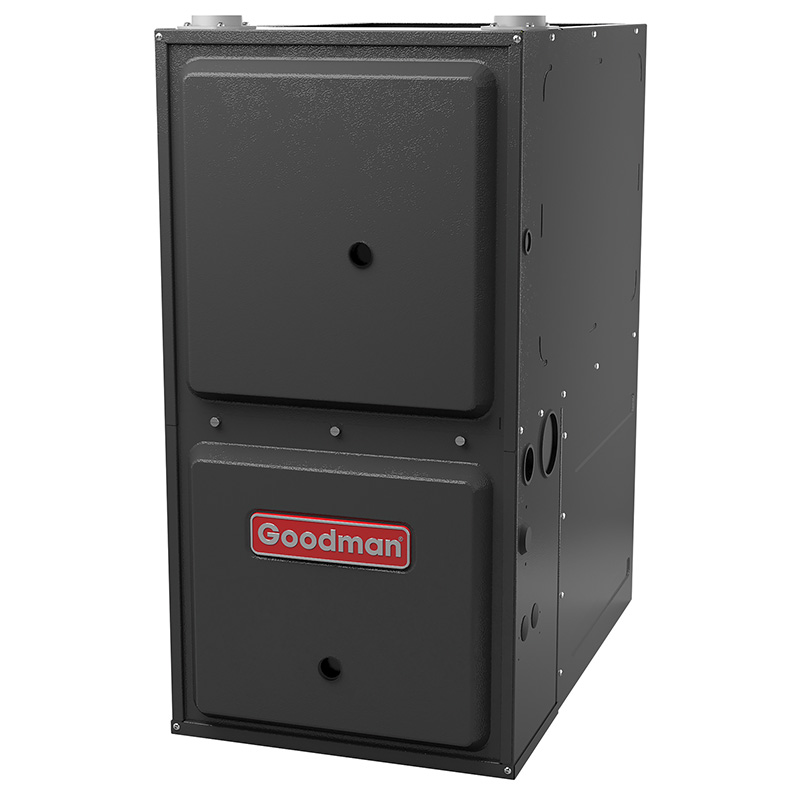
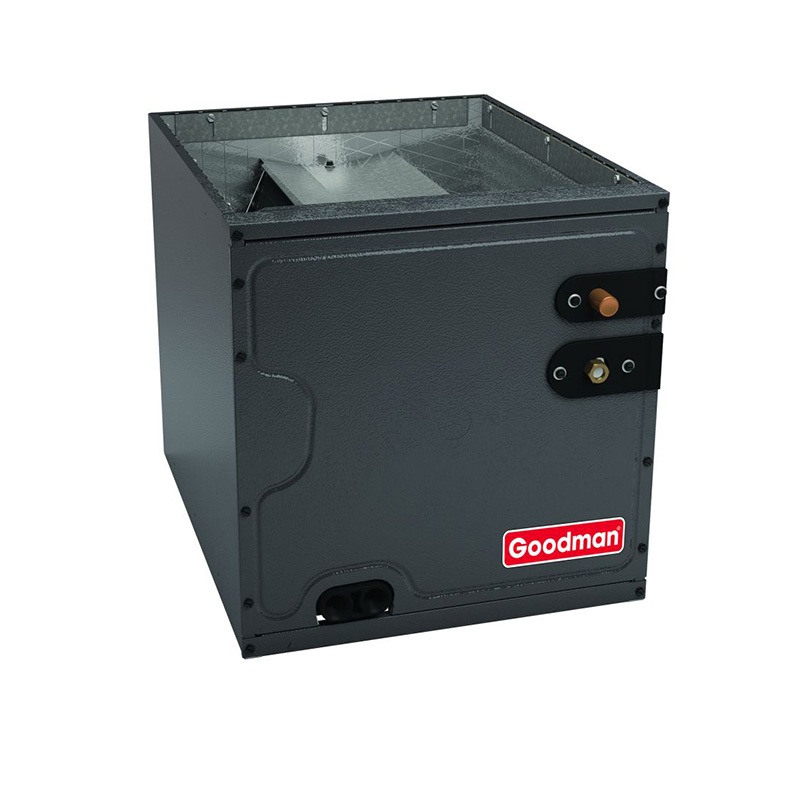
Goodman Air Conditioning And Heating – 1.5 Ton 15.2 SEER2 AC With 40000 BTU 96% AFUE Two Stage Multi-Speed ECM Gas Furnace System – Downflow | R32
View on AC Direct see your lowest price →Check current price on AC Direct →
Key features
- 15.2 SEER2 cooling efficiency, meeting federal minimums with some headroom
- 96% AFUE two-stage gas furnace reduces temperature swings and fuel use
- Multi-speed ECM blower motor cuts electrical consumption versus PSC motors
- Downflow configuration for attic or upper-level air handler installations
- R-32 refrigerant with lower global warming potential than R-410A
- 40,000 BTU heating capacity suited to smaller conditioned spaces
About this system
This 1.5-ton Goodman system pairs a 15.2 SEER2 air conditioner with a 40,000 BTU, 96% AFUE two-stage gas furnace in a downflow configuration, making it a practical choice for smaller homes, condominiums, or spaces under roughly 700 to 900 square feet depending on local climate. The downflow orientation suits installations where the air handler sits in an upper-floor mechanical closet or attic platform and distributes conditioned air downward through floor registers. R-32 refrigerant, which has a lower global warming potential than the R-410A it succeeds, is the new industry standard, so replacement refrigerant will remain widely available for the foreseeable future.
The two-stage furnace is a meaningful step up from single-stage equipment. On most heating days the unit runs on the lower stage, which reduces temperature swings, lowers operating noise, and cuts gas consumption compared to a furnace that fires at full output every cycle. The multi-speed ECM blower motor adds to that efficiency story by consuming significantly less electricity than a standard PSC motor and supporting better humidity control in cooling mode. At 15.2 SEER2, cooling efficiency sits just above the federal minimum for most northern climate regions, so operating costs will be modest without reaching the premium tier. This system suits a budget-conscious buyer who wants two-stage heating comfort and reasonable cooling efficiency and is comfortable accepting Goodman’s value-brand trade-offs on long-term durability.
This Goodman package delivers genuine two-stage heating comfort and a capable ECM blower at a price point that undercuts Trane, Carrier, and Lennox by a notable margin, which makes it attractive for cost-conscious buyers. The trade-off is a brand history that includes documented capacitor failures, evaporator coil leak reports, and compressor lifespans that average shorter than premium competitors. If you pair it with a skilled installer and budget for potential repairs after year seven, the value proposition holds up reasonably well.
Overall score is the average of the five ratings above.
What we like
- Two-stage furnace operation improves comfort and reduces gas consumption on mild heating days
- Multi-speed ECM motor lowers blower electricity costs and supports better dehumidification
- Priced 15 to 25 percent below comparable Trane, Lennox, and Carrier systems
- R-32 refrigerant is current industry standard with strong future availability
- 96% AFUE rating means very little heat energy is lost up the flue
Trade-offs
- Dual-run capacitors are the most commonly reported failure point, typically after several years of use
- Evaporator coil leaks appear in a meaningful share of owner reports and can be costly to address
- Compressor lifespan averages 10 to 14 years versus 15 to 20 years seen in premium brands
- A minority of owners report refrigerant leaks within year one, usually tied to installation or initial charge issues
What homeowners and pros say about Goodman
Homeowners who rate Goodman positively on Google dealer reviews, where the brand averages around 3.8 out of 5, consistently point to the lower upfront cost as the deciding factor. For a 1.5-ton system like this one, getting two-stage furnace performance and a 96% AFUE rating at a price well below Carrier, Trane, or Lennox is a real advantage for buyers on a fixed budget. HVAC technicians tend to describe Goodman as a workable product whose longevity is highly sensitive to installation quality, and they are quick to note that dual-run capacitor failure is the single most common service call they see on Goodman equipment, typically a straightforward repair in the 300 to 600 dollar range but one that often signals the start of more frequent service visits.
The picture darkens somewhat on ConsumerAffairs, where Goodman sits around 2.5 out of 5, with the recurring theme being repair costs that start climbing after roughly year seven. The specific failure modes worth knowing before you buy are evaporator coil leaks, which appear in a meaningful portion of owner accounts and can run well beyond a simple capacitor swap, and compressor lifespan, which industry experience puts at 10 to 14 years for Goodman versus 15 to 20 years for premium brands. A small share of owners also report refrigerant leaks in the first year, something most technicians attribute to the installation or initial refrigerant charge rather than the equipment itself. Taken together, the evidence suggests this system can deliver solid value in years one through six or seven, but prospective buyers should budget for service and weigh whether the upfront savings offset the higher probability of mid-life repairs compared to premium alternatives.
Sources: ConsumerAffairs Goodman owner reviews, AHRI Directory of Certified Product Performance, U.S. DOE appliance and equipment efficiency standards, Goodman product specification sheets.
What it costs to run
At 15.2 SEER2, cooling this 1.5-ton system for a typical 1200-hour cooling season at the U.S. average electricity rate of $0.17/kWh works out to roughly $242 per year in cooling, about $32 less per year than a minimum-efficiency 13.4 SEER2 unit of the same size. Your real cost depends on your climate and local rate.
Method: (18,000 BTU/hr ÷ 15.2 SEER2) × 1200 hours ÷ 1000 × $0.17/kWh. Rate source: U.S. EIA average; cooling hours: moderate-climate estimate.
How it compares
| Brand | Comparable model | SEER2 | Stage | Price position |
|---|---|---|---|---|
| Goodman | GSX-H/GCVC96 Series (this system) | 15.2 | two-stage | Value pick |
| Carrier | Performance 15 / 58CV Series | 15.2 | two-stage | Typically 15 to 25 percent more than this Goodman system |
| Trane | XR15 / S9V2 Series | 15.2 | two-stage | Typically 15 to 25 percent more than this Goodman system |
| Lennox | Merit ML15 / ML96V Series | 15.2 | two-stage | Typically 15 to 25 percent more than this Goodman system |
Competitor rows are comparable single-stage units at similar efficiency; price is relative position, not a quote.
Questions about this system
Is a downflow furnace harder to find an installer for than an upflow unit?
Most licensed HVAC contractors work with both configurations, but you should confirm before booking. Downflow units require a specific subbase or floor opening and careful attention to combustion air routing, so this is not the configuration to cut corners on installation.
What does two-stage heating actually feel like compared to single-stage?
On most days the furnace runs at its lower stage, which means longer, quieter cycles that bring the space up to temperature gradually rather than in a short blast. The result is fewer temperature swings and more even warmth throughout the home, particularly noticeable in open floor plans.
How does R-32 affect my maintenance or repair options going forward?
R-32 is the current direction of the industry, so technicians are increasingly trained and equipped to handle it. It does require slightly different handling procedures than R-410A, so confirm your service contractor has R-32 certification and the appropriate equipment before any refrigerant work.
What is the Goodman warranty on this system and what do I need to do to activate it?
Goodman typically offers a 10-year parts limited warranty when you register the equipment online within a set window after installation, and a lifetime heat exchanger warranty on the furnace. Failure to register usually reduces coverage to five years, so registration is critical and should be confirmed with your installer at the time of startup.
The ConsumerAffairs score for Goodman is around 2.5 out of 5. Should that worry me?
ConsumerAffairs skews toward complaint-driven reviews, so a low score there reflects the experiences of owners motivated to post negatively rather than a true cross-section of owners. Google dealer reviews run closer to 3.8 out of 5, with affordability cited most often. The honest read is that Goodman performs adequately when installed correctly but does carry documented failure risks, particularly with capacitors and coils, that tend to appear after roughly year seven.
Specifications
| Cooling capacity | 1.5 Ton |
| Efficiency | 15.2 SEER2 |
| Furnace output | 40000 BTU |
| Furnace efficiency | 96% AFUE |
| Configuration | Downflow |
| Refrigerant | R-32 |