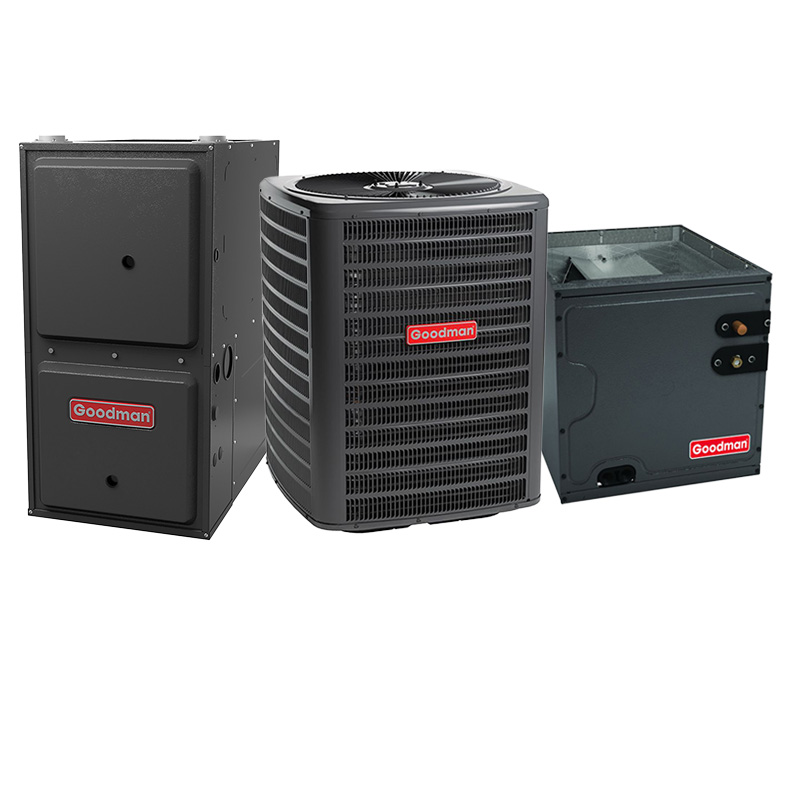
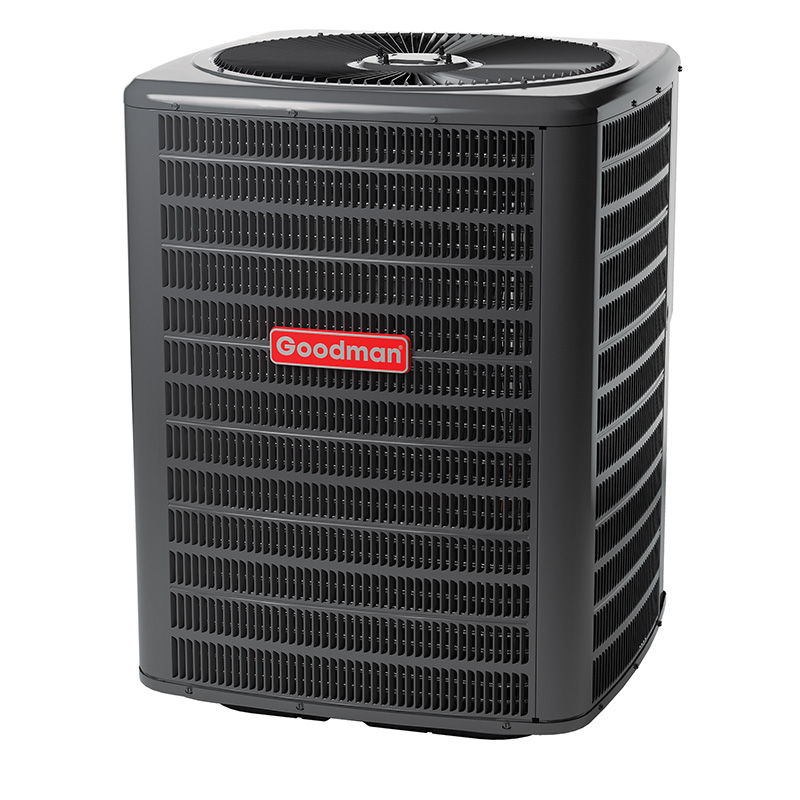
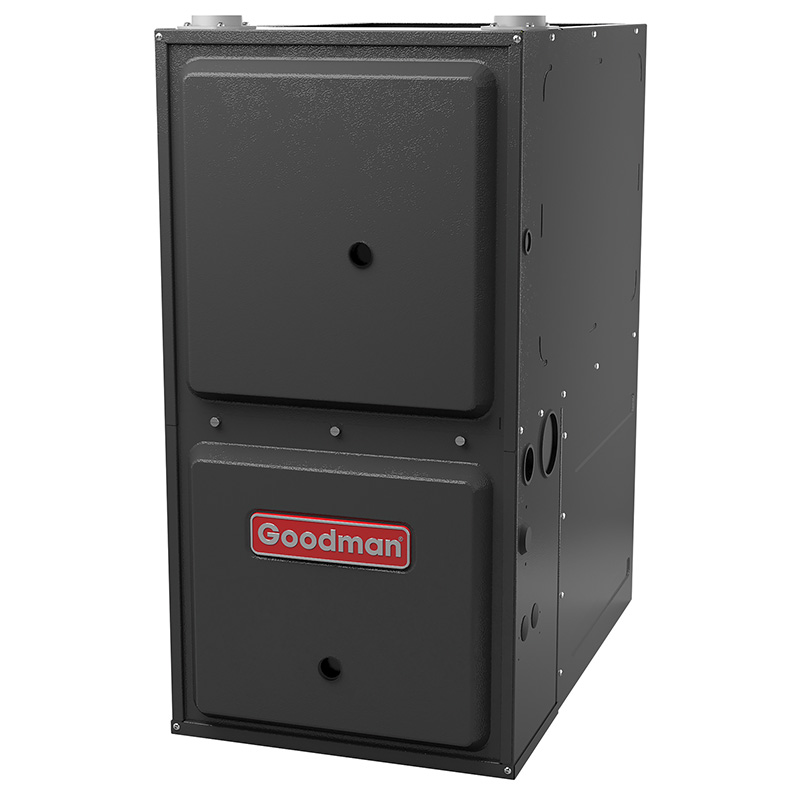
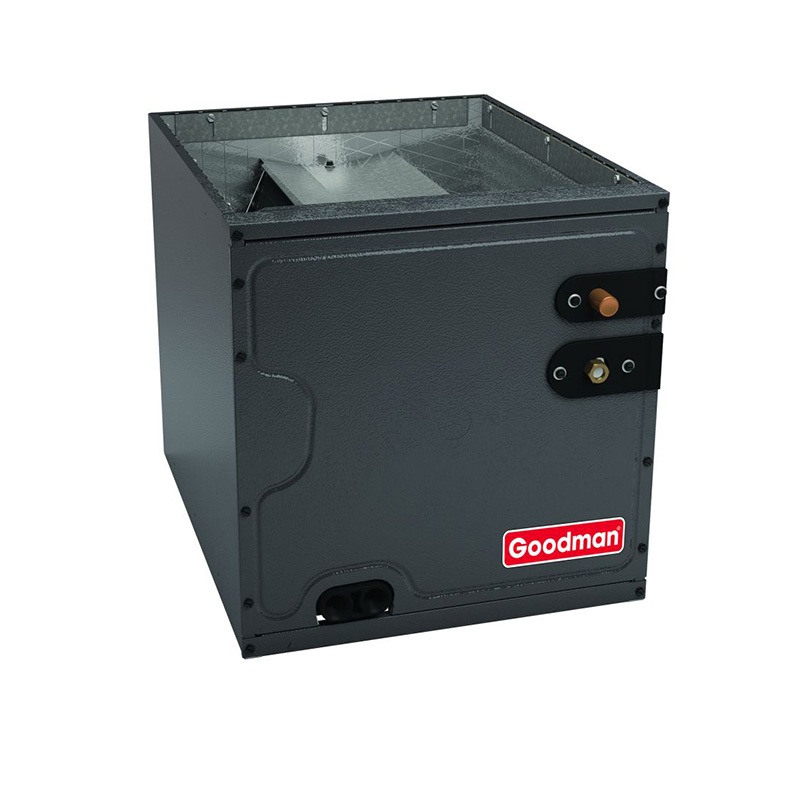
Goodman Air Conditioning And Heating – 2 Ton 14.5 SEER2 AC With 60000 BTU 96% AFUE Two Stage Multi-Speed ECM Gas Furnace System – Downflow | R32
View on AC Direct see your lowest price →Check current price on AC Direct →
Key features
- 2-ton cooling capacity, 14.5 SEER2 efficiency rating
- 60,000 BTU two-stage gas furnace at 96% AFUE
- Multi-speed ECM blower motor for variable airflow
- Downflow configuration for dedicated downflow cabinet installations
- R-32 refrigerant with lower global warming potential than R-410A
- Matched system design intended for single-contractor installation
About this system
This Goodman package pairs a 2-ton, 14.5 SEER2 air conditioner with a 60,000 BTU, 96% AFUE two-stage gas furnace in a downflow configuration, making it a practical choice for homes where the air handler sits in a utility closet, basement, or above a crawlspace with supply ducts running downward. The R-32 refrigerant charge is a forward-looking move: R-32 has a lower global warming potential than the R-410A it replaces, and its higher energy density can support slightly better system efficiency over time. At 14.5 SEER2, this unit clears the federal minimum for most U.S. regions without reaching into premium-efficiency territory, which keeps the purchase price accessible.
The two-stage furnace is the standout spec here. Unlike a single-stage unit that fires at full capacity every cycle, two-stage operation lets the furnace run at a lower output during mild weather, which lengthens run times, reduces temperature swings, and generally lowers fuel consumption compared to a single-stage 96% AFUE unit. The multi-speed ECM blower motor reinforces those benefits by modulating airflow to match the heating or cooling demand, contributing to quieter operation and better humidity control during air conditioning mode. For a 2-ton system serving a smaller home, roughly 900 to 1,400 square feet depending on climate and insulation, that combination of two-stage heat and variable-speed airflow is a meaningful comfort upgrade over entry-level alternatives.
Downflow systems are less common than upflow or horizontal configurations, so buyers should confirm their existing ductwork and air handler cabinet are genuinely designed for downflow before purchasing. This is not a universal or multi-position unit in the typical sense, and installing it in the wrong orientation will void the warranty and potentially damage the equipment. A licensed HVAC contractor familiar with downflow installs is essentially mandatory here.
This Goodman combination delivers genuine two-stage heating and ECM blower technology at a price point that undercuts Carrier, Trane, and Lennox by a meaningful margin, making it a reasonable value for budget-conscious buyers who hire a skilled installer and maintain the equipment consistently. The 14.5 SEER2 rating is adequate but not exceptional, and Goodman's real-world track record shows a higher incidence of capacitor failures, evaporator coil leaks, and shorter compressor lifespans than premium brands. It earns its place in the market, but buyers should go in with clear expectations about potential repair costs after year seven.
Overall score is the average of the five ratings above.
What we like
- Two-stage furnace operation reduces temperature swings and lowers fuel use compared to single-stage 96% AFUE units
- Multi-speed ECM motor improves humidity control and reduces noise during part-load operation
- Priced 15 to 25 percent below comparable Carrier, Trane, and Lennox systems
- 96% AFUE furnace keeps most combustion heat in the living space, not the flue
- R-32 refrigerant is more environmentally responsible and increasingly well-supported by service technicians
Trade-offs
- Dual-run capacitors are the most frequently reported failure point, typically requiring a 300 to 600 dollar repair within the equipment's lifetime
- Evaporator coil leaks appear in a meaningful share of owner reviews, a more costly and disruptive repair
- Compressor lifespan averages 10 to 14 years versus 15 to 20 years for premium-brand counterparts
- A minority of owners report refrigerant leaks within the first year, most often traced to install or factory charge issues rather than a defect that warranty covers easily
What homeowners and pros say about Goodman
Homeowners who have lived with Goodman equipment describe an experience that tracks closely with the brand’s ratings: a ConsumerAffairs score of roughly 2.5 out of 5 driven largely by owners who faced repair bills after year seven, and Google dealer scores hovering around 3.8 out of 5 where the most repeated compliment is that the equipment cost significantly less than competing brands at installation. The two-stage furnace and ECM blower in this particular configuration draw more favorable comments than entry-level Goodman single-stage units, with owners noting quieter operation and more consistent room temperatures during the heating season. Where the frustration tends to concentrate is in the cooling side: dual-run capacitor failures are the most commonly reported repair, typically running 300 to 600 dollars and often showing up within the first decade of ownership. Evaporator coil leaks appear often enough in owner reviews to be a genuine pattern rather than an outlier, and that repair is substantially more disruptive and costly.
HVAC technicians who work on Goodman equipment regularly offer a more calibrated view. They acknowledge that the brand’s compressors tend to reach end of life in the 10-to-14-year range rather than the 15-to-20 years a Carrier or Trane compressor might deliver, and they are consistent in saying that install quality is the single largest variable in how long any Goodman system lasts. A correctly sized, properly charged, and well-commissioned Goodman routinely delivers a decade or more of serviceable performance; the same unit installed carelessly or charged improperly can develop refrigerant leaks within the first year, a documented failure mode seen in a minority of owner reports. For this downflow two-stage system, technicians specifically caution that downflow configurations are less common and require a contractor comfortable with the orientation, which narrows the pool of installers who should touch it. The R-32 refrigerant also requires technicians to be current on A2L handling procedures, which is worth verifying before scheduling any service.
Sources: ConsumerAffairs Goodman owner reviews, AHRI Directory of Certified Product Performance, U.S. DOE appliance and equipment efficiency standards, Goodman product specification sheets.
What it costs to run
At 14.5 SEER2, cooling this 2-ton system for a typical 1200-hour cooling season at the U.S. average electricity rate of $0.17/kWh works out to roughly $338 per year in cooling, about $27 less per year than a minimum-efficiency 13.4 SEER2 unit of the same size. Your real cost depends on your climate and local rate.
Method: (24,000 BTU/hr ÷ 14.5 SEER2) × 1200 hours ÷ 1000 × $0.17/kWh. Rate source: U.S. EIA average; cooling hours: moderate-climate estimate.
How it compares
| Brand | Comparable model | SEER2 | Stage | Price position |
|---|---|---|---|---|
| Goodman | This system (2T 14.5 SEER2 / 60K BTU 96% AFUE two-stage ECM downflow R-32) | 14.5 | Two-stage furnace / single-stage AC | Value pick |
| Carrier | Performance Series (24ACC636 AC + 59TP6 two-stage furnace) | 15-16 | Two-stage furnace / single-stage AC | Typically 15 to 25 percent more than this Goodman system |
| Trane | XR15 AC + XC80 two-stage furnace | 15 | Two-stage furnace / single-stage AC | Typically 15 to 25 percent more than this Goodman system |
| Lennox | Merit Series ML14XC1 AC + ML196E two-stage furnace | 14.3-15 | Two-stage furnace / single-stage AC | Typically 15 to 25 percent more than this Goodman system |
Competitor rows are comparable single-stage units at similar efficiency; price is relative position, not a quote.
Questions about this system
Is this system genuinely downflow-only, or can it be installed in other orientations?
This unit is configured specifically for downflow installations, meaning the supply air exits from the bottom of the air handler cabinet. Installing it in an upflow or horizontal position is not supported and will void the warranty. Confirm your existing cabinet and ductwork are designed for downflow before purchasing.
What does two-stage operation actually mean for my heating bills compared to a standard 96% AFUE single-stage furnace?
Two-stage operation allows the furnace to fire at a lower capacity during moderate weather rather than always running at full output. In practice this means longer, gentler cycles that extract more consistent heat from each cubic foot of gas burned, often resulting in lower fuel consumption and more even temperatures room to room. The combined effect with the ECM blower is noticeable, though actual savings depend heavily on your climate, home insulation, and how well the system is sized.
Does R-32 refrigerant change how a technician services this unit?
R-32 requires equipment and certifications that most licensed HVAC technicians already have or are acquiring, since the industry is broadly transitioning away from R-410A. It is mildly flammable, which means it requires A2L-rated handling procedures, but for the homeowner this is largely invisible. Confirm your service contractor has R-32 experience before scheduling maintenance or repairs.
Goodman's ConsumerAffairs score is quite low. Should that concern me?
ConsumerAffairs scores around 2.5 out of 5 for Goodman, and the channel skews heavily toward dissatisfied owners, so the number is not a straight reliability percentage. Google dealer reviews sit closer to 3.8 out of 5, where affordability is the most commonly cited positive. The most consistently documented issues are dual-run capacitor failures (a low-cost fix), evaporator coil leaks, and compressor lifespans shorter than premium brands. Those are real trade-offs, not just noise, but they are also manageable with a good service relationship and a home warranty or equipment protection plan.
What size home is a 2-ton system appropriate for, and how do I know if this is right for my house?
As a rough rule, 2 tons of cooling capacity suits approximately 900 to 1,400 square feet in a moderately insulated home in a moderate climate, but ceiling height, window area, insulation levels, and local climate all shift that range significantly. The only reliable way to confirm is a Manual J load calculation performed by a licensed HVAC contractor before purchasing. Undersizing causes the system to run constantly without meeting setpoint; oversizing leads to short cycling, poor humidity removal, and accelerated wear.
Specifications
| Cooling capacity | 2 Ton |
| Efficiency | 14.5 SEER2 |
| Furnace output | 60000 BTU |
| Furnace efficiency | 96% AFUE |
| Configuration | Downflow |
| Refrigerant | R-32 |