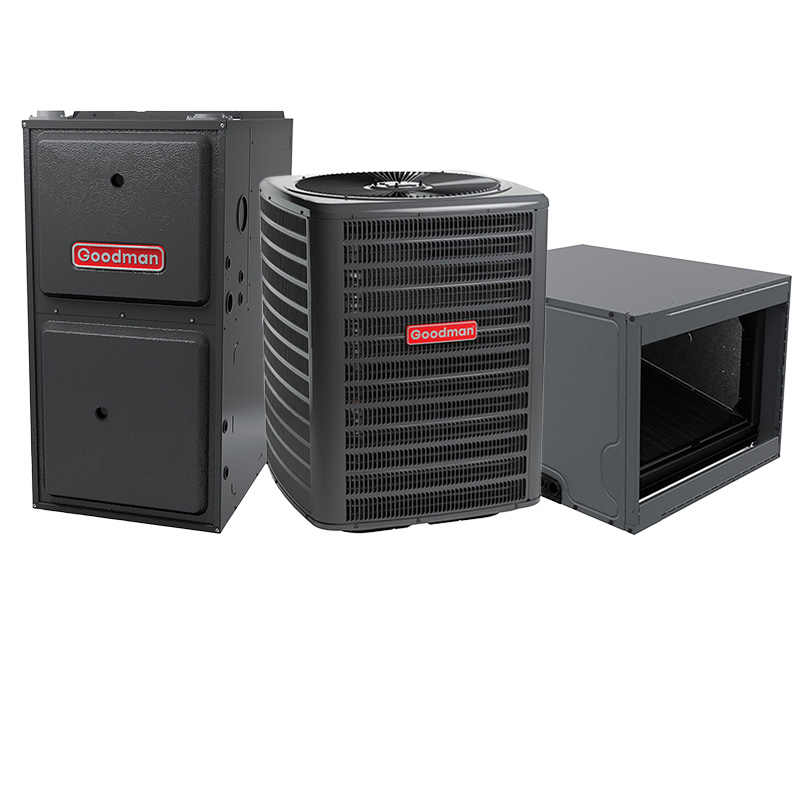
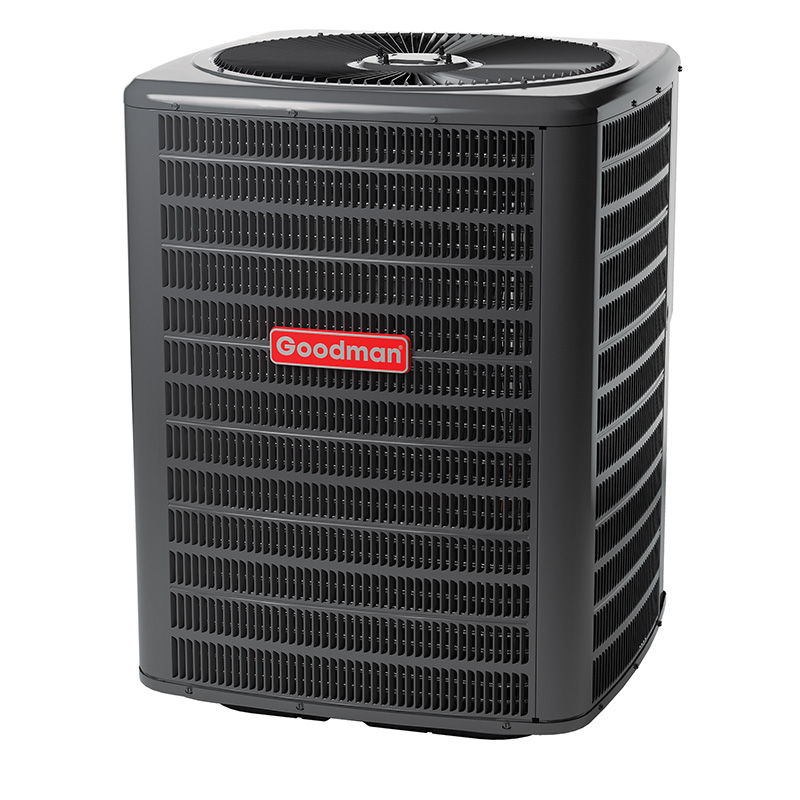
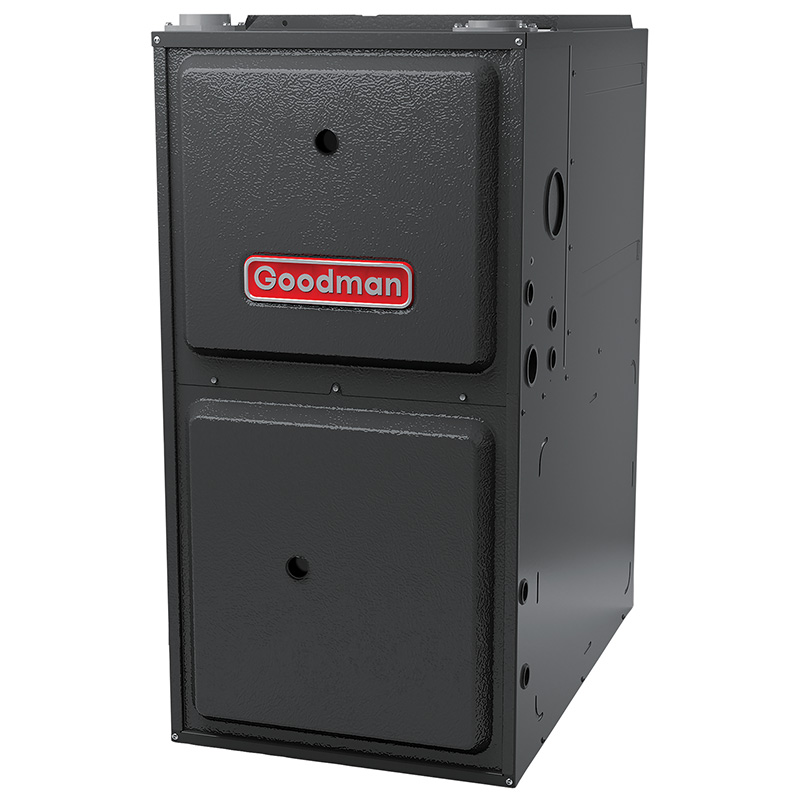
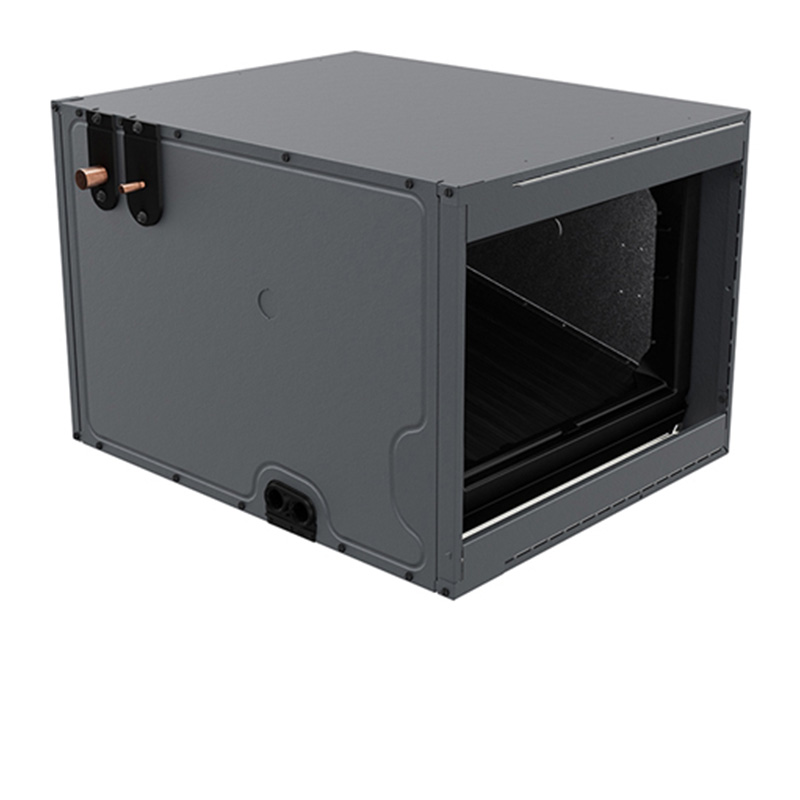
Goodman Air Conditioning And Heating – 2 Ton 15.2 SEER2 AC With 80000 BTU 96% AFUE Two Stage Multi-Speed ECM Gas Furnace System – Horizontal | R32
View on AC Direct see your lowest price →Check current price on AC Direct →
Key features
- 2-ton cooling capacity rated at 15.2 SEER2 for above-minimum efficiency
- 96% AFUE two-stage gas furnace for more even heat and lower fuel use than single-stage
- Multi-speed ECM blower motor improves humidity control and reduces energy draw
- Horizontal configuration designed for attic, crawl space, or side-discharge installations
- R-32 refrigerant with lower global warming potential than R-410A
- 80,000 BTU heat output suited to smaller and mid-size homes in cold climates
About this system
This Goodman package pairs a 2-ton, 15.2 SEER2 air conditioner with an 80,000 BTU, 96% AFUE two-stage gas furnace in a horizontal configuration, making it a practical choice for homes where the air handler sits in a crawl space, attic, or closet with side-discharge ductwork. The R-32 refrigerant reduces the global warming potential compared to older R-410A systems, and at 15.2 SEER2 the cooling efficiency clears the federal minimum comfortably without reaching premium-tier pricing. For a smaller home in a moderate climate, 2 tons is a reasonable fit for roughly 900 to 1,200 square feet of well-insulated space, though a proper Manual J load calculation should always confirm sizing before purchase.
The two-stage furnace is a meaningful upgrade over single-stage units. Running mostly on the lower stage during mild weather, it cycles less frequently, holds room temperature more evenly, and keeps the blower running longer at lower speeds, which improves air filtration and humidity control in winter. The multi-speed ECM blower motor reinforces that benefit on the cooling side, modulating airflow to reduce the short-cycling that can leave a home feeling clammy even when the thermostat reads the right number. That combination, at this price point, is the core argument for choosing this system over a basic single-stage alternative.
This Goodman combo delivers real functional value: a two-stage furnace and ECM blower at a price that typically undercuts comparable Carrier, Trane, or Lennox equipment by 15 to 25 percent. The trade-off is a compressor lifespan that tends to run shorter than premium brands and a reliability record that is genuinely dependent on who installs it and how. Buyers who prioritize upfront cost and are willing to budget for possible capacitor or coil service after year seven will find this system hard to beat on paper.
Overall score is the average of the five ratings above.
What we like
- Priced 15 to 25 percent below comparable Trane, Lennox, and Carrier systems
- Two-stage furnace operation reduces temperature swings and improves comfort over single-stage units
- 96% AFUE furnace rating means very little fuel is wasted as exhaust
- ECM blower motor lowers electricity use during fan operation compared to standard PSC motors
- R-32 refrigerant is a lower-GWP alternative to R-410A, aligning with current regulatory direction
Trade-offs
- Compressor lifespan averages 10 to 14 years, shorter than the 15 to 20 years reported for premium brands
- Dual-run capacitor failures are a documented and recurring issue, typically surfacing in the first several years of operation
- Evaporator coil leaks appear in a meaningful share of owner reviews and can be costly to address
- Overall reliability is heavily tied to installation quality, meaning a poor install can accelerate every other failure mode
What homeowners and pros say about Goodman
Homeowners who have owned Goodman equipment tend to split along a clear line: those who had a skilled contractor handle the install and kept up with annual maintenance generally report years of trouble-free operation and point to the lower purchase price as a genuine win. Those who ran into problems more often describe capacitor failures as a recurring nuisance and, in a portion of cases, evaporator coil leaks that turned into expensive repairs. The ConsumerAffairs score of roughly 2.5 out of 5 reflects a forum where complaints dominate, but Google dealer reviews average closer to 3.8 out of 5, and affordability is the word that appears most often in the positive feedback. Neither number tells the whole story on its own.
HVAC technicians are generally candid about Goodman: it is a serviceable brand that leans heavily on installation quality to perform well. The dual-run capacitor is the component they see fail most often and it is typically a straightforward, low-cost repair in the 300 to 600 dollar range. Evaporator coil leaks are a more serious concern that appears in a meaningful share of owner experiences. Compressor longevity tends to fall in the 10 to 14 year range rather than the 15 to 20 years more commonly reported for Trane, Lennox, or Carrier units. For this specific two-stage, ECM-equipped horizontal system, the added comfort features do represent a genuine step up from a basic single-stage Goodman package, and at the typical 15 to 25 percent discount versus premium brands, the math can work out favorably for budget-conscious buyers who go in with realistic expectations.
Sources: ConsumerAffairs Goodman owner reviews, AHRI Directory of Certified Product Performance, U.S. DOE appliance and equipment efficiency standards, Goodman product specification sheets.
What it costs to run
At 15.2 SEER2, cooling this 2-ton system for a typical 1200-hour cooling season at the U.S. average electricity rate of $0.17/kWh works out to roughly $322 per year in cooling, about $43 less per year than a minimum-efficiency 13.4 SEER2 unit of the same size. Your real cost depends on your climate and local rate.
Method: (24,000 BTU/hr ÷ 15.2 SEER2) × 1200 hours ÷ 1000 × $0.17/kWh. Rate source: U.S. EIA average; cooling hours: moderate-climate estimate.
How it compares
| Brand | Comparable model | SEER2 | Stage | Price position |
|---|---|---|---|---|
| Goodman | 2-Ton 15.2 SEER2 AC + 96% AFUE Two-Stage Gas Furnace (Horizontal, R-32) | 15.2 | Two-stage | Value pick |
| Carrier | Performance 15 Series (24ACC636) | 15 | Single-stage | Typically 15 to 25 percent more than this Goodman system |
| Trane | XR15 Series | 15 | Single-stage | Typically 15 to 25 percent more than this Goodman system |
| Lennox | Merit ML15XC1 Series | 15 | Single-stage | Typically 15 to 25 percent more than this Goodman system |
Competitor rows are comparable single-stage units at similar efficiency; price is relative position, not a quote.
Questions about this system
Is a horizontal configuration system harder to service than an upflow or downflow unit?
Horizontal units are more common in attics and crawl spaces where vertical clearance is limited. They are not inherently harder to service, but access in those locations can make routine tasks like coil cleaning or blower service more labor-intensive, which may increase service call costs over time.
How does R-32 refrigerant affect ownership compared to R-410A systems?
R-32 operates at lower charge weights for the same capacity, which can reduce refrigerant cost if a top-off is ever needed. It is mildly flammable, so technicians handling it must be certified for A2L refrigerants, which most newer HVAC contractors already are. Availability is growing as the industry transitions away from R-410A.
What does the two-stage furnace actually do differently in daily use?
On most winter days the furnace fires at its lower stage, running longer cycles at a reduced output. This keeps temperatures more consistent from room to room, reduces the blast of hot air that single-stage units produce at startup, and allows the air filter more contact time with circulating air. The high stage activates on the coldest days when the lower stage cannot keep up.
Goodman has mixed reviews online. How seriously should I take that?
The ConsumerAffairs score of around 2.5 out of 5 reflects a complaint-heavy channel where dissatisfied owners are far more likely to post than satisfied ones. Google dealer reviews average closer to 3.8 out of 5, with affordability the most frequently cited positive. The documented failure modes, specifically capacitor failures, evaporator coil leaks, and shorter compressor lifespan, are real and worth factoring into your decision, but they do not make the brand unusable, particularly if you budget for potential service after year seven.
Does Goodman's warranty cover me if a capacitor or coil fails?
Goodman's registered limited warranty typically covers parts for 10 years on registered equipment, which would include covered components like the compressor, coil, and heat exchanger. Capacitors are generally considered a wear item and may or may not be covered depending on the specific warranty terms and how the failure is classified. Labor is never covered by the manufacturer's warranty, so service call costs come out of pocket regardless of whether the part itself is warrantied.
Specifications
| Cooling capacity | 2 Ton |
| Efficiency | 15.2 SEER2 |
| Furnace output | 80000 BTU |
| Furnace efficiency | 96% AFUE |
| Configuration | Horizontal |
| Refrigerant | R-32 |