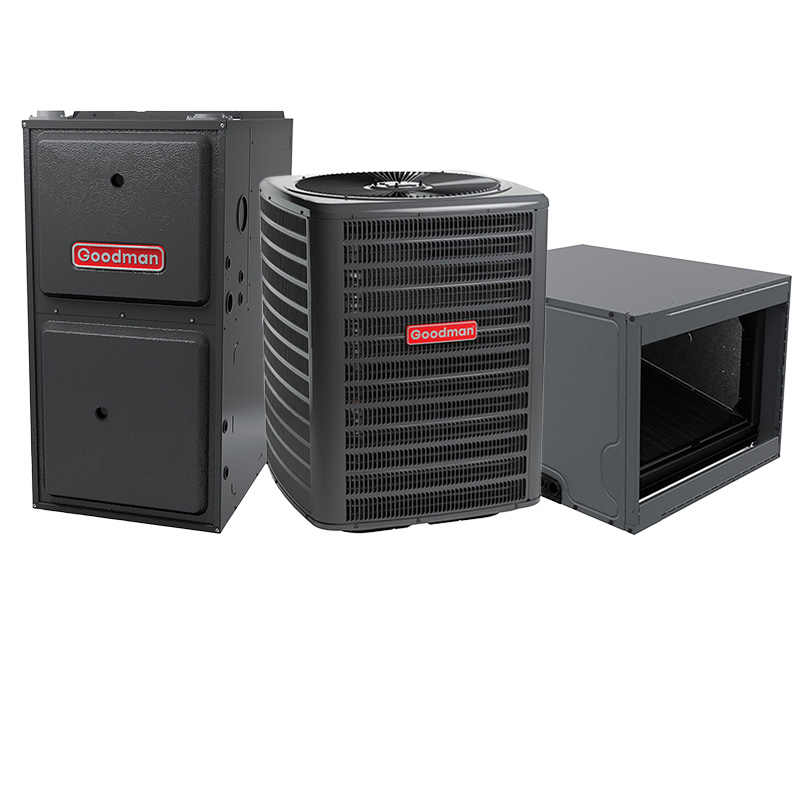
Goodman Air Conditioning And Heating – 3.5 Ton 14.5 SEER2 AC With 100000 BTU 96% AFUE Two Stage Multi-Speed ECM Gas Furnace System – Horizontal | R32
View on AC Direct see your lowest price →Check current price on AC Direct →
Key features
- 3.5-ton cooling capacity with 14.5 SEER2 efficiency rating
- 100,000 BTU two-stage gas furnace at 96% AFUE
- Multi-speed ECM blower motor for quieter, more efficient airflow
- Horizontal configuration for attic and crawl-space installations
- R-32 refrigerant with lower global warming potential than R-410A
- Two-stage heating reduces temperature swings and short-cycling on mild days
About this system
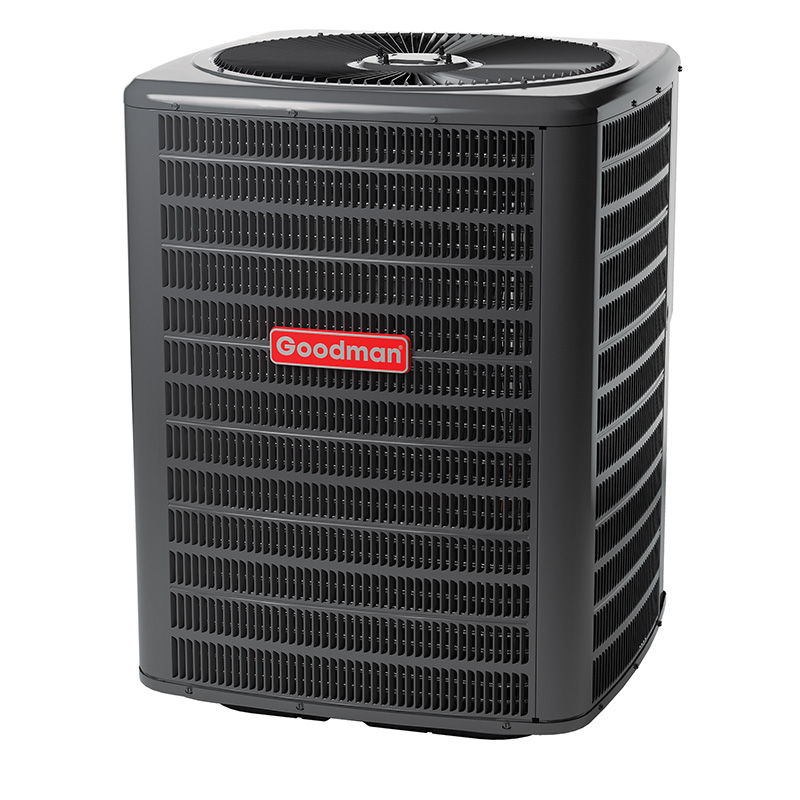
This Goodman bundle pairs a 3.5-ton, 14.5 SEER2 split-system air conditioner with a 100,000 BTU, 96% AFUE two-stage gas furnace configured for horizontal installation, making it a practical choice for homes where attic or crawl-space runs are the only option. The R-32 refrigerant charge is lower in global warming potential than older R-410A systems and is increasingly standard across the industry. At 14.5 SEER2, this unit clears the federal minimum for most U.S. climate regions and will cut operating costs compared to older 13 SEER or 14 SEER equipment, though it sits at the entry-to-mid tier rather than at the top of the efficiency ladder.
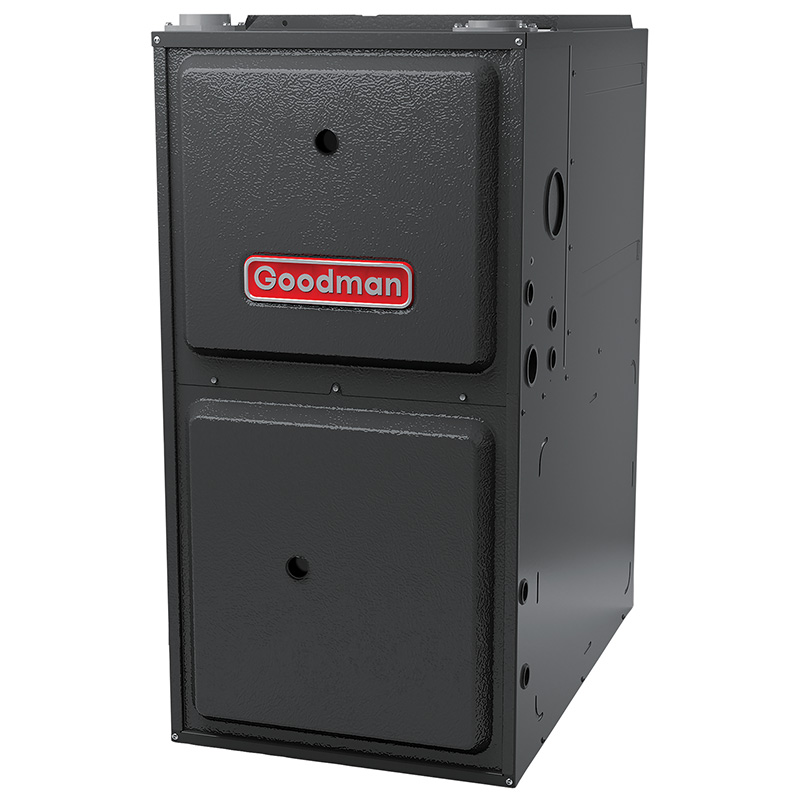
The furnace side is where this system earns more of its keep. A 96% AFUE rating means only about 4 cents of every fuel dollar goes up the flue, and the two-stage burner lets the system run at lower output on mild days, which reduces temperature swings, lowers fuel bills versus a single-stage unit, and cuts on-off cycling noise. The multi-speed ECM blower motor is more efficient than a standard PSC motor and works well with zoning setups, though true variable-speed comfort is a step above this tier. Horizontal orientation adds installation complexity, so pairing this kit with an experienced HVAC contractor is especially important.
This system suits homeowners in mid-sized houses, roughly 1,800 to 2,600 square feet depending on climate and insulation, who want meaningfully better efficiency than a basic starter system without paying premium-brand prices. It is less suited to buyers who want set-and-forget peace of mind over a 20-year horizon or who are sensitive to potential mid-life repair bills.
This Goodman combo delivers solid mid-tier efficiency and a capable two-stage furnace at a price point that can be 15 to 25 percent below Carrier, Trane, or Lennox equivalents. The trade-off is a brand track record that shows more mid-life repair activity than premium competitors, and a compressor lifespan that averages shorter than the top tier. If the savings are reinvested in professional installation and a service plan, it becomes a reasonable value; if corners are cut on the install, the warranty and reliability picture gets noticeably worse.
Overall score is the average of the five ratings above.
What we like
- Purchase price typically 15 to 25 percent lower than comparable Carrier, Trane, or Lennox systems
- 96% AFUE two-stage furnace provides genuine fuel savings and comfort over single-stage alternatives
- ECM blower motor reduces electricity use compared to standard PSC motors
- R-32 refrigerant is a forward-looking choice as the industry moves away from higher-GWP refrigerants
- Horizontal configuration is factory-ready, avoiding the need for field modifications in tight installations
Trade-offs
- Compressor lifespan averages 10 to 14 years, notably shorter than the 15 to 20 years reported for premium-brand compressors
- Evaporator coil leaks appear in a meaningful share of owner reports, which can mean costly refrigerant and repair bills
- Dual-run capacitor failures are common after the early years, adding recurring service calls even if each repair is relatively inexpensive
- A minority of owners report refrigerant leaks within the first year, most often tied to installation or initial charge quality
What homeowners and pros say about Goodman
Homeowners reviewing Goodman equipment on ConsumerAffairs give the brand roughly 2.5 out of 5 stars, a score shaped heavily by owners who sought out that platform after experiencing repair costs, often after year 7. The recurring complaints center on the expense of mid-life fixes rather than catastrophic early failures. Google dealer reviews paint a less severe picture, averaging around 3.8 out of 5 across hundreds of reviews per location, where the most common praise is straightforward: the price made a system replacement financially possible when a premium brand quote was out of reach. For this specific horizontal two-stage system, buyers in both camps echo a consistent theme that install quality is the variable that matters most.
HVAC technicians who work on Goodman equipment regularly point to dual-run capacitor failure as the most predictable service call, typically a modest repair in the 300 to 600 dollar range but one that tends to repeat. Evaporator coil leaks are also documented in owner reports and represent a costlier fix. The compressor picture is worth understanding clearly: Goodman compressors average 10 to 14 years, which is a real gap compared to the 15 to 20 years reported for premium-brand units. A small number of owners also report refrigerant leaks in the first year, which technicians generally attribute to installation or initial charge quality rather than the equipment itself. None of these are reasons to rule out the system, but they are honest factors to weigh against the upfront savings this brand consistently delivers.
Sources: ConsumerAffairs Goodman owner reviews, AHRI Directory of Certified Product Performance, U.S. DOE appliance and equipment efficiency standards, Goodman product specification sheets.
What it costs to run
At 14.5 SEER2, cooling this 3.5-ton system for a typical 1200-hour cooling season at the U.S. average electricity rate of $0.17/kWh works out to roughly $591 per year in cooling, about $48 less per year than a minimum-efficiency 13.4 SEER2 unit of the same size. Your real cost depends on your climate and local rate.
Method: (42,000 BTU/hr ÷ 14.5 SEER2) × 1200 hours ÷ 1000 × $0.17/kWh. Rate source: U.S. EIA average; cooling hours: moderate-climate estimate.
How it compares
| Brand | Comparable model | SEER2 | Stage | Price position |
|---|---|---|---|---|
| Goodman | GSZTO-18 / GMVC96 Series (this system) | 14.5 | Two-stage | Value pick |
| Carrier | Comfort 14 / 59SC2 Series | 14.3-15.2 | Single-stage | Typically 15 to 25 percent more than this Goodman system |
| Trane | XR14 / S8X1 Series | 14.3-15.0 | Single-stage | Typically 15 to 25 percent more than this Goodman system |
| Lennox | Merit 14 / ML180 Series | 14.3-15.0 | Single-stage | Typically 15 to 25 percent more than this Goodman system |
Competitor rows are comparable single-stage units at similar efficiency; price is relative position, not a quote.
Questions about this system
Why does the horizontal configuration matter, and does it affect how many contractors can install this system?
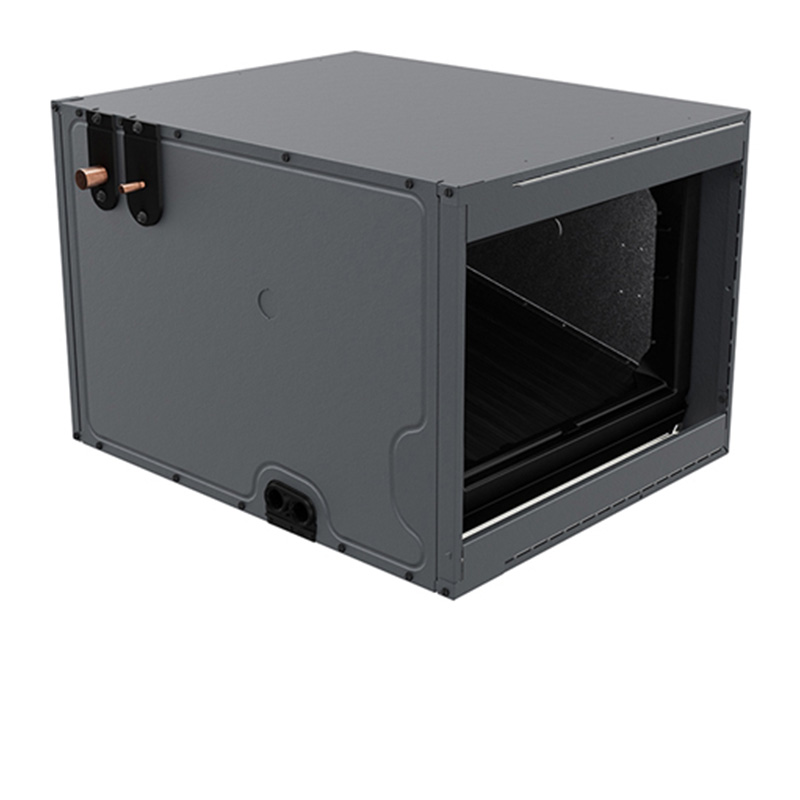
Horizontal orientation means the air handler is laid on its side, typically in an attic or crawl space, rather than standing upright. Fewer contractors work in these configurations regularly, so it is worth confirming your installer has direct horizontal experience. Improper pitch or drain positioning in a horizontal install is a leading cause of condensate and moisture problems down the road.
What does R-32 refrigerant mean for me as the homeowner, and will it be hard to service?
R-32 has a lower global warming potential than R-410A and is being adopted broadly across the industry, so availability is growing, not shrinking. For routine service it behaves similarly to R-410A, though not all older recovery equipment is certified for R-32, so confirm your technician has the right tools before scheduling a service call.
How much can the two-stage furnace actually save compared to a single-stage 96% AFUE unit?
The efficiency rating is the same either way, but two-stage operation lets the furnace run at lower output for most of the heating season, which reduces on-off cycling and can cut fuel use in practice. The bigger benefit for most homeowners is comfort rather than dramatic bill reductions, since fewer temperature swings and longer, quieter run cycles make the house feel more even.
What are the most likely repair costs I should budget for after year 7 with this system?
Dual-run capacitor replacements are the most frequently reported repair on Goodman equipment and typically run 300 to 600 dollars including labor. Evaporator coil leaks are documented in a meaningful share of owner reviews and can cost significantly more depending on refrigerant quantity and coil replacement. Setting aside a small annual maintenance budget and keeping a service contract after the warranty period is worth considering.
Does the Goodman warranty require registration, and what does it actually cover?
Goodman's limited parts warranty is extended when you register the equipment online within a set window after installation, so completing that step is important. Coverage applies to parts, not labor, meaning a compressor replacement under warranty still involves out-of-pocket labor costs. Reviewing the specific warranty document for this model before purchase is recommended, as terms can vary by product line.
Specifications
| Cooling capacity | 3.5 Ton |
| Efficiency | 14.5 SEER2 |
| Furnace output | 100000 BTU |
| Furnace efficiency | 96% AFUE |
| Configuration | Horizontal |
| Refrigerant | R-32 |