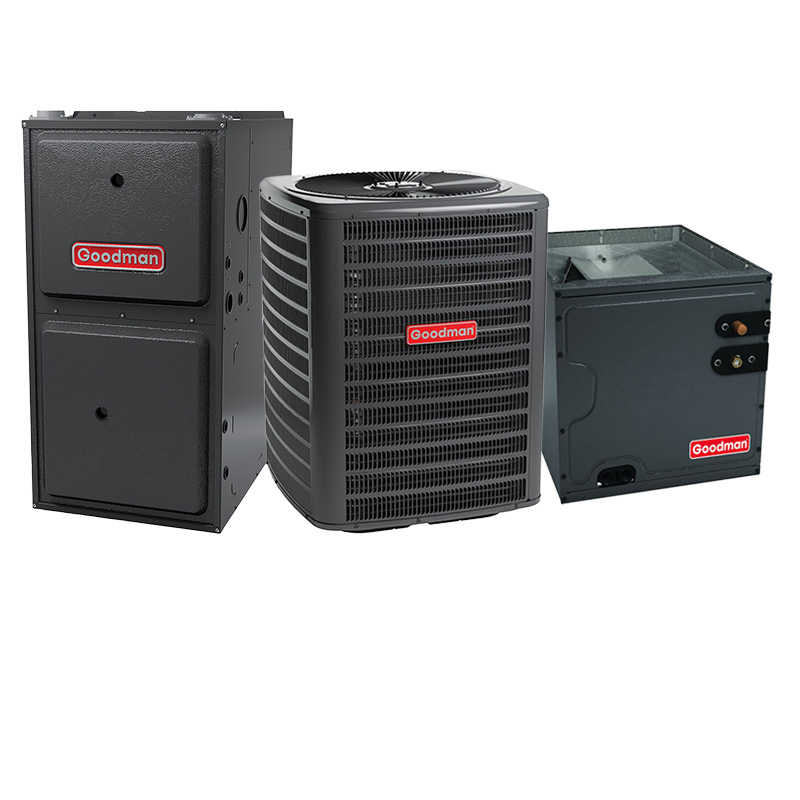
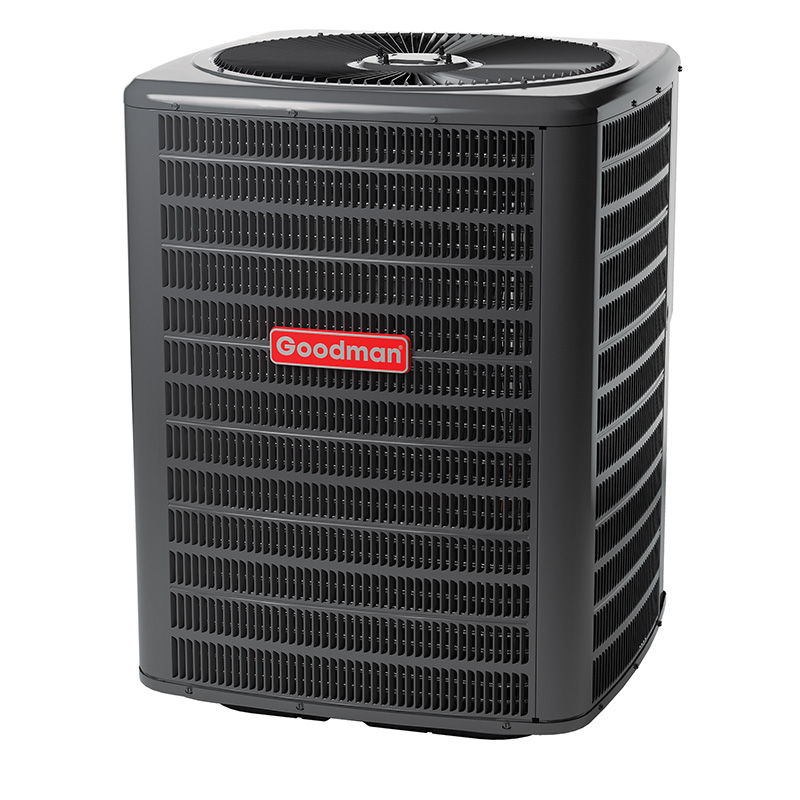
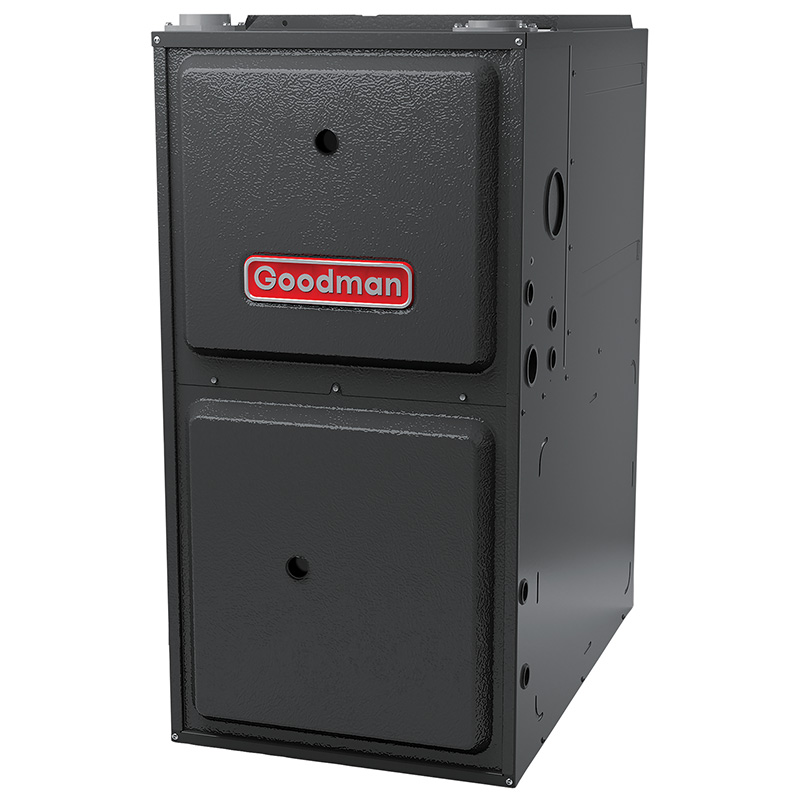
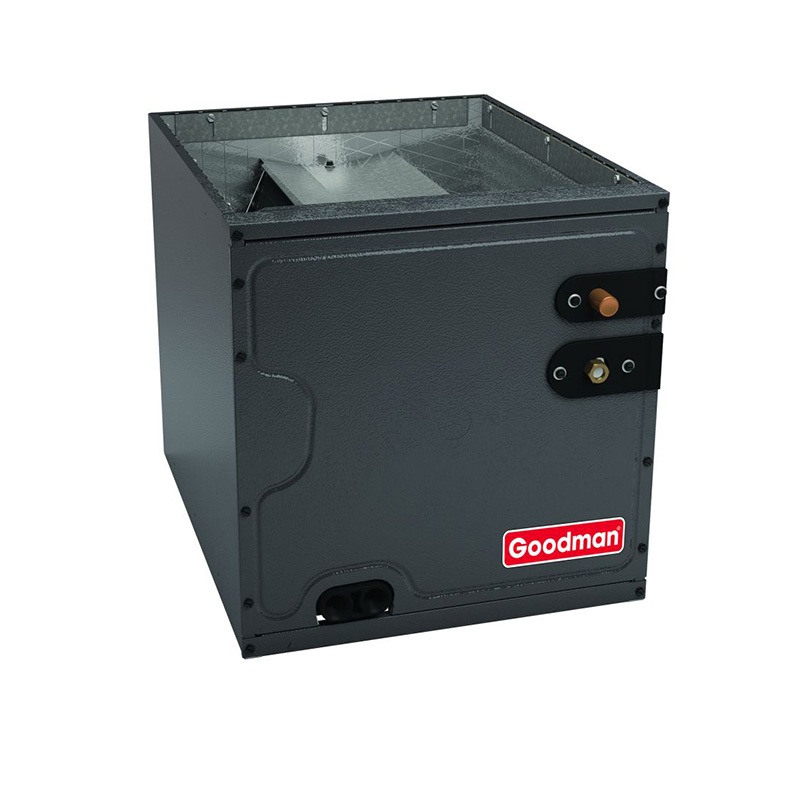
Goodman Air Conditioning And Heating – 3.5 Ton 15.2 SEER2 AC With 100000 BTU 96% AFUE Two Stage Multi-Speed ECM Gas Furnace System – Upflow | R32
View on AC Direct see your lowest price →Check current price on AC Direct →
Key features
- 3.5-ton cooling capacity rated at 15.2 SEER2 for mid-efficiency performance under current DOE test standards
- 100,000 BTU two-stage gas furnace at 96% AFUE for high-efficiency heating with reduced temperature swings
- Multi-speed ECM blower motor lowers electrical consumption and softens airflow delivery compared with PSC motors
- R-32 refrigerant charge offers a lower global-warming potential than R-410A and aligns with industry transition direction
- Upflow configuration designed for basement or ground-level utility installations where air discharges upward into supply plenum
- Two-stage gas valve operates on low fire for most heating hours, reducing short-cycling and noise compared with single-stage units
About this system
This Goodman bundle pairs a 3.5-ton, 15.2 SEER2 central air conditioner with a 100,000 BTU, 96% AFUE two-stage gas furnace in an upflow configuration, making it a practical choice for mid-size homes in the 1,800 to 2,400 square foot range that need both serious heating muscle and respectable cooling efficiency. The R-32 refrigerant charge is a forward-looking detail: R-32 carries a lower global-warming potential than the outgoing R-410A and is increasingly the industry standard, so sourcing refrigerant for future service calls should remain straightforward as the market transitions.
The two-stage furnace is the performance highlight here. Running on low fire roughly 80 percent of the time, it cycles longer and more evenly than a single-stage unit, which tends to mean fewer cold spots, quieter operation, and less humidity bounce on heating days. The multi-speed ECM blower motor reinforces that: ECM motors ramp airflow gradually rather than slamming on at full speed, cutting electrical draw at the air handler and reducing the "blast of air" sensation from registers. At 96% AFUE the furnace converts 96 cents of every gas dollar into usable heat, which qualifies as high-efficiency and may satisfy local rebate thresholds in many utility territories.
Goodman positions this system as a value-tier alternative to Trane, Lennox, and Carrier, typically landing 15 to 25 percent below those brands at the same efficiency tier. That gap is real money on a system this size, and for a homeowner with a skilled installer and a willingness to stay current on maintenance, the trade-off can make solid financial sense. The upflow orientation suits homes with a basement or utility closet installation where supply air travels upward into the duct system, so confirm your existing ductwork and plenum geometry before ordering.
This Goodman system delivers genuinely high-efficiency heating and competent mid-tier cooling at a price that undercuts the major premium brands by a meaningful margin, making it a reasonable choice for cost-conscious buyers who prioritize upfront savings and have access to a quality installer. The two-stage furnace and ECM motor are real upgrades over entry-level configurations, though Goodman's documented component failure history and shorter average compressor lifespan mean long-term ownership costs deserve a place in the budget math. It is not the most durable system on the market, but at its price point it is honest about what it offers.
Overall score is the average of the five ratings above.
What we like
- 96% AFUE two-stage furnace delivers high-efficiency heat with noticeably steadier temperatures than single-stage alternatives
- 15.2 SEER2 meets current efficiency minimums comfortably and may qualify for utility rebates in many regions
- ECM multi-speed blower reduces electricity use at the air handler and softens airflow for more comfortable distribution
- R-32 refrigerant is a practical future-proof choice as the industry moves away from R-410A
- Pricing typically runs 15 to 25 percent below comparable Trane, Carrier, and Lennox systems, a real dollar advantage on a 3.5-ton unit
Trade-offs
- Dual-run capacitors are the most frequently reported failure point, typically requiring a 300 to 600 dollar service call, often before year 10
- Evaporator coil leaks appear in a meaningful share of owner reports, which can mean refrigerant loss and costly coil replacement outside the warranty window
- Compressor lifespan averages 10 to 14 years versus 15 to 20 years for premium-brand compressors, a relevant gap for long-term cost planning
- A minority of owners report refrigerant leaks within the first year, most traced to installation or initial charge issues rather than product defects, underscoring how heavily performance depends on installer quality
What homeowners and pros say about Goodman
On Google dealer review pages, Goodman equipment consistently earns scores around 3.8 out of 5 across hundreds of reviews per location, with affordability cited most often as the reason buyers chose the brand. Homeowners who report smooth installations and keep up with annual maintenance tend to be satisfied through the first several years of ownership. HVAC technicians often describe Goodman as a workable system whose outcome depends heavily on how carefully it was commissioned: refrigerant charge, static pressure, and airflow setup are all areas where shortcuts show up in performance and longevity.
On ConsumerAffairs, Goodman sits at roughly 2.5 out of 5, though that channel skews toward owners who sought out a place to report a problem. The recurring pattern in those reviews is repair costs beginning to climb after about year seven, which aligns with the documented failure modes: dual-run capacitors tend to go first (a 300 to 600 dollar fix but an unwelcome one), followed in some units by evaporator coil leaks that can cost considerably more to address. Compressor longevity averaging 10 to 14 years versus the 15 to 20 years more commonly seen in premium brands is the longer-term risk, and a small share of owners report refrigerant leaks within the first year, most of which investigators trace back to installation quality rather than the equipment itself. For this specific system, the two-stage furnace and ECM motor represent a step above Goodman’s baseline product line, but those documented weak points apply to the brand regardless of which tier you buy into.
Sources: ConsumerAffairs Goodman owner reviews, AHRI Directory of Certified Product Performance, U.S. DOE appliance and equipment efficiency standards, Goodman product specification sheets.
What it costs to run
At 15.2 SEER2, cooling this 3.5-ton system for a typical 1200-hour cooling season at the U.S. average electricity rate of $0.17/kWh works out to roughly $564 per year in cooling, about $75 less per year than a minimum-efficiency 13.4 SEER2 unit of the same size. Your real cost depends on your climate and local rate.
Method: (42,000 BTU/hr ÷ 15.2 SEER2) × 1200 hours ÷ 1000 × $0.17/kWh. Rate source: U.S. EIA average; cooling hours: moderate-climate estimate.
How it compares
| Brand | Comparable model | SEER2 | Stage | Price position |
|---|---|---|---|---|
| Goodman | GSXH5 / GMVC96 Series (this system) | 15.2 | two-stage | Value pick |
| Carrier | Comfort 16 / 58MVC Series | 15.2-16 | two-stage | Typically 15 to 25 percent more than this Goodman system |
| Trane | XR15 / S9X2 Series | 15.0-15.5 | two-stage | Typically 15 to 25 percent more than this Goodman system |
| Lennox | Merit 16ACX / ML196 Series | 15.0-16 | two-stage | Typically 15 to 25 percent more than this Goodman system |
Competitor rows are comparable single-stage units at similar efficiency; price is relative position, not a quote.
Questions about this system
Will this system work with my existing R-410A line set, or do I need new refrigerant lines because it uses R-32?
In most cases the existing copper line set can be reused if it is the correct diameter, free of contamination, and within the line-length specifications Goodman publishes for this unit. However, R-32 is mildly flammable (A2L classification), which means your installer must follow updated handling and leak-detection practices, and some local codes may impose additional requirements. Confirm with your installing contractor before assuming a direct swap.
What is the real-world difference between the two-stage furnace here and a single-stage unit at the same AFUE?
Both will hit 96% AFUE on a steady-state combustion test, but the two-stage unit runs on low fire for most of the heating season, which means longer, gentler cycles rather than frequent short blasts of heat. Most homeowners notice fewer cold spots, less temperature overshoot, and quieter operation. The efficiency advantage in practice is modest but the comfort difference is usually noticeable.
The upflow configuration is listed. Can this furnace be converted to horizontal or downflow if my installation requires it?
Goodman does make furnaces in multiple orientations, but this unit is rated and certified as an upflow model. Converting a furnace to a different orientation without explicit factory approval can void the warranty and create a safety or code issue. If your installation requires horizontal or downflow, specify the correct orientation when ordering rather than planning a field conversion.
How worried should I be about the capacitor and coil leak issues I have read about in Goodman reviews?
Dual-run capacitor failures are the most commonly documented failure mode for Goodman equipment and are generally a relatively inexpensive repair (roughly 300 to 600 dollars), though that cost adds up if the capacitor fails every few years. Evaporator coil leaks are a more serious concern because a coil replacement outside the warranty period can run significantly higher. Enrolling in an annual maintenance plan that includes capacitor inspection and refrigerant pressure checks is a practical way to catch both issues early.
Is the 3.5-ton size right for my home, or should I size up to a 4-ton unit?
Tonnage should be determined by a Manual J load calculation based on your home's square footage, insulation levels, window area, climate zone, and ceiling height, not by rule of thumb alone. An oversized unit short-cycles, which degrades dehumidification and accelerates component wear. Have your contractor run the calculation before committing to this size, even if 3.5 tons sounds right based on square footage.
Specifications
| Cooling capacity | 3.5 Ton |
| Efficiency | 15.2 SEER2 |
| Furnace output | 100000 BTU |
| Furnace efficiency | 96% AFUE |
| Configuration | Upflow |
| Refrigerant | R-32 |