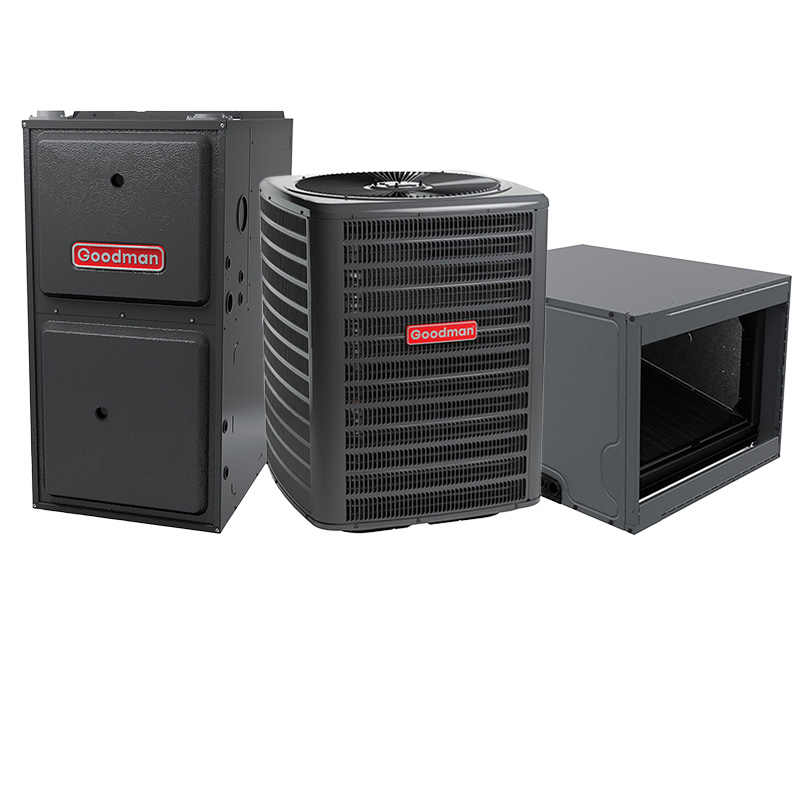
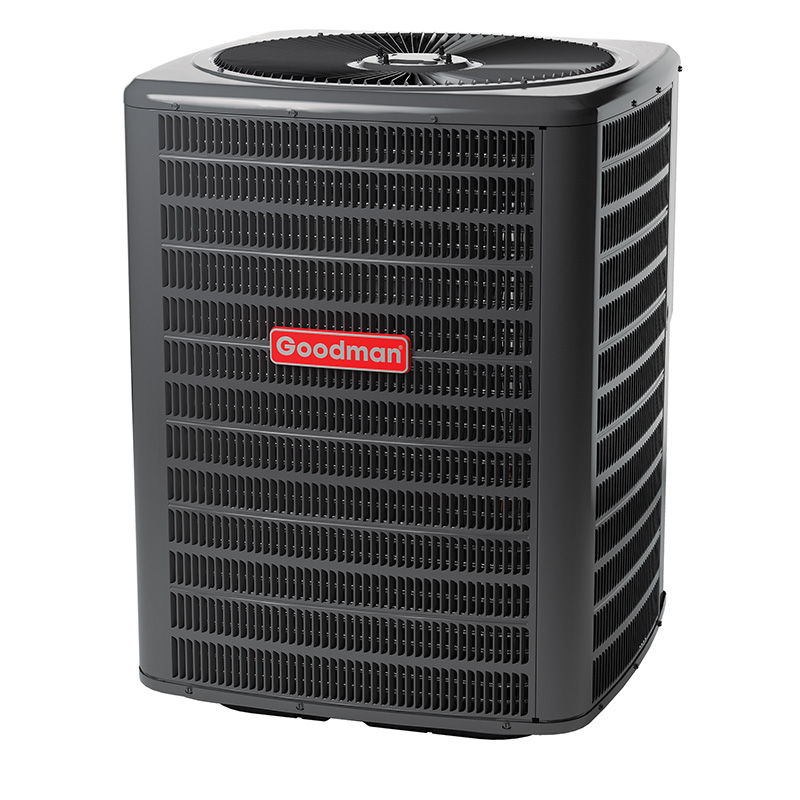
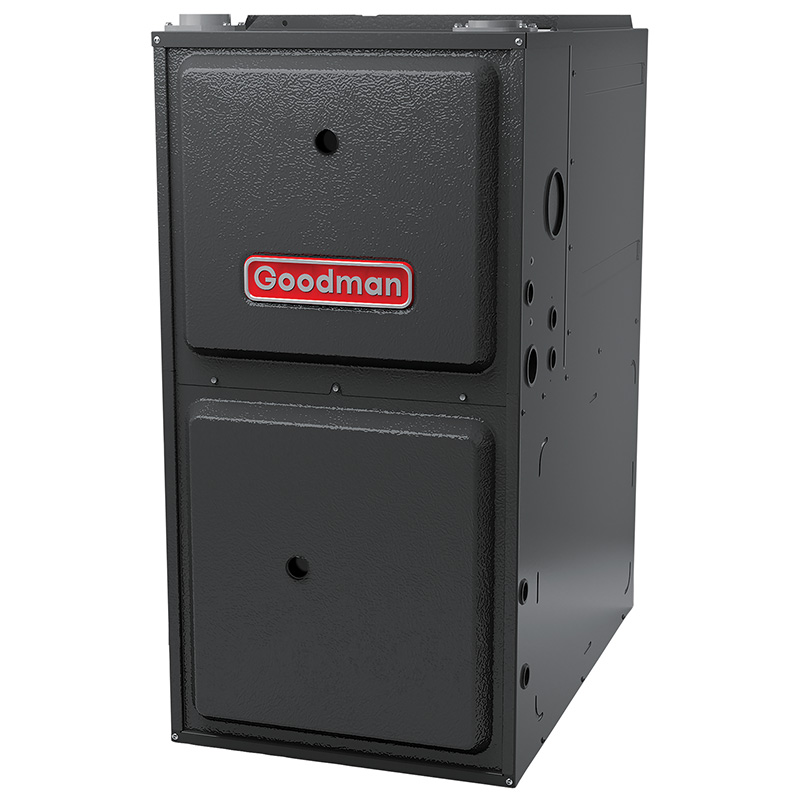
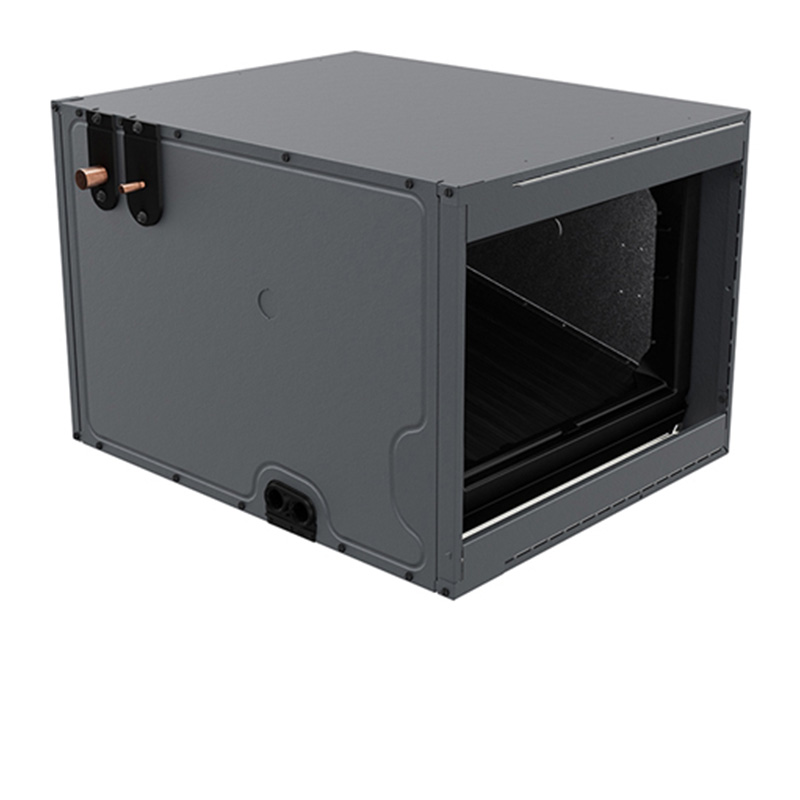
Goodman Air Conditioning And Heating – 3.5 Ton 15 SEER2 AC With 120000 BTU 96% AFUE Two Stage Multi-Speed ECM Gas Furnace System – Horizontal | R32
View on AC Direct see your lowest price →Check current price on AC Direct →
Key features
- 3.5-ton cooling capacity with 15 SEER2 efficiency rating, meeting current federal minimums
- 120,000 BTU two-stage gas furnace at 96% AFUE for precise, efficient heating
- Multi-speed ECM blower motor reduces electricity consumption and improves airflow comfort
- Horizontal configuration designed for attic, crawl space, or side-load installations
- R-32 refrigerant charge, a lower global-warming-potential alternative to R-410A
- Two-stage operation reduces short cycling and holds more consistent indoor temperatures
About this system
This Goodman package pairs a 3.5-ton, 15 SEER2 air conditioner with a 120,000 BTU, 96% AFUE two-stage gas furnace in a horizontal configuration, making it a practical choice for manufactured homes, crawl spaces, or utility closets where vertical installation is not an option. The R-32 refrigerant charge reflects a meaningful shift in the industry toward a lower global-warming-potential refrigerant, and replacement refrigerant should remain widely available as R-410A is phased out. At 15 SEER2, efficiency sits at the current federal minimum threshold for most northern U.S. climate zones, meaning you are not paying a premium for high-efficiency cooling, but you are also not falling behind on code compliance.
The two-stage furnace is the standout specification here. Running on low stage the majority of the time, it cycles less often, maintains more even temperatures throughout the home, and runs more quietly than a single-stage unit. The multi-speed ECM blower motor adds to that comfort story by ramping airflow gradually rather than blasting on at full speed, and it consumes significantly less electricity than a standard PSC motor. The 96% AFUE rating means only four cents of every heating dollar escapes as exhaust, which is a genuinely strong number for a value-priced brand. Together, these heating-side features can offset some of the modest cooling-side efficiency rating for homeowners in heating-dominated climates.
This system suits a budget-conscious buyer replacing aging equipment in a home with existing horizontal ductwork, particularly in a northern or mixed climate where furnace performance drives most of the annual utility bill. It is less compelling for someone in a hot southern climate who will lean on the air conditioner heavily all year and where a higher SEER2 rating would pay back faster.
This Goodman system delivers genuinely strong heating specs at a price point well below comparable Trane, Carrier, or Lennox equipment, and the two-stage furnace with ECM blower is a real comfort upgrade over basic single-stage alternatives. The cooling side is adequate but not exceptional, and Goodman's track record shows that long-term reliability depends heavily on who installs it and how well it is maintained. Buyers who prioritize upfront cost savings and are prepared for possible component repairs after year seven will find solid value here; buyers who want minimal ownership hassle over 15-plus years should weigh the premium brands seriously.
Overall score is the average of the five ratings above.
What we like
- 96% AFUE two-stage furnace is a high-efficiency heating spec for a value-priced system
- Two-stage operation and ECM motor meaningfully improve comfort and reduce blower electricity use
- R-32 refrigerant positions the system well as the industry moves away from R-410A
- Priced roughly 15 to 25 percent below comparable Trane, Carrier, and Lennox systems
- Horizontal config opens installation options where vertical units simply will not fit
Trade-offs
- 15 SEER2 is the efficiency floor, not a standout rating, and may produce higher cooling bills in hot climates
- Dual-run capacitors and evaporator coil leaks are documented recurring failure points as units age
- Compressor lifespan averages 10 to 14 years versus 15 to 20 years typical of premium brands
- A minority of owners have reported refrigerant leaks within the first year, often tied to install quality rather than equipment defects
What homeowners and pros say about Goodman
Homeowners who shop Goodman typically arrive at two very different conclusions depending on what went right or wrong at installation. On Google dealer reviews, where real transaction customers leave feedback, Goodman systems cluster around 3.8 out of 5 stars, with affordability and the quality of the dealer experience drawing the most consistent praise. On ConsumerAffairs, which skews heavily toward people who had problems, the brand sits around 2.5 out of 5, and the recurring complaint is not immediate failure but rather repair costs that start climbing after roughly year seven of ownership. That gap tells a meaningful story: Goodman equipment often starts well and declines faster than premium alternatives as it ages.
HVAC technicians generally describe Goodman as workable equipment that rewards a careful installation and punishes a sloppy one more visibly than Trane or Carrier hardware would. The failure modes that show up most in service calls are predictable: dual-run capacitors fail with some regularity and are a low-cost repair, evaporator coil leaks have appeared in a notable share of owner accounts, and compressors in this product line tend to reach the end of their useful life somewhere between 10 and 14 years rather than the 15 to 20 years a premium-brand compressor might deliver. The two-stage furnace and ECM blower in this particular configuration are the kind of specifications that typically age better than basic single-stage equipment, since they run more gently and cycle less aggressively. For this system specifically, getting a documented, professional installation from a dealer who pulls permits and pressure-tests the refrigerant circuit is less optional than it might be with a more forgiving brand.
Sources: ConsumerAffairs Goodman owner reviews, AHRI Directory of Certified Product Performance, U.S. DOE appliance and equipment efficiency standards, Goodman product specification sheets.
What it costs to run
At 15 SEER2, cooling this 3.5-ton system for a typical 1200-hour cooling season at the U.S. average electricity rate of $0.17/kWh works out to roughly $571 per year in cooling, about $68 less per year than a minimum-efficiency 13.4 SEER2 unit of the same size. Your real cost depends on your climate and local rate.
Method: (42,000 BTU/hr ÷ 15 SEER2) × 1200 hours ÷ 1000 × $0.17/kWh. Rate source: U.S. EIA average; cooling hours: moderate-climate estimate.
How it compares
| Brand | Comparable model | SEER2 | Stage | Price position |
|---|---|---|---|---|
| Goodman | 3.5T 15 SEER2 AC + 120K BTU 96% AFUE Two-Stage ECM Furnace (Horizontal, R-32) | 15 | Two-stage | Value pick |
| Carrier | Performance 16 Central Air Conditioner (24ACC6) paired with Performance 96 Gas Furnace (59TP6) | 15-16 | Single-stage AC / Two-stage furnace | Typically 15 to 25 percent more than Goodman |
| Trane | XR15 Air Conditioner (4TTR5) paired with S9X2 Gas Furnace | 15 | Single-stage AC / Two-stage furnace | Typically 15 to 25 percent more than Goodman |
| Lennox | Merit ML15 Air Conditioner paired with ML196E Gas Furnace | 15 | Single-stage AC / Two-stage furnace | Typically 15 to 25 percent more than Goodman |
Competitor rows are comparable single-stage units at similar efficiency; price is relative position, not a quote.
Questions about this system
Why does this system use R-32 instead of R-410A, and will refrigerant be easy to find if I need a recharge?
R-410A is being phased out under EPA regulations, and Goodman has transitioned this product line to R-32, which has a lower global-warming potential. R-32 is already widely used in equipment manufactured overseas and is becoming standard in the U.S. market, so availability should not be a concern for service technicians in the coming years.
Is a 15 SEER2 rating going to cost me noticeably more to run than a higher-efficiency unit?
Compared to an 18 SEER2 system, a 15 SEER2 unit uses roughly 15 to 20 percent more electricity for the same cooling output, so in a hot climate with long cooling seasons the difference on your utility bill can add up over time. In a mixed or heating-dominant climate where the furnace does most of the work, the gap matters less and the strong 96% AFUE rating on the furnace side becomes the more relevant efficiency number.
What does the horizontal configuration mean, and how do I know if my home needs it?
Horizontal means the air handler section is designed to be installed on its side, with airflow moving in a horizontal path rather than straight up or down. This is required in crawl spaces, low attics, and some utility closets where there is not enough vertical clearance for an upright unit. If your old system is already in one of those spaces, you almost certainly need a horizontal configuration to replace it.
Goodman has mixed reviews online. What are the most common problems I should watch for?
The most consistently reported failure point is the dual-run capacitor, which is also one of the cheapest and quickest repairs an HVAC technician makes, typically in the $300 to $600 range. Evaporator coil leaks show up in a meaningful portion of owner reviews as units age, and a small share of owners have reported refrigerant leaks in the first year, which is usually a sign of an installation issue rather than a defect in the equipment itself.
Does Goodman require registration to get the full warranty, and what does the warranty actually cover on this system?
Yes, Goodman requires product registration within a set window after installation to activate the full extended warranty; without registration you typically fall back to a shorter base coverage period. The registered warranty generally covers parts for ten years, so confirming registration shortly after install is an important step that is easy to overlook.
Specifications
| Cooling capacity | 3.5 Ton |
| Efficiency | 15 SEER2 |
| Furnace output | 120000 BTU |
| Furnace efficiency | 96% AFUE |
| Configuration | Horizontal |
| Refrigerant | R-32 |