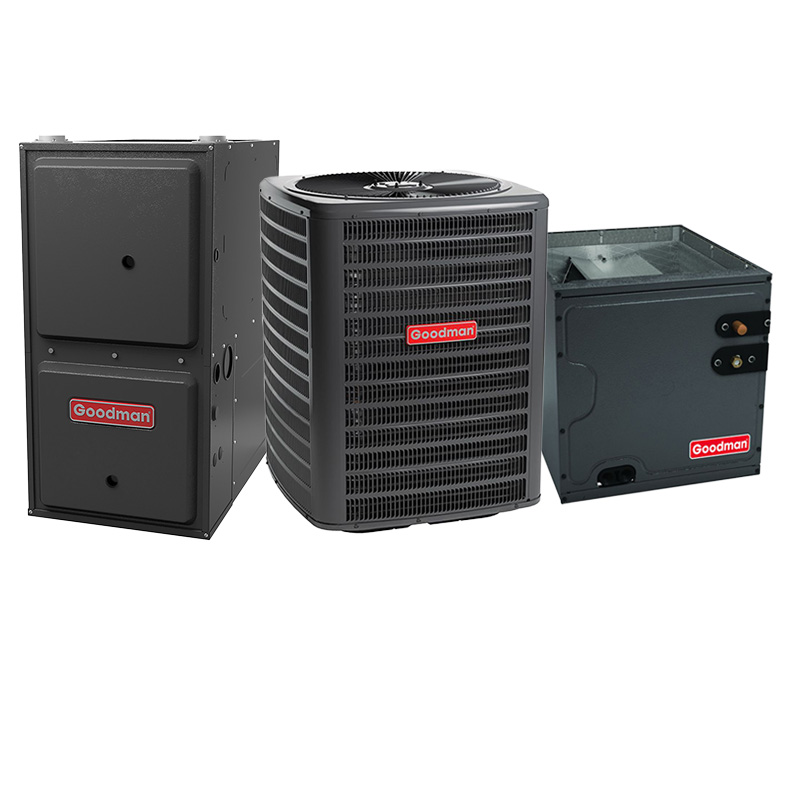
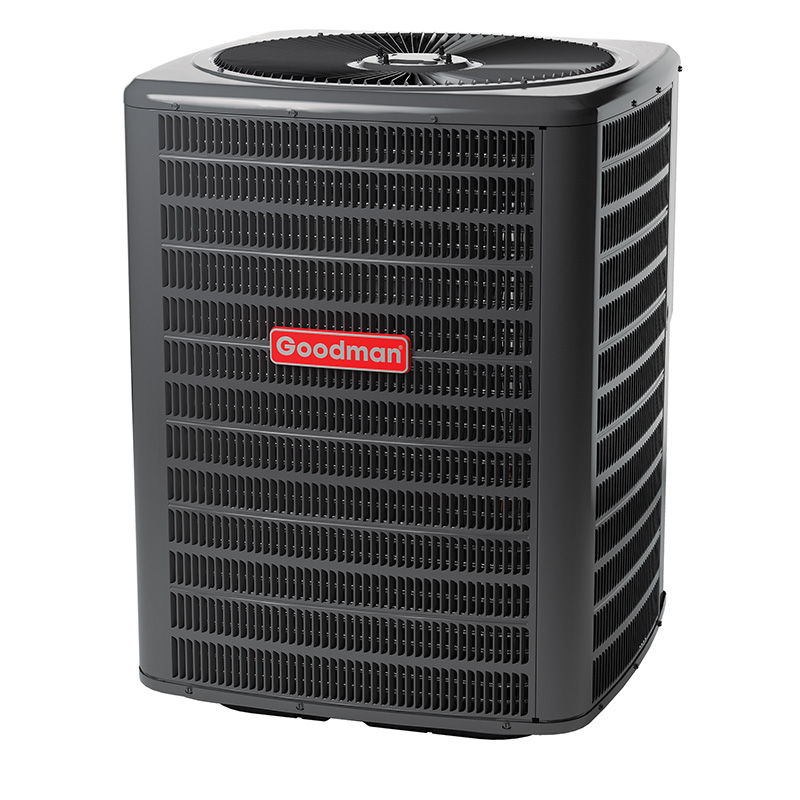
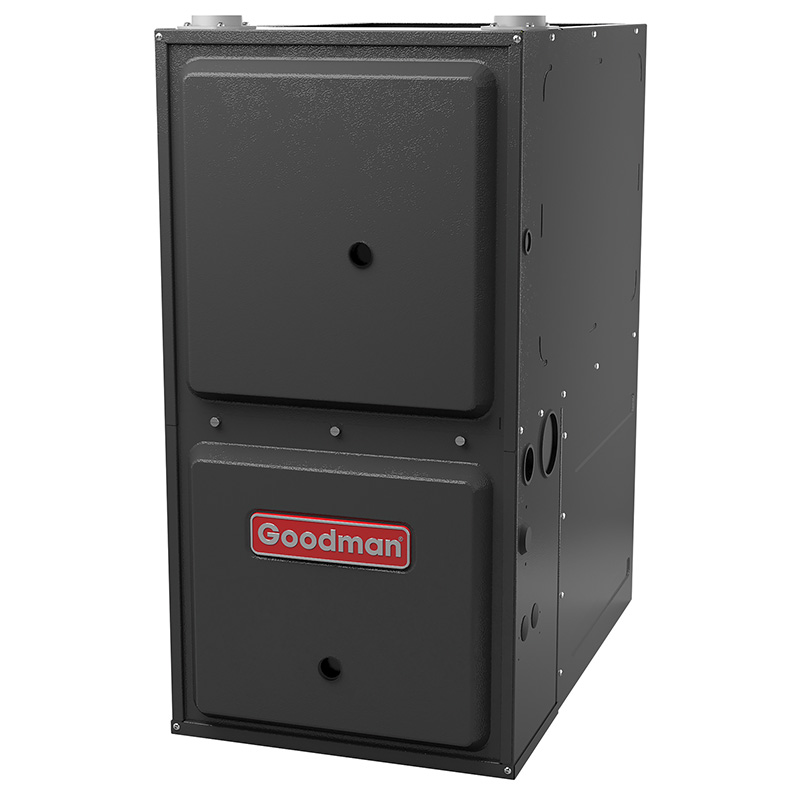
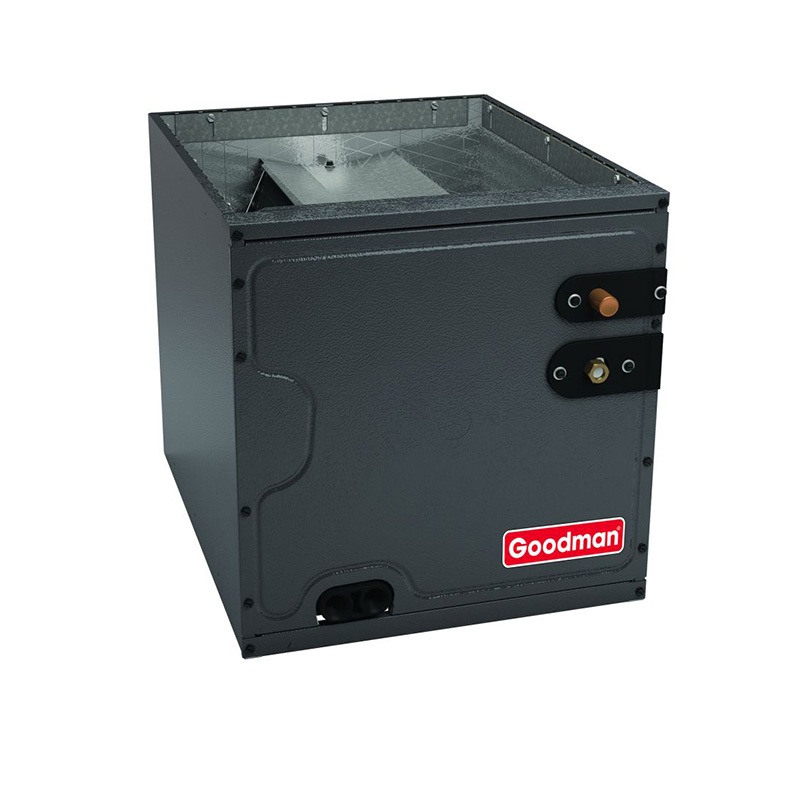
Goodman Air Conditioning And Heating – 3 Ton 14.5 SEER2 AC With 60000 BTU 96% AFUE Two Stage Multi-Speed ECM Gas Furnace System – Downflow | R32
View on AC Direct see your lowest price →Check current price on AC Direct →
Key features
- 3-ton cooling capacity with 14.5 SEER2 efficiency rating, meeting federal minimums for most U.S. regions
- 96% AFUE two-stage gas furnace with 60,000 BTU output for high-efficiency winter heating
- Multi-speed ECM blower motor reduces electrical draw and improves airflow consistency vs. standard PSC motors
- Downflow configuration designed for attic, raised-platform, or closet installations above conditioned space
- R-32 refrigerant with lower global warming potential than R-410A; requires R-32 certified technician
- Two-stage furnace operation runs at reduced capacity during mild weather, improving comfort and humidity control
About this system
This Goodman package pairs a 3-ton, 14.5 SEER2 air conditioner with a 60,000 BTU, 96% AFUE two-stage gas furnace in a downflow configuration, making it a solid fit for homes where the air handler sits in an attic, closet, or platform above the living space. The 14.5 SEER2 rating clears the federal minimum threshold for most U.S. climate regions, so you get compliant, reasonably efficient cooling without paying for top-tier efficiency you may not recoup in energy savings over a typical ownership period. The 96% AFUE furnace is a genuine high-efficiency unit, meaning roughly 96 cents of every dollar spent on gas goes toward heat rather than escaping through the flue.
The two-stage furnace operation is a meaningful upgrade over single-stage equipment. Running at the lower stage during milder weather reduces temperature swings, runs longer cycles that improve humidity control, and puts less mechanical stress on the system compared to constant full-blast cycling. The multi-speed ECM blower motor adds to that benefit by adjusting airflow more precisely, which also lowers electricity consumption relative to a standard PSC motor. R-32 refrigerant has a lower global warming potential than the R-410A it replaces, and it operates at slightly different pressures, so your installing technician needs to be certified and familiar with R-32 handling procedures.
This system suits budget-conscious homeowners replacing aging equipment in a single-zone home, particularly those who heat heavily in winter and want the efficiency gains of a 96% furnace without stretching to a premium brand. It is not the right call if you want the longest possible compressor lifespan, the most sophisticated humidity management, or the peace of mind of a brand with a stronger long-term reliability track record. Installation quality will determine more about how this unit performs than almost any spec on the sheet.
This Goodman system offers legitimate high-efficiency heating and competent cooling at a price point roughly 15 to 25 percent below comparable Trane, Carrier, or Lennox equipment, and the two-stage furnace and ECM motor are real comfort improvements over entry-level alternatives. The trade-off is a brand with a documented history of capacitor failures, evaporator coil leaks, and compressor lifespans that tend to run shorter than premium competitors, meaning long-term cost of ownership can close the gap on that upfront savings. It earns its place in the market for budget-focused buyers who hire a skilled installer and stay current on maintenance.
Overall score is the average of the five ratings above.
What we like
- Upfront price is typically 15 to 25 percent below Trane, Carrier, and Lennox equivalents for comparable specs
- 96% AFUE furnace is a genuine high-efficiency rating that meaningfully reduces annual gas costs in heating-heavy climates
- Two-stage furnace operation cuts temperature swings and improves humidity control compared to single-stage units
- ECM blower motor consumes less electricity than standard PSC motors and supports better airflow management
- R-32 refrigerant is an environmentally improved choice over R-410A with lower global warming potential
Trade-offs
- Dual-run capacitors are the most frequently reported failure point and tend to need replacement within the first several years of use
- Compressor lifespan averages 10 to 14 years, notably shorter than the 15 to 20 years typical of premium-brand compressors
- Evaporator coil leaks appear in a meaningful share of owner reviews, a potentially expensive repair outside the parts warranty window
- A minority of first-year owners report refrigerant leaks, most tied to installation or initial charge issues, underlining how much performance depends on installer quality
What homeowners and pros say about Goodman
Homeowners who weigh in on Goodman tend to split along predictable lines. Early in ownership, the praise centers almost entirely on affordability, which tracks with the Google dealer review average sitting around 3.8 out of 5 across a wide sample of dealer locations. Those buyers got a system that keeps their house comfortable and did not strain the budget. The picture shifts as systems age. On ConsumerAffairs, where the audience skews heavily toward people who have had problems, Goodman lands around 2.5 out of 5, and the recurring story is the same: repairs start accumulating after roughly year seven. The specific failure modes that show up most often are dual-run capacitor replacements, evaporator coil leaks that can escalate into costly refrigerant and labor bills, and compressors that tend to give out between 10 and 14 years rather than the 15 to 20 years owners of Trane or Carrier equipment sometimes report. A minority of first-year owners also describe refrigerant leaks, which technicians generally attribute to installation or initial charge problems rather than a factory defect.
HVAC professionals tend to echo a version of the same nuance. Many will install Goodman without hesitation for a customer on a tight budget, especially when they are the ones doing the installation and can control the quality of the setup and commissioning. The consistent caveat is that Goodman’s performance ceiling is heavily dependent on that install quality, more so than with premium brands that have tighter factory tolerances and more robust component specifications. For this specific system, the two-stage furnace and ECM motor are features that experienced technicians genuinely respect at this price point, and the R-32 refrigerant transition means your tech needs current training. The bottom line from both camps: Goodman is a reasonable bet if you go in clear-eyed about the trade-offs, hire a skilled and R-32 certified installer, and plan to maintain the system consistently rather than ignore it until something breaks.
Sources: ConsumerAffairs Goodman owner reviews, AHRI Directory of Certified Product Performance, U.S. DOE appliance and equipment efficiency standards, Goodman product specification sheets.
What it costs to run
At 14.5 SEER2, cooling this 3-ton system for a typical 1200-hour cooling season at the U.S. average electricity rate of $0.17/kWh works out to roughly $506 per year in cooling, about $42 less per year than a minimum-efficiency 13.4 SEER2 unit of the same size. Your real cost depends on your climate and local rate.
Method: (36,000 BTU/hr ÷ 14.5 SEER2) × 1200 hours ÷ 1000 × $0.17/kWh. Rate source: U.S. EIA average; cooling hours: moderate-climate estimate.
How it compares
| Brand | Comparable model | SEER2 | Stage | Price position |
|---|---|---|---|---|
| Goodman | GSZTO / GMVC96 Two-Stage Series (this system) | 14.5 | Two-stage | Value pick |
| Carrier | Performance 14 / 58CV Two-Stage Series | 14.3 to 15.2 | Two-stage | Typically 15 to 25 percent more than this Goodman system |
| Trane | XR14 / S9V2 Two-Stage Series | 14.3 to 15.1 | Two-stage | Typically 15 to 25 percent more than this Goodman system |
| Lennox | Merit 14 / ML196 Two-Stage Series | 14.3 to 15.0 | Two-stage | Typically 15 to 25 percent more than this Goodman system |
Competitor rows are comparable single-stage units at similar efficiency; price is relative position, not a quote.
Questions about this system
Why does this system use R-32 refrigerant and does my installer need special certification?
R-32 is a next-generation refrigerant with a lower global warming potential than R-410A, which is being phased down under federal regulations. It operates at different pressures and has a mild flammability classification, so yes, your installing technician must hold an EPA Section 608 certification and should have specific R-32 handling experience. Not every local HVAC company has caught up on R-32 yet, so confirm this before booking.
What does two-stage heating actually mean day to day, and is it worth it over single-stage?
A two-stage furnace runs at a lower firing rate, typically around 65 percent of full capacity, during mild weather and only steps up to full output when temperatures drop or the house needs to recover quickly. In practice this means longer, quieter heating cycles, less temperature swing between thermostat calls, and better moisture removal. For most climates it is a worthwhile upgrade over single-stage, particularly since the price difference at this tier is modest.
The downflow configuration is listed, but my current system is upflow. Can I still use this unit?
No, downflow and upflow are not interchangeable configurations. A downflow furnace is specifically engineered to draw return air from the top and discharge conditioned air downward, and the internal components, heat exchanger, and flue connections are oriented accordingly. Installing a downflow unit in an upflow application is not safe and will void the warranty. Confirm your existing ductwork and equipment orientation before purchasing.
Goodman reviews mention capacitor failures frequently. How worried should I be, and what does that repair typically cost?
Dual-run capacitors are the single most commonly reported failure on Goodman cooling equipment, and while the timing varies, many owners encounter this in the mid-life years of the system. The good news is that a capacitor replacement is one of the simpler and less expensive HVAC repairs, typically falling in the 300 to 600 dollar range depending on your market and the technician. Keeping a service contract or scheduling annual tune-ups gives a technician the chance to catch a weakening capacitor before it strands you on a hot day.
How does Goodman's warranty on this system compare to premium brands, and what should I watch out for?
Goodman's standard warranty on registered equipment is 10 years on parts including the compressor, heat exchanger, and coil, which is competitive on paper with what Carrier, Trane, and Lennox typically offer. The critical detail is that registration must be completed within a set window after installation, usually 60 days, or the warranty reverts to a shorter unregistered term. Labor is not covered under the manufacturer warranty, so an extended labor warranty from your installer is worth pricing out separately, particularly given the documented coil and capacitor failure modes.
Specifications
| Cooling capacity | 3 Ton |
| Efficiency | 14.5 SEER2 |
| Furnace output | 60000 BTU |
| Furnace efficiency | 96% AFUE |
| Configuration | Downflow |
| Refrigerant | R-32 |