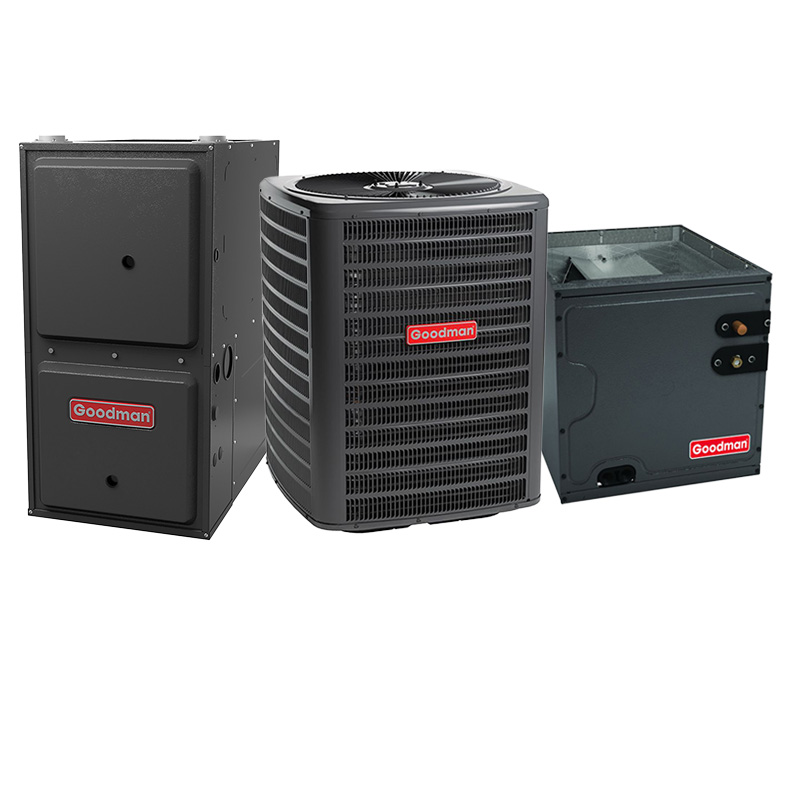
Goodman Air Conditioning And Heating – 3 Ton 14.5 SEER2 AC With 80000 BTU 96% AFUE Two Stage Multi-Speed ECM Gas Furnace System – Downflow | R32
View on AC Direct see your lowest price →Check current price on AC Direct →
Key features
- 3-ton cooling capacity with 14.5 SEER2 efficiency rating
- 80,000 BTU two-stage gas furnace at 96% AFUE
- Multi-speed ECM blower motor for gradual, quieter airflow
- Downflow configuration for installations above crawlspaces or basements
- R-32 refrigerant with lower global warming potential than R-410A
- Bundled matched system designed to meet manufacturer warranty requirements
About this system
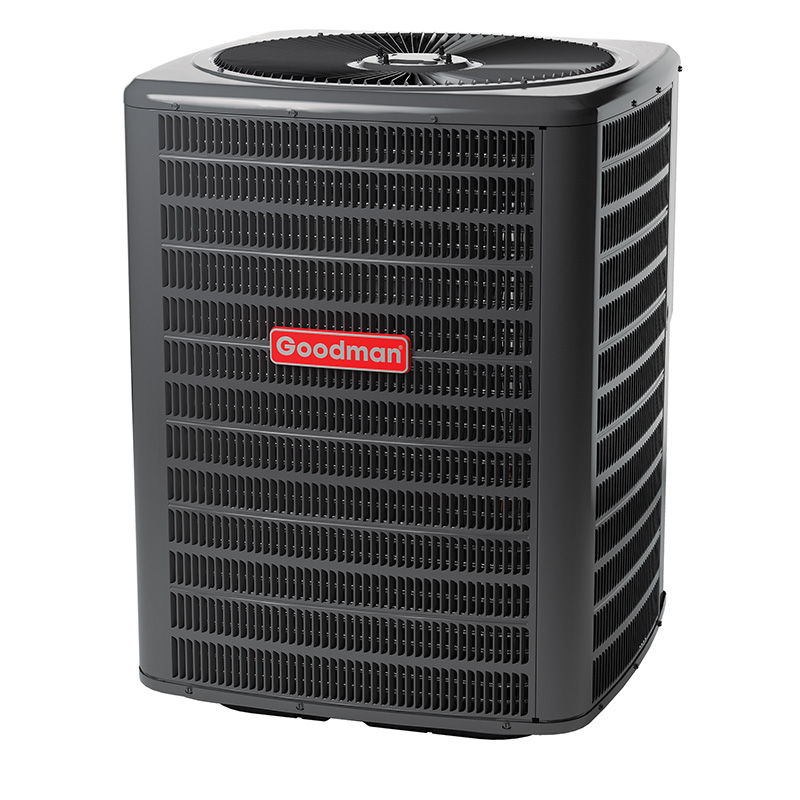
This Goodman system pairs a 3-ton, 14.5 SEER2 central air conditioner with an 80,000 BTU, 96% AFUE two-stage gas furnace in a downflow configuration, making it a practical choice for homes where the air handler sits above a crawlspace or basement with supply air directed downward. The R-32 refrigerant charge is a forward-looking detail: R-32 has a lower global warming potential than the older R-410A it replaces, and it is increasingly the industry standard for new residential equipment. At 14.5 SEER2, cooling efficiency clears the federal minimum comfortably without reaching the higher tiers that carry a significant price premium.
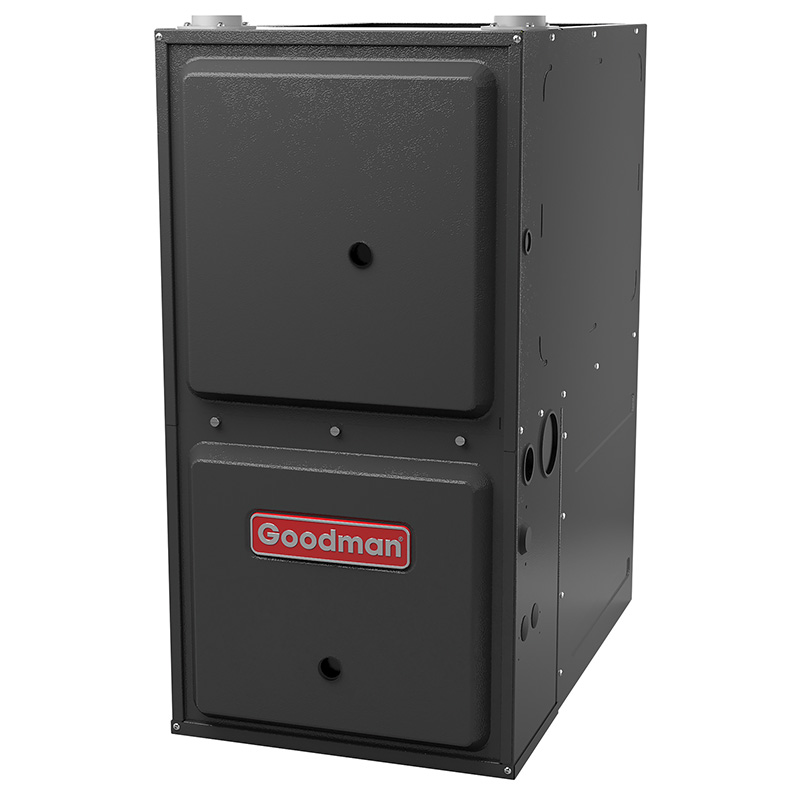
The two-stage furnace is the standout spec here. Running on a lower stage the majority of the time, it cycles less aggressively than a single-stage unit, which translates to more even temperatures room to room and better humidity control during long, mild heating runs. The multi-speed ECM (electronically commutated motor) blower reinforces that benefit by ramping airflow gradually rather than slamming on at full speed. At 96% AFUE, nearly all the fuel combusted becomes usable heat, which matters most in cold climates with high natural gas costs. Downflow units are less common than horizontal or upflow configurations, so confirming your ductwork and platform are compatible before ordering is essential.
This bundle targets budget-conscious homeowners who want meaningfully better comfort features than entry-level single-stage equipment but are not ready to spend on variable-capacity systems from premium brands. It is a solid fit for mid-size homes in moderate climates, provided installation is handled by an experienced technician, since Goodman equipment in particular responds well or poorly to how carefully it is commissioned.
This Goodman bundle delivers genuine comfort upgrades over single-stage systems at a price point that undercuts comparable Carrier, Trane, and Lennox equipment by 15 to 25 percent. The two-stage furnace and ECM blower are real quality-of-life improvements, but long-term reliability sits a notch below premium brands, and the system's lifespan will depend heavily on who installs and maintains it.
Overall score is the average of the five ratings above.
What we like
- Two-stage furnace reduces temperature swings and improves humidity control versus single-stage
- 96% AFUE is a top-tier efficiency rating that meaningfully cuts heating fuel costs
- ECM blower motor lowers operating electricity consumption compared to PSC motors
- R-32 refrigerant is more environmentally responsible and increasingly well-supported by technicians
- Priced 15 to 25 percent below comparable Trane, Carrier, and Lennox systems
Trade-offs
- Compressor lifespan averages 10 to 14 years, shorter than the 15 to 20 years typical of premium brands
- Dual-run capacitor failures are the most commonly reported repair, usually surfacing after year 7
- Evaporator coil leaks appear in a meaningful share of owner reports, a notable long-term cost risk
- Downflow-only configuration limits installation flexibility; mismatched ductwork setups require additional labor
What homeowners and pros say about Goodman
Homeowners who track Goodman feedback will find a split picture. On ConsumerAffairs, Goodman scores around 2.5 out of 5, a channel where dissatisfied owners are far more likely to post than satisfied ones, and the recurring theme is repair costs that start climbing after roughly year 7. Google dealer reviews tell a somewhat better story, averaging around 3.8 out of 5 across hundreds of location-level reviews, where affordability is cited most often as the reason buyers chose Goodman over name-brand alternatives. For this two-stage, high-AFUE system specifically, owners who invested in the better comfort features tend to be more satisfied than those who bought basic single-stage Goodman equipment, because the two-stage furnace delivers a perceptibly smoother experience day to day.
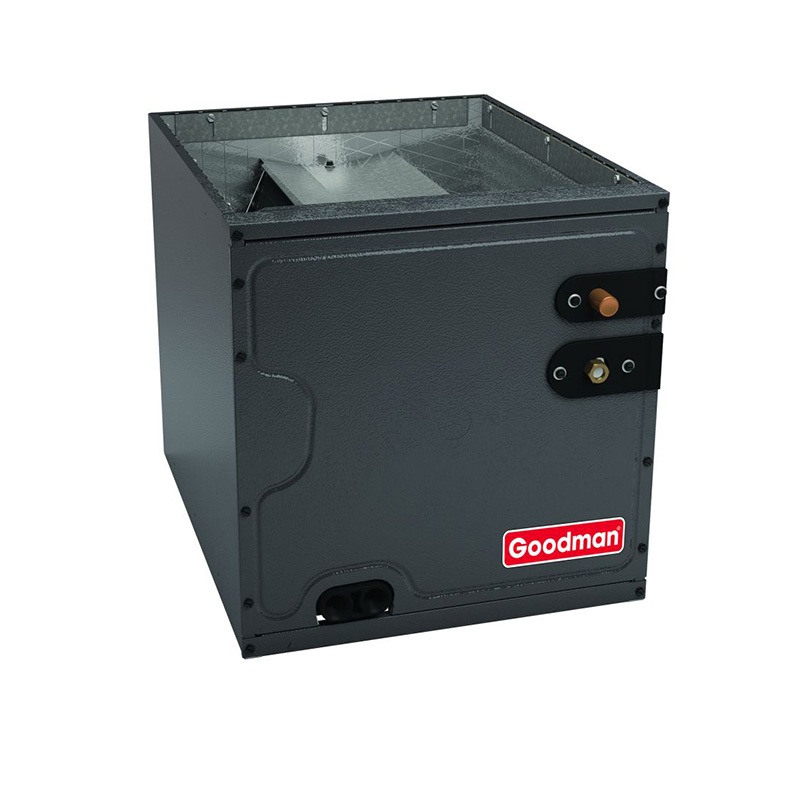
HVAC technicians are candid about where Goodman falls short. Dual-run capacitors are the most commonly flagged failure point, and experienced techs often replace them proactively during tune-ups to avoid a no-cool service call in midsummer. Evaporator coil leaks show up in a meaningful share of owner histories, and compressors tend to run 10 to 14 years versus the 15 to 20 years seen on well-maintained Trane or Carrier compressors. A small but notable minority of owners have reported refrigerant leaks within the first year, something technicians generally attribute to installation errors or improper charging rather than a manufacturing defect. The consistent professional advice: Goodman can perform well for a long time, but it rewards careful installation and annual maintenance more than most premium brands do.
Sources: ConsumerAffairs Goodman owner reviews, AHRI Directory of Certified Product Performance, U.S. DOE appliance and equipment efficiency standards, Goodman product specification sheets.
What it costs to run
At 14.5 SEER2, cooling this 3-ton system for a typical 1200-hour cooling season at the U.S. average electricity rate of $0.17/kWh works out to roughly $506 per year in cooling, about $42 less per year than a minimum-efficiency 13.4 SEER2 unit of the same size. Your real cost depends on your climate and local rate.
Method: (36,000 BTU/hr ÷ 14.5 SEER2) × 1200 hours ÷ 1000 × $0.17/kWh. Rate source: U.S. EIA average; cooling hours: moderate-climate estimate.
How it compares
| Brand | Comparable model | SEER2 | Stage | Price position |
|---|---|---|---|---|
| Goodman | GSXH503610 / GCVC960803BN (this system) | 14.5 | Two-stage | Value pick |
| Carrier | Comfort 14 / Performance 96 (58TP) | 14.3 to 15 | Single-stage / Two-stage | Typically 15 to 25 percent more than this Goodman bundle |
| Trane | XR14c / S9V2 (two-stage furnace series) | 14.3 to 15 | Single-stage / Two-stage | Typically 15 to 25 percent more than this Goodman bundle |
| Lennox | ML14XC1 / EL296V (two-stage furnace series) | 14.3 to 15 | Single-stage / Two-stage | Typically 15 to 25 percent more than this Goodman bundle |
Competitor rows are comparable single-stage units at similar efficiency; price is relative position, not a quote.
Questions about this system
Why does this system use R-32 instead of R-410A, and does that affect service costs?
R-32 is replacing R-410A across the industry as regulations phase out higher-GWP refrigerants. It is not backward compatible with older R-410A equipment, but any certified technician with the correct recovery equipment can handle it. Service costs are not significantly different from R-410A work, and supply availability is growing steadily.
What does downflow mean, and how do I know if my home needs it?
Downflow means the furnace draws return air in from the top and discharges conditioned air downward, feeding ductwork that runs beneath the unit, typically into a crawlspace or basement. If your current furnace sits on a platform with ducts below it, downflow is likely correct. Verify your existing duct orientation with your installer before purchasing, since converting a ductwork layout adds labor cost.
How often do Goodman capacitors fail, and what does that repair cost?
Dual-run capacitor failure is the most frequently reported repair on Goodman AC systems, and it tends to show up after roughly year 7 of use. The good news is that it is among the least expensive HVAC repairs, typically running between 300 and 600 dollars including labor, and a skilled technician can complete it in under an hour.
Does registering the system affect my warranty coverage?
Yes, Goodman requires product registration within a set window after installation to receive the full parts warranty period; unregistered units revert to a shorter base coverage term. Your installing contractor should handle registration, but confirm it was completed and retain your registration confirmation for any future claims.
Will 3 tons be enough for my house, or should I size up?
Three tons serves roughly 1,500 to 2,000 square feet in a moderately insulated home in most U.S. climates, but square footage alone is not a reliable guide. A proper Manual J load calculation from your installer accounts for insulation levels, window area, ceiling height, and local climate, and it is the only reliable way to confirm 3 tons is the right size. Oversizing causes short cycling that reduces humidity removal and accelerates wear.
Specifications
| Cooling capacity | 3 Ton |
| Efficiency | 14.5 SEER2 |
| Furnace output | 80000 BTU |
| Furnace efficiency | 96% AFUE |
| Configuration | Downflow |
| Refrigerant | R-32 |