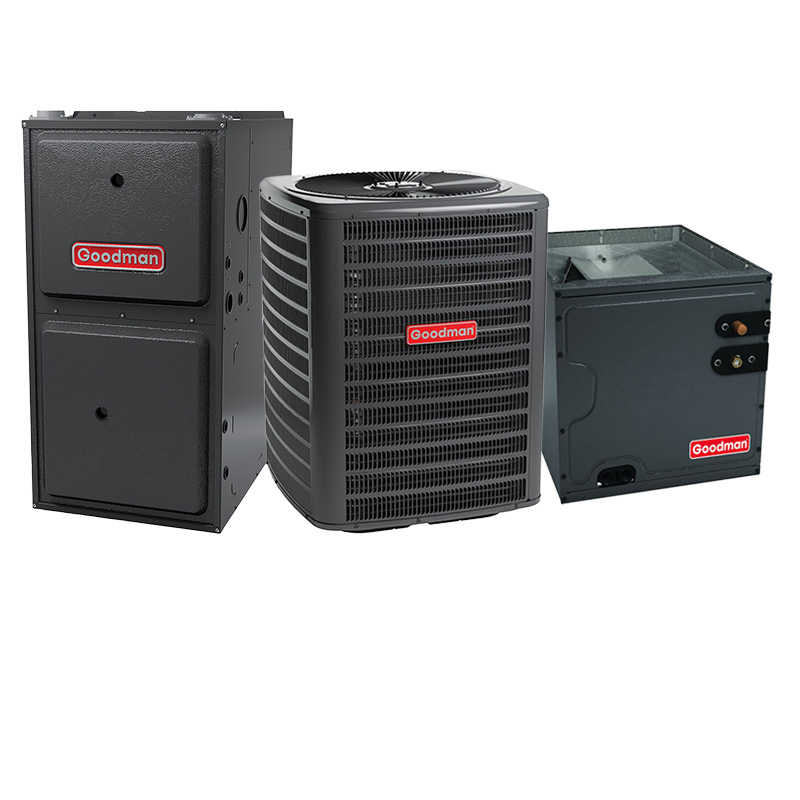
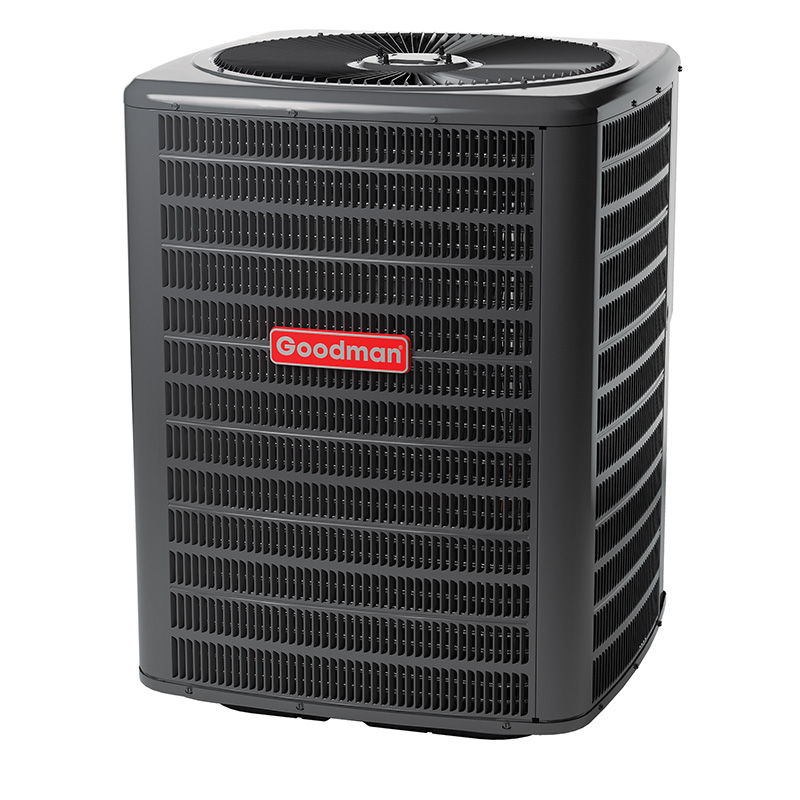
Goodman Air Conditioning And Heating – 3 Ton 15.2 SEER2 AC With 60000 BTU 96% AFUE Two Stage Multi-Speed ECM Gas Furnace System – Upflow | R32
View on AC Direct see your lowest price →Check current price on AC Direct →
Key features
- 3-ton, 15.2 SEER2 central air conditioner using R-32 refrigerant
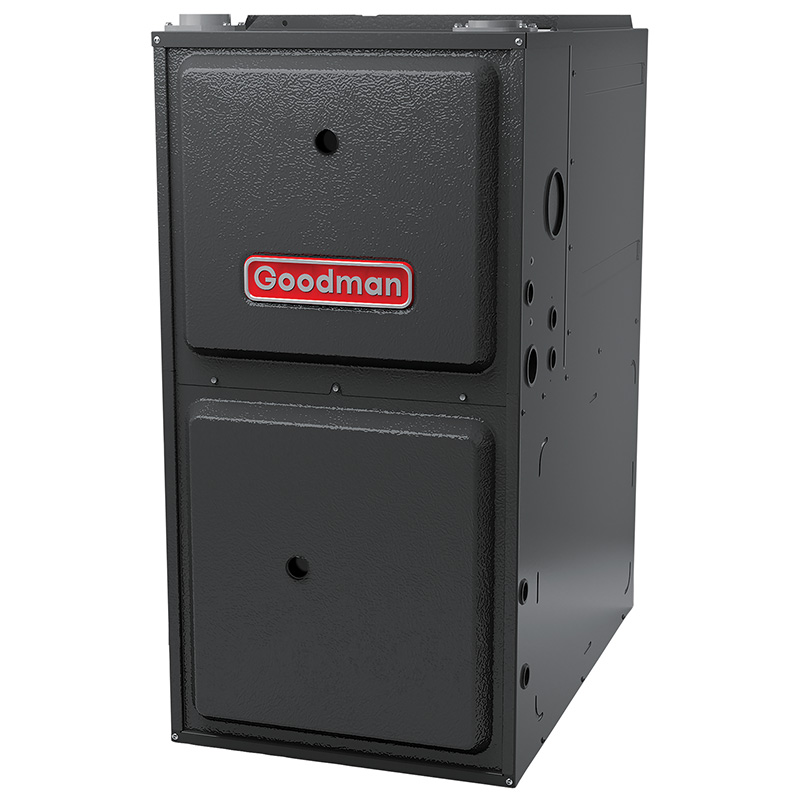
- 60,000 BTU, 96% AFUE two-stage gas furnace for high-efficiency heating
- Multi-speed ECM blower motor reduces electricity use and improves airflow consistency
- Two-stage heating operation lowers humidity and reduces temperature swings on mild days
- Upflow configuration for basement or ground-level utility closet installations
- Matched system design allows both units to be registered together under Goodman's warranty program
About this system
This Goodman bundle pairs a 3-ton, 15.2 SEER2 air conditioner with a 60,000 BTU, 96% AFUE two-stage gas furnace in an upflow configuration, making it a practical choice for mid-size homes in the 1,400 to 2,000 square-foot range that need both efficient cooling and high-efficiency gas heat. The 15.2 SEER2 rating clears the current federal minimum by a comfortable margin without reaching premium-tier pricing, and the 96% AFUE furnace captures nearly all combustion energy, which translates to real savings on gas bills in colder climates.
The two-stage furnace operation is a meaningful upgrade over single-stage equipment. On mild days it runs at the lower stage longer, which evens out temperatures room to room and keeps humidity in check during shoulder seasons. The multi-speed ECM blower motor supports that behavior by adjusting airflow more precisely than a standard PSC motor, and it consumes less electricity doing it. R-32 refrigerant is used in the AC side; it carries a lower global warming potential than the older R-410A it replaces and is increasingly standard in new residential equipment. For buyers who want a solid, workaday system without paying a premium brand markup, this package is worth serious consideration, provided installation is handled by a licensed technician with documented experience on Goodman equipment.
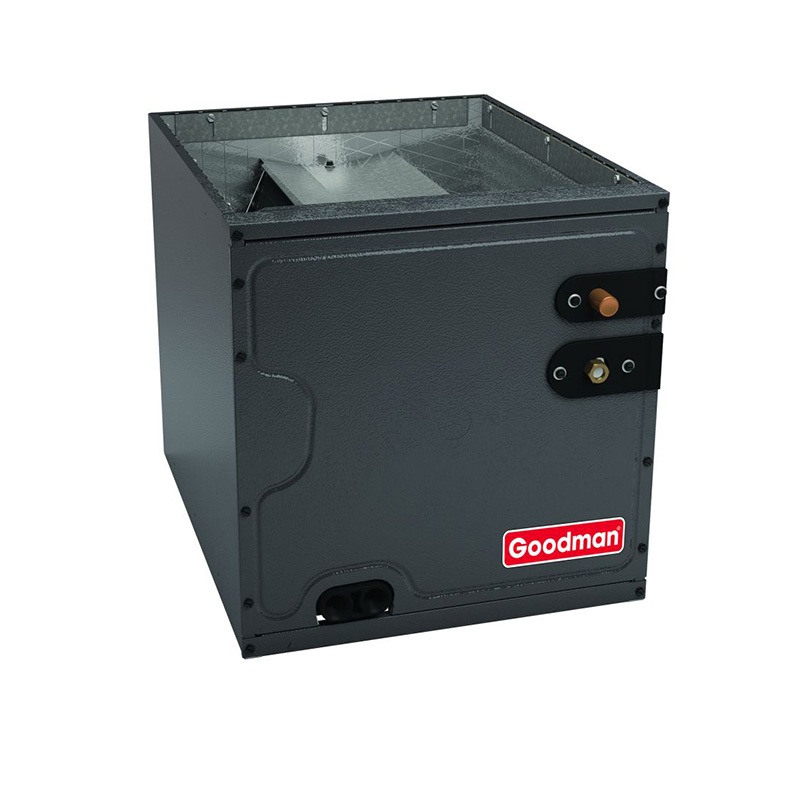
Upflow configuration means the air handler pushes conditioned air upward into supply ducts above it, which suits basements, ground-level utility closets, and crawl-space mechanical rooms. Buyers in attic-install or horizontal applications should not use this configuration. One honest caveat: Goodman’s long-term performance record is more variable than Trane, Carrier, or Lennox, and the gap is most visible after year seven, so budget expectations around potential maintenance costs should be set accordingly before purchase.
This Goodman bundle delivers genuine efficiency at a price point roughly 15 to 25 percent below comparable Trane, Carrier, and Lennox systems, and the two-stage furnace with ECM motor is a real comfort upgrade over entry-level single-stage equipment. The trade-off is a reliability ceiling that is lower than premium brands, with compressor longevity averaging 10 to 14 years and documented issues with dual-run capacitors and evaporator coil leaks in the field. It is a reasonable choice for budget-conscious buyers who install it correctly and plan for routine maintenance.
Overall score is the average of the five ratings above.
What we like
- Priced 15 to 25 percent below comparable Trane, Lennox, and Carrier systems for similar efficiency
- 96% AFUE furnace is among the highest efficiency tiers available for gas heating
- Two-stage furnace with ECM motor meaningfully improves humidity control and room-to-room comfort
- 15.2 SEER2 exceeds current federal minimums, reducing seasonal cooling costs
- R-32 refrigerant has lower global warming potential than the R-410A used in older systems
Trade-offs
- Compressor lifespan averages 10 to 14 years versus 15 to 20 years for premium brands
- Dual-run capacitor failures are the most commonly reported issue, typically requiring a 300 to 600 dollar service call
- Evaporator coil leaks appear in a meaningful share of owner reviews, particularly past the midpoint of the warranty period
- A minority of owners report refrigerant leaks in the first year, most often traced to install or charge quality rather than the equipment itself
What homeowners and pros say about Goodman
Homeowners who research Goodman online will find a split picture. On ConsumerAffairs, the brand scores around 2.5 out of 5, and that channel skews toward people who had something go wrong rather than those whose systems ran quietly for years without issue. The recurring theme in those complaints is repair costs that start climbing after roughly year seven, with dual-run capacitor failures cited most often as the first thing to go. Capacitor replacements are generally a 300 to 600 dollar fix when caught early, but they signal that owners of Goodman equipment should budget for service calls as the system ages. Evaporator coil leaks also appear with enough frequency in owner accounts to be a genuine concern, and a minority of buyers report refrigerant leaks in the first year, most traceable to installation rather than a factory defect. Compressor longevity averaging 10 to 14 years, compared to 15 to 20 for premium brands, is a real difference that matters when you are weighing total cost of ownership over a decade or more.
On Google, Goodman dealer reviews sit around 3.8 out of 5 across hundreds of reviews per location, and the most consistent praise is straightforward: the equipment costs less and, when installed correctly, works. HVAC technicians who work on Goodman equipment regularly tend to share a version of the same view. They note that the brand’s performance is more installation-dependent than premium lines, meaning a sloppy commissioning job produces worse long-term outcomes on a Goodman than it might on a Trane or Carrier. For this specific system, the two-stage furnace and ECM motor are genuine comfort upgrades that a good installer can set up to run well, and the 96% AFUE and 15.2 SEER2 ratings represent real efficiency. The honest summary is that this package offers solid specs at a lower price, with a reliability ceiling that is meaningful but manageable if you choose your installer carefully and stay current on maintenance.
Sources: ConsumerAffairs Goodman owner reviews, AHRI Directory of Certified Product Performance, U.S. DOE appliance and equipment efficiency standards, Goodman product specification sheets.
What it costs to run
At 15.2 SEER2, cooling this 3-ton system for a typical 1200-hour cooling season at the U.S. average electricity rate of $0.17/kWh works out to roughly $483 per year in cooling, about $65 less per year than a minimum-efficiency 13.4 SEER2 unit of the same size. Your real cost depends on your climate and local rate.
Method: (36,000 BTU/hr ÷ 15.2 SEER2) × 1200 hours ÷ 1000 × $0.17/kWh. Rate source: U.S. EIA average; cooling hours: moderate-climate estimate.
How it compares
| Brand | Comparable model | SEER2 | Stage | Price position |
|---|---|---|---|---|
| Goodman | 3-Ton 15.2 SEER2 AC / 96% AFUE Two-Stage ECM Furnace Bundle | 15.2 | Two-stage | Value pick |
| Carrier | Comfort 15 Series (24ACC6) | 15+ | Single-stage | Typically 15 to 25 percent more than this Goodman bundle |
| Trane | XR15 Series | 15+ | Single-stage | Typically 15 to 25 percent more than this Goodman bundle |
| Lennox | Merit 14ACX / ML196 Furnace | 15+ | Single-stage | Typically 15 to 25 percent more than this Goodman bundle |
Competitor rows are comparable single-stage units at similar efficiency; price is relative position, not a quote.
Questions about this system
Does this system qualify for the federal energy efficiency tax credit?
The 96% AFUE furnace meets the efficiency threshold for the federal 25C tax credit, which can be worth up to 600 dollars on qualifying furnaces. The AC side at 15.2 SEER2 may also qualify depending on the full system combination and your climate region. Confirm eligibility with a tax professional and keep your installation invoice and AHRI certificate on file.
What refrigerant does this system use and will it be hard to service?
This system uses R-32, which is replacing R-410A in new residential equipment. R-32 requires technicians with A2L refrigerant handling certification, so verify that your service contractor is trained and equipped for it before scheduling any future work. Availability of R-32 is growing as more manufacturers adopt it, but it is not yet as universally stocked as R-410A was.
How long can I realistically expect the compressor to last?
Based on Goodman's documented field history, compressors on their residential AC units tend to average 10 to 14 years, which is shorter than the 15 to 20 years commonly associated with premium brands like Trane and Carrier. Annual maintenance, correct refrigerant charge at installation, and a hard-start kit if voltage in your area is unstable all support the longer end of that range.
What is covered under the warranty and how does registration work?
Goodman offers a 10-year parts warranty on registered systems, which drops to 5 years if you do not register within 60 days of installation. Labor is not covered at any point, so factor in service call costs when budgeting. Register both units together at Goodman's website using your installer's information and the serial numbers from each unit.
Is this system a good fit for a home with variable duct sizes or rooms that are hard to heat and cool?
The two-stage furnace and ECM blower motor combination is better suited to homes with uneven heating and cooling than a single-stage system would be, because the lower firing stage runs longer cycles that distribute air more evenly. That said, duct design and system sizing still matter most. A Manual J load calculation by your installer is essential to confirm that 3 tons and 60,000 BTU are the right fit for your specific floor plan and climate.
Specifications
| Cooling capacity | 3 Ton |
| Efficiency | 15.2 SEER2 |
| Furnace output | 60000 BTU |
| Furnace efficiency | 96% AFUE |
| Configuration | Upflow |
| Refrigerant | R-32 |