Goodman Air Conditioning And Heating – 3 Ton 15.2 SEER2 AC With 80000 BTU 96% AFUE Two Stage Multi-Speed ECM Gas Furnace System – Upflow | R32
View on AC Direct see your lowest price →Check current price on AC Direct →
Key features
- 3-ton cooling capacity rated at 15.2 SEER2 for mid-tier seasonal efficiency
- 80,000 BTU two-stage gas furnace at 96% AFUE for high-efficiency heating
- ECM multi-speed blower motor reduces fan energy consumption vs. standard PSC motors
- Upflow configuration for basements and interior closet installations with overhead duct systems
- R-32 refrigerant with lower global warming potential than R-410A
- Two-stage furnace operation delivers quieter, steadier heat on mild days
About this system
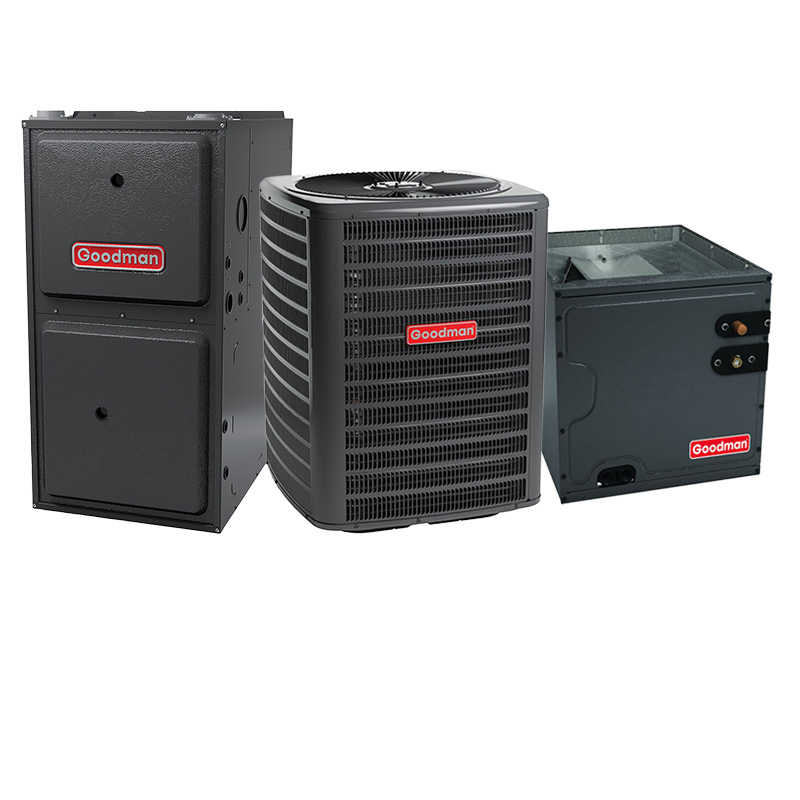
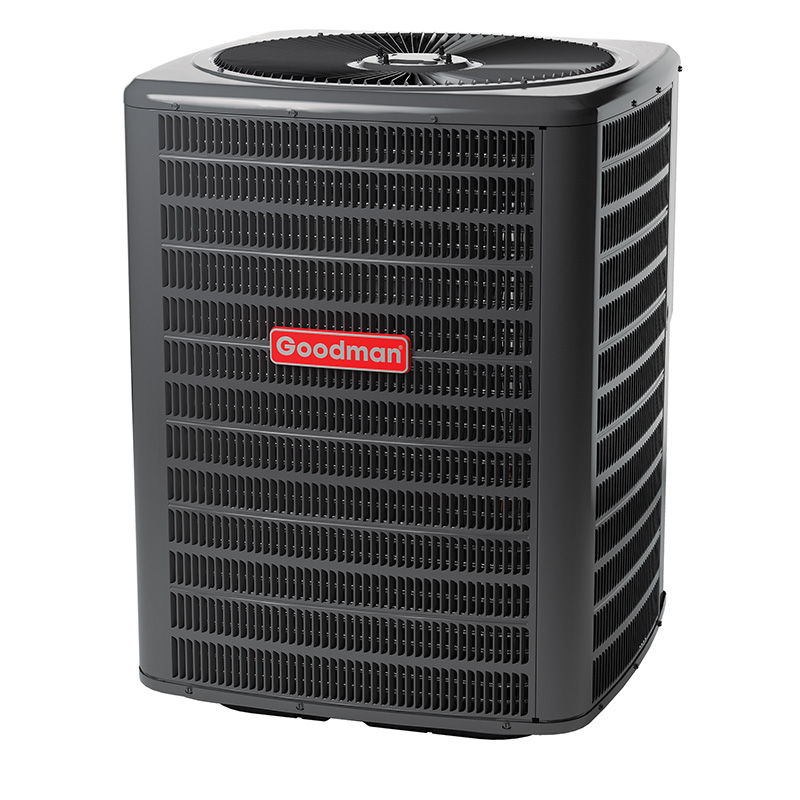
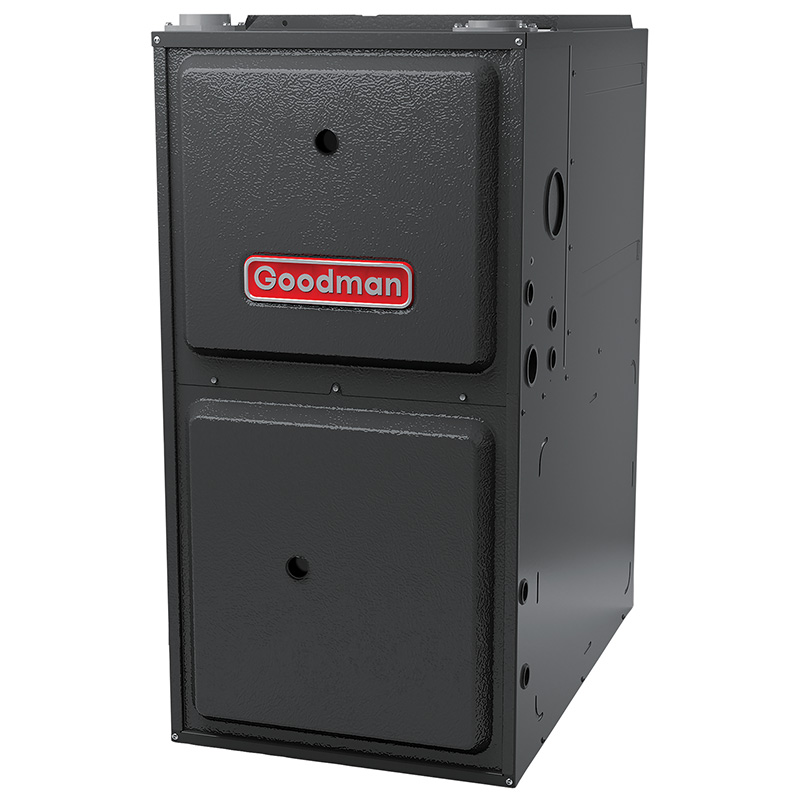
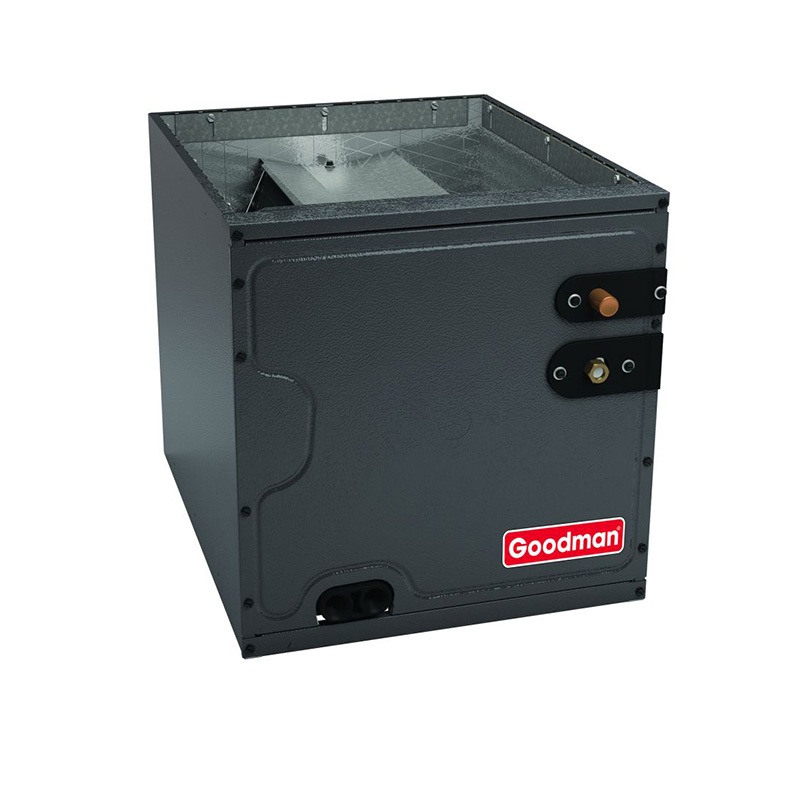
This Goodman bundle pairs a 3-ton, 15.2 SEER2 central air conditioner with an 80,000 BTU, 96% AFUE two-stage gas furnace in an upflow configuration, making it a practical match for homes in the 1,400 to 2,000 square foot range that need both summer cooling and a high-efficiency heating source. The 96% AFUE rating means only about four cents of every dollar spent on gas escapes as waste heat, which puts the furnace squarely in the top tier of gas heating efficiency. Two-stage operation lets the furnace run at a lower capacity on milder days, improving comfort and reducing temperature swings compared to a single-stage unit.
The 15.2 SEER2 efficiency rating clears the federal minimum for most U.S. climate regions and lands in the mid-tier range, not entry-level but not the top of the market either. The ECM (electronically commutated motor) blower cuts fan electricity use noticeably compared to a standard PSC motor, and the R-32 refrigerant charge has a lower global warming potential than the older R-410A it replaces. Upflow configuration suits the most common residential setup where the furnace sits in a basement or interior closet and distributes conditioned air upward through overhead ductwork.
Goodman positions this system as a budget-conscious alternative to premium brands, typically priced 15 to 25 percent below comparable Trane, Lennox, or Carrier equipment. That gap can cover a meaningful portion of installation labor costs, which is worth factoring in when comparing total project budgets. The trade-off is a shorter expected compressor lifespan and a brand reputation that sits closer to the middle of the pack than the top.
This Goodman system delivers genuinely high-efficiency heating and respectable cooling performance at a price that undercuts major premium brands by a meaningful margin. It suits homeowners who want a capable, code-compliant system without paying a Trane or Lennox premium, provided they invest in a skilled installer. Long-term ownership costs hinge heavily on that install quality and on budgeting for likely capacitor and coil service somewhere in the middle years.
Overall score is the average of the five ratings above.
What we like
- 96% AFUE furnace rating is among the highest available for gas heating, cutting fuel waste to roughly 4%
- Two-stage furnace operation improves comfort and reduces temperature swings compared to single-stage alternatives
- ECM blower motor lowers ongoing fan electricity costs relative to standard PSC motors
- Priced 15 to 25 percent below comparable Trane, Lennox, and Carrier systems, freeing budget for installation quality
- R-32 refrigerant has a lower environmental impact than the R-410A found in older systems
Trade-offs
- Compressor lifespan averages 10 to 14 years, shorter than the 15 to 20 years reported for premium brand compressors
- Dual-run capacitor failures are the most common documented repair, typically occurring mid-life at a cost of $300 to $600
- Evaporator coil leaks appear in a meaningful share of owner reviews and can be a costly mid-term repair
- A minority of owners report refrigerant leaks within the first year, most often traced to installation or initial charge issues rather than factory defects
What homeowners and pros say about Goodman
Homeowners who post about Goodman equipment on review platforms tend to cluster at the extremes. On ConsumerAffairs, where the brand holds roughly 2.5 out of 5 stars, the loudest complaints center on repair costs that start accumulating after about year seven, with capacitor failures and refrigerant issues cited most often. On Google dealer reviews, where Goodman installers average closer to 3.8 out of 5 stars across hundreds of reviews per location, the most repeated praise is straightforward: the price made a full system replacement financially feasible for households that could not absorb a premium-brand quote. Neither picture is complete on its own, and both are worth holding in mind.
HVAC professionals tend to have a more nuanced take. Many technicians are comfortable recommending Goodman to clients who are on a tight budget, with the consistent caveat that the install has to be done right and that the owner should expect to replace the dual-run capacitor at some point, likely in the $300 to $600 range. Evaporator coil leaks come up as a recurring mid-life concern, and pros note that Goodman compressors generally run 10 to 14 years rather than the 15 to 20 years that stronger premium-brand compressors have shown. For this specific two-stage, 96% AFUE bundle, the furnace side tends to draw fewer complaints than the cooling components, which aligns with the broader pattern in the reviews.
Sources: ConsumerAffairs Goodman owner reviews, AHRI Directory of Certified Product Performance, U.S. DOE appliance and equipment efficiency standards, Goodman product specification sheets.
What it costs to run
At 15.2 SEER2, cooling this 3-ton system for a typical 1200-hour cooling season at the U.S. average electricity rate of $0.17/kWh works out to roughly $483 per year in cooling, about $65 less per year than a minimum-efficiency 13.4 SEER2 unit of the same size. Your real cost depends on your climate and local rate.
Method: (36,000 BTU/hr ÷ 15.2 SEER2) × 1200 hours ÷ 1000 × $0.17/kWh. Rate source: U.S. EIA average; cooling hours: moderate-climate estimate.
How it compares
| Brand | Comparable model | SEER2 | Stage | Price position |
|---|---|---|---|---|
| Goodman | GSXH503610 + GMVC960803BN (or equivalent bundled series) | 15.2 | Two-stage | Value pick |
| Carrier | Comfort 15 Series (24ACC6) | 15.2 | Single-stage | Typically 15 to 25 percent more than this Goodman bundle |
| Trane | XR15 Series (4TTR5) | 15.2 | Single-stage | Typically 15 to 25 percent more than this Goodman bundle |
| Lennox | Merit ML15 Series | 15.2 | Single-stage | Typically 15 to 25 percent more than this Goodman bundle |
Competitor rows are comparable single-stage units at similar efficiency; price is relative position, not a quote.
Questions about this system
Is 15.2 SEER2 enough efficiency to qualify for federal tax credits or utility rebates?
The federal 25C tax credit for central air conditioners generally requires at least 16 SEER2 for split systems, so this unit at 15.2 SEER2 would not qualify on the cooling side. However, the 96% AFUE furnace may qualify separately under the heating equipment provision, and some utility rebate programs have lower efficiency thresholds, so it is worth checking your local utility's current requirements before purchase.
What does two-stage mean on the furnace, and does it actually save money?
Two-stage means the furnace has a high-fire and a low-fire setting, running at the lower output on mild days and stepping up only when demand rises. This reduces short-cycling, which is when the unit fires up and shuts down repeatedly, and tends to produce steadier indoor temperatures. Fuel savings compared to a single-stage 96% AFUE furnace are modest, but the comfort improvement is the more commonly cited benefit.
How important is the installer for a Goodman system specifically?
HVAC technicians consistently note that Goodman's performance and longevity lean more heavily on install quality than premium brands do. Proper refrigerant charge, correct airflow setup, and accurate electrical connections are the factors most often linked to the early refrigerant leak reports and shortened component life seen in owner reviews. Choosing an experienced, licensed contractor and confirming they will perform a full system commissioning check is arguably the most important decision in this purchase.
What are the most likely repairs I should budget for over the life of this system?
The dual-run capacitor is the most commonly reported failure on Goodman AC units, typically a $300 to $600 repair and generally a straightforward fix. Evaporator coil leaks appear in a meaningful share of reviews and can be more expensive depending on whether a repair or replacement is needed. Compressors on Goodman units average 10 to 14 years, so budgeting for a potential compressor or full outdoor unit replacement in that window is prudent.
Why does this system use R-32 refrigerant, and does that affect service costs?
R-32 is a lower-global-warming-potential refrigerant being phased in as the industry moves away from R-410A under current EPA rules. Most certified HVAC technicians are already equipped to handle R-32, but it is worth confirming that any service contractor you hire is certified and stocked for it, since it is not yet as universally available at every shop as R-410A currently is.
Specifications
| Cooling capacity | 3 Ton |
| Efficiency | 15.2 SEER2 |
| Furnace output | 80000 BTU |
| Furnace efficiency | 96% AFUE |
| Configuration | Upflow |
| Refrigerant | R-32 |