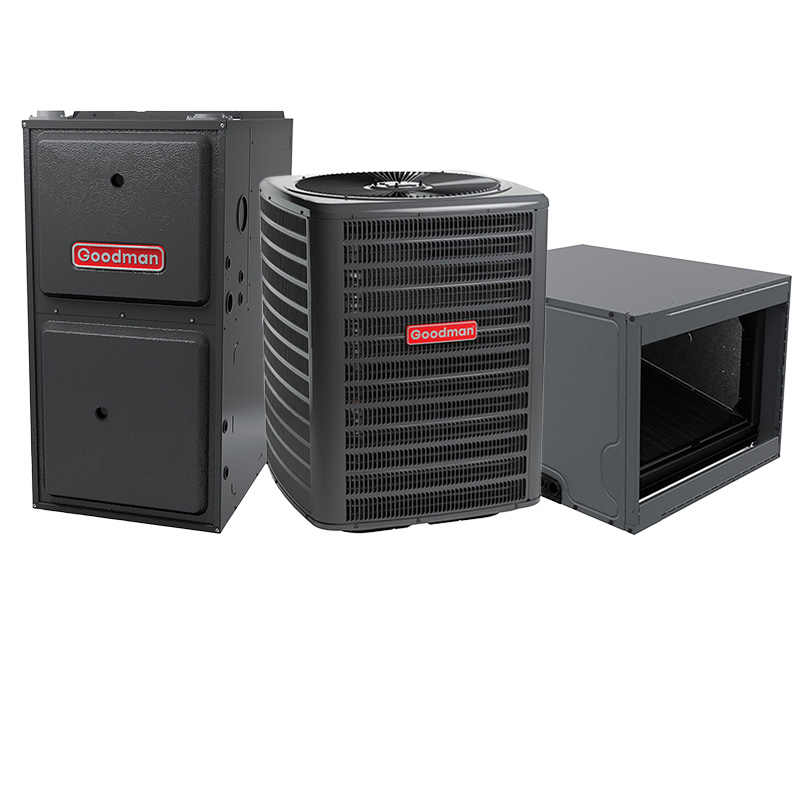
Goodman Air Conditioning And Heating – 4 Ton 14.5 SEER2 AC With 80000 BTU 96% AFUE Two Stage Multi-Speed ECM Gas Furnace System – Horizontal | R32
View on AC Direct see your lowest price →Check current price on AC Direct →
Key features
- 4-ton cooling capacity with 14.5 SEER2 efficiency rating
- 80,000 BTU two-stage gas furnace at 96% AFUE
- Multi-speed ECM blower motor for lower fan energy use and better dehumidification
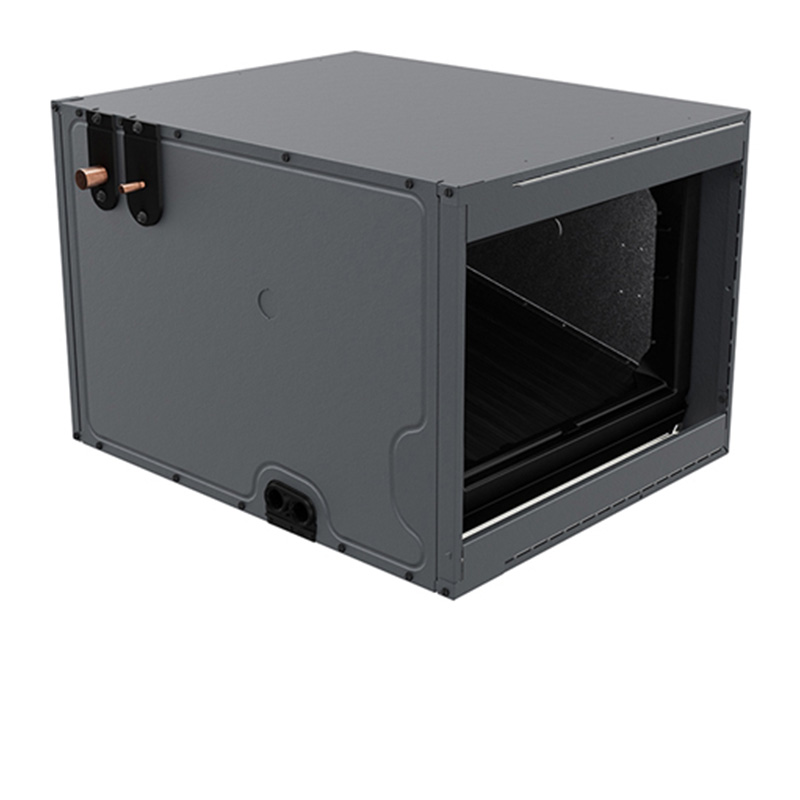
- Horizontal cabinet orientation for attic and crawl-space installs
- R-32 refrigerant with lower global-warming potential than R-410A
- Goodman value pricing, typically 15 to 25 percent below Trane, Lennox, and Carrier equivalents
About this system
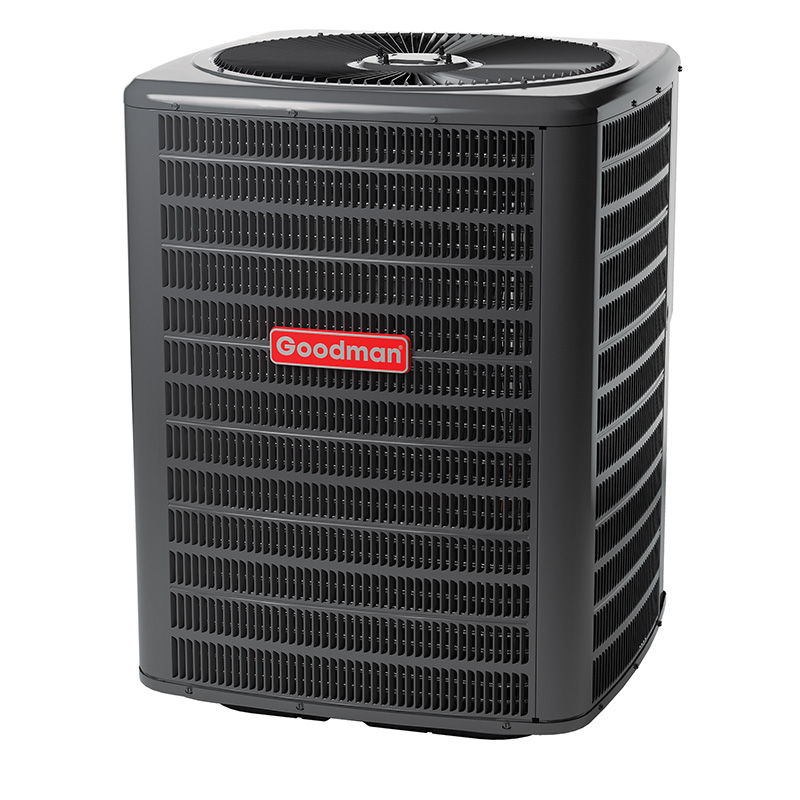
This Goodman bundle pairs a 4-ton, 14.5 SEER2 central air conditioner with an 80,000 BTU, 96% AFUE two-stage gas furnace in a horizontal configuration, making it a practical choice for homes with attic or crawl-space installations where vertical cabinet clearance is limited. The R-32 refrigerant charge is a forward-looking detail: R-32 carries a lower global-warming potential than the R-410A it is gradually replacing, and several utility jurisdictions are beginning to favor or require it. At 14.5 SEER2, cooling efficiency sits right at the federal minimum threshold for most northern U.S. climate zones, so expect modest but not remarkable energy savings compared with mid-efficiency or high-efficiency alternatives.
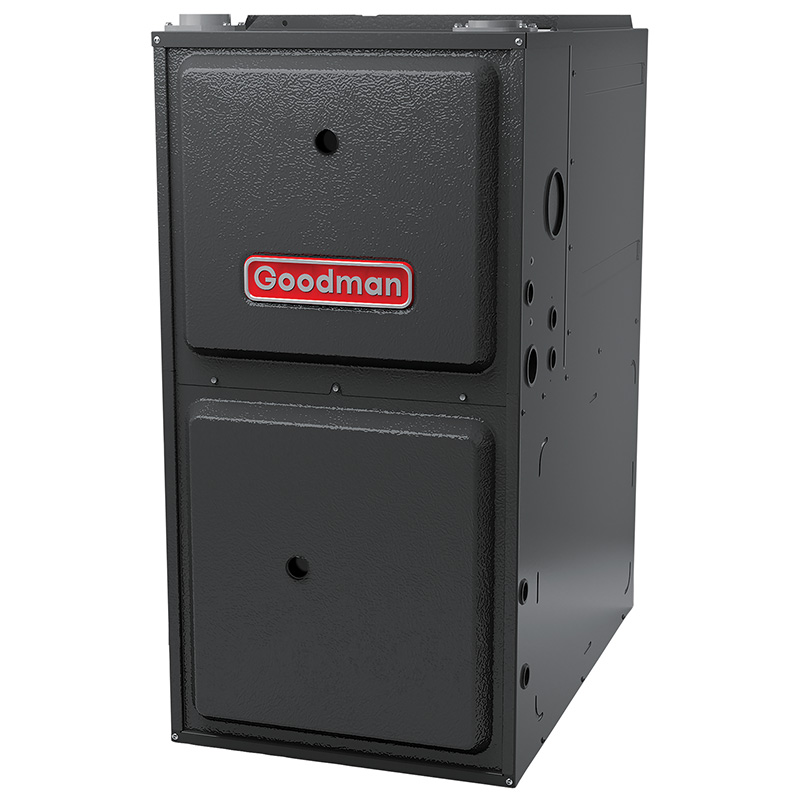
The furnace side is where this system earns real attention. A 96% AFUE rating means 96 cents of every dollar spent on gas converts to usable heat, which is solidly high-efficiency territory. Two-stage operation lets the furnace run at a lower firing rate on mild days, reducing short-cycling, evening out temperatures room to room, and cutting wear on the heat exchanger. The multi-speed ECM blower motor adjusts airflow continuously, which also helps dehumidification in cooling mode and keeps fan electricity costs lower than a standard PSC motor would. Together, those furnace features meaningfully offset the mid-tier cooling efficiency for homeowners in heating-dominant climates.
Goodman positions this system for budget-conscious buyers who want a real two-stage, high-efficiency furnace without the price premium of Trane, Lennox, or Carrier. It suits replacement projects in homes between roughly 2,000 and 2,600 square feet with adequate Manual J load calculations, horizontal duct runs, and a licensed installer who knows Goodman equipment well. Buyers in the Sun Belt who lean on cooling far more than heating should consider whether stepping up to a higher SEER2 rating would pay off faster given their runtime hours.
This system is a reasonable budget pick for heating-dominant climates where the 96% AFUE two-stage furnace will do most of the heavy lifting, but the 14.5 SEER2 cooling efficiency is entry-level and long-term reliability hinges heavily on installation quality and regular maintenance. Buyers who can afford to step up to a premium brand will likely see fewer out-of-pocket repair costs after year seven, but those working with tighter budgets and a skilled installer get real furnace value here.
Overall score is the average of the five ratings above.
What we like
- 96% AFUE two-stage furnace delivers genuine high-efficiency heating and reduces short-cycling
- ECM blower motor lowers electricity consumption and improves comfort compared with standard motors
- R-32 refrigerant is lower-GWP and increasingly utility-preferred
- Horizontal configuration covers install scenarios that upflow units cannot address
- Purchase price typically 15 to 25 percent below comparable Carrier, Trane, and Lennox systems
Trade-offs
- 14.5 SEER2 is the federal minimum floor, so cooling savings are limited compared with 17+ SEER2 alternatives
- Dual-run capacitor failures are the most commonly reported issue, typically surfacing in years 5 to 10 and costing $300 to $600 per service call
- Evaporator coil leaks appear in a notable share of owner reports, and a minority of buyers report refrigerant issues within the first year that often trace back to installation
- Compressor lifespan averages 10 to 14 years versus 15 to 20 years for premium-brand counterparts, a meaningful difference over a full ownership cycle
What homeowners and pros say about Goodman
Among homeowners, opinions on Goodman tend to split cleanly along installation experience. Buyers who had their system sized correctly and installed by a technician familiar with the brand often report years of trouble-free service and consistently point to the lower purchase price as a win. The recurring frustration in the ConsumerAffairs community, where Goodman scores around 2.5 out of 5, centers on repair bills that start accumulating after roughly year seven, with dual-run capacitor failures being the most commonly named culprit. Those are typically $300 to $600 fixes, not catastrophic, but they add up. Evaporator coil leaks also appear often enough in owner discussions to be worth noting, and a smaller group of buyers report refrigerant issues in the first year that their technicians later attribute to improper charge at installation rather than a product defect.
HVAC professionals who work on Goodman equipment regularly tend to echo the same message: the equipment is serviceable, parts are widely stocked, and the value proposition is real for customers who cannot stretch to a Trane or Carrier budget. Where pros grow cautious is around compressor longevity. Goodman compressors are generally cited as averaging 10 to 14 years in the field, a meaningful step below the 15 to 20 years technicians associate with premium brands. Google dealer reviews for Goodman installers average around 3.8 out of 5, and affordability is the word that appears most often in the positive reviews. The professional consensus is not that Goodman is a bad product but that it rewards buyers who invest in a quality installation upfront, keep up with annual maintenance, and budget for the possibility of a capacitor replacement somewhere in the middle years.
Sources: ConsumerAffairs Goodman owner reviews, AHRI Directory of Certified Product Performance, U.S. DOE appliance and equipment efficiency standards, Goodman product specification sheets.
What it costs to run
At 14.5 SEER2, cooling this 4-ton system for a typical 1200-hour cooling season at the U.S. average electricity rate of $0.17/kWh works out to roughly $675 per year in cooling, about $56 less per year than a minimum-efficiency 13.4 SEER2 unit of the same size. Your real cost depends on your climate and local rate.
Method: (48,000 BTU/hr ÷ 14.5 SEER2) × 1200 hours ÷ 1000 × $0.17/kWh. Rate source: U.S. EIA average; cooling hours: moderate-climate estimate.
How it compares
| Brand | Comparable model | SEER2 | Stage | Price position |
|---|---|---|---|---|
| Goodman | This system (4T 14.5 SEER2 AC + 80K BTU 96% AFUE two-stage ECM furnace, horizontal, R-32) | 14.5 | Two-stage furnace / single-stage AC | Value pick |
| Carrier | Performance 14 series (24ACC4) paired with Performance 96 two-stage furnace (59TP6) | 14.3 to 15.2 | Two-stage furnace / single-stage AC | Typically 15 to 25 percent more than this Goodman bundle |
| Trane | XR14c paired with S9V2 two-stage variable-speed furnace | 14.3 to 15.0 | Two-stage furnace / single-stage AC | Typically 15 to 25 percent more than this Goodman bundle |
| Lennox | Merit 14ACX paired with ML196V two-stage variable-speed furnace | 14.3 to 15.0 | Two-stage furnace / single-stage AC | Typically 15 to 25 percent more than this Goodman bundle |
Competitor rows are comparable single-stage units at similar efficiency; price is relative position, not a quote.
Questions about this system
Is the 14.5 SEER2 rating going to cost me noticeably more on my electric bill than a higher-efficiency unit?
Compared with a 17 SEER2 system, a 14.5 SEER2 unit uses roughly 15 to 17 percent more electricity for the same cooling output. In a moderate climate with short cooling seasons the dollar difference per year may be small, but in hot-humid regions with long runtimes the gap compounds over time and can affect payback math.
Why does Goodman have such a low ConsumerAffairs score if it sells so many units?
ConsumerAffairs skews heavily toward buyers who experienced problems since satisfied owners rarely seek out review platforms. Goodman's score there sits around 2.5 out of 5, with repair costs after year seven as the recurring complaint. Google dealer reviews, which capture a broader cross-section of customers, average closer to 3.8 out of 5, where affordability is the most frequently cited positive.
What does horizontal configuration mean and how do I know if my home needs it?
A horizontal furnace is designed to lie on its side so the airflow enters and exits through the ends rather than the bottom or top. It is the standard choice for attic and crawl-space installations where ceiling height or floor clearance rules out a vertical upflow or downflow cabinet. Your installer should confirm the correct orientation during the equipment selection process.
The specs mention R-32 refrigerant. Do I need to tell my technician anything special?
Yes. R-32 requires recovery equipment and service tools certified for it, and technicians must hold the appropriate EPA Section 608 certification. R-32 is mildly flammable (A2L classification), so service procedures differ slightly from R-410A work. Most established HVAC companies already have compliant equipment, but confirm this before scheduling any future service calls.
What maintenance steps matter most for keeping this system out of trouble?
Annual professional inspections that include capacitor testing are the single most cost-effective step given that dual-run capacitors are the most commonly reported failure point on Goodman equipment. Keeping the evaporator coil clean and the refrigerant charge verified at installation reduces the risk of the coil-leak and early refrigerant-loss issues that appear in owner reports. Filter changes every one to three months protect both the blower motor and the coil.
Specifications
| Cooling capacity | 4 Ton |
| Efficiency | 14.5 SEER2 |
| Furnace output | 80000 BTU |
| Furnace efficiency | 96% AFUE |
| Configuration | Horizontal |
| Refrigerant | R-32 |