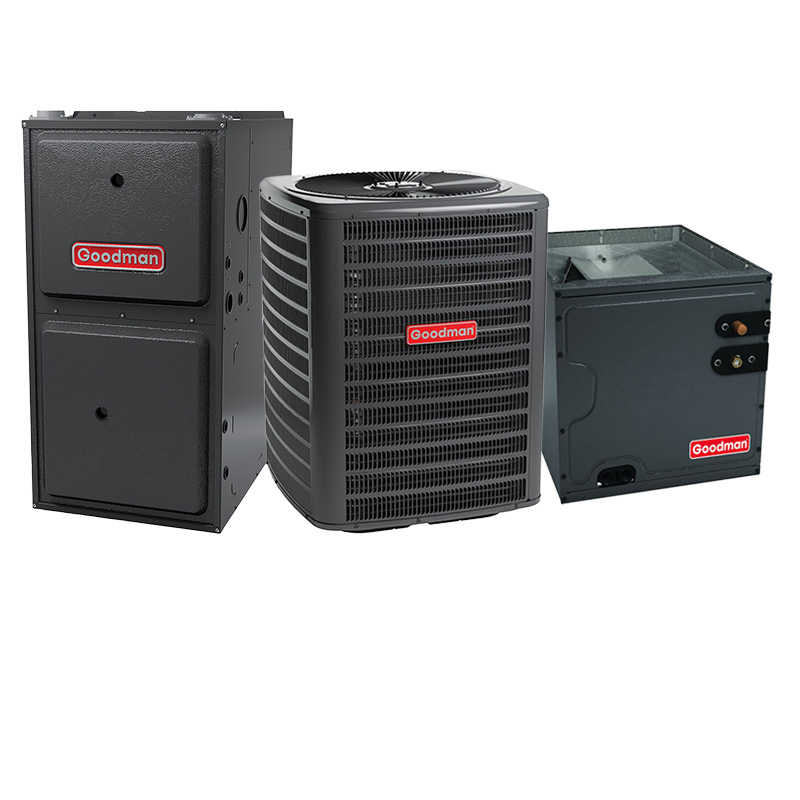
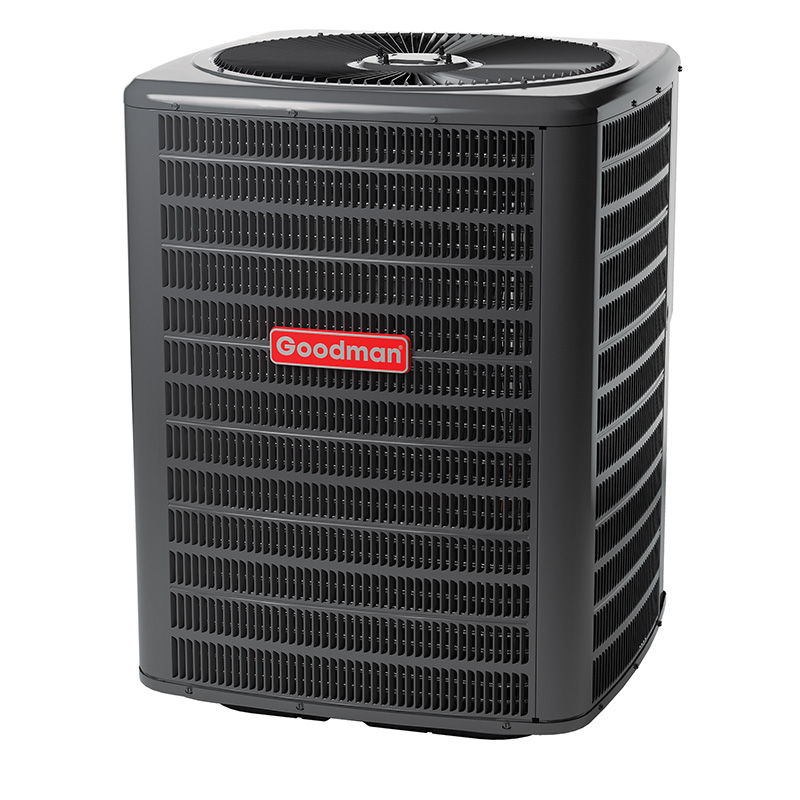
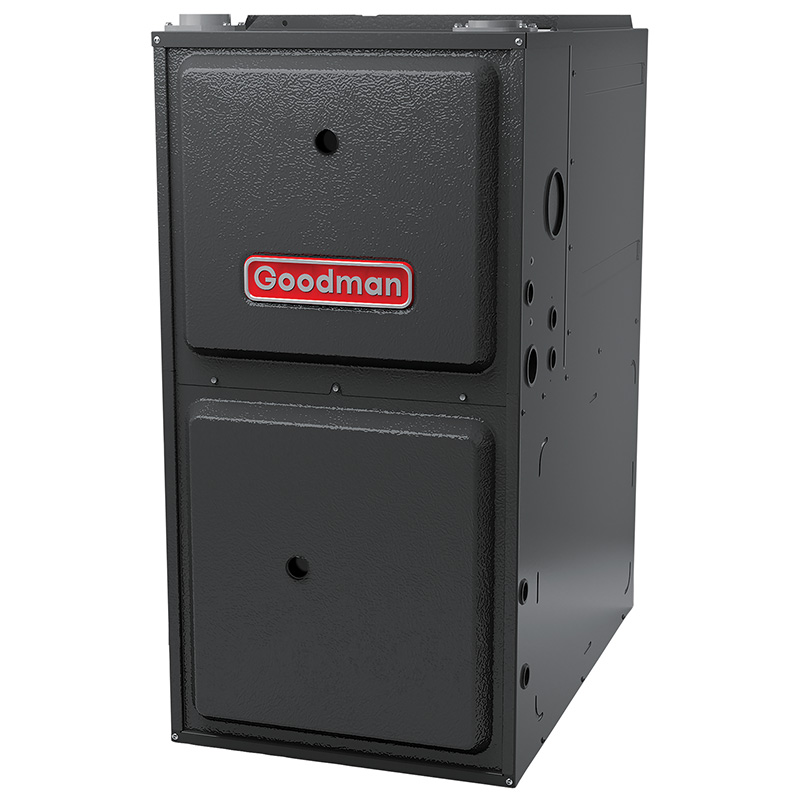
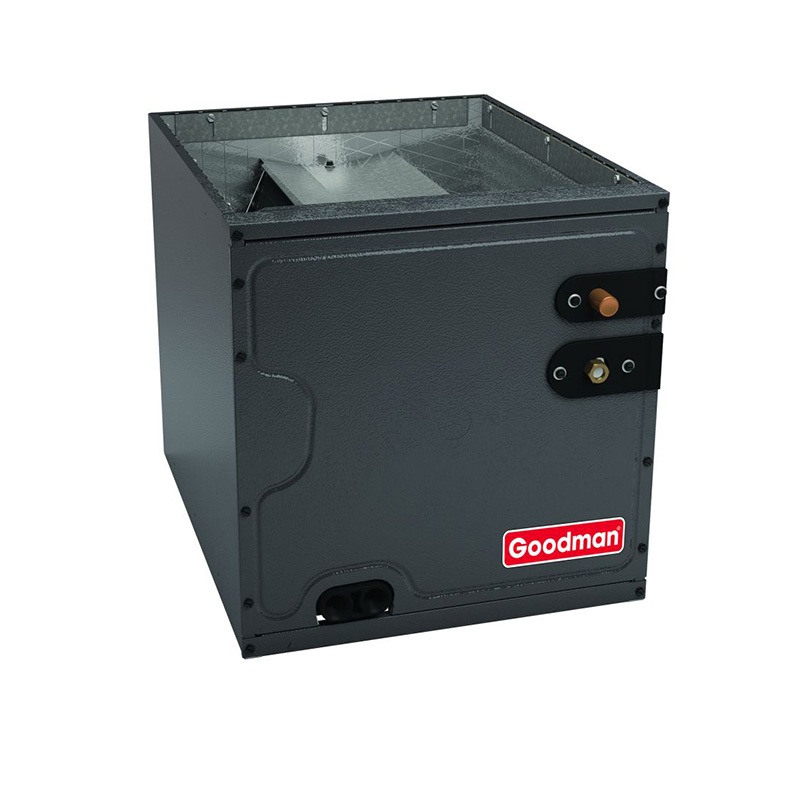
Goodman Air Conditioning And Heating – 4 Ton 15.2 SEER2 AC With 120000 BTU 96% AFUE Two Stage Multi-Speed ECM Gas Furnace System – Upflow | R32
View on AC Direct see your lowest price →Check current price on AC Direct →
Key features
- 4-ton cooling capacity rated at 15.2 SEER2 for modern federal efficiency compliance
- 120,000 BTU two-stage gas furnace at 96% AFUE for high-efficiency cold-climate heating
- Multi-speed ECM blower motor reduces electricity draw and supports better humidity control
- Two-stage furnace operation lowers fuel use and noise on mild heating days
- R-32 refrigerant with lower global warming potential than outgoing R-410A
- Upflow configuration designed for basement or utility-closet air handler installations
About this system
This Goodman package pairs a 4-ton, 15.2 SEER2 air conditioner with a 120,000 BTU, 96% AFUE two-stage gas furnace in an upflow configuration, making it a practical fit for larger homes in climates that demand both serious cooling capacity and efficient winter heating. The 15.2 SEER2 rating clears the federal minimum for most regions while stopping short of the premium efficiency tier, which translates to meaningful energy savings over older equipment without the premium price of a 17- or 18-SEER2 system. The 96% AFUE furnace converts 96 cents of every fuel dollar into usable heat, putting it firmly in the high-efficiency category and close to the practical ceiling for gas equipment.
The two-stage furnace and multi-speed ECM blower motor are the real workhorses of this system. Two-stage operation means the furnace fires at a lower capacity on mild days and ramps up only when temperatures drop hard, which reduces temperature swings, cuts fuel use during shoulder seasons, and runs quieter than a single-stage unit cycling on and off. The ECM motor adjusts airflow continuously, supporting better humidity control and indoor air quality while drawing less electricity than a standard PSC motor. R-32 refrigerant carries a lower global warming potential than the R-410A it replaces and is becoming the new standard, so parts and service should remain accessible for the system’s working life. Upflow configuration suits homes with the air handler in a basement or utility closet that feeds ductwork running upward through the living space.
Goodman sits in the value tier of the HVAC market, typically priced 15 to 25 percent below comparable equipment from Trane, Carrier, or Lennox. That gap funds itself over time if the system runs reliably, but prospective buyers should understand that Goodman’s real-world longevity leans heavily on installation quality. A meticulous install by an experienced technician is arguably the most important factor in how this system performs over its lifetime.
This Goodman system delivers competitive specs at a price point that undercuts premium brands by a meaningful margin, making it a solid choice for cost-conscious buyers who hire a skilled installer and plan for occasional component repairs after year seven. The two-stage furnace and ECM motor are genuine upgrades over entry-level equipment, but Goodman's documented track record on compressor lifespan and capacitor failures means buyers should budget for maintenance and not expect the same longevity as Trane or Lennox. It earns its place in the market as an honest value option, not a premium one.
Overall score is the average of the five ratings above.
What we like
- 15 to 25 percent lower upfront cost than comparable Carrier, Trane, and Lennox systems
- 96% AFUE two-stage furnace is near the top of gas efficiency and reduces fuel bills in cold climates
- ECM blower motor improves comfort, humidity control, and operating efficiency over standard motors
- R-32 refrigerant is forward-compatible with the direction the industry is heading
- Wide dealer and parts network makes service accessible in most metro and suburban markets
Trade-offs
- Dual-run capacitors are the most commonly reported failure point, typically surfacing in the first several years and costing 300 to 600 dollars to fix
- Evaporator coil leaks appear in a meaningful share of owner reviews and can be expensive to address outside warranty
- Compressor lifespan averages 10 to 14 years versus 15 to 20 years for premium-brand compressors
- A minority of owners report refrigerant leaks within the first year, most often traced to install or charge issues rather than the equipment itself
What homeowners and pros say about Goodman
Homeowners who leave reviews for Goodman systems tend to split into two camps: those who are several years in with no major issues and credit the savings at purchase, and those who faced repair bills after year seven and feel the long-term math did not favor them. Goodman’s ConsumerAffairs score of roughly 2.5 out of 5 captures the second group more than the first, since satisfied owners rarely seek out review platforms. The more balanced picture comes from Google dealer reviews, where Goodman-installed systems average around 3.8 out of 5 and affordability is the most frequently cited reason buyers chose the brand. HVAC technicians who work on Goodman equipment regularly point to dual-run capacitor failures as the most routine service call, typically a straightforward fix in the 300 to 600 dollar range but one that shows up often enough to be predictable. Evaporator coil leaks and early refrigerant loss in the first year also appear across owner reports, with most contractors attributing the refrigerant issues to installation or initial charge problems rather than factory defects.
For this specific system, the two-stage furnace and ECM blower represent a step up in component quality from Goodman’s entry-level lineup, which should reduce some of the short-cycling wear that contributes to premature failures in single-stage builds. That said, the documented compressor lifespan of 10 to 14 years on Goodman equipment, compared with 15 to 20 years typically seen with Trane or Carrier, remains a real consideration for anyone planning a long ownership horizon. Pros consistently note that installation quality is the single biggest variable in how any Goodman system performs, and this large two-stage setup with an R-32 system is no exception. A careful, certified installer who verifies refrigerant charge and airflow at commissioning will do more to protect your investment here than any factory upgrade.
Sources: ConsumerAffairs Goodman owner reviews, AHRI Directory of Certified Product Performance, U.S. DOE appliance and equipment efficiency standards, Goodman product specification sheets.
What it costs to run
At 15.2 SEER2, cooling this 4-ton system for a typical 1200-hour cooling season at the U.S. average electricity rate of $0.17/kWh works out to roughly $644 per year in cooling, about $87 less per year than a minimum-efficiency 13.4 SEER2 unit of the same size. Your real cost depends on your climate and local rate.
Method: (48,000 BTU/hr ÷ 15.2 SEER2) × 1200 hours ÷ 1000 × $0.17/kWh. Rate source: U.S. EIA average; cooling hours: moderate-climate estimate.
How it compares
| Brand | Comparable model | SEER2 | Stage | Price position |
|---|---|---|---|---|
| Goodman | 4-Ton 15.2 SEER2 AC + 120,000 BTU 96% AFUE Two-Stage ECM Furnace (this system) | 15.2 | Two-stage | Value pick |
| Carrier | Comfort 15 Series (24ACC6) with 58MVC Performance Gas Furnace | 15 to 15.2 | Single-stage | Typically 15 to 25 percent more than this Goodman system |
| Trane | XR15 (4TTR5) with S9X2 Gas Furnace | 15 to 15.5 | Single-stage | Typically 15 to 25 percent more than this Goodman system |
| Lennox | Merit 14ACX with ML196E Gas Furnace | 14.3 to 15 | Single-stage | Typically 15 to 25 percent more than this Goodman system |
Competitor rows are comparable single-stage units at similar efficiency; price is relative position, not a quote.
Questions about this system
Is 4 tons and 120,000 BTU the right size for my house, or should I get a load calculation first?
A Manual J load calculation by your HVAC contractor is the only reliable way to confirm sizing for your specific home. Oversizing a 4-ton system leads to short cycling, poor humidity control, and accelerated wear on the compressor, so do not skip this step even if a neighbor with a similar square footage uses the same size.
What does the R-32 refrigerant mean for service costs compared to the old R-410A systems?
R-32 is the industry's current transition refrigerant and is widely available from HVAC wholesalers, so service costs should be comparable to R-410A for the foreseeable future. Technicians working with R-32 need specific training and certified equipment, so confirm your service contractor is qualified before booking a maintenance or repair call.
Goodman reviews on ConsumerAffairs look pretty bad. Should I be worried?
ConsumerAffairs skews toward complaint-driven submissions, and Goodman's roughly 2.5 out of 5 score there reflects that bias. Google dealer reviews run closer to 3.8 out of 5, with affordability as the most consistent praise. The honest picture is that Goodman is a value brand with documented weak points, particularly capacitors after the first few years and coil leaks, so budget for periodic maintenance and keep your warranty documentation organized.
Does the two-stage furnace actually make a noticeable difference in comfort compared to a single-stage unit?
Yes, especially in shoulder seasons. Single-stage furnaces fire at full capacity every time, producing larger temperature swings and more frequent short on-off cycles. Two-stage operation runs longer at lower output on mild days, which keeps temperatures steadier room to room and helps the system remove more moisture from the air.
What warranty comes with this system and what do I need to do to protect it?
Goodman typically offers a 10-year parts limited warranty when the equipment is registered within a set window after installation, and the compressor often carries an extended coverage period. Registration must be completed by the homeowner or installer within the specified timeframe or the warranty may revert to a shorter base period. Keep a copy of your installation invoice and serial numbers, because Goodman and dealers have both cited missing documentation as a source of warranty claim disputes.
Specifications
| Cooling capacity | 4 Ton |
| Efficiency | 15.2 SEER2 |
| Furnace output | 120000 BTU |
| Furnace efficiency | 96% AFUE |
| Configuration | Upflow |
| Refrigerant | R-32 |