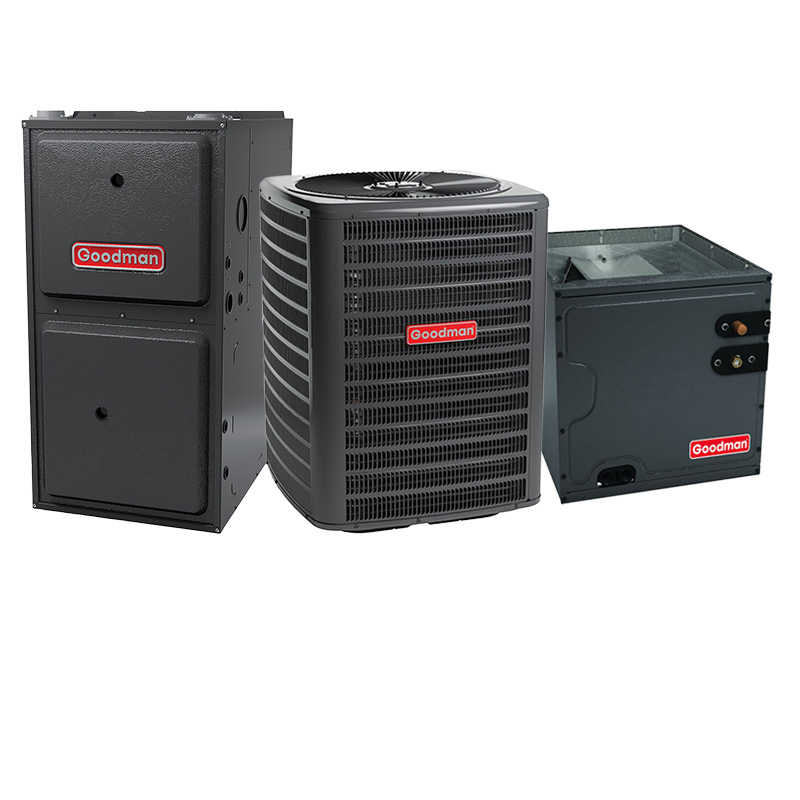
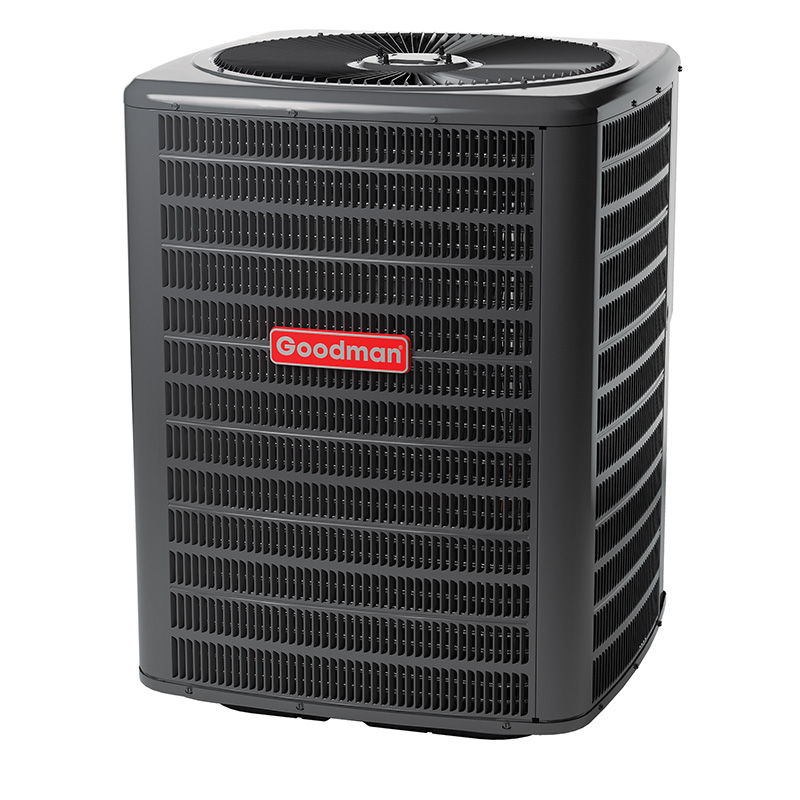
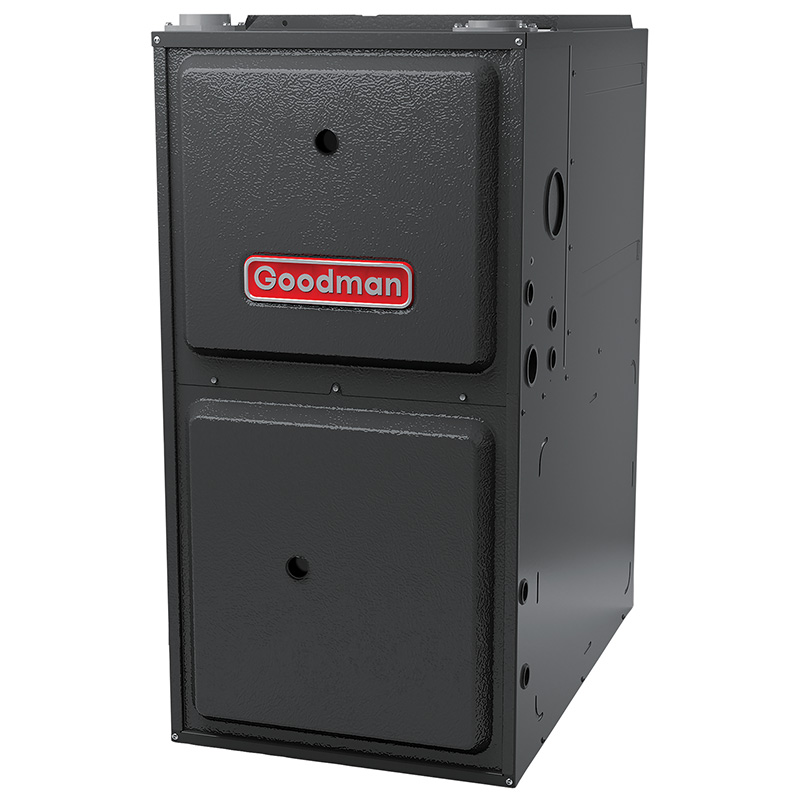
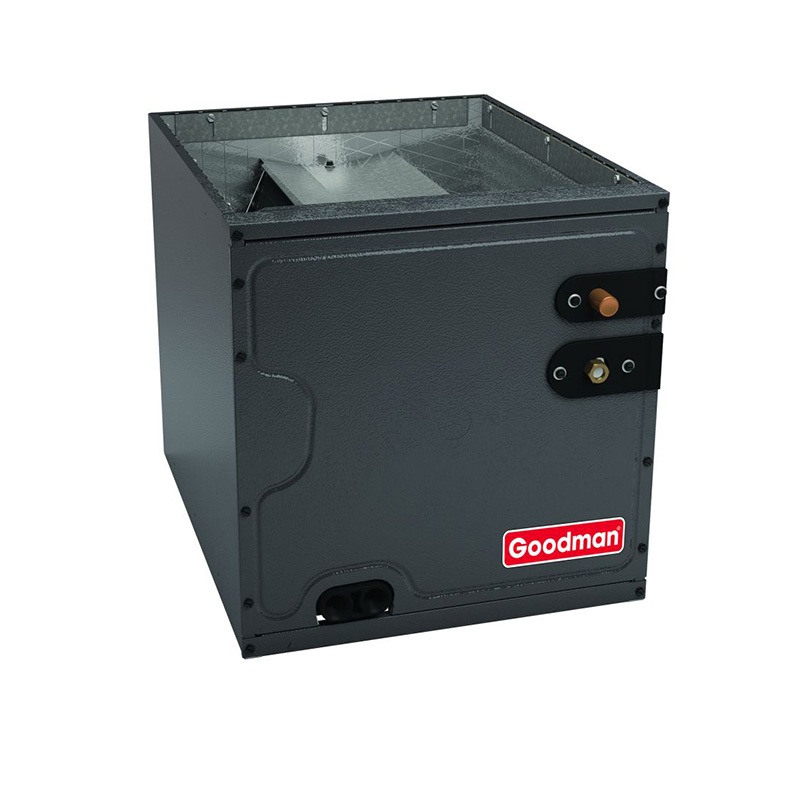
Goodman Air Conditioning And Heating – 4 Ton 15.2 SEER2 AC With 80000 BTU 96% AFUE Two Stage Multi-Speed ECM Gas Furnace System – Upflow | R32
View on AC Direct see your lowest price →Check current price on AC Direct →
Key features
- 4-ton cooling capacity, rated 15.2 SEER2 for mid-tier seasonal efficiency
- Two-stage gas furnace at 80,000 BTU and 96% AFUE for even heat and low fuel waste
- Multi-speed ECM blower motor reduces electricity use and improves humidity control
- R-32 refrigerant: lower global-warming potential than R-410A, forward-compatible charge
- Upflow configuration for basement or utility-closet installations with overhead duct systems
- Priced approximately 15 to 25 percent below comparable Trane, Lennox, and Carrier systems
About this system
This Goodman package pairs a 4-ton, 15.2 SEER2 air conditioner with an 80,000 BTU, 96% AFUE two-stage gas furnace in an upflow configuration, making it a strong fit for homes between roughly 2,000 and 2,600 square feet that have a basement or utility closet where air is delivered upward through the duct system. The R-32 refrigerant charge is a forward-looking choice: R-32 has a lower global-warming potential than the R-410A it replaces, and the industry is moving toward it broadly, so parts and service availability should remain solid for the life of this system.
The two-stage furnace and multi-speed ECM blower motor are the real workhorses here. Two-stage heating means the furnace runs on a lower fire most of the time, cycling up to full capacity only on the coldest days. That longer, gentler run time distributes heat more evenly, reduces temperature swings, and keeps gas bills lower than a single-stage unit at the same AFUE rating. The ECM motor adjusts airflow continuously rather than running at one fixed speed, which lowers electricity consumption during blower operation and supports better humidity management in both heating and cooling seasons. At 96% AFUE, only 4 cents of every dollar spent on gas is lost as exhaust, which is a genuine efficiency tier requiring PVC condensate and venting rather than a standard flue.
Buyers who will get the most from this system are cost-conscious homeowners replacing aging equipment who want meaningfully better efficiency without paying the premium-brand markup, and landlords or builders seeking a proven, spec-friendly product that a wide range of HVAC contractors know how to install. It is not the choice for buyers prioritizing maximum long-term reliability or the quietest possible operation at variable loads, where variable-capacity systems from premium brands have a clear edge.
This Goodman system delivers a solid mid-efficiency combination at a price point that makes two-stage heating and an ECM blower accessible to budget-focused buyers. Performance in the long run depends heavily on installation quality and a willingness to budget for potential capacitor or coil service after year seven. It is a sensible buy for the right buyer, but not a set-it-and-forget-it premium product.
Overall score is the average of the five ratings above.
What we like
- Two-stage furnace operation reduces temperature swings and lowers gas consumption versus single-stage equipment at the same AFUE
- 96% AFUE is a genuine high-efficiency rating that meaningfully cuts heating costs compared to 80% units
- ECM blower motor draws less electricity and supports better dehumidification during cooling season
- R-32 refrigerant positions the system well as the industry phases out R-410A
- Entry price is typically 15 to 25 percent below comparable Carrier, Trane, and Lennox systems, freeing budget for a quality install
Trade-offs
- Dual-run capacitors are the most frequently reported failure point, usually appearing after several years of use and costing 300 to 600 dollars to address
- Evaporator coil leaks appear in a meaningful share of owner reviews and can be a costly repair outside the parts warranty window
- Compressor longevity averages 10 to 14 years, shorter than the 15 to 20 years typical of premium-brand compressors
- A minority of owners report refrigerant leaks in the first year, most often traced to installation or initial charge issues rather than the equipment itself
What homeowners and pros say about Goodman
Homeowners who land on Goodman typically do so after comparing quotes and finding a gap of several hundred to over a thousand dollars versus Carrier, Trane, or Lennox systems at similar efficiency ratings. Google dealer reviews across Goodman-focused contractors average around 3.8 out of 5, where the word that comes up most often is affordability, and where satisfied customers credit their installers as much as the equipment. The ConsumerAffairs picture is harder to read favorably: Goodman sits around 2.5 out of 5 on that platform, a channel that draws frustrated owners disproportionately, and the recurring complaint is repair costs that start climbing somewhere around year seven. The specific failure modes that show up repeatedly are dual-run capacitor failures, which are typically a quick repair in the 300 to 600 dollar range, and evaporator coil leaks, which cost more and generate stronger frustration in reviews. A smaller but notable share of owners describe refrigerant leaks in the first year, and the professional consensus is that these almost always trace back to charge or installation errors rather than defective hardware.
HVAC technicians have a complicated relationship with Goodman. Many install it regularly and acknowledge that a well-installed Goodman system in a correctly sized application will run reliably for a decade or more. The concern they raise most often is that Goodman’s value positioning sometimes attracts the lowest-bid installers, creating a feedback loop where the brand gets blamed for problems that originated on the truck. The compressor lifespan question is a real one: Goodman compressors averaging 10 to 14 years versus the 15 to 20 years more commonly associated with premium brands is not a rumor, it is a consistent pattern in long-term owner data. For this particular system, the two-stage furnace and ECM blower represent genuinely better technology than a base single-stage unit, and the R-32 charge is a mark in its favor as the refrigerant transition continues. The system rewards buyers who invest in a quality install and budget modestly for the maintenance reality that all mechanical equipment eventually needs service.
Sources: ConsumerAffairs Goodman owner reviews, AHRI Directory of Certified Product Performance, U.S. DOE appliance and equipment efficiency standards, Goodman product specification sheets.
What it costs to run
At 15.2 SEER2, cooling this 4-ton system for a typical 1200-hour cooling season at the U.S. average electricity rate of $0.17/kWh works out to roughly $644 per year in cooling, about $87 less per year than a minimum-efficiency 13.4 SEER2 unit of the same size. Your real cost depends on your climate and local rate.
Method: (48,000 BTU/hr ÷ 15.2 SEER2) × 1200 hours ÷ 1000 × $0.17/kWh. Rate source: U.S. EIA average; cooling hours: moderate-climate estimate.
How it compares
| Brand | Comparable model | SEER2 | Stage | Price position |
|---|---|---|---|---|
| Goodman | 4-Ton 15.2 SEER2 AC + 80k BTU 96% AFUE Two-Stage ECM Furnace (this system) | 15.2 | Two-stage | Value pick |
| Carrier | Comfort 24ACC6 / 58CV Series | 15.2–16 | Single-stage to two-stage depending on model | Typically 15 to 25 percent more than this Goodman system |
| Trane | XR15 / S9V2 Series | 15–15.5 | Single-stage AC, two-stage furnace | Typically 15 to 25 percent more than this Goodman system |
| Lennox | Merit ML14XC1 / ML296V Series | 15–15.5 | Single-stage AC, two-stage furnace | Typically 15 to 25 percent more than this Goodman system |
Competitor rows are comparable single-stage units at similar efficiency; price is relative position, not a quote.
Questions about this system
Does this system qualify for federal tax credits given its efficiency ratings?
The 96% AFUE furnace meets the efficiency threshold for the federal 25C energy efficiency tax credit, which can cover up to 30 percent of equipment and installation costs up to a $600 cap for furnaces as of current IRS guidelines. The 15.2 SEER2 AC portion should also be verified against the current CEE tier requirements, as the qualifying threshold for central AC credits has been updated, and your tax professional can confirm eligibility based on your specific filing situation.
My home has existing R-410A line sets. Can I reuse them with this R-32 system?
In many cases existing copper line sets can be reused with R-32 if they are clean, undamaged, and the correct diameter, but this is a call your installing technician needs to make on-site after inspecting the lines. R-32 operates at different pressures than R-410A, and any residual oil contamination from the old refrigerant must be flushed before reuse. Never reuse lines without a qualified assessment, as a contaminated or undersized line set is one of the leading causes of early refrigerant leak complaints.
How do I register the warranty, and what does Goodman actually cover?
Goodman requires online registration within a specific window after installation to activate the full parts warranty, typically 10 years on the compressor, heat exchanger, and other functional parts for registered residential equipment. Failing to register usually drops coverage to a shorter base warranty, so registration is a step worth confirming with your contractor the day of install. Labor is not covered by Goodman's warranty, which means out-of-pocket service costs can add up if a covered part fails outside a labor warranty your contractor may separately offer.
The specs show upflow only. What does that mean for my installation?
Upflow means the furnace pulls return air in at the bottom and discharges conditioned air upward into a duct system that runs overhead, which is the standard arrangement for basements and main-floor utility closets with supply ducts above. If your home has a crawlspace or attic air handler situation requiring downflow or horizontal airflow, this specific unit is not the right configuration and you would need a different model. Confirm your existing duct orientation with your contractor before ordering.
How much of the long-term reliability risk is really about installation versus the equipment itself?
HVAC technicians and the broader owner feedback for Goodman consistently point to installation quality as the single largest factor in how long the system performs. Issues like improper refrigerant charge, poorly sealed ductwork, and undersized or oversized equipment selection account for a substantial portion of early-year problems, including the first-year refrigerant leaks documented in owner reviews. Spending on a licensed, experienced installer and getting a Manual J load calculation done before sizing is arguably more important with a value-brand product than with a premium brand that may have tighter factory tolerances and more robust service networks.
Specifications
| Cooling capacity | 4 Ton |
| Efficiency | 15.2 SEER2 |
| Furnace output | 80000 BTU |
| Furnace efficiency | 96% AFUE |
| Configuration | Upflow |
| Refrigerant | R-32 |