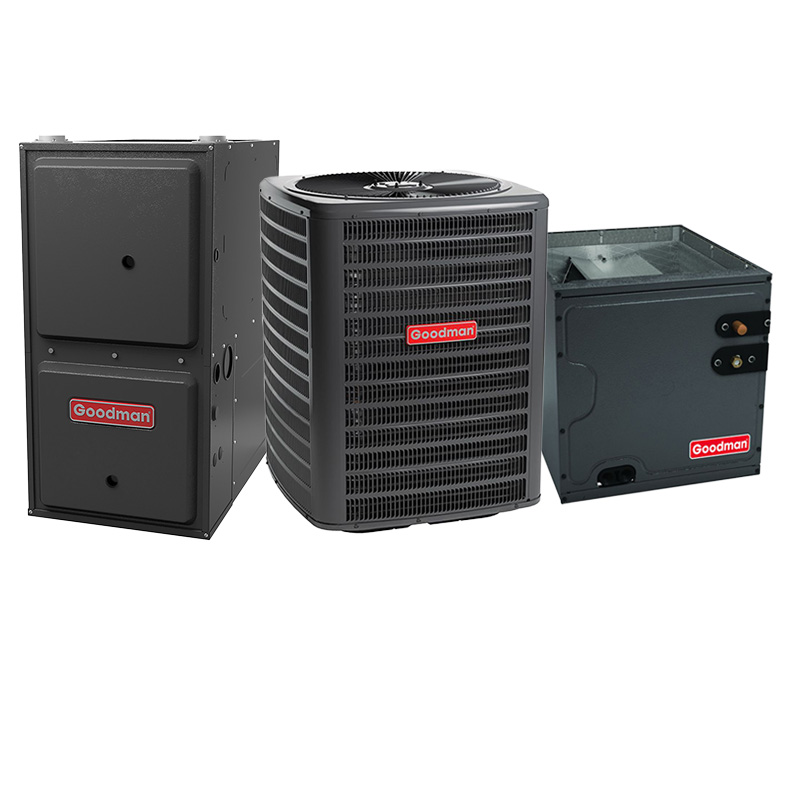
Goodman Air Conditioning And Heating – 5 Ton 15.2 SEER2 AC With 100000 BTU 96% AFUE Two Stage Multi-Speed ECM Gas Furnace System – Downflow | R32
View on AC Direct see your lowest price →Check current price on AC Direct →
Key features
- 5-ton cooling capacity paired with 100,000 BTU two-stage gas heat
- 96% AFUE furnace recovers nearly all fuel energy as usable heat
- 15.2 SEER2 mid-tier cooling efficiency, exceeding federal minimums
- Multi-speed ECM blower motor reduces electricity draw and improves humidity control
- Downflow configuration designed for ductwork below the unit
- R-32 refrigerant with lower global warming potential than R-410A
About this system
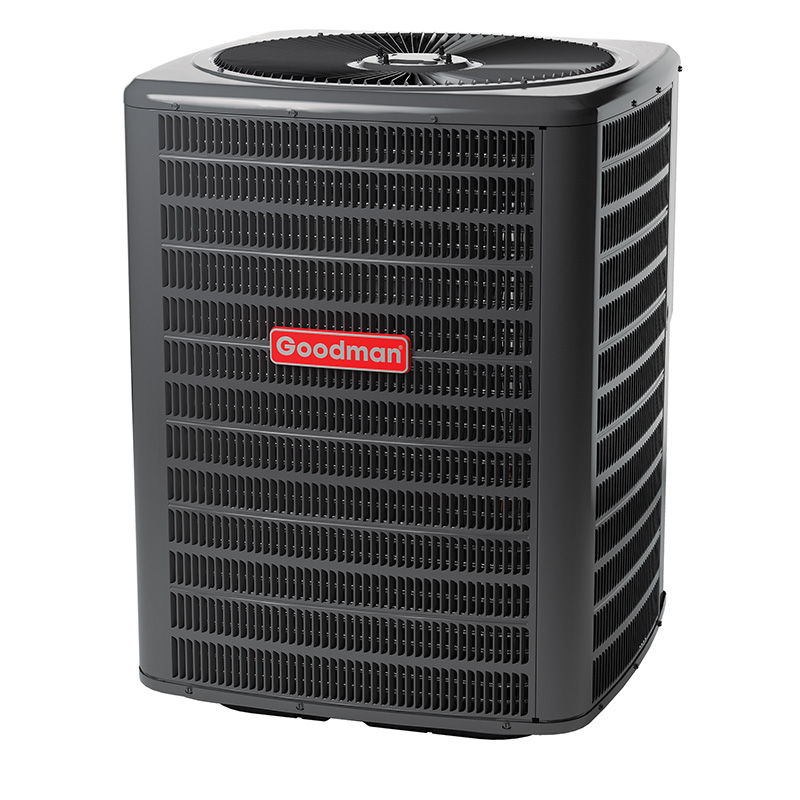
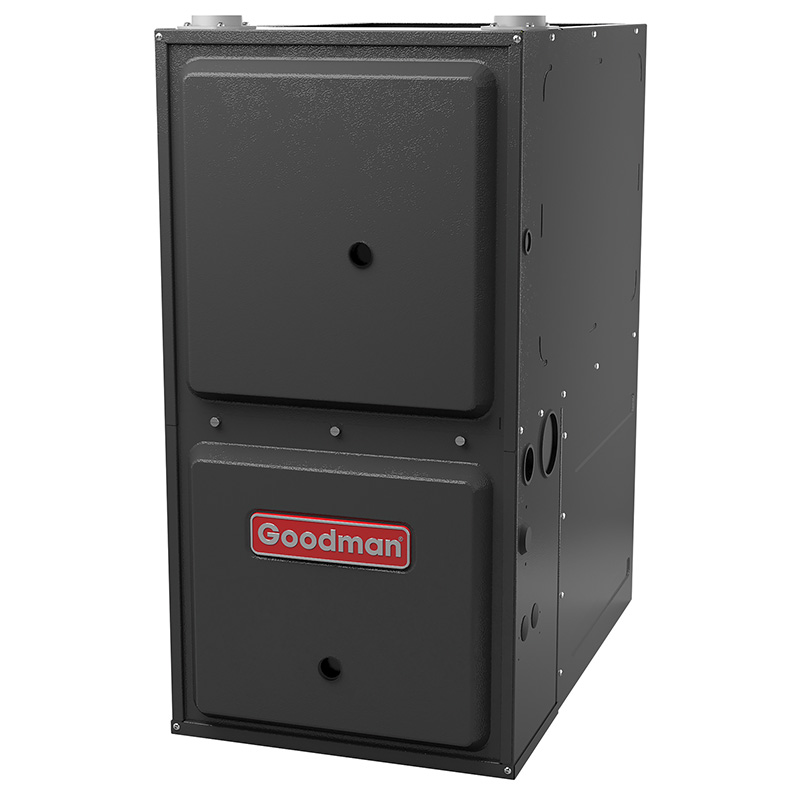
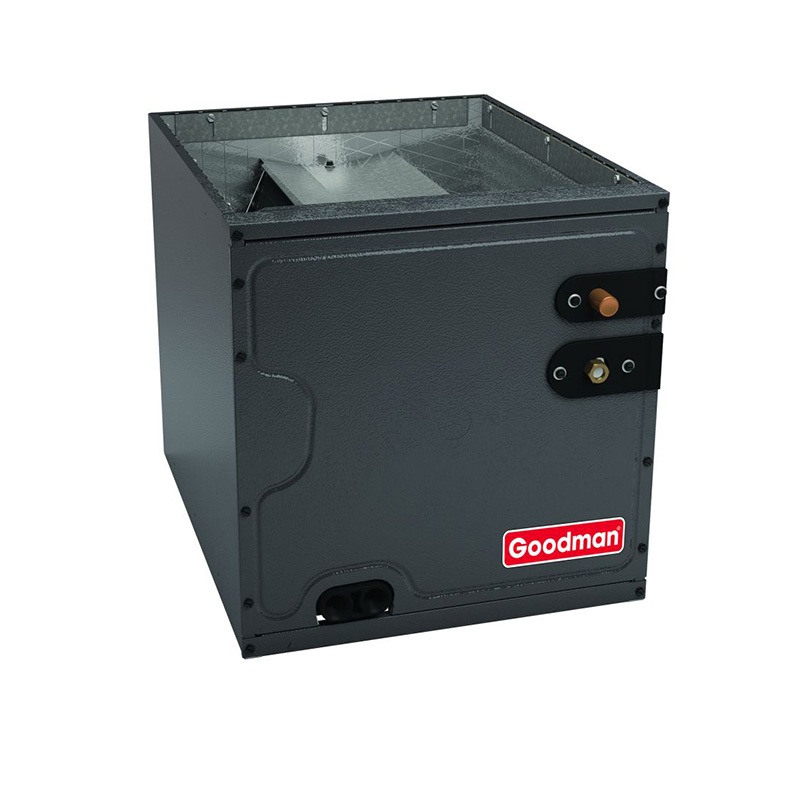
This Goodman package pairs a 5-ton, 15.2 SEER2 air conditioner with a 100,000 BTU, 96% AFUE two-stage gas furnace in a downflow configuration, meaning conditioned air is delivered through the bottom of the unit — the right layout for homes where ductwork runs beneath the air handler, such as crawl-space or basement installations. The R-32 refrigerant charge is a meaningful forward-looking choice: R-32 has a lower global warming potential than the R-410A it replaces and is increasingly the industry standard as older refrigerants phase down. At 5 tons, this system is sized for larger homes, typically in the 2,200 to 2,800 square foot range depending on climate zone, insulation quality, and window load.
The two-stage furnace and multi-speed ECM blower motor are where this system earns its efficiency numbers. Two-stage heating means the furnace runs at a reduced capacity most of the time, cycling less aggressively and distributing heat more evenly than a single-stage unit. The ECM motor uses significantly less electricity than a standard PSC blower and contributes to better humidity management during cooling season. At 96% AFUE, almost all of the fuel you pay for becomes usable heat. The 15.2 SEER2 efficiency rating clears the federal minimum for most regions by a meaningful margin, though it sits in the mid-tier rather than the high-efficiency bracket occupied by 18 SEER2 and above equipment. For buyers who want a real efficiency upgrade over builder-grade equipment without paying premium-brand prices, this system occupies a practical middle ground.
This Goodman system delivers genuine mid-tier efficiency and a practical feature set at a price point typically 15 to 25 percent below comparable Trane, Lennox, or Carrier equipment. The two-stage furnace and ECM blower are real performance upgrades over entry-level alternatives, and the R-32 refrigerant future-proofs the refrigerant side. The honest trade-off is that Goodman's documented reliability record and shorter average compressor lifespan mean total ownership cost depends heavily on installer quality and how prepared you are for potential repair costs in years seven and beyond.
Overall score is the average of the five ratings above.
What we like
- Priced 15 to 25 percent below comparable premium-brand systems
- Two-stage furnace reduces temperature swings and runs more quietly at partial load
- 96% AFUE is near the top of the efficiency scale for gas furnaces
- ECM blower motor lowers electricity consumption compared to standard PSC motors
- R-32 refrigerant aligns with current and near-future regulatory direction
Trade-offs
- Goodman compressors average 10 to 14 years versus 15 to 20 for premium brands, a gap that matters on a 5-ton unit with higher replacement cost
- Dual-run capacitor failures are the most commonly reported repair, typically surfacing within the first decade
- Evaporator coil leaks appear in a meaningful share of owner feedback, a potentially expensive fix
- A minority of owners report refrigerant leaks within the first year, usually traceable to install or initial charge quality rather than the equipment itself
What homeowners and pros say about Goodman
Homeowners who have installed Goodman equipment tend to split into two camps. Those whose systems were commissioned by experienced installers frequently report years of trouble-free operation and praise the brand’s lower upfront cost. Those who ran into problems more often point to repair bills that started climbing around year seven or eight, which aligns with Goodman’s roughly 2.5 out of 5 rating on ConsumerAffairs, a platform that attracts more complaints than compliments by its nature. Google dealer reviews land closer to 3.8 out of 5 across hundreds of location-level reviews, where the word that comes up most often on the positive side is affordability. For a 5-ton two-stage system, that price difference against Carrier, Trane, or Lennox is real and substantial.
HVAC technicians are generally candid about Goodman’s specific failure patterns. Dual-run capacitors are the most frequently cited repair on these units, typically a straightforward and relatively low-cost fix in the 300 to 600 dollar range when caught early. Evaporator coil leaks show up often enough in owner feedback that they are worth factoring into your long-term budget. Compressor lifespan on Goodman equipment tends to average in the 10 to 14 year range, meaningfully shorter than the 15 to 20 years technicians associate with Trane or Carrier compressors, and on a 5-ton system a compressor replacement is not a small bill. A minority of owners also report refrigerant leaks within the first year, which technicians typically attribute to installation or initial charge quality rather than a defect in the equipment itself. The consistent professional advice is that Goodman can deliver solid value, but the installer you choose matters more with this brand than with premium alternatives.
Sources: ConsumerAffairs Goodman owner reviews, AHRI Directory of Certified Product Performance, U.S. DOE appliance and equipment efficiency standards, Goodman product specification sheets.
What it costs to run
At 15.2 SEER2, cooling this 5-ton system for a typical 1200-hour cooling season at the U.S. average electricity rate of $0.17/kWh works out to roughly $805 per year in cooling, about $108 less per year than a minimum-efficiency 13.4 SEER2 unit of the same size. Your real cost depends on your climate and local rate.
Method: (60,000 BTU/hr ÷ 15.2 SEER2) × 1200 hours ÷ 1000 × $0.17/kWh. Rate source: U.S. EIA average; cooling hours: moderate-climate estimate.
How it compares
| Brand | Comparable model | SEER2 | Stage | Price position |
|---|---|---|---|---|
| Goodman | GMVC96 / GSXC6 Series (this system) | 15.2 | Two-stage | Value pick |
| Carrier | Comfort 16 / 58CV Series | 15.2 to 16 | Two-stage | Typically 15 to 25 percent more than this Goodman system |
| Trane | XR15 / S9V2 Series | 15 to 15.5 | Two-stage | Typically 15 to 25 percent more than this Goodman system |
| Lennox | Merit 16 / ML196 Series | 15 to 16 | Two-stage | Typically 15 to 25 percent more than this Goodman system |
Competitor rows are comparable single-stage units at similar efficiency; price is relative position, not a quote.
Questions about this system
Is a downflow configuration right for my home?
Downflow systems deliver air through the bottom of the unit and are designed for installations where the supply ductwork sits below the equipment, such as crawl spaces or basement plenum setups. If your existing ductwork runs above or to the side of the air handler, you would need a different configuration. Always confirm the airflow direction matches your home's duct layout before purchasing.
What does the two-stage furnace actually do differently day to day?
A two-stage furnace runs at a lower capacity, often around 65 to 70 percent, during mild weather and only ramps to full output when the temperature drop demands it. In practice, this means longer, gentler heating cycles, less temperature overshoot, and quieter operation most of the time. It also tends to distribute heat more evenly through the house compared to a single-stage unit that blasts on at full power and shuts off quickly.
Why does Goodman have mixed reviews online and should that concern me?
Goodman carries roughly a 2.5 out of 5 rating on ConsumerAffairs, a platform that skews toward dissatisfied owners, where the recurring theme is rising repair costs after about year seven. Google dealer reviews sit around 3.8 out of 5, where affordability is the most common positive. The brand's documented weak points are dual-run capacitor failures, evaporator coil leaks, and compressor lifespans that average shorter than premium brands. These are real trade-offs, though many owners run Goodman systems for a decade or more without major issues, particularly when the installation is done well.
Is R-32 refrigerant safe and easy to service?
R-32 is classified as mildly flammable, which means technicians need to follow specific handling procedures, but it is widely used in residential equipment internationally and is becoming standard in the United States. Most licensed HVAC technicians can work with it, though you should confirm your service provider is familiar with R-32 handling before scheduling work. On the environmental side, R-32 has a significantly lower global warming potential than R-410A, which is one reason manufacturers are transitioning to it.
What size home is this 5-ton system appropriate for?
A rough rule of thumb puts 5 tons in the range of 2,200 to 2,800 square feet, but the right size depends on your climate zone, ceiling height, insulation levels, window area, and sun exposure. Oversizing a system causes short cycling, poor humidity control, and accelerated wear, so the correct approach is to have a licensed contractor perform a Manual J load calculation for your specific home before purchasing.
Specifications
| Cooling capacity | 5 Ton |
| Efficiency | 15.2 SEER2 |
| Furnace output | 100000 BTU |
| Furnace efficiency | 96% AFUE |
| Configuration | Downflow |
| Refrigerant | R-32 |