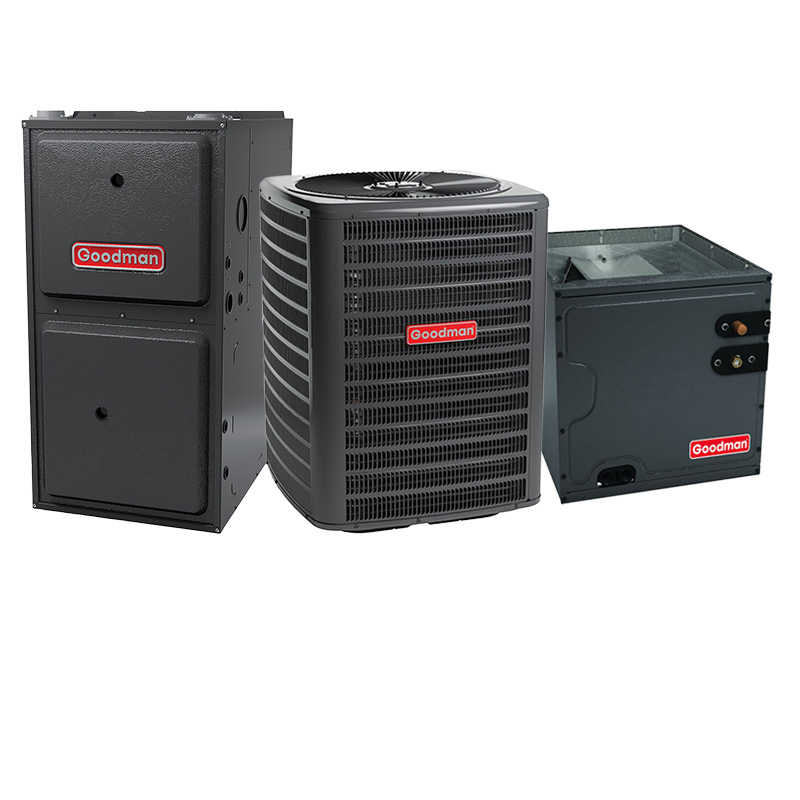
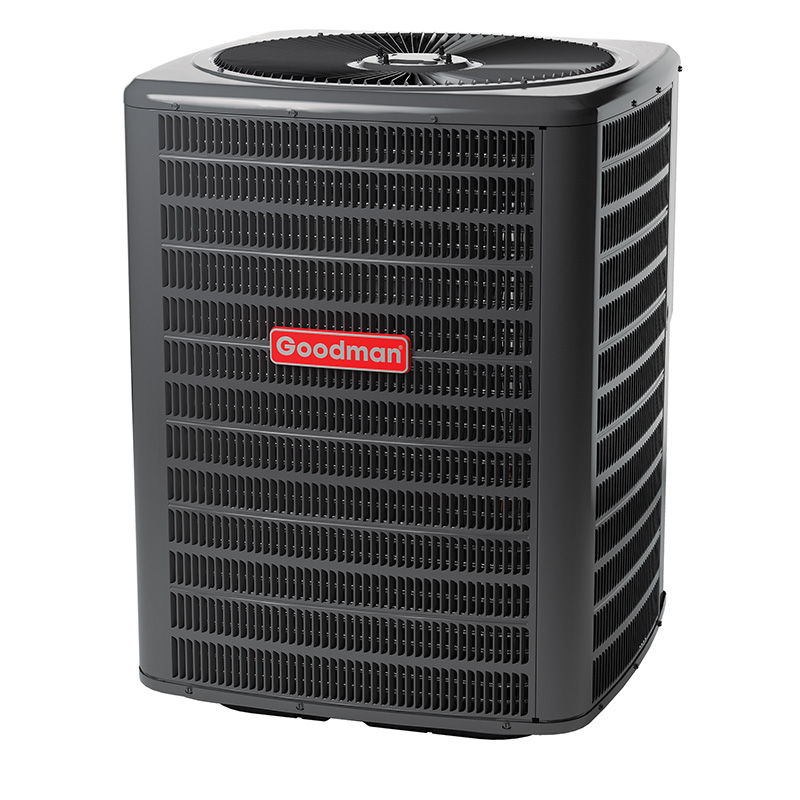
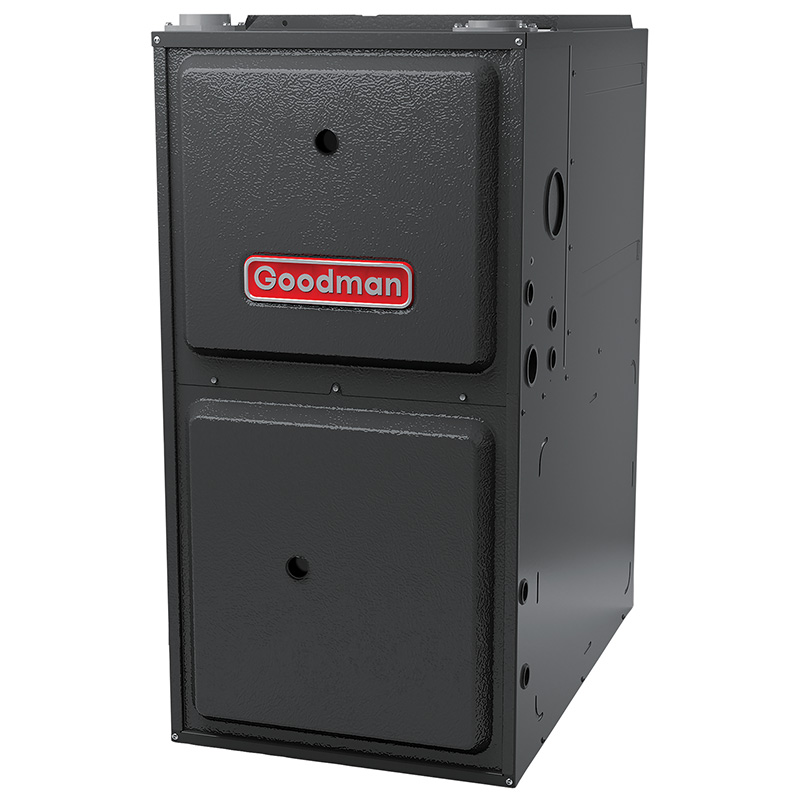
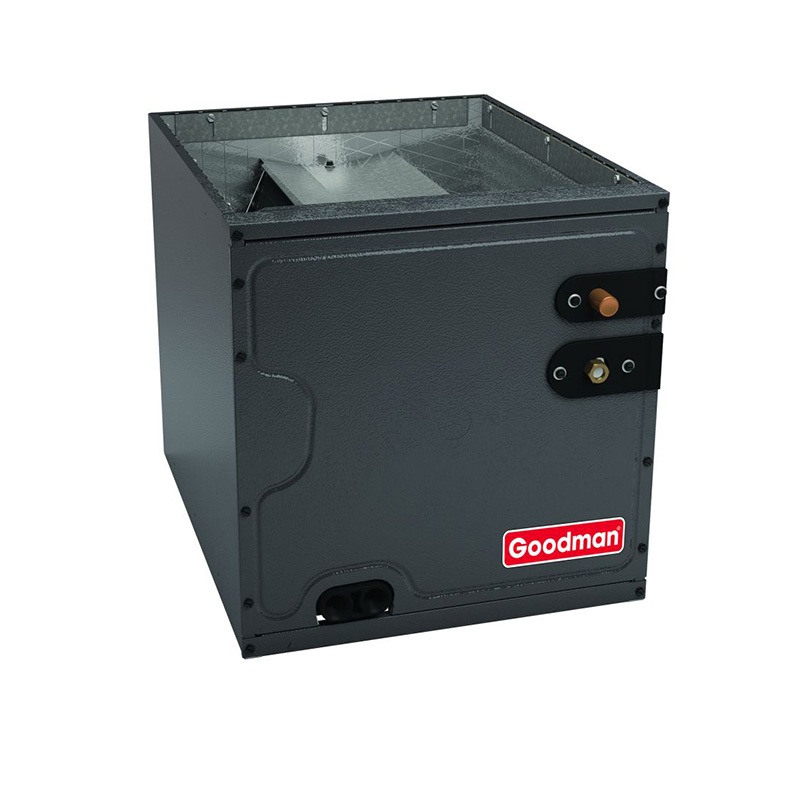
Goodman Air Conditioning And Heating – 5 Ton 15.5 SEER2 AC With 100000 BTU 96% AFUE Two Stage Multi-Speed ECM Gas Furnace System – Upflow | R32
View on AC Direct see your lowest price →Check current price on AC Direct →
Key features
- 15.5 SEER2 cooling efficiency, meeting or exceeding 2023 federal regional minimums
- 96% AFUE two-stage gas furnace reduces fuel waste to roughly 4 cents per dollar of gas burned
- Multi-speed ECM blower motor lowers fan electricity draw and improves airflow consistency
- Two-stage heating operates at reduced capacity on milder days, limiting short cycling
- R-32 refrigerant charge with lower global warming potential than outgoing R-410A
- Upflow configuration designed for basement or closet installs where air discharges upward
About this system
This Goodman package pairs a 5-ton, 15.5 SEER2 air conditioner with a 100,000 BTU, 96% AFUE two-stage gas furnace in an upflow configuration, making it a serious whole-home system sized for larger houses typically in the 2,400 to 3,200 square foot range, depending on climate and insulation. The 15.5 SEER2 rating lands just above the federal minimum thresholds for most regions, delivering measurable efficiency gains over older 14 SEER equipment without reaching the premium tier of 18+ SEER2 variable-speed systems. The 96% AFUE furnace means 96 cents of every dollar spent on gas becomes usable heat, which is a genuinely strong number and puts annual fuel waste in the low single digits.
The two-stage furnace and multi-speed ECM blower motor are the spec highlights worth understanding. Two-stage heating runs at a lower fire rate on most days, cycling less aggressively and distributing heat more evenly than single-stage units. The ECM blower adjusts airflow speed in response to system demand, which lowers electricity consumption during fan operation and tends to reduce the temperature swings that make large homes feel inconsistent. R-32 refrigerant is the newer, lower-global-warming-potential alternative to R-410A, and while servicing will require technicians certified to handle it, R-32 equipment is increasingly common and parts availability is improving quickly. This system suits homeowners who want a capable, fuel-efficient heating and cooling system at a price point well below premium brands, and who are prepared to invest in a quality installation.
This Goodman system offers a genuinely efficient combination of cooling and heating at a price that runs 15 to 25 percent below comparable Trane, Carrier, and Lennox packages, making it a reasonable choice for budget-conscious buyers who prioritize upfront savings. The two-stage furnace and ECM blower add real comfort value, but Goodman's documented history of capacitor failures, evaporator coil leaks, and compressors averaging 10 to 14 years means long-term ownership costs deserve honest consideration. How the system performs past year seven will depend heavily on installer quality and how proactive you are with maintenance.
Overall score is the average of the five ratings above.
What we like
- Priced 15 to 25 percent below Trane, Carrier, and Lennox equivalents, leaving room in the budget for a quality install
- 96% AFUE furnace is a top-tier fuel efficiency rating that translates to real annual gas savings
- Two-stage operation reduces temperature swings and short cycling in larger homes
- ECM blower motor cuts fan electricity consumption compared to standard PSC motors
- R-32 refrigerant is forward-compatible with the industry's direction away from R-410A
Trade-offs
- Dual-run capacitors are the most commonly reported failure point and can appear well before the 10-year mark
- Evaporator coil leaks show up in a meaningful share of owner reviews, and coil replacement is not a low-cost repair
- Compressor lifespan averages 10 to 14 years versus 15 to 20 years typical of premium brands, affecting long-term value calculations
- A minority of owners report refrigerant leaks within the first year, usually tied to install or charge issues rather than defective equipment, which raises the stakes for installer selection
What homeowners and pros say about Goodman
Homeowners and HVAC professionals who discuss Goodman equipment online tend to land in two camps, and the ratings reflect that split. On ConsumerAffairs, where unhappy owners are more likely to post, Goodman scores around 2.5 out of 5, with the recurring pattern being repair costs that climb noticeably after roughly year seven of ownership. On Google dealer reviews, where the full customer base is more represented, scores average around 3.8 out of 5 across hundreds of reviews, and the most common praise centers on affordability and the value delivered relative to price. Neither score tells the complete story on its own.
Among HVAC technicians, the conversation about Goodman usually starts and ends with installation. Pros consistently say that a well-installed Goodman system performs respectably, while a rushed or improper install accelerates the equipment’s known weak points. The most cited failure modes are dual-run capacitors, which are low-cost fixes but can appear before the ten-year mark; evaporator coil leaks, which are more disruptive and expensive; and compressors that average 10 to 14 years of service life compared to 15 to 20 years in premium brands. First-year refrigerant leaks, while reported by a minority of owners, are generally attributed to charge or install errors. For this specific two-stage, ECM furnace system, owners who invest in a careful install and annual maintenance tend to report better outcomes than those who treat the low upfront cost as an invitation to cut corners on service.
Sources: ConsumerAffairs Goodman owner reviews, AHRI Directory of Certified Product Performance, U.S. DOE appliance and equipment efficiency standards, Goodman product specification sheets.
What it costs to run
At 15.5 SEER2, cooling this 5-ton system for a typical 1200-hour cooling season at the U.S. average electricity rate of $0.17/kWh works out to roughly $790 per year in cooling, about $123 less per year than a minimum-efficiency 13.4 SEER2 unit of the same size. Your real cost depends on your climate and local rate.
Method: (60,000 BTU/hr ÷ 15.5 SEER2) × 1200 hours ÷ 1000 × $0.17/kWh. Rate source: U.S. EIA average; cooling hours: moderate-climate estimate.
How it compares
| Brand | Comparable model | SEER2 | Stage | Price position |
|---|---|---|---|---|
| Goodman | 5 Ton 15.5 SEER2 AC + 96% AFUE Two-Stage ECM Gas Furnace (this system) | 15.5 | Two-stage | Value pick |
| Carrier | Performance 16 series (24ACC6) with 96% AFUE Performance gas furnace | 16 | Single-stage | Typically 15 to 25 percent more than this Goodman system |
| Trane | XR15 (4TTR5) with S9X2 96% AFUE gas furnace | 15.5 | Single-stage | Typically 15 to 25 percent more than this Goodman system |
| Lennox | Merit 16ACX with ML96 96% AFUE gas furnace | 16 | Single-stage | Typically 15 to 25 percent more than this Goodman system |
Competitor rows are comparable single-stage units at similar efficiency; price is relative position, not a quote.
Questions about this system
Is a 5-ton unit actually the right size for my house, or will it short cycle?
Five tons is appropriate for roughly 2,400 to 3,200 square feet in most climates, but proper sizing requires a Manual J load calculation based on your specific insulation, window area, orientation, and local design temperatures. Oversizing a two-stage system is less damaging than oversizing a single-stage unit, but it still shortens equipment life and hurts dehumidification, so insist that your installer perform the calculation before committing to this size.
What does R-32 refrigerant mean for servicing and repairs?
R-32 is mildly flammable (classified A2L), which means technicians need specific training and equipment to handle it safely. It is not exotic, and adoption is accelerating across the industry, but you should confirm that any service company you call is equipped to work with A2L refrigerants before scheduling a repair. Refrigerant itself is generally less expensive than R-410A, which is a minor long-term positive.
How serious is the capacitor failure issue, and what does fixing it cost?
Dual-run capacitor failure is the most frequently reported Goodman repair and typically costs between $300 and $600 for a service call and parts. The repair is straightforward and fast for any competent technician, so it is not a system-ending problem, but it can appear before the 10-year mark and is worth factoring into your maintenance budget. Keeping a scheduled annual tune-up helps catch a weakening capacitor before it causes a no-cool failure in peak summer heat.
What warranty comes with this system, and what do I need to do to keep it valid?
Goodman typically offers a 10-year parts warranty on registered equipment, but warranty terms require registration within a defined window after installation and, in most cases, installation by a licensed contractor. Read the registration requirements carefully because an unregistered unit may default to a shorter base warranty. The compressor is usually covered separately; confirm the specific coverage tier for this model at the time of purchase.
How much does installer quality actually matter with a Goodman system?
It matters more than with premium brands. Technicians consistently cite install quality as the single biggest variable in how long a Goodman system lasts, and the documented first-year refrigerant leak reports are generally attributed to installation or charge errors rather than factory defects. Spending on an experienced, licensed installer who performs a Manual J calculation, verifies refrigerant charge properly, and commissions the system thoroughly is likely the best investment you can make alongside the equipment purchase.
Specifications
| Cooling capacity | 5 Ton |
| Efficiency | 15.5 SEER2 |
| Furnace output | 100000 BTU |
| Furnace efficiency | 96% AFUE |
| Configuration | Upflow |
| Refrigerant | R-32 |