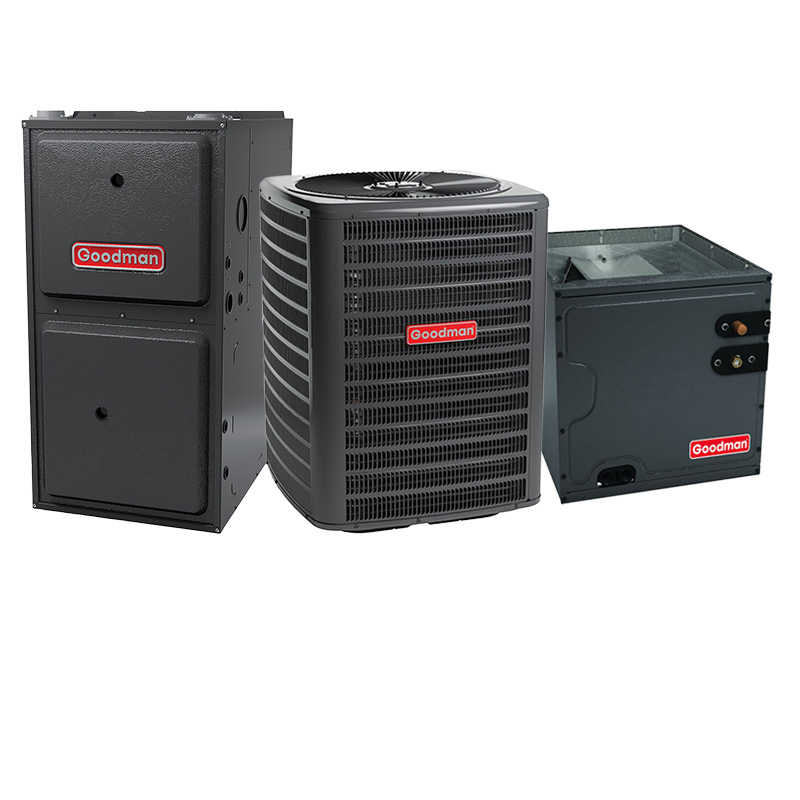
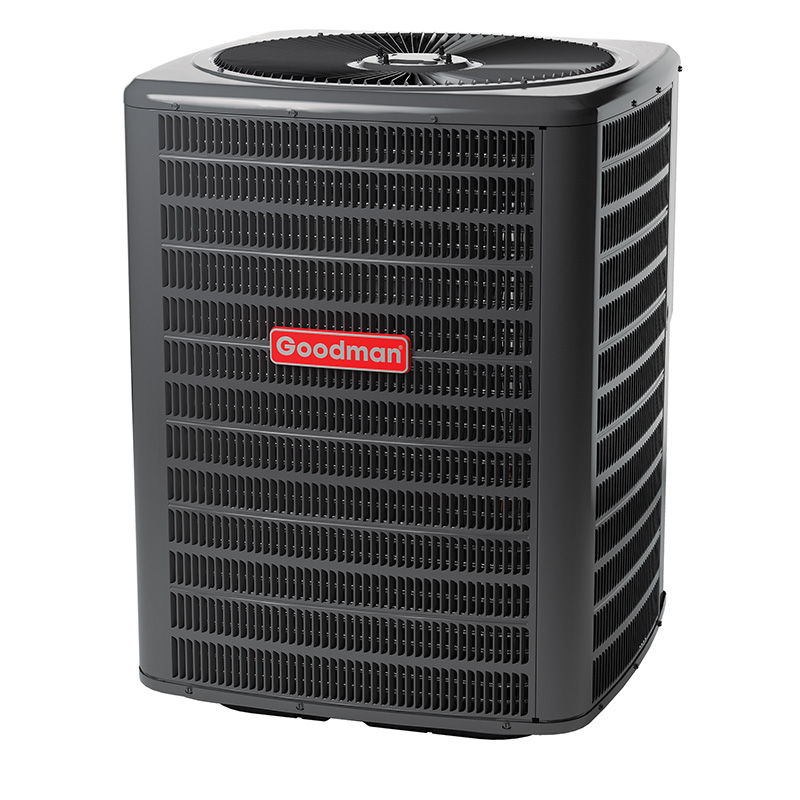
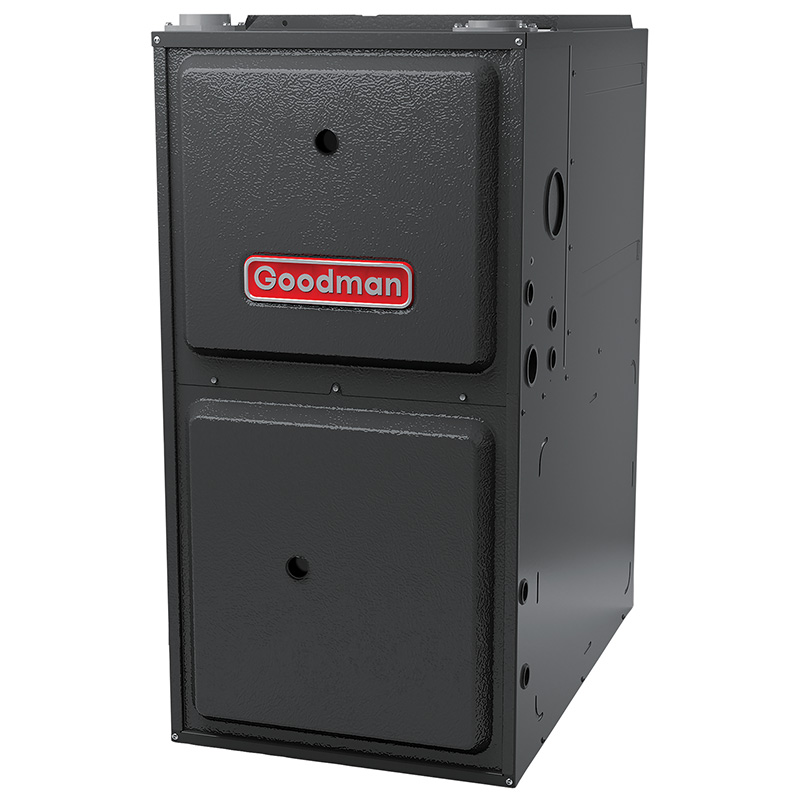
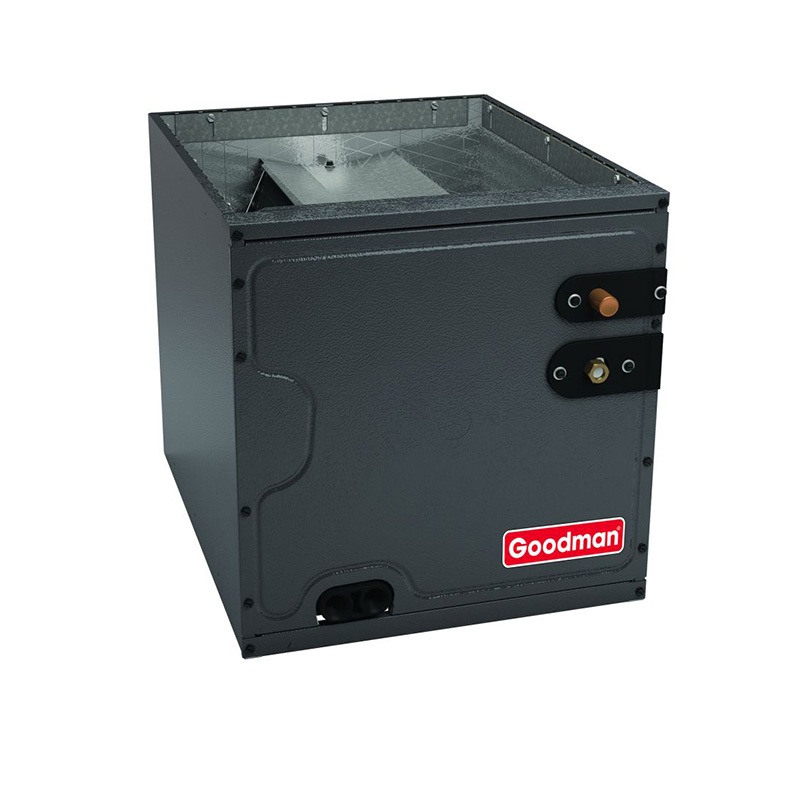
Goodman Air Conditioning And Heating – 5 Ton 15.5 SEER2 AC With 120000 BTU 96% AFUE Two Stage Multi-Speed ECM Gas Furnace System – Upflow | R32
View on AC Direct see your lowest price →Check current price on AC Direct →
Key features
- 5-ton cooling capacity, 15.5 SEER2 efficiency rating
- 120,000 BTU two-stage gas furnace at 96% AFUE
- Multi-speed ECM blower motor for lower operating costs and better humidity control
- R-32 refrigerant with a lower global-warming potential than R-410A
- Upflow configuration for basement or closet installations with supply air exiting the top
- Priced approximately 15 to 25 percent below comparable Trane, Lennox, and Carrier systems
About this system
This Goodman bundle pairs a 5-ton, 15.5 SEER2 central air conditioner with a 120,000 BTU, 96% AFUE two-stage gas furnace in an upflow configuration, making it a practical choice for larger homes in climates that demand serious heating and cooling capacity. The 96% AFUE rating means 96 cents of every dollar spent on gas goes toward heat, which is near the top of what residential gas furnaces can deliver. Two-stage operation lets the furnace run at a lower output on mild days, reducing temperature swings and cycling noise while trimming fuel bills compared with single-stage units.
The 15.5 SEER2 efficiency sits comfortably in the mid-tier range, clearing the federal minimums for most regions without reaching the higher SEER2 numbers on variable-speed premium equipment. The multi-speed ECM blower motor is a meaningful upgrade over standard PSC motors, improving airflow consistency, lowering blower electricity costs, and helping the system handle humidity more effectively during shoulder-season cooling. The unit is charged with R-32 refrigerant, a lower global-warming-potential alternative to the R-410A that dominated the market for years. R-32 systems require technicians who are current on handling protocols, so confirm that detail with your installer before booking.
At 5 tons, this system is sized for roughly 2,500 to 3,500 square feet depending on insulation, climate zone, and window loads, though a proper Manual J load calculation is the only reliable way to confirm fit. Oversizing a 5-ton system in a smaller home will cause short-cycling, poor humidity control, and accelerated wear, so resist the temptation to round up on tonnage without that calculation in hand.
This Goodman bundle delivers a genuinely efficient heating and cooling package at a price point that undercuts the major premium brands by a meaningful margin. The two-stage furnace and ECM blower are real operational advantages, not just spec-sheet checkboxes. The trade-off is a reliability track record that lags the premium tier, and long-term ownership costs depend heavily on how well the system is installed and maintained.
Overall score is the average of the five ratings above.
What we like
- 96% AFUE two-stage furnace ranks among the most efficient residential gas furnaces available
- ECM blower motor reduces electricity use and improves comfort compared with standard motors
- 15.5 SEER2 meets or exceeds regional efficiency mandates with room to spare
- R-32 refrigerant has lower environmental impact than the R-410A it replaces
- Significantly lower upfront cost than comparable systems from Carrier, Trane, or Lennox
Trade-offs
- Dual-run capacitors are the most frequently reported failure point, typically requiring a 300 to 600 dollar service call
- Evaporator coil leaks appear in a meaningful share of owner reviews, often after the base warranty period
- Compressor lifespan averages 10 to 14 years, shorter than the 15 to 20 years commonly cited for premium brands
- A minority of owners report refrigerant leaks within the first year, usually traced to install or charge issues rather than a factory defect
What homeowners and pros say about Goodman
Homeowners who choose Goodman equipment most often cite affordability as the deciding factor, and that sentiment shows up consistently in Google dealer reviews, which average around 3.8 out of 5 across a wide range of install locations. Satisfaction tends to be highest in the first several years, when the hardware is performing as designed and warranty coverage softens the blow of any early repairs. The picture shifts noticeably after roughly year seven, which is when ConsumerAffairs reviews, averaging about 2.5 out of 5 on a complaint-heavy channel, begin to reflect rising repair costs and frustrations with component failures. That gap between the two ratings is not a contradiction; it reflects where Goodman actually sits in the market.
Among HVAC technicians, the most commonly discussed failure point on Goodman equipment is the dual-run capacitor, a relatively inexpensive fix in the 300 to 600 dollar range that many pros consider routine maintenance rather than a sign of deeper trouble. More consequential are the evaporator coil leaks that show up in a meaningful share of owner accounts, and a compressor lifespan that tends to run 10 to 14 years rather than the 15 to 20 years associated with premium brands. A small number of owners also encounter refrigerant leaks in the first year, which technicians almost always attribute to the installation rather than the equipment itself. That last point underscores what experienced installers say repeatedly about Goodman: the brand’s long-term performance is unusually sensitive to the quality of the initial setup, which means choosing a careful, experienced contractor matters at least as much as the equipment decision itself. On this two-stage, high-AFUE system with an ECM blower, a clean installation and prompt capacitor replacement when the time comes can keep operating costs reasonable for well over a decade.
Sources: ConsumerAffairs Goodman owner reviews, AHRI Directory of Certified Product Performance, U.S. DOE appliance and equipment efficiency standards, Goodman product specification sheets.
What it costs to run
At 15.5 SEER2, cooling this 5-ton system for a typical 1200-hour cooling season at the U.S. average electricity rate of $0.17/kWh works out to roughly $790 per year in cooling, about $123 less per year than a minimum-efficiency 13.4 SEER2 unit of the same size. Your real cost depends on your climate and local rate.
Method: (60,000 BTU/hr ÷ 15.5 SEER2) × 1200 hours ÷ 1000 × $0.17/kWh. Rate source: U.S. EIA average; cooling hours: moderate-climate estimate.
How it compares
| Brand | Comparable model | SEER2 | Stage | Price position |
|---|---|---|---|---|
| Goodman | 5-Ton 15.5 SEER2 AC + 120,000 BTU 96% AFUE Two-Stage ECM Furnace (this system) | 15.5 | Two-stage | Value pick |
| Carrier | Performance Series (24ACC636 AC + 59TP6 Furnace) | 15-16 | Two-stage | Typically 15 to 25 percent more than this Goodman bundle |
| Trane | XR15 AC + S9V2 Furnace | 15-16 | Two-stage | Typically 15 to 25 percent more than this Goodman bundle |
| Lennox | Merit Series ML15 AC + ML196 Furnace | 15-16 | Two-stage | Typically 15 to 25 percent more than this Goodman bundle |
Competitor rows are comparable single-stage units at similar efficiency; price is relative position, not a quote.
Questions about this system
Is R-32 refrigerant harder to service than R-410A, and will every HVAC tech be able to work on this system?
R-32 is mildly flammable, which requires technicians to follow updated handling and recovery procedures. Most established HVAC companies have already trained their staff for R-32 work, but it is worth confirming before you schedule a service call. R-32 systems cannot be topped off with R-410A, so your tech must have the correct refrigerant on the truck.
What does two-stage operation actually mean for my heating bills and home comfort?
A two-stage furnace runs at a lower firing rate on moderate days and ramps to full capacity only when temperatures drop sharply. This reduces the short on-off cycling that can leave rooms feeling uneven, and it lowers gas consumption on the many days when full capacity is not needed. Most homeowners notice quieter operation and more consistent temperatures compared with single-stage alternatives.
How long should I expect the compressor to last, and what warranty coverage applies?
Goodman compressors in owner reports tend to average roughly 10 to 14 years, which is shorter than the 15 to 20 years more commonly seen with premium brands. Goodman typically provides a 10-year parts warranty when the system is registered within the required window after installation, so confirm registration deadlines with your installer and keep records. The warranty covers parts but not labor, which is a meaningful distinction once the system ages past year five or six.
My house is about 2,800 square feet. Is 5 tons definitely the right size?
Square footage alone is not a reliable sizing guide. A proper Manual J load calculation factors in ceiling height, insulation levels, window area and orientation, local climate, and duct layout. Oversizing a 5-ton system in the wrong house causes short-cycling, elevated humidity, and faster wear on components. Ask your installer to provide the load calculation in writing before agreeing to a system size.
What are the most common repairs owners run into, and roughly what do they cost?
Dual-run capacitor failures are the most frequently reported issue and are generally a straightforward repair in the 300 to 600 dollar range. Evaporator coil leaks come up in a meaningful share of reviews and tend to be more expensive, especially if the coil needs replacement outside the warranty period. A small number of owners report refrigerant leaks in the first year, which is usually an installation or initial-charge problem rather than a factory defect.
Specifications
| Cooling capacity | 5 Ton |
| Efficiency | 15.5 SEER2 |
| Furnace output | 120000 BTU |
| Furnace efficiency | 96% AFUE |
| Configuration | Upflow |
| Refrigerant | R-32 |