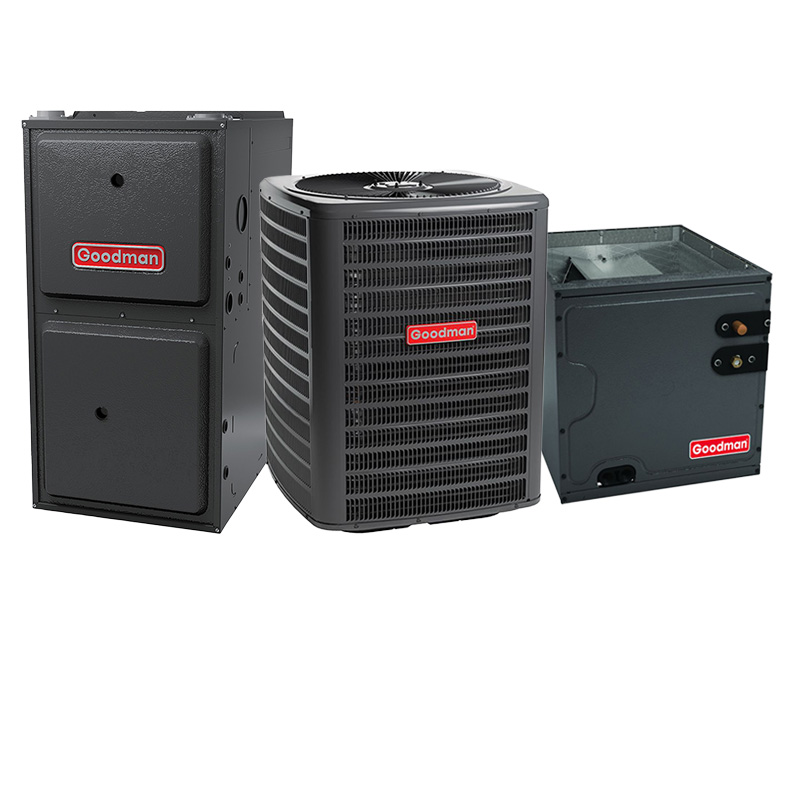
Goodman Furnace AC – 1.5 Ton 14.5 SEER2 AC With 40000 BTU 96% AFUE Multi-Speed ECM Gas Furnace System – Upflow | R32
View on AC Direct see your lowest price →Check current price on AC Direct →
Key features
- 1.5-ton cooling capacity, 14.5 SEER2 efficiency rating meets current federal minimums
- 40,000 BTU, 96% AFUE upflow gas furnace for high-efficiency heating
- Multi-speed ECM blower motor reduces electrical draw and improves humidity control
- R-32 refrigerant with lower global-warming potential than legacy R-410A systems
- Upflow cabinet design for basement or closet installations feeding overhead ductwork
- Factory-matched system engineered to satisfy AHRI certification requirements as a bundle
About this system
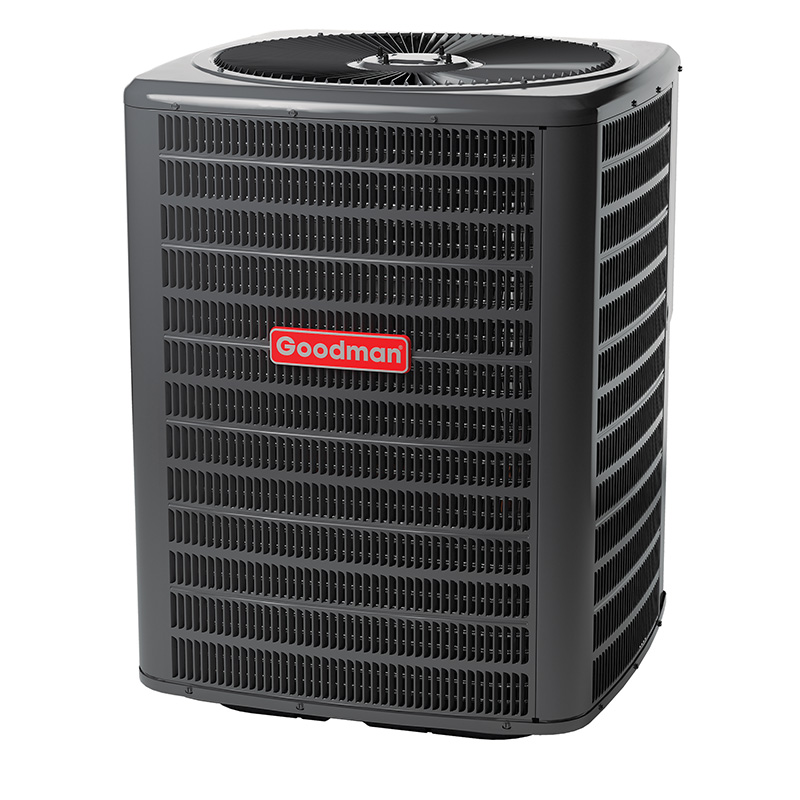
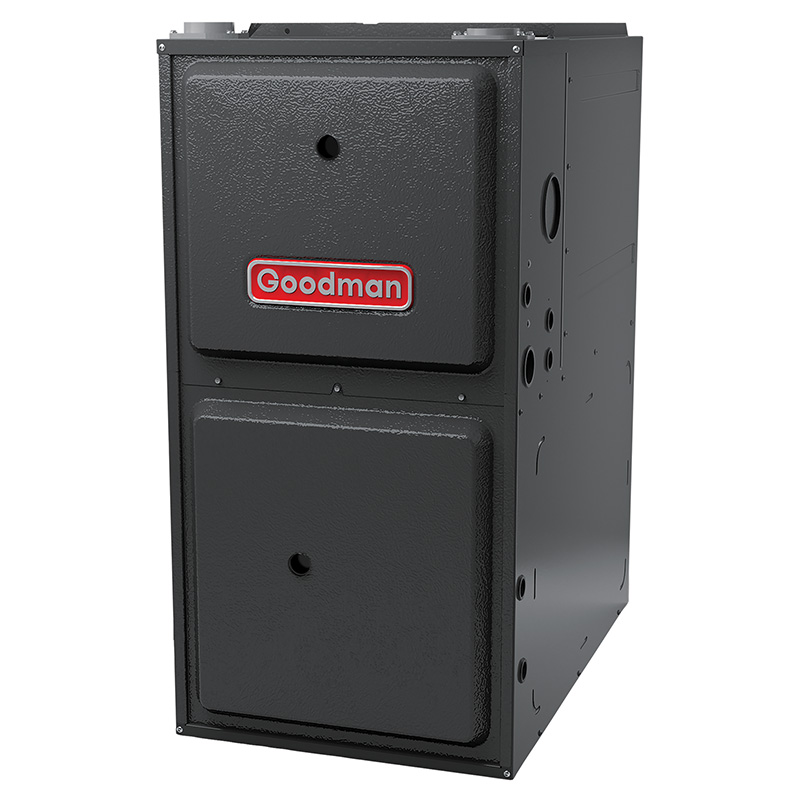
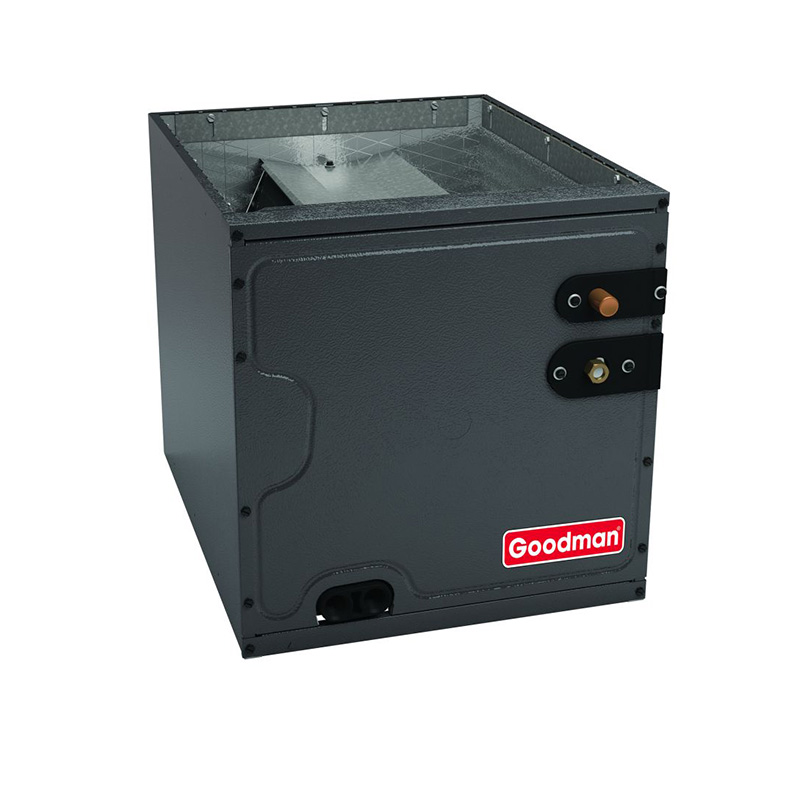
This Goodman bundle pairs a 1.5-ton, 14.5 SEER2 central air conditioner with a 40,000 BTU, 96% AFUE upflow gas furnace in an R-32 refrigerant system. The combination is sized for smaller homes, condos, or well-insulated spaces roughly under 800 square feet, depending on climate and load calculations. At 14.5 SEER2, the cooling side sits at the current federal minimum efficiency tier for most U.S. regions, meaning you meet code without paying for mid- or high-efficiency cooling upgrades. The 96% AFUE furnace is a genuine high-efficiency unit, however, converting 96 cents of every dollar of gas into usable heat, which makes it a strong performer on the heating side of this package.
The multi-speed ECM blower motor is a meaningful spec at this price point. ECM motors use significantly less electricity than standard PSC motors and allow the system to modulate airflow, which improves humidity control and comfort compared with a basic single-speed setup. The upflow configuration means supply air exits the top of the furnace cabinet, making this a fit for installations in basements or closets where ductwork runs above. R-32 refrigerant is the newer, lower global-warming-potential alternative to R-410A, and it will become the industry standard, so parts and refrigerant availability should be stable for the long term. Buyers should know this is a Goodman value-tier product: the price is competitive, but long-term performance depends heavily on how carefully it is installed and maintained.
This Goodman bundle delivers solid heating efficiency and a capable ECM motor at a price point 15 to 25 percent below Trane, Carrier, and Lennox equivalents, making it a legitimate option for budget-conscious buyers in smaller spaces. The 96% AFUE furnace is a genuine strong point, but the cooling side is entry-level efficiency and the brand's documented issues with capacitors, coil leaks, and shorter compressor lifespan mean ongoing maintenance costs deserve a place in your budget planning. It earns its value score, not because it rivals premium brands, but because it is honest about what it is.
Overall score is the average of the five ratings above.
What we like
- 96% AFUE furnace is a true high-efficiency unit that lowers annual gas bills meaningfully
- ECM multi-speed blower improves comfort and reduces fan electricity cost versus standard PSC motors
- R-32 refrigerant is the forward-looking industry standard, supporting long-term parts availability
- Factory-matched bundle simplifies equipment selection and satisfies AHRI certification as a system
- Priced 15 to 25 percent below comparable Carrier, Trane, and Lennox packages
Trade-offs
- Dual-run capacitors are the most frequently reported failure point, typically requiring a 300 to 600 dollar repair around or after year 7
- Evaporator coil leaks appear in a meaningful share of owner reviews, a potential mid-life expense
- Compressor lifespan averages 10 to 14 years versus 15 to 20 years for premium brands
- 14.5 SEER2 is minimum-tier cooling efficiency, so operating cost savings on the AC side are limited compared with a mid-efficiency upgrade
What homeowners and pros say about Goodman
Homeowners who purchase Goodman equipment tend to have split experiences that align closely with what independent ratings show. On Google dealer reviews, Goodman systems average around 3.8 out of 5 stars across hundreds of reviews per location, with affordability and budget-friendliness cited most often as the reason buyers chose the brand. On ConsumerAffairs, which skews toward people who had problems, the score drops to roughly 2.5 out of 5, and the recurring complaint is repair costs rising after approximately year seven. For this specific bundle, that pattern is worth taking seriously: dual-run capacitor failures are the most documented failure point across Goodman cooling equipment, typically a 300 to 600 dollar fix, and evaporator coil leaks show up in enough owner accounts to be considered a real risk rather than an outlier. A minority of owners have also reported refrigerant issues in the first year, which experienced technicians generally attribute to installation or initial charge problems rather than factory defects.
HVAC professionals consistently point out that install quality is the single largest variable in how long any Goodman system performs. A properly charged, correctly sized, and well-commissioned Goodman unit can deliver reliable service for a decade or more, while a rushed installation can surface problems within months. Compressor longevity is one area where the brand trails premium competitors regardless of install quality: documented averages run 10 to 14 years versus 15 to 20 years for Trane, Carrier, and Lennox equipment. For this 1.5-ton, 96% AFUE upflow package specifically, the furnace side is where Goodman holds up well given the high AFUE rating and ECM motor, while the cooling components carry the most long-term risk. Buyers who treat annual maintenance as a non-negotiable expense, not an optional one, tend to report better outcomes with Goodman equipment across the board.
Sources: ConsumerAffairs Goodman owner reviews, AHRI Directory of Certified Product Performance, U.S. DOE appliance and equipment efficiency standards, Goodman product specification sheets.
What it costs to run
At 14.5 SEER2, cooling this 1.5-ton system for a typical 1200-hour cooling season at the U.S. average electricity rate of $0.17/kWh works out to roughly $253 per year in cooling, about $21 less per year than a minimum-efficiency 13.4 SEER2 unit of the same size. Your real cost depends on your climate and local rate.
Method: (18,000 BTU/hr ÷ 14.5 SEER2) × 1200 hours ÷ 1000 × $0.17/kWh. Rate source: U.S. EIA average; cooling hours: moderate-climate estimate.
How it compares
| Brand | Comparable model | SEER2 | Stage | Price position |
|---|---|---|---|---|
| Goodman | GSXH5 / GMVC96 bundle (this system) | 14.5 | Single-stage | Value pick |
| Carrier | Comfort 24ACC6 / 58TP series | 14.3 to 15.2 | Single-stage | Typically 15 to 25 percent more than this Goodman bundle |
| Trane | XR14 / S8X1 series | 14.3 to 15.0 | Single-stage | Typically 15 to 25 percent more than this Goodman bundle |
| Lennox | Merit ML14XC1 / ML196E series | 14.3 to 15.0 | Single-stage | Typically 15 to 25 percent more than this Goodman bundle |
Competitor rows are comparable single-stage units at similar efficiency; price is relative position, not a quote.
Questions about this system
Is 1.5 tons enough cooling for my home?
A 1.5-ton unit is generally appropriate for spaces between roughly 600 and 900 square feet in moderate climates, though proper sizing depends on insulation, ceiling height, window area, and local temperatures. Oversizing is a common mistake that causes short-cycling and poor humidity control, so a Manual J load calculation by your installer is the right way to confirm this size fits your space before purchasing.
What does the ECM blower motor actually change day to day?
An ECM motor runs at multiple speeds rather than just on or off, so it can circulate air at a lower speed for longer periods. This keeps temperatures more even throughout the home and removes more humidity from the air during cooling season. It also draws considerably less electricity than a standard PSC motor, which adds up over a cooling and heating season.
Why does R-32 refrigerant matter and will it be hard to service?
R-32 has a lower global-warming potential than the R-410A it is replacing across the industry, and it is the refrigerant that major manufacturers are standardizing on going forward. This means refrigerant and service parts should be widely available from HVAC suppliers for the foreseeable life of the system, though technicians do need to use R-32-rated equipment and follow specific handling procedures.
What are the most likely repairs I should budget for with this Goodman system?
Dual-run capacitor failures are the most commonly reported issue with Goodman equipment and typically cost 300 to 600 dollars to fix, often appearing after the seven-year mark. Evaporator coil leaks are also documented in a meaningful share of owner reports and can be a more expensive repair depending on warranty status. Keeping the system on an annual maintenance plan improves the odds of catching these issues early.
Does the upflow furnace configuration limit where this system can be installed?
An upflow furnace must be installed with the air supply exiting through the top of the cabinet, which works well in basements, utility closets, and mechanical rooms where the main duct trunk runs overhead. It is not the right configuration for attic installations or downflow applications where supply air needs to drop down through the floor, so confirm your duct layout matches before ordering.
Specifications
| Cooling capacity | 1.5 Ton |
| Efficiency | 14.5 SEER2 |
| Furnace output | 40000 BTU |
| Furnace efficiency | 96% AFUE |
| Configuration | Upflow |
| Refrigerant | R-32 |