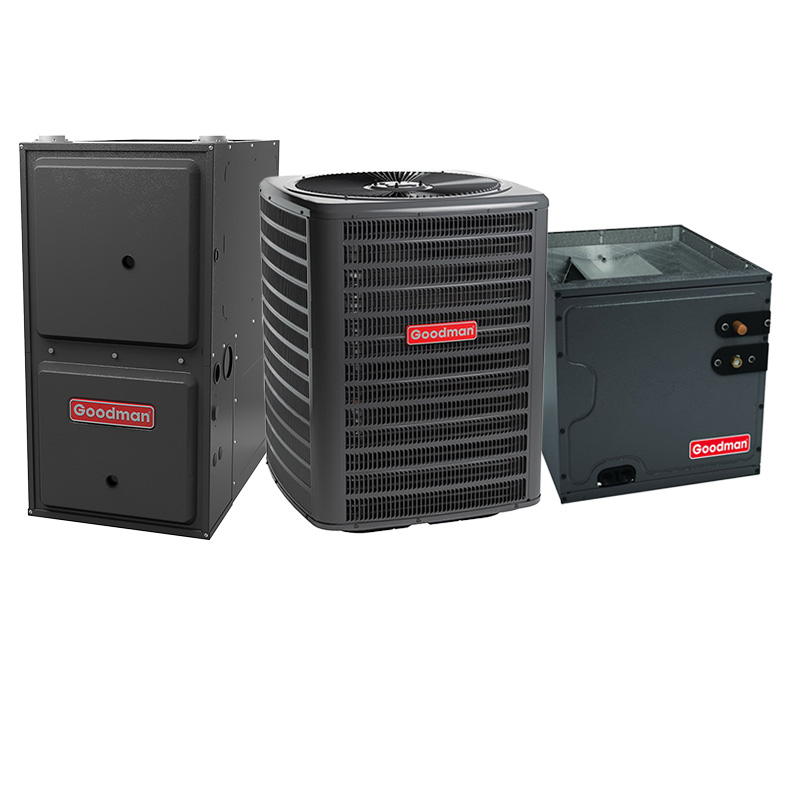
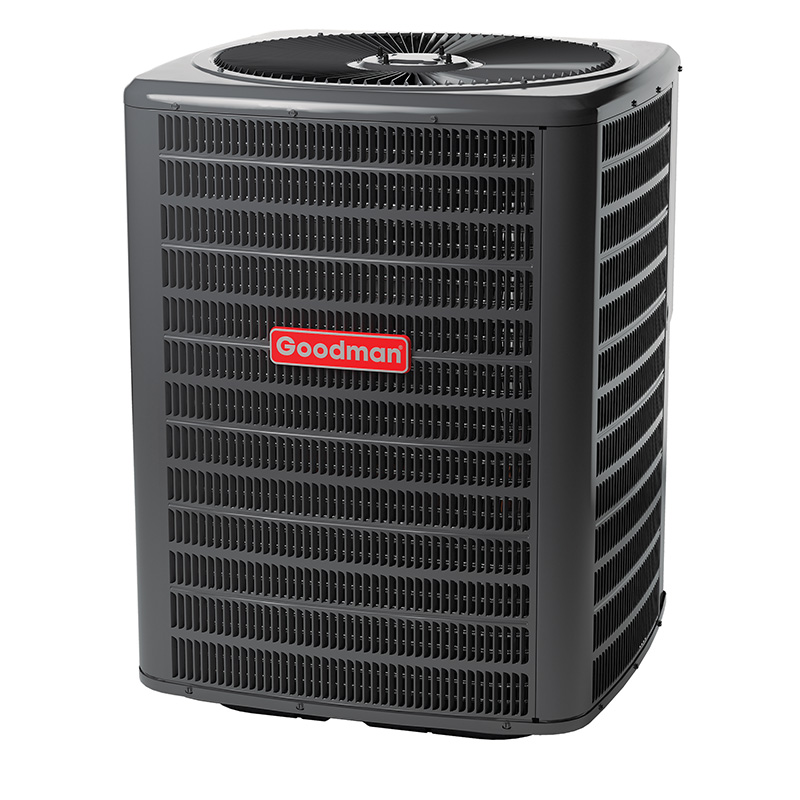
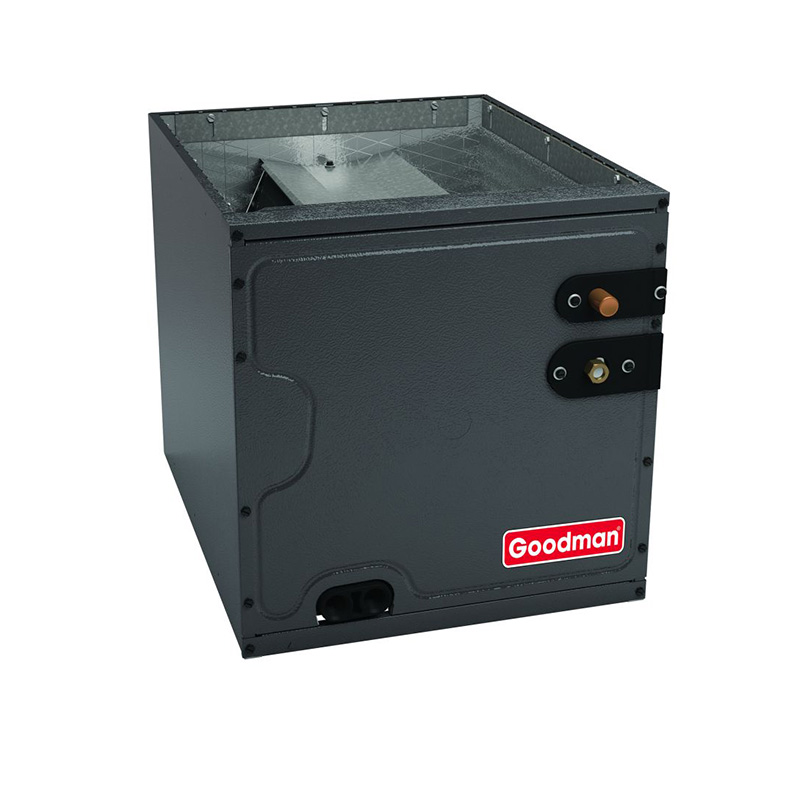
Goodman Furnace AC – 1.5 Ton 15 SEER2 AC With 40000 BTU 96% AFUE Multi-Speed ECM Gas Furnace System – Downflow | R32
View on AC Direct see your lowest price →Check current price on AC Direct →
Key features
- 1.5-ton cooling capacity paired with 40,000 BTU heating output for smaller spaces
- 15 SEER2 efficiency meets current federal minimum standards for most U.S. regions
- 96% AFUE high-efficiency gas furnace with only 4% flue heat loss
- Multi-speed ECM blower motor for quieter operation and lower fan energy use
- Downflow configuration designed for closet, platform, or upper-floor installations
- R-32 refrigerant charge with lower global warming potential than R-410A
About this system
This Goodman system pairs a 1.5-ton, 15 SEER2 air conditioner with a 40,000 BTU, 96% AFUE multi-speed ECM gas furnace in a downflow configuration, meaning warm air exits from the bottom of the unit — a layout common in homes where the furnace sits in a closet or utility space above a crawlspace or on an upper floor. The R-32 refrigerant charge is a forward-looking choice: R-32 has a lower global warming potential than the outgoing R-410A and is increasingly the industry standard, so future service calls should not be complicated by refrigerant availability issues.
At 15 SEER2, this system sits at the federal minimum efficiency floor for most northern U.S. climate zones, which means it will satisfy code in most markets but will not cut utility bills the way a 17 or 18 SEER2 variable-speed system would. The 96% AFUE rating is a genuine strength — only 4% of combustion energy escapes as exhaust, putting this furnace solidly in the high-efficiency tier. The ECM multi-speed blower motor is more energy-efficient than a standard PSC motor and supports better humidity control and quieter low-demand operation. This combination suits smaller homes or additions under roughly 600 to 800 square feet (depending on climate and insulation) that need reliable heating and cooling without a premium-brand price tag.
This Goodman bundle delivers real value for budget-conscious buyers who need a code-compliant, high-AFUE heating system in a downflow layout without paying a Carrier or Trane premium. The trade-off is a compressor lifespan that averages shorter than premium brands and a reputation for repair costs that can climb after year seven, so it rewards buyers who budget for maintenance. If long-term reliability outweighs upfront savings for you, a comparable Carrier or Trane series is worth the added cost.
Overall score is the average of the five ratings above.
What we like
- Priced roughly 15 to 25 percent below comparable Carrier, Trane, and Lennox equipment
- 96% AFUE furnace keeps heating costs low throughout the system's life
- ECM multi-speed blower improves comfort and reduces electricity use versus basic PSC motors
- R-32 refrigerant future-proofs the system against refrigerant phase-out concerns
- Downflow config fills a real installation niche that not every brand covers at this price point
Trade-offs
- Compressor lifespan averages 10 to 14 years versus 15 to 20 years for premium brands
- Dual-run capacitor failures are commonly reported, typically adding 300 to 600 dollars in service costs
- Evaporator coil leaks appear in a meaningful share of owner reviews, especially past mid-life
- A minority of owners report refrigerant leaks within the first year, most tied to install or charge issues rather than the equipment itself
What homeowners and pros say about Goodman
Homeowners who choose Goodman tend to fall into two camps: those who are satisfied with reliable, no-frills performance and those who encounter repair bills that erode the upfront savings. On ConsumerAffairs, Goodman scores around 2.5 out of 5, with the recurring theme being repair costs that start climbing after roughly year seven — capacitor failures (typically a 300 to 600 dollar fix) are the most frequently cited issue, and evaporator coil leaks show up in a meaningful share of mid-life complaints. Google dealer reviews tell a somewhat better story, averaging around 3.8 out of 5 across hundreds of reviews per location, where affordability is consistently the top compliment.
HVAC technicians who work on Goodman equipment regularly point out that install quality is the single biggest predictor of how long one of these systems lasts — a properly commissioned unit with correct refrigerant charge and clean airflow can perform respectably for a decade or more, while a rushed or undercharged install tends to surface the brand’s weaker points faster. Compressor longevity is a legitimate concern: documented averages run 10 to 14 years versus the 15 to 20 years common with Trane and Carrier compressors. For this 1.5-ton downflow system specifically, the R-32 refrigerant and ECM blower are modern touches that work in its favor, but buyers should budget for at least one capacitor replacement and keep an eye on the evaporator coil for signs of leakage as the system ages.
Sources: ConsumerAffairs Goodman owner reviews, AHRI Directory of Certified Product Performance, U.S. DOE appliance and equipment efficiency standards, Goodman product specification sheets.
What it costs to run
At 15 SEER2, cooling this 1.5-ton system for a typical 1200-hour cooling season at the U.S. average electricity rate of $0.17/kWh works out to roughly $245 per year in cooling, about $29 less per year than a minimum-efficiency 13.4 SEER2 unit of the same size. Your real cost depends on your climate and local rate.
Method: (18,000 BTU/hr ÷ 15 SEER2) × 1200 hours ÷ 1000 × $0.17/kWh. Rate source: U.S. EIA average; cooling hours: moderate-climate estimate.
How it compares
| Brand | Comparable model | SEER2 | Stage | Price position |
|---|---|---|---|---|
| Goodman | GSXH5 / GCVC8 Series (this system) | 15 | Single-stage / Multi-speed | Value pick |
| Carrier | Comfort 24ACC6 / 58TP Series | 15 | Single-stage | Typically 15 to 25 percent more than Goodman |
| Trane | XR15 / S9X2 Series | 15 | Single-stage | Typically 15 to 25 percent more than Goodman |
| Lennox | Merit ML15 / ML196 Series | 15 | Single-stage | Typically 15 to 25 percent more than Goodman |
Competitor rows are comparable single-stage units at similar efficiency; price is relative position, not a quote.
Questions about this system
Is a downflow furnace going to work in my home, and how do I know if I need one?
A downflow furnace discharges conditioned air from its bottom and draws return air from the top, making it the right choice when ductwork runs beneath the unit — common in platform closet installs or upper-floor mechanical rooms above crawlspaces. If your current furnace is upflow (air exits the top) or horizontal, this unit is not a straight swap and may require duct modifications.
R-32 is different from what most older systems used — will local techs know how to service it?
R-32 is already standard on equipment sold in Europe and Australia and is rapidly becoming the norm in the U.S., so most HVAC technicians are trained or being trained on it. One practical note: R-32 is mildly flammable (A2L classification), so service requires technicians with A2L certification, which is increasingly common but worth confirming with your service provider.
What does 15 SEER2 actually mean for my electric bill compared to an older system?
SEER2 is tested under conditions that better reflect real-world static pressure than the older SEER standard, so a 15 SEER2 rating is roughly equivalent in real-world performance to a 15 to 16 SEER unit under the old test. If you are replacing a 10 to 12 SEER system, expect meaningful savings; if you are replacing a 14 to 15 SEER system, the savings will be modest.
Goodman has mixed reviews online — should I be worried about buying this system?
Goodman's ConsumerAffairs score sits around 2.5 out of 5, which sounds alarming but reflects a channel where unhappy owners are far more motivated to post than satisfied ones; Google dealer reviews average closer to 3.8 out of 5. The honest picture is that Goodman equipment performs adequately when installed correctly, but documented failure modes — capacitor failures, evaporator coil leaks, and compressor longevity shorter than premium brands — are real and worth budgeting for, especially after year seven.
What kind of warranty comes with this Goodman system, and are there conditions I need to know about?
Goodman typically covers the compressor and functional parts for 10 years on registered equipment, but registration must be completed within a set window after installation (usually 60 days) or coverage may revert to a shorter base warranty. Labor is not covered by the manufacturer, so factor in service call costs separately; some dealers offer extended labor warranties worth asking about at purchase.
Specifications
| Cooling capacity | 1.5 Ton |
| Efficiency | 15 SEER2 |
| Furnace output | 40000 BTU |
| Furnace efficiency | 96% AFUE |
| Configuration | Downflow |
| Refrigerant | R-32 |