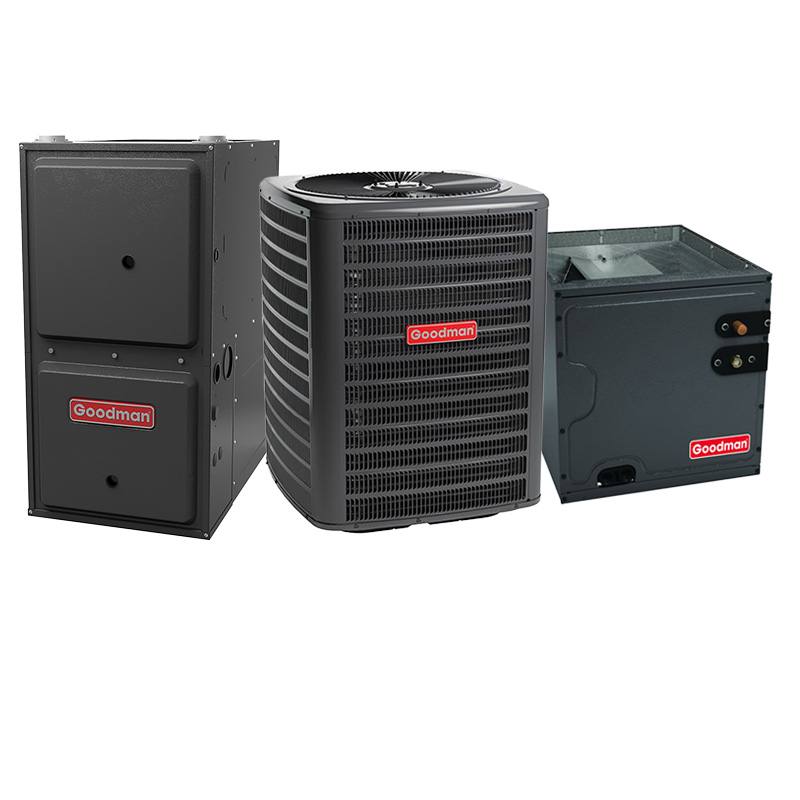
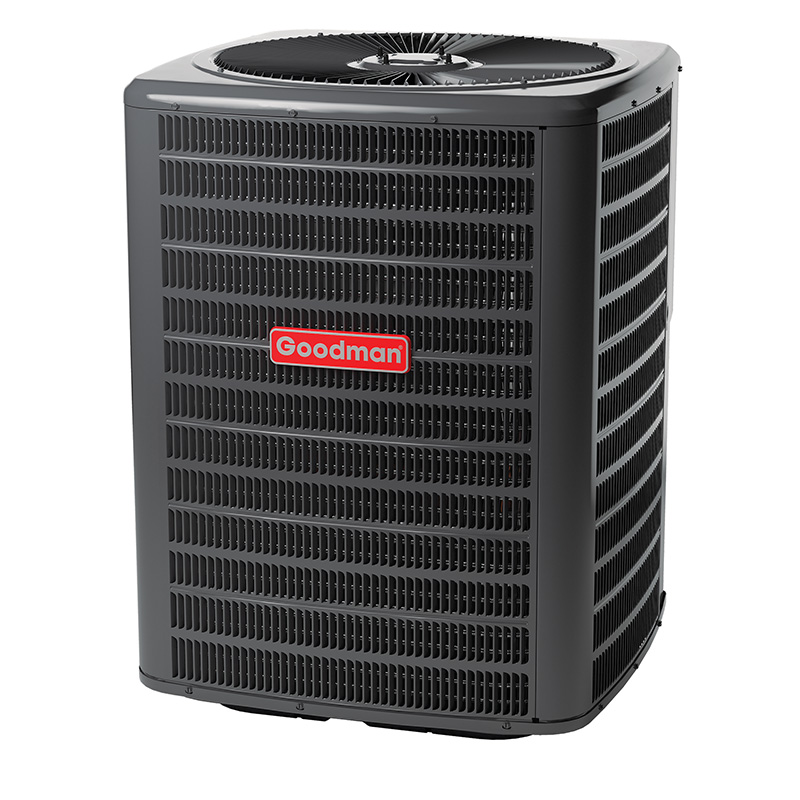
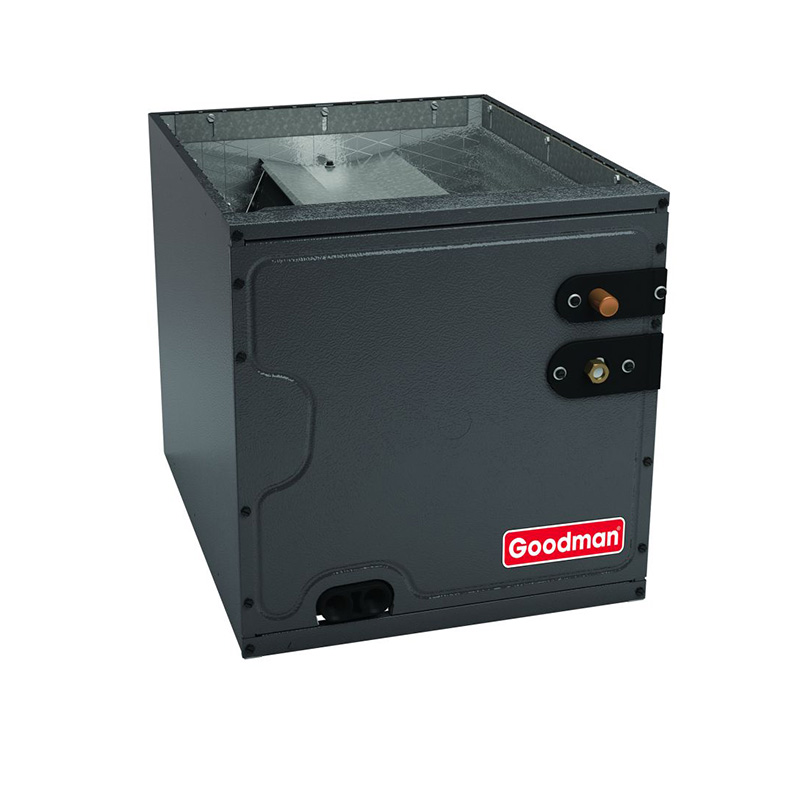
Goodman Furnace AC – 1.5 Ton 15.2 SEER2 AC With 40000 BTU 96% AFUE Multi-Speed ECM Gas Furnace System – Downflow | R32
View on AC Direct see your lowest price →Check current price on AC Direct →
Key features
- 1.5-ton cooling capacity rated at 15.2 SEER2 under current DOE test conditions
- 40,000 BTU gas furnace with 96% AFUE high-efficiency rating
- Multi-speed ECM blower motor for lower operating costs vs single-speed motors
- Downflow configuration for basement or platform closet installations
- R-32 refrigerant with lower global warming potential than R-410A
- Factory-tested refrigerant circuit with brazed copper connections
About this system
This Goodman downflow system pairs a 1.5-ton, 15.2 SEER2 air conditioner with a 40,000 BTU, 96% AFUE multi-speed ECM gas furnace, making it a compact but capable choice for smaller homes, condominiums, or additions in the 600 to 900 square foot range where heating loads are modest and cooling demand is limited. The downflow configuration means the furnace discharges conditioned air downward through the floor, which suits basement or closet installations where return air enters from the top and supply ducts run beneath the unit. R-32 refrigerant is a newer, lower global-warming-potential alternative to R-410A and is increasingly the industry standard as the transition away from older refrigerants accelerates.
The 96% AFUE rating places this furnace solidly in the high-efficiency tier, meaning only four cents of every dollar spent on gas escapes as waste heat. The multi-speed ECM blower motor adjusts airflow in steps to match demand, which reduces electricity consumption compared to single-speed PSC motors and improves humidity control during cooling season. At 15.2 SEER2, the air conditioner clears the current federal minimum efficiency threshold with modest headroom but does not reach the variable-speed or two-stage performance levels found in premium systems. For a buyer whose priority is replacing aging equipment without stretching the budget, this combination covers the functional bases reliably enough, provided installation is done carefully by a qualified contractor.
This Goodman combo covers the fundamentals at a price point noticeably below Trane, Carrier, and Lennox equivalents, and the 96% AFUE furnace with ECM motor is a genuine efficiency win for a value-tier system. The trade-off is a brand track record that shows real vulnerability past year seven, particularly around capacitors, evaporator coil integrity, and compressor longevity, so buyers should factor extended service costs into the total ownership picture. It suits a budget-conscious buyer who wants a competent installer and is comfortable with that longer-term risk profile.
Overall score is the average of the five ratings above.
What we like
- Priced 15 to 25 percent below comparable Trane, Lennox, and Carrier systems
- 96% AFUE furnace rating reduces annual gas costs meaningfully vs 80% units
- ECM multi-speed motor lowers electricity use and improves dehumidification
- R-32 refrigerant is forward-compatible as the industry moves away from R-410A
- Dual-run capacitor failures, the most common reported issue, are typically a low-cost repair
Trade-offs
- Compressor lifespan averages 10 to 14 years, shorter than the 15 to 20 years seen with premium brands
- Evaporator coil leaks appear in a meaningful share of owner reviews and can be costly to address
- Single-stage cooling at 15.2 SEER2 lacks the comfort and efficiency ceiling of two-stage or variable systems
- A minority of owners report refrigerant leaks within the first year, most often tied to install or initial charge quality
What homeowners and pros say about Goodman
Homeowners who leave reviews about Goodman systems tend to split along a clear line: those who had a skilled installer and stayed on top of annual maintenance often report years of trouble-free operation and consistently mention the lower purchase price as a win, while those who encountered problems describe frustration with repair costs that climb after roughly year seven. Google dealer reviews for Goodman equipment average around 3.8 out of 5 across multiple locations, with affordability as the most repeated praise. ConsumerAffairs scores sit lower, around 2.5 out of 5, though that platform draws a higher share of complaint-driven posts and likely overstates the negative rate across the full ownership base.
HVAC technicians tend to hold a nuanced view of Goodman. Many acknowledge the brand as a reasonable choice for budget-conscious buyers while flagging that install quality has an outsized effect on how long the system lasts. The failure modes that come up most consistently in service records are dual-run capacitor replacements, which are a relatively low-cost fix typically running 300 to 600 dollars, and evaporator coil leaks, which are more disruptive and expensive. Compressor longevity is the longer-horizon concern, with averages in the 10-to-14-year range falling short of the 15-to-20 years technicians associate with premium-brand compressors. A minority of owners also report refrigerant leaks in the first year, which experienced installers generally attribute to line set connections or initial charge rather than factory defects in the unit itself.
Sources: ConsumerAffairs Goodman owner reviews, AHRI Directory of Certified Product Performance, U.S. DOE appliance and equipment efficiency standards, Goodman product specification sheets.
What it costs to run
At 15.2 SEER2, cooling this 1.5-ton system for a typical 1200-hour cooling season at the U.S. average electricity rate of $0.17/kWh works out to roughly $242 per year in cooling, about $32 less per year than a minimum-efficiency 13.4 SEER2 unit of the same size. Your real cost depends on your climate and local rate.
Method: (18,000 BTU/hr ÷ 15.2 SEER2) × 1200 hours ÷ 1000 × $0.17/kWh. Rate source: U.S. EIA average; cooling hours: moderate-climate estimate.
How it compares
| Brand | Comparable model | SEER2 | Stage | Price position |
|---|---|---|---|---|
| Goodman | 1.5T 15.2 SEER2 AC + 40K BTU 96% AFUE ECM Furnace (Downflow, R-32) | 15.2 | Single-stage | Value pick |
| Carrier | Comfort 24ACC6 + 58TP0 96% Furnace | 15.2 | Single-stage | Moderately higher than this system |
| Trane | XR15 + S9X2 96% Furnace | 15.0 | Single-stage | Moderately higher than this system |
| Lennox | Merit ML15XC1 + ML196E Furnace | 15.2 | Single-stage | Noticeably higher than this system |
Competitor rows are comparable single-stage units at similar efficiency; price is relative position, not a quote.
Questions about this system
Is a downflow furnace harder to install than an upflow unit, and does it limit my equipment choices?
Downflow furnaces discharge air through the bottom and require a special floor stand or sub-base when installed on a combustible surface, which adds a small material and labor cost. They are common in utility closets and manufactured homes where ductwork runs below the unit, but if your home has a conventional basement with overhead ducts, you likely want an upflow configuration instead. Confirm with your contractor that a downflow layout matches your existing duct system before ordering.
What does the R-32 refrigerant change mean for service costs compared to older R-410A systems?
R-32 operates at similar pressures to R-410A and most modern recovery and charging equipment handles both, so service costs should be comparable in the near term. R-32 does require technicians to be certified for mildly flammable refrigerants, which some older shops may not yet support, so confirm your service contractor is equipped before purchase. Long-term, R-32 supply and pricing should remain stable or improve as the industry standardizes around it.
How likely am I to need a capacitor replacement, and what does that typically cost?
Dual-run capacitor failure is the most frequently reported repair issue across Goodman owner accounts, and it often shows up as a system that runs but does not cool properly or fails to start. The repair is generally straightforward for a qualified technician and typically costs between 300 and 600 dollars for parts and labor. Keeping a service contract or scheduling annual tune-ups can catch a weakening capacitor before it causes a shutdown.
Is 1.5 tons enough cooling capacity for my space?
A 1.5-ton unit is generally sized for roughly 600 to 900 square feet under average conditions, but actual sizing depends on insulation quality, window area, ceiling height, local climate, and sun exposure. Oversizing is a common mistake that leads to short cycling, poor humidity control, and premature wear, so a proper Manual J load calculation by your installer is essential before confirming this tonnage.
What does Goodman's warranty cover, and are there conditions I need to meet?
Goodman typically offers a 10-year parts limited warranty when the system is registered online within a set window after installation, often 60 days. Failure to register usually drops coverage to a shorter term, and the warranty generally requires installation by a licensed contractor and routine maintenance. It covers parts but not labor, so out-of-pocket repair costs after year one still include technician time even during the warranty period.
Specifications
| Cooling capacity | 1.5 Ton |
| Efficiency | 15.2 SEER2 |
| Furnace output | 40000 BTU |
| Furnace efficiency | 96% AFUE |
| Configuration | Downflow |
| Refrigerant | R-32 |