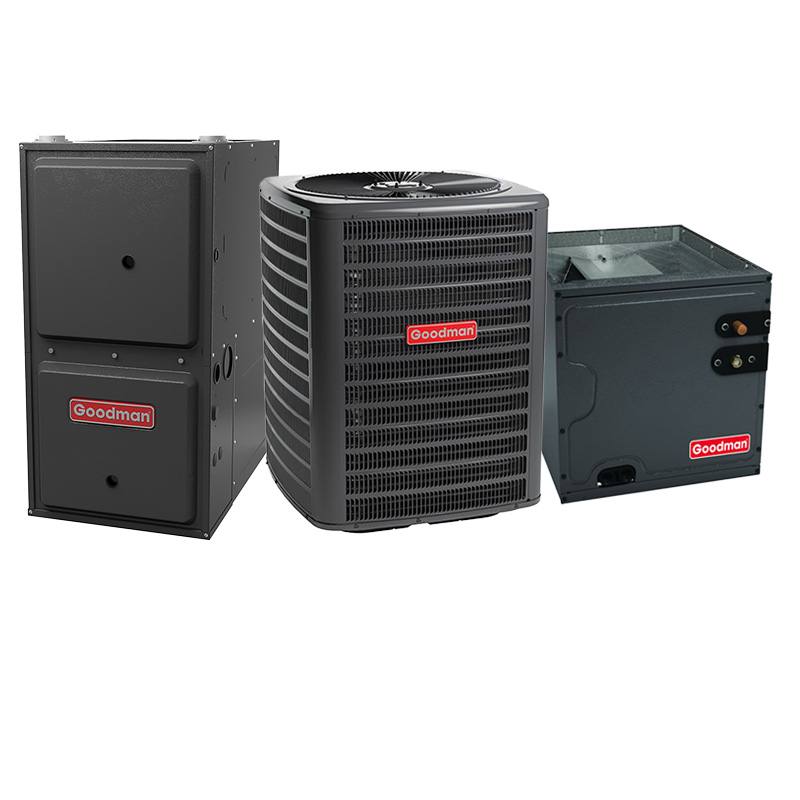
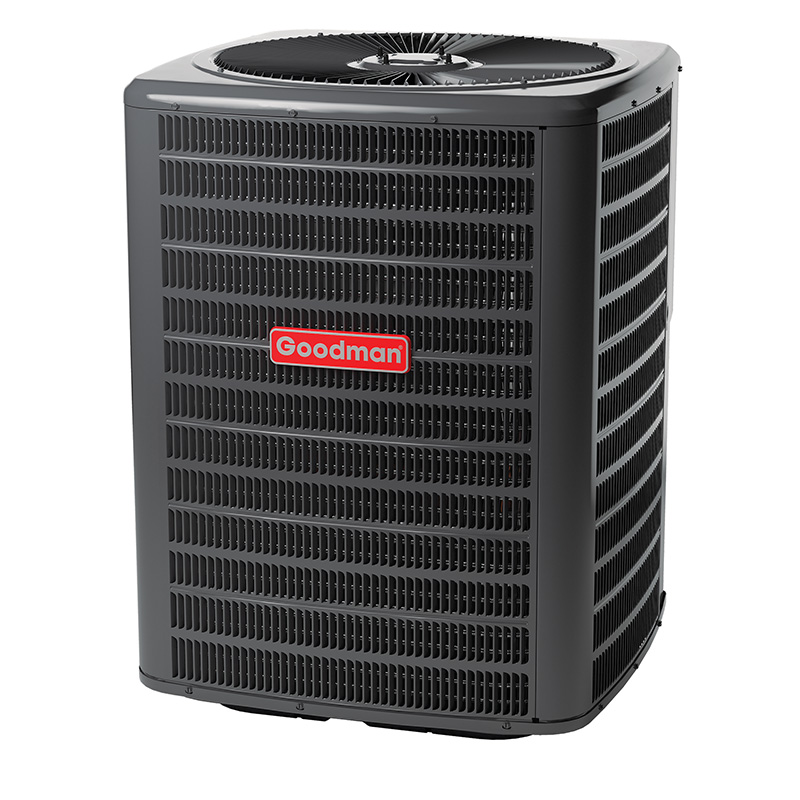
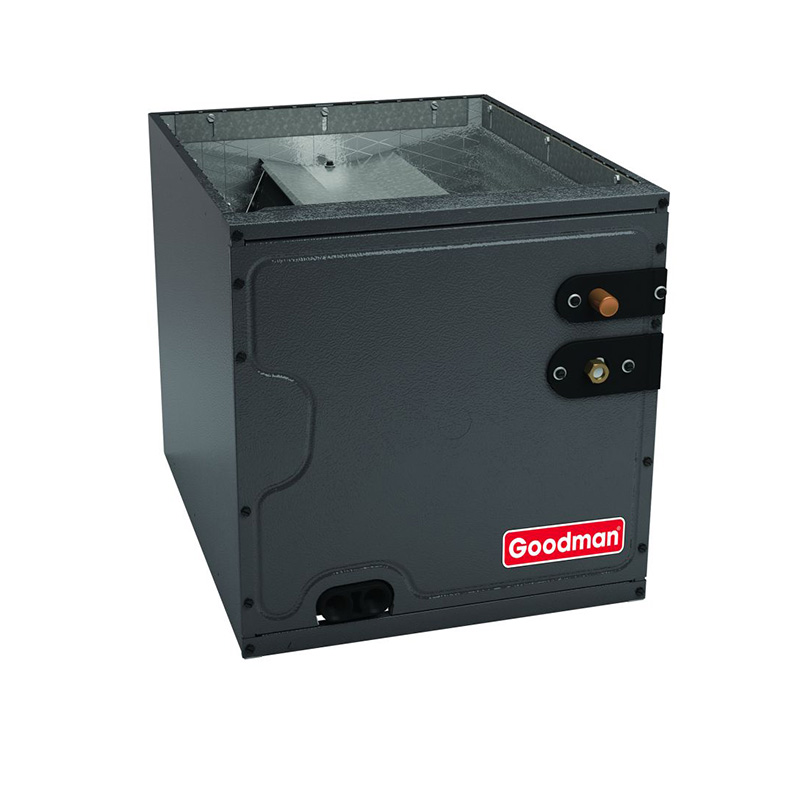
Goodman Furnace AC – 1.5 Ton 15.2 SEER2 AC With 60000 BTU 96% AFUE Multi-Speed ECM Gas Furnace System – Downflow | R32
View on AC Direct see your lowest price →Check current price on AC Direct →
Key features
- 1.5-ton cooling capacity with 15.2 SEER2 efficiency rating
- 60,000 BTU gas furnace at 96% AFUE for high-efficiency heating
- Multi-speed ECM blower motor reduces fan energy use and improves dehumidification
- Downflow configuration designed for closet installs above crawl spaces or in manufactured homes
- R-32 refrigerant with lower global warming potential than R-410A
- Factory-matched system designed for straightforward compatibility between indoor and outdoor units
About this system
This Goodman downflow system pairs a 1.5-ton, 15.2 SEER2 central air conditioner with a 60,000 BTU, 96% AFUE multi-speed ECM gas furnace. The efficiency numbers land in a solid middle tier: 15.2 SEER2 clears the federal minimum by a comfortable margin and will satisfy most utility rebate thresholds, while 96% AFUE means roughly 96 cents of every dollar spent on gas goes toward heating your home rather than up the flue. The ECM blower motor is a meaningful inclusion at this price point, running at lower speeds during mild conditions to cut fan electricity use and improve humidity control compared to a standard PSC motor.
The downflow configuration sends conditioned air downward from the furnace, which is standard in homes where the air handler sits in a closet on the main floor above a crawl space, or in manufactured housing. R-32 refrigerant replaces the older R-410A in Goodman’s current lineup; it carries a lower global warming potential and slightly better thermodynamic properties, though it does require technicians with R-32 certification during service. At 1.5 tons, this system is sized for smaller homes, typically in the 600 to 900 square foot range depending on insulation, climate zone, and ceiling height. A proper Manual J load calculation before purchase is strongly recommended to confirm the size is right for your space.
This Goodman combo delivers genuine mid-tier efficiency at a price that typically runs 15 to 25 percent below Carrier, Trane, or Lennox systems with similar specs, making it a reasonable choice for budget-conscious buyers who are willing to accept a shorter expected compressor lifespan and some documented reliability concerns. The ECM motor and 96% AFUE furnace are legitimately good features for the price, but long-term ownership costs can close the gap with premium brands if the documented failure points materialize. The quality of your installation matters more with Goodman than it does with premium brands, so choosing an experienced installer is not optional here.
Overall score is the average of the five ratings above.
What we like
- Priced 15 to 25 percent below comparable Carrier, Trane, and Lennox systems
- 96% AFUE furnace is a high-efficiency rating that can meaningfully reduce annual heating bills
- ECM blower motor improves part-load efficiency and comfort at this price tier
- 15.2 SEER2 meets or exceeds many utility rebate program thresholds
- R-32 refrigerant is a forward-looking choice with lower environmental impact than R-410A
Trade-offs
- Compressor lifespan averages 10 to 14 years versus 15 to 20 years typical of premium brands
- Evaporator coil leaks appear in a meaningful share of owner reviews, a recurring Goodman-specific concern
- ConsumerAffairs rating sits around 2.5 out of 5, with repair costs after year 7 the dominant complaint theme
- A minority of owners report refrigerant leaks within the first year, pointing to install sensitivity and the need for a skilled, certified technician
What homeowners and pros say about Goodman
Homeowners who chose a Goodman system frequently point to the upfront price as the deciding factor, and that sentiment shows up in Google dealer reviews, where the brand averages around 3.8 out of 5 across hundreds of dealer-level ratings and affordability is the most common positive note. The picture is less flattering on ConsumerAffairs, where Goodman sits at roughly 2.5 out of 5, with the recurring theme being repair costs that start climbing after roughly year seven of ownership. The complaints are not universal, but they are consistent enough to treat as a real planning consideration rather than statistical noise.
HVAC technicians tend to be candid about where Goodman units run into trouble on this specific configuration. Dual-run capacitor failures are the most commonly cited service call, and while the repair is typically low-cost, ranging from 300 to 600 dollars, it reflects a component quality gap relative to premium brands. More consequential are evaporator coil leaks, which appear in a meaningful portion of owner feedback and can mean a costly coil replacement mid-life. Compressor longevity is another honest trade-off: Goodman compressors average 10 to 14 years in the field, compared to 15 to 20 years on Trane, Carrier, or Lennox equipment. Technicians consistently note that install quality has an outsized effect on how this particular brand performs, making the choice of installer nearly as important as the equipment choice itself.
Sources: ConsumerAffairs Goodman owner reviews, AHRI Directory of Certified Product Performance, U.S. DOE appliance and equipment efficiency standards, Goodman product specification sheets.
What it costs to run
At 15.2 SEER2, cooling this 1.5-ton system for a typical 1200-hour cooling season at the U.S. average electricity rate of $0.17/kWh works out to roughly $242 per year in cooling, about $32 less per year than a minimum-efficiency 13.4 SEER2 unit of the same size. Your real cost depends on your climate and local rate.
Method: (18,000 BTU/hr ÷ 15.2 SEER2) × 1200 hours ÷ 1000 × $0.17/kWh. Rate source: U.S. EIA average; cooling hours: moderate-climate estimate.
How it compares
| Brand | Comparable model | SEER2 | Stage | Price position |
|---|---|---|---|---|
| Goodman | GSXH5-18 / GCVC960603BN (this system) | 15.2 | Single-stage / Multi-speed | Value pick |
| Carrier | Comfort 15 (24ACC6) | 15.2 | Single-stage | Approximately 15 to 20 percent more than this Goodman |
| Trane | XR15 | 15.0 to 15.2 | Single-stage | Approximately 20 to 25 percent more than this Goodman |
| Lennox | Merit ML15XC1 | 15.2 | Single-stage | Approximately 20 to 25 percent more than this Goodman |
Competitor rows are comparable single-stage units at similar efficiency; price is relative position, not a quote.
Questions about this system
Why does this system use R-32 refrigerant and does it cost more to service?
Goodman transitioned to R-32 because it has a lower global warming potential than R-410A and slightly better thermodynamic efficiency. The practical downside is that not every HVAC technician in your area will carry R-32 or hold the certification to handle it, so confirm service availability in your market before purchasing. Recharge costs may be slightly higher than R-410A in areas where R-32 is still less common.
What does downflow configuration mean and how do I know if this is the right setup for my home?
Downflow means the furnace discharges conditioned air out the bottom, routing it into ductwork below the unit. This is common in homes where the air handler sits in a main-floor closet above a crawl space, or in some manufactured and modular homes. If your existing system is upflow or horizontal, this unit is not a direct replacement and you would need significant ductwork changes.
What are the most common repairs I should budget for over the life of this system?
Dual-run capacitors are the most frequently reported failure on Goodman systems and are typically a straightforward repair costing between 300 and 600 dollars. Evaporator coil leaks appear in a notable share of owner feedback and can run significantly higher depending on whether the coil needs replacement. Compressors on Goodman units tend to average 10 to 14 years, so budgeting for a potential compressor replacement or full system swap in that window is prudent.
Is the standard Goodman warranty strong enough or should I buy an extended warranty?
Goodman's standard registered warranty covers parts for 10 years on most components, which is competitive on paper. However, given documented compressor lifespans and repair frequency after year 7 reflected in ConsumerAffairs reviews, many owners find that a labor warranty or extended service contract adds meaningful protection since parts-only coverage still leaves you paying for diagnostic and labor costs on every call.
Is 1.5 tons the right size for my home, or should I consider going up to 2 tons?
Sizing depends on your home's square footage, insulation quality, window area, ceiling height, and climate zone rather than a simple rule of thumb. A 1.5-ton system is typically appropriate for 600 to 900 square feet under average conditions, but a proper Manual J heat load calculation by your installer is the only reliable way to confirm fit. An oversized unit short-cycles, hurts humidity control, and can shorten equipment life, so do not simply default to a larger size.
Specifications
| Cooling capacity | 1.5 Ton |
| Efficiency | 15.2 SEER2 |
| Furnace output | 60000 BTU |
| Furnace efficiency | 96% AFUE |
| Configuration | Downflow |
| Refrigerant | R-32 |