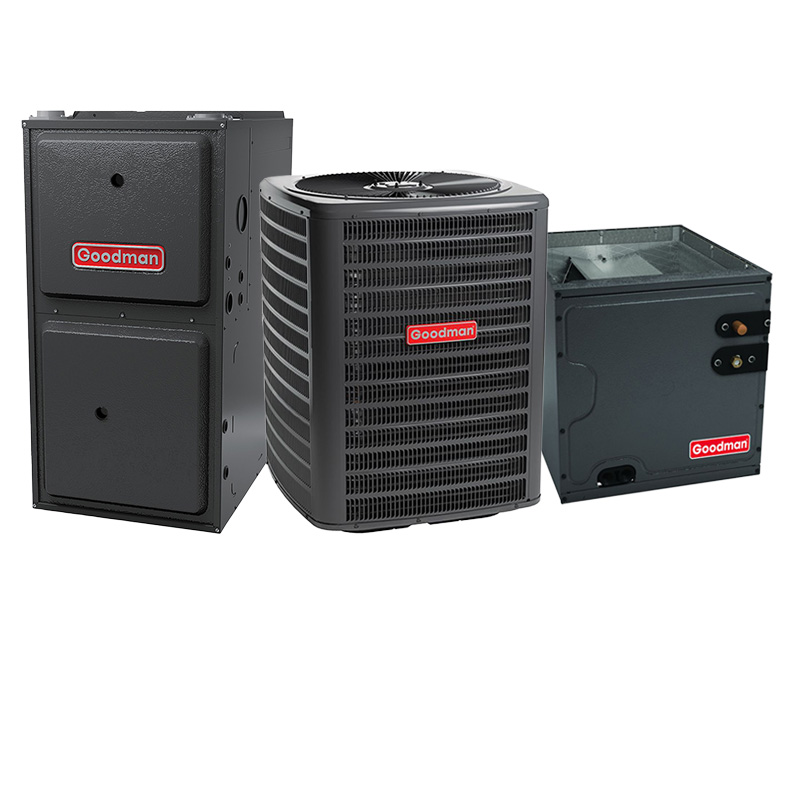
Goodman Furnace AC – 2.5 Ton 15.2 SEER2 AC With 60000 BTU 96% AFUE Multi-Speed ECM Gas Furnace System – Upflow | R32
View on AC Direct see your lowest price →Check current price on AC Direct →
Key features
- 2.5-ton cooling capacity rated at 15.2 SEER2 for above-minimum efficiency
- 96% AFUE gas furnace converts 96% of fuel to usable heat
- Multi-speed ECM blower motor reduces energy use and improves airflow consistency
- Upflow configuration for basement or ground-level utility closet installations
- R-32 refrigerant with lower global warming potential than R-410A
- 60,000 BTU heating output suited to mid-sized single-family homes
About this system
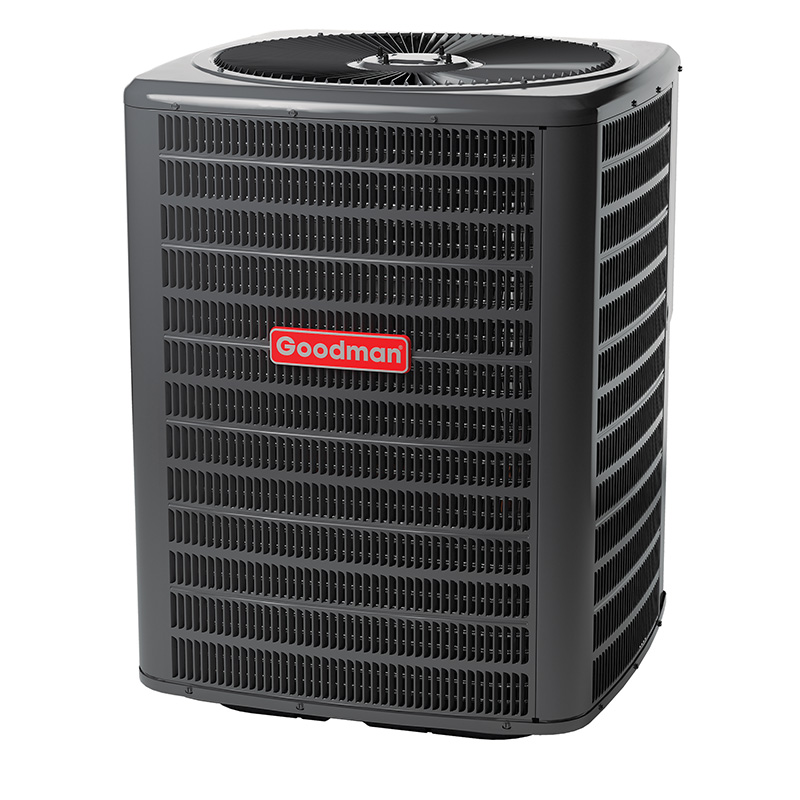
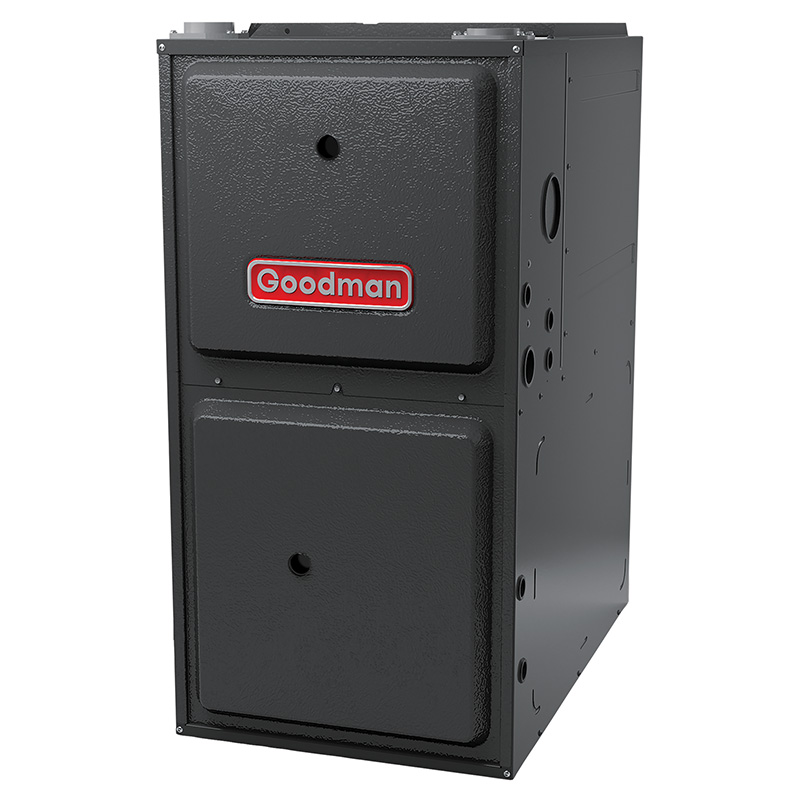
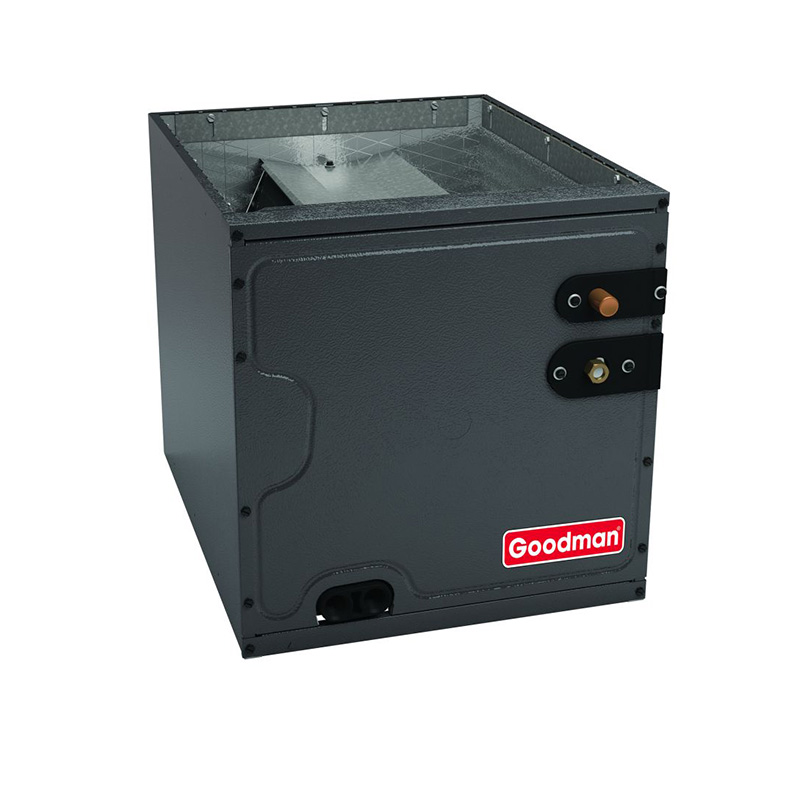
This Goodman combination system pairs a 2.5-ton, 15.2 SEER2 central air conditioner with a 60,000 BTU, 96% AFUE multi-speed ECM gas furnace in an upflow configuration. The 15.2 SEER2 rating clears the current federal minimum efficiency threshold with a modest margin, meaning you get real energy savings over older 13 or 14 SEER equipment without paying the premium of a 17-plus SEER2 inverter-driven system. The 96% AFUE furnace is a genuine high-efficiency unit, converting 96 cents of every fuel dollar into usable heat, and the multi-speed ECM blower motor ramps airflow up or down to reduce short-cycling and uneven temperatures compared to a single-speed unit.
The R-32 refrigerant charge is worth noting. R-32 has a lower global warming potential than R-410A and is increasingly common in newer systems, but it requires technicians who are rated and equipped to handle it. If you need a service call down the road, confirming your local HVAC company carries R-32 before signing any contracts is a practical step. The upflow configuration suits homes where the furnace sits in a basement or ground-level utility closet and air is delivered upward through ductwork, which covers the majority of single-family homes in colder climates. At 2.5 tons, this system is best matched to roughly 1,200 to 1,600 square feet of conditioned space, though a proper Manual J load calculation by your installer should confirm sizing.
This Goodman bundle delivers legitimate high-efficiency heating and competent cooling at a price point that is noticeably lower than comparable Carrier, Trane, or Lennox packages. The 96% AFUE furnace and ECM blower are real-world performers, but long-term ownership costs depend heavily on install quality and your willingness to budget for component repairs after the seven-year mark. It is a reasonable value pick, not a set-and-forget premium system.
Overall score is the average of the five ratings above.
What we like
- Priced roughly 15 to 25 percent below comparable equipment from Carrier, Trane, and Lennox
- 96% AFUE is a genuinely high-efficiency furnace rating that cuts annual heating bills versus 80% AFUE units
- Multi-speed ECM motor improves comfort and lowers blower energy consumption compared to single-speed furnaces
- 15.2 SEER2 clears federal minimums and delivers measurable cooling efficiency gains over older equipment
- R-32 refrigerant is forward-looking and carries a lower environmental impact than the R-410A it replaces
Trade-offs
- Dual-run capacitors are the most frequently reported failure point, typically requiring a 300 to 600 dollar repair
- Evaporator coil leaks appear in a meaningful share of owner reviews and can be a costly mid-life repair
- Compressor lifespan averages 10 to 14 years versus 15 to 20 years for premium brands, raising long-run replacement risk
- A minority of owners report refrigerant leaks in the first year, pointing to the system's sensitivity to precise installation and charging
What homeowners and pros say about Goodman
Homeowners who go looking for Goodman feedback online will find a split picture. On ConsumerAffairs, Goodman scores around 2.5 out of 5, a channel that skews toward complaints, and the recurring theme there is repair costs climbing after roughly year seven. On Google dealer reviews, the brand lands closer to 3.8 out of 5 across locations, where affordability is the most frequently cited reason people are satisfied. Neither number tells the whole story, but together they sketch a brand where the upfront value proposition is real and the long-term experience is more variable.
HVAC technicians who work on Goodman equipment regularly point to a few specific things buyers should understand before committing. Dual-run capacitors are the most commonly reported component failure and are generally a quick, low-cost fix when caught early. Evaporator coil leaks show up in a meaningful share of owner accounts and can become a more involved repair. Compressor lifespan on Goodman systems tends to average 10 to 14 years, which is a real gap compared to the 15 to 20 years often seen in premium brands. For this particular system, the R-32 refrigerant adds a layer of consideration, since not every service truck is yet equipped to handle it, making technician selection at both installation and any future service call more consequential than it might otherwise be.
Sources: ConsumerAffairs Goodman owner reviews, AHRI Directory of Certified Product Performance, U.S. DOE appliance and equipment efficiency standards, Goodman product specification sheets.
What it costs to run
At 15.2 SEER2, cooling this 2.5-ton system for a typical 1200-hour cooling season at the U.S. average electricity rate of $0.17/kWh works out to roughly $403 per year in cooling, about $54 less per year than a minimum-efficiency 13.4 SEER2 unit of the same size. Your real cost depends on your climate and local rate.
Method: (30,000 BTU/hr ÷ 15.2 SEER2) × 1200 hours ÷ 1000 × $0.17/kWh. Rate source: U.S. EIA average; cooling hours: moderate-climate estimate.
How it compares
| Brand | Comparable model | SEER2 | Stage | Price position |
|---|---|---|---|---|
| Goodman | GSXH5 / GMVC96 Series (this system) | 15.2 | Single-stage / Multi-speed | Value pick |
| Carrier | Comfort 15 Series (24ACC6) | 15.2 | Single-stage | Typically 15 to 25 percent more than this Goodman package |
| Trane | XR15 Series | 15.0 to 16.0 | Single-stage | Typically 15 to 25 percent more than this Goodman package |
| Lennox | Merit 14ACX / ML196 Series | 15.0 to 15.5 | Single-stage | Typically 15 to 25 percent more than this Goodman package |
Competitor rows are comparable single-stage units at similar efficiency; price is relative position, not a quote.
Questions about this system
Is 15.2 SEER2 enough efficiency, or should I pay more for a higher-rated unit?
15.2 SEER2 comfortably exceeds current federal minimums and will produce real savings over older 13 or 14 SEER equipment. Stepping up to a 17 or 18 SEER2 variable-speed system adds cost upfront and can take several years to recoup in energy savings, so 15.2 SEER2 is a reasonable stopping point for most households unless you run the AC heavily or live in an extreme cooling climate.
Does my HVAC technician need special certification to work with R-32 refrigerant?
Yes. R-32 is an A2L refrigerant classified as mildly flammable, so technicians need specific training and compatible recovery equipment to handle it safely and legally. Before installation or any future service, confirm that the contractor you hire is R-32 certified and carries the right tools, since not every local shop has updated their equipment yet.
What are the most likely repairs I should budget for over the life of this system?
Based on documented owner experience with Goodman equipment, dual-run capacitors are the most common failure, typically a straightforward repair in the 300 to 600 dollar range. Evaporator coil leaks and refrigerant loss show up in a meaningful share of reviews and can cost more to address. Budgeting for a service agreement or a dedicated repair fund starting around year six or seven is a practical approach.
How important is the installer for a Goodman system specifically?
Very important. Industry technicians consistently cite install quality as the single biggest factor in how long a Goodman system lasts and how reliably it performs. A minority of owners who report refrigerant leaks within the first year trace them back to improper charging at installation, so choosing a licensed contractor with verifiable experience on Goodman equipment matters more here than it might with a brand that has tighter factory tolerances.
What size home does a 2.5-ton, 60,000 BTU system typically fit?
As a rough guideline, 2.5 tons of cooling capacity is often appropriate for homes in the 1,200 to 1,600 square foot range, and 60,000 BTU of heating suits similar footprints in most U.S. climates. That said, proper sizing depends on insulation, window area, ceiling height, and local climate, so a Manual J load calculation from your installer is the only reliable way to confirm the system is the right fit before purchase.
Specifications
| Cooling capacity | 2.5 Ton |
| Efficiency | 15.2 SEER2 |
| Furnace output | 60000 BTU |
| Furnace efficiency | 96% AFUE |
| Configuration | Upflow |
| Refrigerant | R-32 |