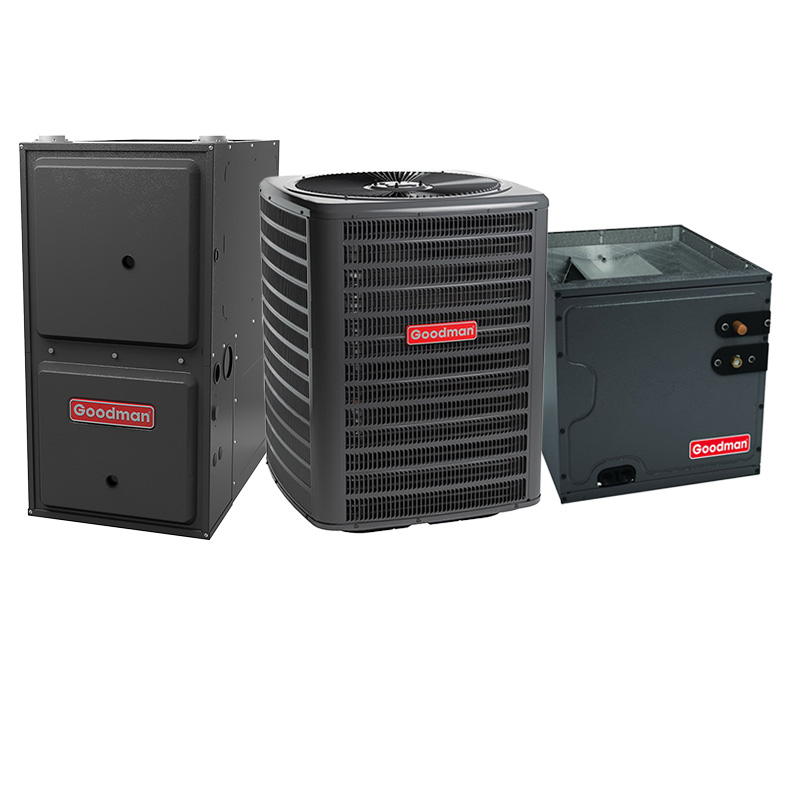
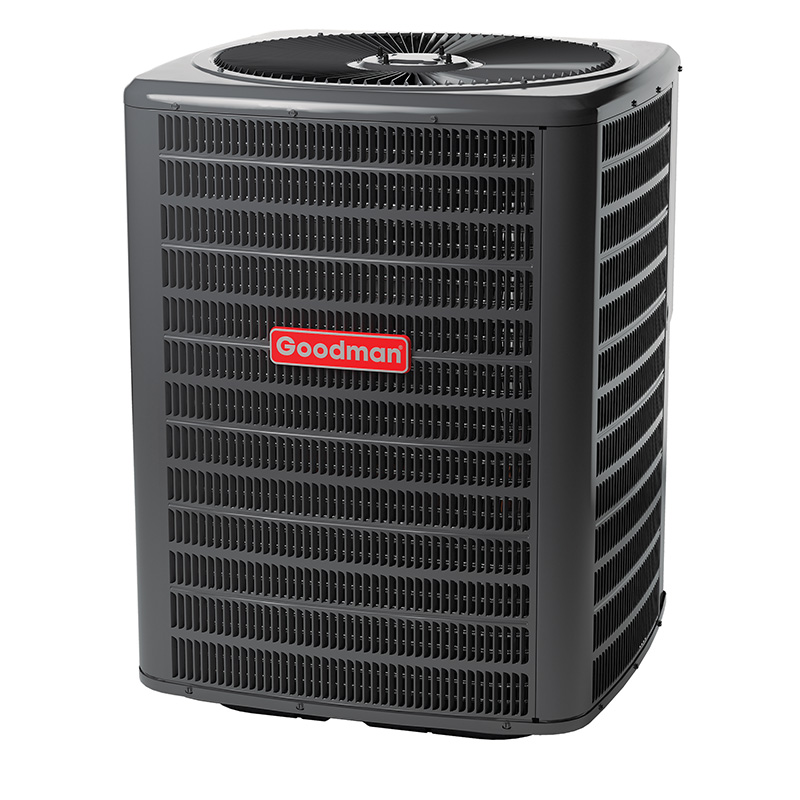
Goodman Furnace AC – 2.5 Ton 15.2 SEER2 AC With 80000 BTU 96% AFUE Multi-Speed ECM Gas Furnace System – Downflow | R32
View on AC Direct see your lowest price →Check current price on AC Direct →
Key features
- 2.5-ton cooling capacity rated at 15.2 SEER2 under current DOE test standards
- 80,000 BTU gas furnace with 96% AFUE for high-efficiency heating
- Multi-speed ECM blower motor reduces electricity use and operates quieter than PSC motors
- Downflow cabinet orientation designed for attic or closet installations above conditioned space
- R-32 refrigerant with lower global warming potential than R-410A
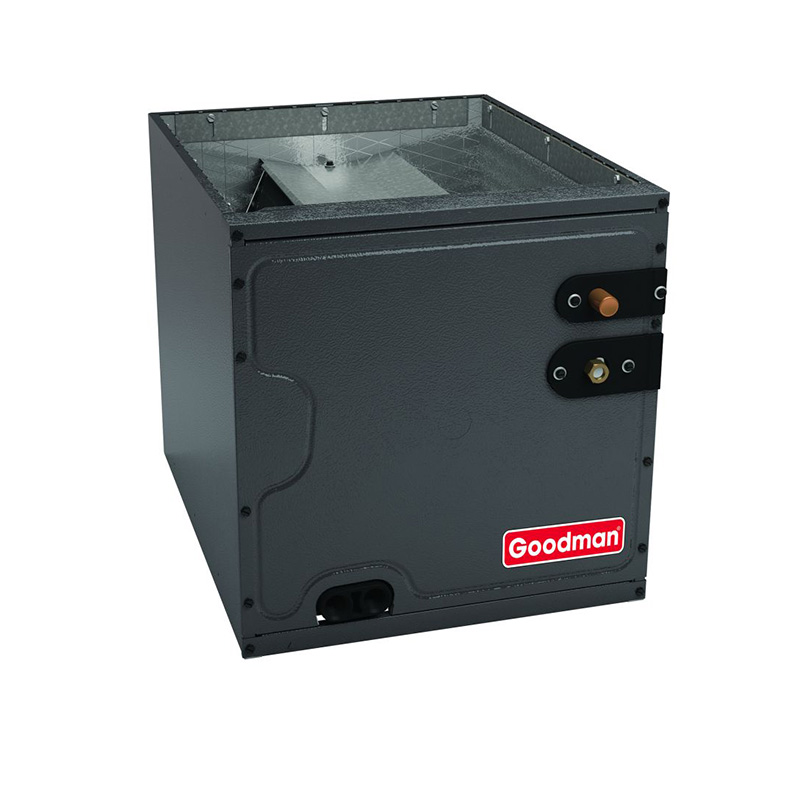
- Factory-matched coil and air handler pairing supports consistent AHRI-rated system performance
About this system
This Goodman bundle pairs a 2.5-ton, 15.2 SEER2 central air conditioner with an 80,000 BTU, 96% AFUE multi-speed ECM gas furnace in a downflow configuration, making it a purpose-built choice for homes where the air handler sits above a crawlspace or finished basement and blows conditioned air downward. The R-32 refrigerant charge is a forward-looking detail: R-32 has a lower global warming potential than the older R-410A it replaces in newer equipment, and its higher energy density allows slightly more compact heat exchange. At 15.2 SEER2, this system clears the current federal minimum with room to spare, landing in the entry-to-mid efficiency tier rather than the premium zone occupied by 18-plus SEER2 variable-speed systems.
The 96% AFUE rating on the furnace is the genuinely strong number in this package. It means only four cents of every dollar spent on gas escapes as waste heat, which represents real savings over an 80% unit in colder climates. The multi-speed ECM blower motor is a meaningful upgrade over a standard PSC motor: it ramps airflow to match demand, reduces electricity draw during partial-load operation, and tends to run quieter at lower speeds. That said, this is a multi-speed rather than a true variable-speed or modulating system, so it does not deliver the same fine-grained humidity control or whisper-quiet comfort ceiling that top-tier communicating equipment offers. For a medium-size home in a moderate climate, however, the gap is rarely noticeable day to day.
This Goodman combo delivers a genuinely high-efficiency furnace and a code-compliant, mid-tier cooling system at a price point that is meaningfully lower than comparable Carrier, Trane, or Lennox bundles. The trade-off is a brand track record that skews toward affordability over long-term reliability, with compressor and coil longevity that typically trails premium competitors. It is a solid value buy when installed by an experienced technician and backed by a service agreement, but it is not the system to choose if low maintenance cost over 15-plus years is the top priority.
Overall score is the average of the five ratings above.
What we like
- 96% AFUE furnace rating delivers genuine heating efficiency in cold climates
- 15.2 SEER2 meets and exceeds current federal minimums without a premium-brand price
- ECM multi-speed blower lowers operating electricity costs compared to single-speed PSC motors
- R-32 refrigerant is an industry-forward choice with lower environmental impact
- Downflow configuration suits a specific installation need that not all bundled systems accommodate
Trade-offs
- Goodman compressors average 10 to 14 years of service life versus 15 to 20 years for premium brands
- Evaporator coil leaks appear with notable frequency in owner reports, a cost that can offset initial savings
- Dual-run capacitor failures are the most commonly reported service call, typically adding $300 to $600 per incident
- A minority of owners report refrigerant leaks in year one, usually traced to install quality rather than the equipment itself
What homeowners and pros say about Goodman
Homeowners who leave reviews on ConsumerAffairs give Goodman equipment roughly 2.5 out of 5, and that channel draws heavily from frustrated owners rather than satisfied ones. The recurring theme is not early catastrophic failure but rather repair costs that begin accumulating after around year seven, with dual-run capacitor replacements and evaporator coil leaks cited most often. Google dealer reviews, which capture a broader and less complaint-skewed audience, land closer to 3.8 out of 5, where the most consistent praise is for upfront affordability and the most consistent criticism is for inconsistent long-term performance. Neither number tells the whole story, but together they point to a brand that delivers on price and struggles to match premium competitors on longevity.
HVAC technicians tend to be candid about Goodman: the equipment works, but install quality matters more with this brand than with Trane or Carrier, because a marginal installation on a Goodman unit tends to surface problems sooner. The compressor lifespan averaging 10 to 14 years versus the 15 to 20 years typical of premium brands is the most meaningful long-term cost factor for this specific system, particularly given that a compressor replacement on a 2.5-ton unit is a significant expense. The documented refrigerant leak reports within the first year are generally attributed to charging errors at installation rather than factory defects, which reinforces the technician consensus that who installs this system matters as much as what the system is.
Sources: ConsumerAffairs Goodman owner reviews, AHRI Directory of Certified Product Performance, U.S. DOE appliance and equipment efficiency standards, Goodman product specification sheets.
What it costs to run
At 15.2 SEER2, cooling this 2.5-ton system for a typical 1200-hour cooling season at the U.S. average electricity rate of $0.17/kWh works out to roughly $403 per year in cooling, about $54 less per year than a minimum-efficiency 13.4 SEER2 unit of the same size. Your real cost depends on your climate and local rate.
Method: (30,000 BTU/hr ÷ 15.2 SEER2) × 1200 hours ÷ 1000 × $0.17/kWh. Rate source: U.S. EIA average; cooling hours: moderate-climate estimate.
How it compares
| Brand | Comparable model | SEER2 | Stage | Price position |
|---|---|---|---|---|
| Goodman | 2.5T 15.2 SEER2 AC + 80K BTU 96% AFUE ECM Furnace (Downflow, R-32) | 15.2 | Multi-speed | Value pick |
| Carrier | Comfort Series (24ACC / 58CVA pairing) | 15-16 | Single-stage | Typically 15 to 25 percent more than Goodman |
| Trane | XR15 / S9X1 pairing | 15-16 | Single-stage | Typically 15 to 25 percent more than Goodman |
| Lennox | Merit Series (ML15 / ML196 pairing) | 15-16 | Single-stage | Typically 15 to 25 percent more than Goodman |
Competitor rows are comparable single-stage units at similar efficiency; price is relative position, not a quote.
Questions about this system
Is a downflow furnace the right configuration for my house?
Downflow units are designed for installations where the furnace sits in an upper-floor closet or attic and discharges air downward into floor or low-wall ducts. If your existing system is a downflow unit and your ductwork runs beneath the equipment, this configuration is correct. If your ducts run overhead or your air handler is in a basement blowing upward, you need an upflow or horizontal unit instead.
Can my existing R-410A refrigerant lines be reused with this R-32 system?
R-32 requires dedicated line sets and components rated for its higher operating pressure and different oil compatibility. In most cases, existing R-410A copper line sets of the correct diameter can be reused after a proper flush, but fittings, the metering device, and the disconnect must be confirmed compatible. Your installing technician should verify this before reusing any existing refrigerant circuit components.
What does the 96% AFUE rating actually mean for my gas bill?
AFUE measures what percentage of the fuel burned is converted to usable heat. At 96%, this furnace sends only about four cents of every gas dollar up the flue. Compared to a common 80% AFUE unit, that is roughly a 20% reduction in gas consumption for the same heat output, which translates to real savings in climates with long or cold heating seasons.
How often do Goodman capacitors fail, and how much does it cost to fix?
Dual-run capacitor failure is the single most commonly reported service issue across Goodman equipment. It is not unique to Goodman, but it does appear frequently in owner reports, typically after several years of operation. The repair is straightforward and usually runs $300 to $600 including the service call, making it an annoying but manageable expense rather than a system-ending failure.
Does Goodman's warranty require professional registration, and what does it actually cover?
Goodman requires online registration within a set window after installation to access the extended parts warranty; without registration, coverage defaults to a shorter base term. The warranty covers parts but not labor, refrigerant, or the diagnostic cost of the service call, so out-of-pocket repair costs can still be significant even within the warranty period. Confirm registration requirements and labor coverage options with your installer before the job is complete.
Specifications
| Cooling capacity | 2.5 Ton |
| Efficiency | 15.2 SEER2 |
| Furnace output | 80000 BTU |
| Furnace efficiency | 96% AFUE |
| Configuration | Downflow |
| Refrigerant | R-32 |