Goodman Furnace AC – 2.5 Ton 16 SEER2 AC With 80000 BTU 96% AFUE Multi-Speed ECM Gas Furnace System – Upflow | R32
View on AC Direct see your lowest price →Check current price on AC Direct →
Key features
- 2.5-ton 16 SEER2 AC rated for moderate to warm climates with solid seasonal energy savings
- 96% AFUE upflow gas furnace converts nearly all fuel into usable heat
- Multi-speed ECM blower motor reduces electricity use and improves airflow consistency
- R-32 refrigerant with lower global-warming potential than R-410A
- Matched system designed and rated as a paired AC and furnace combination
- 80,000 BTU heat output sized for mid-range square footage in most climate zones
About this system
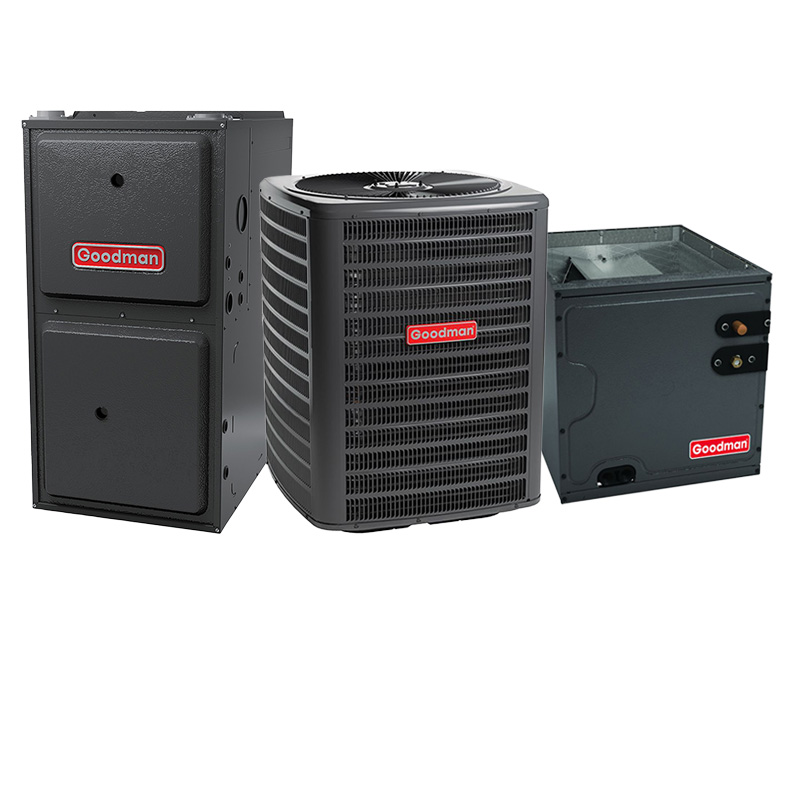
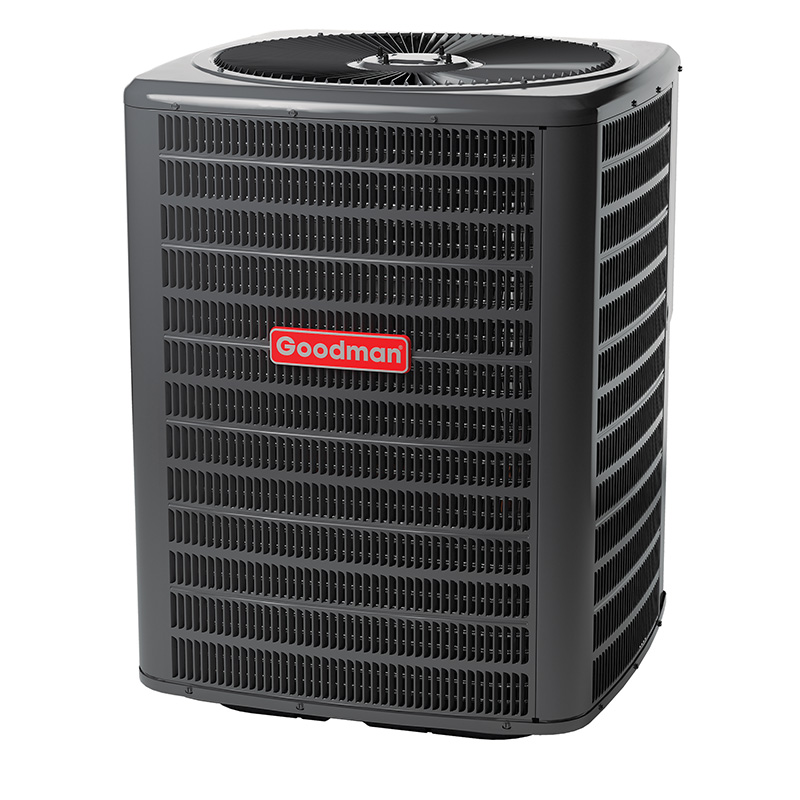
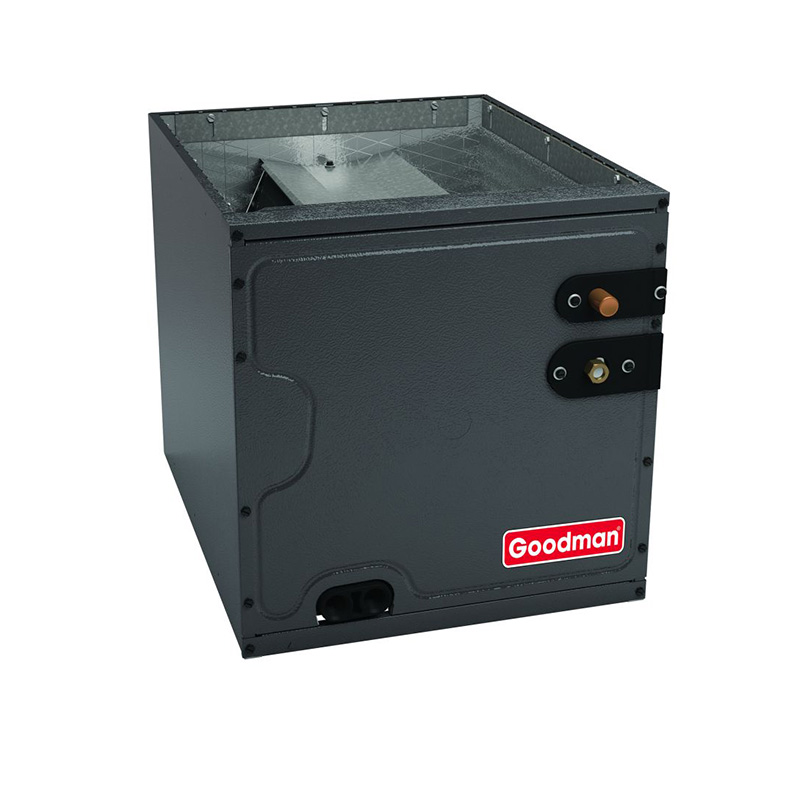
This Goodman bundle pairs a 2.5-ton, 16 SEER2 central air conditioner with an 80,000 BTU, 96% AFUE upflow gas furnace, making it a matched system suited to homes roughly in the 1,200 to 1,800 square foot range, depending on local climate and insulation. The 96% AFUE rating means the furnace converts 96 cents of every dollar of gas into usable heat, putting it squarely in the high-efficiency tier and qualifying it for many utility rebate programs. R-32 refrigerant carries a lower global-warming potential than the older R-410A it is replacing, and it runs at lower pressures, which can translate to slightly lower leak risk and easier long-term servicing as the industry continues its phase-over.
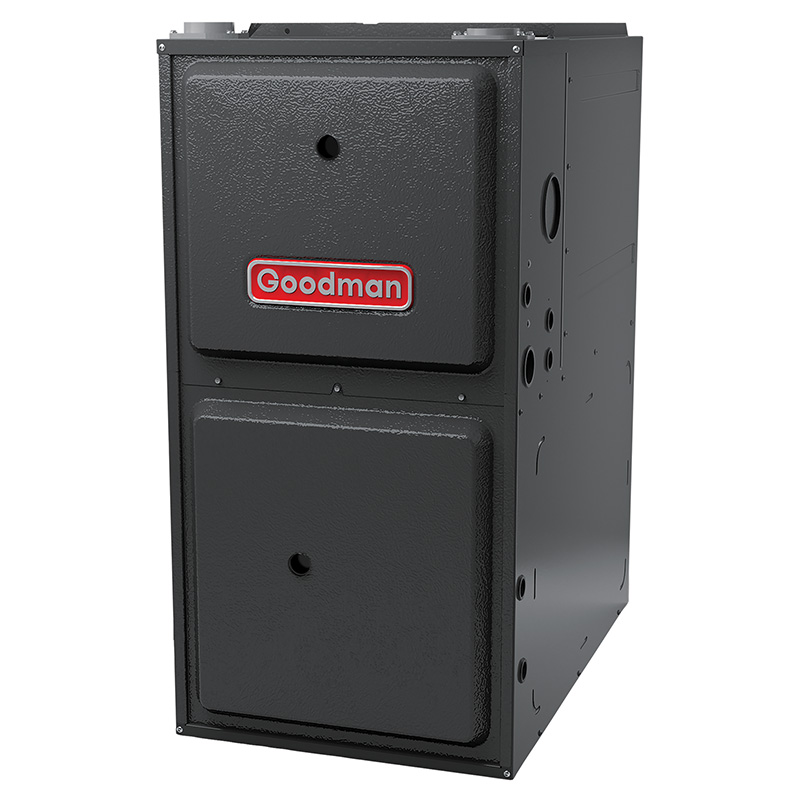
The multi-speed ECM blower motor is one of the more meaningful spec upgrades at this price tier. Unlike a standard PSC motor that simply runs on or off at full speed, the ECM motor ramps up and down, improving air distribution, reducing cold spots, cutting blower electricity consumption, and running quieter during part-load conditions. Upflow configuration means the furnace draws return air from the bottom and discharges conditioned air upward, which fits the large majority of basement or closet installs where ductwork runs overhead. Buyers who need a downflow or horizontal configuration will need a different model entirely, so confirming your duct layout before purchasing is essential.
This system is best understood as a value-tier offering with genuinely respectable specs on paper. It will compete on paper with mid-range offerings from premium brands while coming in noticeably cheaper. The real-world gap shows up less in the efficiency numbers and more in component longevity and the quality of the specific dealer doing the install, both of which matter at least as much as the equipment itself.
This Goodman bundle delivers high-efficiency specs at a price point that is genuinely hard to match from premium brands, and the ECM motor and 96% AFUE furnace are real highlights. The trade-off is a brand track record that shows higher rates of capacitor failures, evaporator coil leaks, and shorter average compressor lifespans than Trane, Lennox, or Carrier, meaning long-term ownership costs can erode some of the upfront savings. For budget-conscious buyers who vet their installer carefully and budget for a service call or two after year seven, this system represents reasonable value.
Overall score is the average of the five ratings above.
What we like
- Purchase price runs 15 to 25 percent below comparable Carrier, Trane, and Lennox systems
- 96% AFUE furnace qualifies for many utility rebates and cuts monthly gas bills meaningfully
- 16 SEER2 efficiency rating is a step above minimum federal standards for most regions
- Multi-speed ECM blower improves comfort and reduces blower electricity draw versus single-speed motors
- R-32 refrigerant is more environmentally friendly and increasingly well-supported by technicians
Trade-offs
- Compressors average 10 to 14 years in owner reports, shorter than the 15 to 20 years cited for premium brands
- Dual-run capacitor failures are the most commonly documented issue, adding 300 to 600 dollars in repair costs, typically after year five or six
- A meaningful share of owners report evaporator coil leaks, which can be a costly mid-life repair
- A minority of owners report refrigerant leaks in the first year, most often linked to installation or initial charge quality rather than the equipment itself
What homeowners and pros say about Goodman
Homeowners who have lived with Goodman equipment tell a story split roughly in half. Those who had a skilled installer and kept up with annual maintenance often report years of trouble-free service and are happy with the money they saved upfront. The brand’s Google dealer scores average around 3.8 out of 5, and affordability is consistently the most cited reason people are satisfied. On the other side, ConsumerAffairs scores sit around 2.5 out of 5, a platform that skews toward frustrated owners, and the recurring theme there is that repair bills start climbing after about year seven. The specific failure modes that come up most often are dual-run capacitor failures, evaporator coil leaks, and compressors that tend to give out in the 10-to-14-year range rather than the 15-to-20 years owners of premium brands sometimes report.
HVAC technicians who work on Goodman equipment regularly tend to have a pragmatic view: the equipment is serviceable and not difficult to work on, capacitor swaps are quick and inexpensive, and the brand’s parts availability is generally solid. Their strongest caution is that Goodman’s performance depends heavily on install quality, more so than some other brands, because the equipment has less tolerance for a poorly sized system, an undercharged refrigerant circuit, or inadequate airflow. For this specific system, the ECM motor and 96% AFUE furnace are features that pros generally respect at this price tier, and the shift to R-32 refrigerant is seen as a forward-looking move. The honest summary from the field: buy it if the price difference is meaningful to your budget, spend what you save on a proven installer, and do not skip the annual tune-up.
Sources: ConsumerAffairs Goodman owner reviews, AHRI Directory of Certified Product Performance, U.S. DOE appliance and equipment efficiency standards, Goodman product specification sheets.
What it costs to run
At 16 SEER2, cooling this 2.5-ton system for a typical 1200-hour cooling season at the U.S. average electricity rate of $0.17/kWh works out to roughly $382 per year in cooling, about $75 less per year than a minimum-efficiency 13.4 SEER2 unit of the same size. Your real cost depends on your climate and local rate.
Method: (30,000 BTU/hr ÷ 16 SEER2) × 1200 hours ÷ 1000 × $0.17/kWh. Rate source: U.S. EIA average; cooling hours: moderate-climate estimate.
How it compares
| Brand | Comparable model | SEER2 | Stage | Price position |
|---|---|---|---|---|
| Goodman | This system (2.5T 16 SEER2 AC + 80K BTU 96% AFUE ECM furnace bundle) | 16 | Single-stage | Value pick |
| Carrier | Comfort 24ACC6 AC paired with 59SC5 furnace series | 16 | Single-stage | Typically 15 to 25 percent more than this Goodman bundle |
| Trane | XR16c AC paired with S9X2 furnace series | 16 | Single-stage | Typically 15 to 25 percent more than this Goodman bundle |
| Lennox | Merit 14ACX AC paired with ML196E furnace series | 16 | Single-stage | Typically 15 to 25 percent more than this Goodman bundle |
Competitor rows are comparable single-stage units at similar efficiency; price is relative position, not a quote.
Questions about this system
Does this system qualify for the federal energy efficiency tax credit?
The 96% AFUE furnace meets the efficiency threshold for the 25C federal tax credit, which can be worth up to 600 dollars for qualifying furnaces. The AC side at 16 SEER2 may or may not meet the regional split-system threshold depending on your climate zone, so confirm the installed combination's AHRI certificate with your contractor before filing.
What warranty comes with this Goodman system?
Goodman typically offers a 10-year parts warranty on registered equipment, which requires registration within a set window after installation. Some components, including the heat exchanger, may carry a lifetime limited warranty on the furnace. Always register the equipment promptly and keep your installation paperwork, as warranty claims without proof of registration can default to a shorter coverage period.
My home has a basement furnace with ductwork running through the ceiling. Is upflow the right configuration?
Yes, upflow is the correct configuration for a basement or ground-level closet install where supply ducts run overhead. The furnace pulls return air in at the bottom and pushes conditioned air upward into the duct system. If your furnace sits in an attic or needs to push air downward, you would need a downflow model instead.
How does the ECM blower motor in this furnace affect my electricity bill compared to a standard motor?
ECM motors are significantly more efficient than the single-speed PSC motors found in lower-cost furnaces, often using 60 to 75 percent less electricity during blower operation. Because the furnace fan can run for long periods during both heating and air conditioning cycles, this difference adds up over a year and is one of the more practical upgrades this system offers at its price point.
I have heard Goodman has issues with capacitors and coil leaks. Should that change my decision?
It is worth factoring in but not necessarily a dealbreaker. Dual-run capacitor failures are the most commonly reported repair on Goodman equipment and are typically a straightforward, relatively low-cost fix in the 300 to 600 dollar range. Evaporator coil leaks show up in a meaningful share of owner reviews and are more expensive to address. Budgeting for at least one or two service calls after year seven is a realistic expectation, and choosing a reputable local installer reduces, though does not eliminate, that risk.
Specifications
| Cooling capacity | 2.5 Ton |
| Efficiency | 16 SEER2 |
| Furnace output | 80000 BTU |
| Furnace efficiency | 96% AFUE |
| Configuration | Upflow |
| Refrigerant | R-32 |